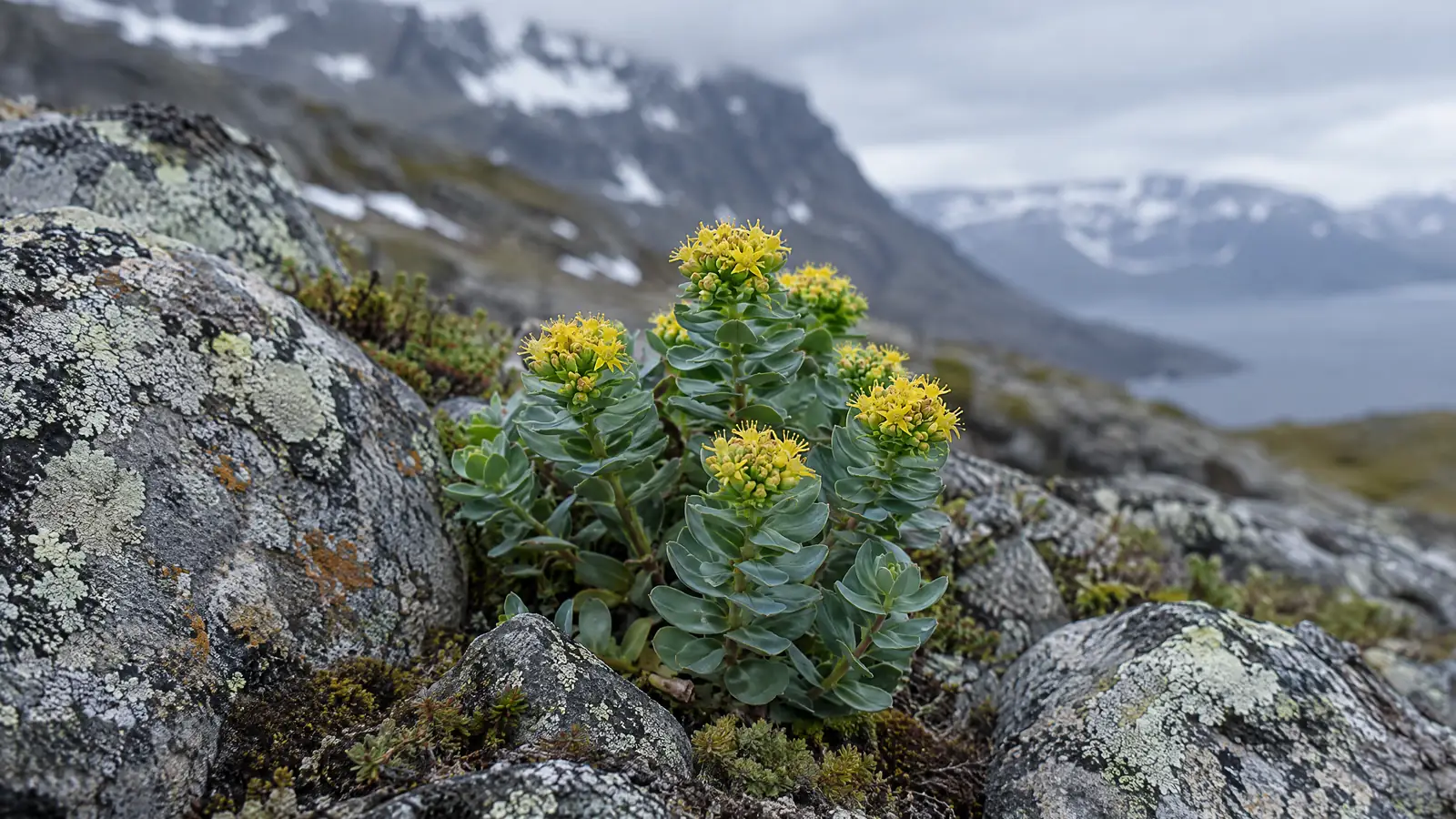
At a Glance
| Parameter | Detail |
|---|---|
| Botanical name | Rhodiola rosea (Golden Root, Arctic Root) |
| Active compounds | Rosavins, salidroside, tyrosol |
| Standardization | 3% rosavins / 1% salidroside |
| Mechanism | HPA axis modulation, monoamine reuptake inhibition, AMPK activation |
| Typical dose | 200–600 mg/day of standardized extract |
| Onset | Acute effects in 30–60 min; sustained effects in 2–4 weeks |
| Safety profile | Well-tolerated; mild stimulant at high doses |
| Evidence grade | Level 1 RCTs for stress-related fatigue; Level 2 for cognitive function |
Patients commonly ask how rhodiola compares to ashwagandha for stress and fatigue — a full side-by-side clinical comparison is covered in Ashwagandha vs Rhodiola Rosea: Which Adaptogen Is Right for You?.
In patients with complex chronic illness (Lyme disease, post-viral fatigue, autoimmune dysregulation), cortisol dysregulation is one of the most under-addressed problems I see. Patients describe it precisely: simultaneously exhausted and unable to rest, mentally sluggish but internally restless. Standard endocrinology panels return “normal,” yet the lived experience is unmistakably one of a dysregulated hypothalamic-pituitary-adrenal (HPA) axis.
Rhodiola rosea (Crassulaceae family) is the adaptogen I reach for most consistently in this clinical picture. It is not sedating like ashwagandha, nor stimulating like ginseng in excess — it occupies a middle ground that suits the wired-and-tired phenotype particularly well. The evidence base, while imperfect, is considerably stronger than many supplements I am asked about, and the safety profile is excellent. This article walks through the pharmacology, the clinical data, and how I use it in practice.
Pharmacology: How Rhodiola Works at the Cellular Level
Key Bioactive Constituents
Rhodiola’s activity derives from three compound classes:
- Rosavins (rosavin, rosarin, rosin): phenylpropanoids largely specific to R. rosea; thought to contribute to MAO-A/B inhibition and serotonin reuptake modulation
- Salidroside (rhodioloside): a phenylethanol glycoside shared with other Rhodiola species; responsible for much of the anti-fatigue and AMPK-activating activity
- Tyrosol: a simple phenol with antioxidant and mild dopaminergic properties
Standardized extracts targeting 3% rosavins and 1% salidroside are the benchmark used in most clinical trials. Products that standardize only to rosavins or only to salidroside represent partial replication of this profile.
HPA Axis Modulation
Rhodiola does not suppress the HPA axis the way exogenous cortisol does, nor does it stimulate it like caffeine. The proposed mechanism is buffering — reducing the amplitude of cortisol spikes in response to acute stressors while supporting baseline adrenal output. Animal models consistently show attenuated corticosterone responses to restraint stress following Rhodiola administration. Human data from Olsson et al. (2009) demonstrated blunted salivary cortisol responses in burnout patients receiving 576 mg/day over 28 days.
At the cellular level, salidroside activates AMPK (AMP-activated protein kinase), improving mitochondrial efficiency and reducing the energetic cost of stress responses. This may partly explain why patients report less post-exertional fatigue — the cellular “cost” of mounting a stress response is lower.
Monoamine System Interactions
Rhodiola extracts have demonstrated inhibition of both MAO-A (serotonin, norepinephrine) and MAO-B (dopamine, phenylethylamine) in vitro and in animal models. The clinical implication is mild elevation of these monoamines — contributing to improved mood, focus, and motivation without the side-effect profile of pharmaceutical MAO inhibitors at the doses studied.
This mechanism also raises a practical interaction consideration: patients on SSRIs, SNRIs, or tricyclic antidepressants should use Rhodiola cautiously, with awareness of theoretical additive serotonergic activity, though clinical serotonin syndrome reports are absent from the literature at standard doses.
Clinical Evidence: What the Trials Show
Stress-Related Fatigue and Burnout
The strongest evidence for Rhodiola sits in the domain of stress-related fatigue. A 2012 RCT by Lekomtseva and colleagues enrolled 60 patients with prolonged work-related fatigue and randomized them to Rhodiola extract (576 mg/day) or placebo for 28 days. The treatment group showed statistically significant improvements in:
- Multidimensional Fatigue Inventory (MFI) scores
- Burnout scales (Maslach Burnout Inventory)
- Self-reported concentration and attention
A 2009 study by Olsson et al. using the same dose in 60 burnout patients found reductions in cortisol response to awakening challenge (cortisol awakening response, CAR) — an objective marker of HPA axis hyperreactivity — alongside subjective fatigue improvements. The combination of subjective and objective outcome measures in these trials is clinically meaningful.
Cognitive Performance Under Acute Stress
Two trials from the military and medical student populations are worth citing:
-
Spasov et al. (2000) — 40 first-year foreign students randomized to Rhodiola (170 mg/day) or placebo during exam periods. Rhodiola group showed improvements in mental fatigue, psychomotor speed, and general well-being within 20 days.
-
Darbinyan et al. (2000) — 56 young physicians on night shifts randomized to Rhodiola (170 mg/day) or placebo for two weeks. The treatment group showed significant improvements in mental fatigue index, speed of audiovisual perception, and short-term memory.
These are small trials by modern standards, but the consistency of effect direction across different populations and outcome measures is notable.
Physical Endurance and Recovery
A 2004 RCT (De Bock et al.) found no significant effect of Rhodiola on VO₂max or endurance performance in trained cyclists. However, a 2013 randomized crossover study (Noreen et al.) showed acute Rhodiola supplementation (3 mg/kg) improved time-to-exhaustion and reduced perceived exertion. The discrepancy likely reflects dose, timing, and population differences — trained athletes appear to benefit less than sedentary or clinically fatigued individuals.
For my patients recovering from post-infectious fatigue, the relevant endpoint is not athletic performance but functional capacity — the ability to walk, think, and work without post-exertional malaise. This is where I find Rhodiola most useful.
Clinical Applications: Who Benefits Most
The Wired-and-Tired Patient
This is the patient archetype for whom I most consistently recommend Rhodiola. They present with:
- Daytime fatigue despite adequate sleep
- Racing thoughts at bedtime or upon waking
- Reduced cognitive endurance (“brain runs out”)
- Elevated cortisol awakening response on salivary testing
- Normal or near-normal thyroid, B12, iron panels
Ashwagandha works well for some of these patients, particularly those with predominantly high cortisol and anxiety. But for patients who also report morning brain fog and low motivation — often a blunted dopaminergic tone alongside elevated cortisol — Rhodiola’s monoamine-modulating profile offers a better fit.
Post-Infectious Fatigue and Post-COVID
In my practice, post-COVID fatigue and post-Lyme fatigue share common physiological themes: mitochondrial dysfunction, neuroinflammation, and HPA axis dysregulation. Rhodiola’s AMPK-activating properties are particularly relevant here — improving mitochondrial substrate utilization in a context where the mitochondria are under oxidative and inflammatory stress.
I typically combine Rhodiola with coenzyme Q10 and NAC in post-infectious recovery protocols, targeting mitochondrial support from multiple angles. Rhodiola addresses the upstream neuroadaptive layer; CoQ10 and NAC address the downstream energetic and oxidative stress components.
Burnout and High-Functioning Exhaustion
Physicians, executives, and caregivers present with a variant of burnout where conventional psychiatric labels (mild depression, GAD) don’t quite fit and pharmacological treatment feels disproportionate. Rhodiola occupies a rational evidence-based middle ground — meaningful clinical effect, no dependence, no withdrawal, daily dose commitment that fits a busy lifestyle.
Dosing, Timing, and Practical Use
Standard Dosing Protocol
| Goal | Dose | Timing |
|---|---|---|
| Acute cognitive support | 200–400 mg | 30–60 min before demand |
| Stress-related fatigue (chronic) | 400–576 mg/day | Morning, fasted or light meal |
| Burnout recovery | 576 mg/day | Split AM/noon; avoid PM |
| Stacking with ashwagandha | 200 mg Rhodiola + 300 mg ashwagandha | Rhodiola AM, ashwagandha PM |
The standard extract dose of 576 mg/day (3% rosavins/1% salidroside) reflects the doses used in the most rigorous clinical trials. Lower doses (200–400 mg) are appropriate for acute cognitive use or as a starting point for sensitive patients.
Timing Matters
Rhodiola has mild stimulant properties at standard and higher doses. Evening administration disrupts sleep in a meaningful subset of patients — I recommend morning and early afternoon dosing only. This distinguishes it clearly from ashwagandha, which is well-tolerated in the evening and can improve sleep quality.
Cycling and Long-Term Use
The adaptogenic literature traditionally recommends cycling — 5 weeks on, 1–2 weeks off — but the evidence base for this recommendation is thin. I advise patients to observe their response over the first 4–6 weeks and reassess. If benefit is clear and side effects absent, continued use is reasonable. If the acute “edge” seems to diminish, a brief washout period often restores sensitivity.
Interactions and Contraindications
- MAO inhibitors: Avoid combination due to theoretical additive monoamine activity
- SSRIs/SNRIs: Use with clinical awareness; standard doses appear safe in practice
- Warfarin: Theoretical CYP3A4 interaction; monitor INR if adding Rhodiola
- Stimulants (modafinil, methylphenidate): Potential additive CNS stimulation; start low
- Pregnancy: Insufficient safety data: avoid
Comparison with Other Adaptogens
| Adaptogen | Primary Effect | Best For | Sedating? |
|---|---|---|---|
| Rhodiola rosea | HPA buffering, monoamine modulation | Wired-and-tired, cognitive fatigue | No (mild stimulant) |
| Ashwagandha | Cortisol reduction, testosterone support | Anxiety, poor sleep, high cortisol | Mildly yes |
| Panax ginseng | Energy, immune, sexual function | Physical fatigue, immune support | No (stimulant) |
| Eleuthero | Endurance, immune | Athletes, infection recovery | No (mild) |
| Schisandra | Liver support, cognitive | Hepatic stress, memory | Mildly yes |
The adaptogen comparison framing is useful clinically but can be misleading — these are not interchangeable molecules with overlapping mechanisms. I rarely use adaptogens as a category substitution (“another adaptogen”). Each has a specific mechanistic rationale, and the patient phenotype drives the selection.
For the patient with predominantly high anxiety, sleep disruption, and elevated cortisol: ashwagandha is my first choice. For the patient with fatigue, brain fog, and a need to maintain daytime cognitive function without sedation: Rhodiola.
Quality Considerations: What to Look For
The supplement industry’s quality problems are well-documented. For Rhodiola specifically:
- Standardization: Require 3% rosavins AND 1% salidroside on the label. Single-marker standardization (rosavins only) misses salidroside’s contribution.
- Species verification: Rhodiola rosea specifically: other Rhodiola species (e.g., R. crenulata) have different chemical profiles and less clinical evidence.
- Third-party testing: NSF International, USP, or Informed Sport certification provides independent verification of label claims.
- Extraction method: Ethanol or water-ethanol extracts preserve both polar (salidroside) and less-polar (rosavins) constituents.
I do not endorse specific brands in clinical guidance, but the above criteria narrow the field considerably.
Related Articles
- Ashwagandha and Cortisol: Clinical Evidence and Dosing
- Magnesium and Sleep: Which Form Works Best
- CoQ10 for Heart Health and Energy Production
- Post-COVID Brain Fog: A Physician’s Framework
- Functional Medicine Labs: What to Order and Why
References
-
Olsson EM, von Schéele B, Panossian AG. A randomised, double-blind, placebo-controlled, parallel-group study of the standardised extract SHR-5 of the roots of Rhodiola rosea in the treatment of subjects with stress-related fatigue. Planta Med. 2009;75(2):105-112. PMID: 19016404
-
Darbinyan V, Kteyan A, Panossian A, et al. Rhodiola rosea in stress induced fatigue — a double blind cross-over study of a standardized extract SHR-5 with a repeated low-dose regimen on the mental performance of healthy physicians during night duty. Phytomedicine. 2000;7(5):365-371. PMID: 11081987
-
Spasov AA, Wikman GK, Mandrikov VB, et al. A double-blind, placebo-controlled pilot study of the stimulating and adaptogenic effect of Rhodiola rosea SHR-5 extract on the fatigue of students caused by stress during an examination period with a repeated low-dose regimen. Phytomedicine. 2000;7(2):85-89. PMID: 10839209
-
Lekomtseva Y, Zhukova I, Wacker A. Rhodiola rosea in subjects with prolonged or chronic fatigue symptoms: results of an open-label clinical trial. Complement Med Res. 2017;24(1):46-52. PMID: 28219059
-
Panossian A, Wikman G, Sarris J. Rosenroot (Rhodiola rosea): traditional use, chemical composition, pharmacology and clinical efficacy. Phytomedicine. 2010;17(7):481-493. PMID: 20378318
-
De Bock K, Eijnde BO, Ramaekers M, Hespel P. Acute Rhodiola rosea intake can improve endurance exercise performance. Int J Sport Nutr Exerc Metab. 2004;14(3):298-307. PMID: 15256690
-
Cropley M, Banks AP, Boyle J. The effects of Rhodiola rosea L. extract on anxiety, stress, cognition and other mood symptoms. Phytother Res. 2015;29(12):1934-1939. PMID: 26502953