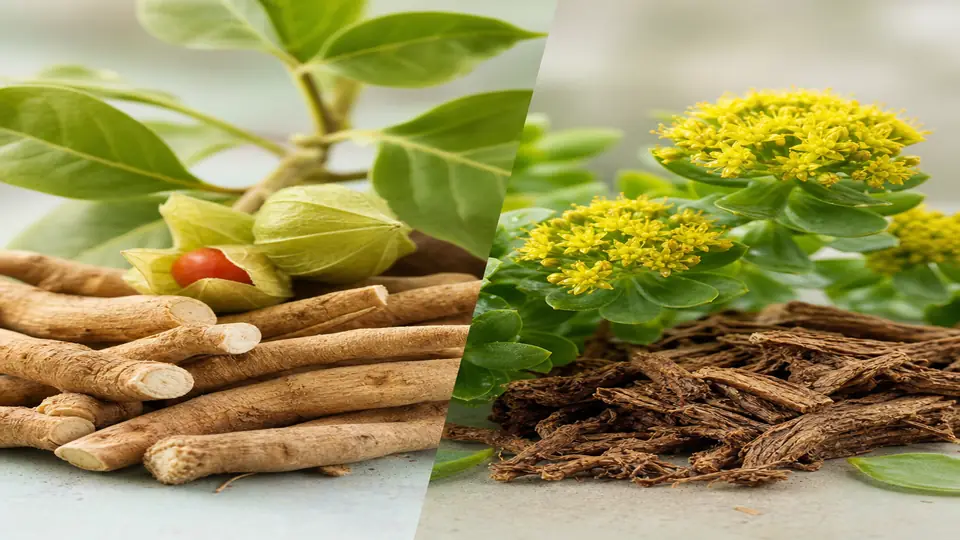

At a Glance
| Factor | Details |
|---|---|
| Botanical name | Withania somnifera |
| Active constituents | Withanolides (withaferine A), alkaloids, sitoindosides |
| Key safety concern | Thyroid stimulation, hepatotoxicity (rare), immunomodulation |
| Pregnancy | Contraindicated — uterine-stimulating activity |
| Autoimmune disease | Caution; can exacerbate flares in active disease |
| Drug interactions | Sedatives, thyroid hormones, immunosuppressants |
| Evidence level | Moderate for benefits; case reports for rare harms |
| Monitoring recommended for | Thyroid patients, those on sedatives, liver disease |
Ashwagandha (Withania somnifera) has earned a reputation as one of the most evidence-backed adaptogens in integrative medicine. Clinical trials support its use for cortisol reduction, stress resilience, thyroid support in subclinical hypothyroidism, and even muscle strength. In my practice, I use it routinely — but not universally. A meaningful subset of patients should not take ashwagandha, or should only do so under close monitoring. This guide covers the clinical contraindications I apply, the drug interactions that matter, and the populations who need individualized evaluation before starting.
1. Pregnancy and Breastfeeding
Contraindication: Absolute in pregnancy.
This is the clearest contraindication. Ashwagandha has demonstrated uterine-stimulating (abortifacient) activity in animal studies. Withania somnifera alkaloids can promote uterine contractions, raising the risk of miscarriage or preterm labor. Traditional Ayurvedic use actually lists ashwagandha as an emmenagogue — a substance used to stimulate menstrual flow — which underscores the mechanism.
There are no controlled human safety trials in pregnancy, and case reports do not justify extrapolation in the other direction. Until prospective data exists, the risk-benefit calculation is straightforward: the supplement is not indicated for any pregnancy-specific condition, so the risk is unacceptable.
For breastfeeding, data are absent. Given that withanolides cross into breast milk in animal models, I advise against use in lactating women as well.
2. Thyroid Disease: Use With Monitoring, Not Freely
Ashwagandha stimulates thyroid function. Multiple RCTs confirm this effect in adults with subclinical hypothyroidism: eight to twelve weeks of supplementation raises free T4 and T3, and reduces TSH. This sounds beneficial for undertreated hypothyroidism — and in that context, it often is.
The risk arises in two populations:
Hyperthyroidism or Graves’ disease. Stimulating an already-overactive thyroid gland can trigger thyrotoxicosis. I have seen cases where ashwagandha triggered palpitations, insomnia, and heat intolerance in patients with treated but borderline Graves’ disease. Even in remission, the thyroid-stimulating action is a meaningful risk.
Patients on levothyroxine or other thyroid medications. Ashwagandha’s thyroid-stimulating effects can add to the medication’s action, pushing patients into subclinical hyperthyroidism. A previously stable TSH of 1.2 can shift to 0.2 after three months of ashwagandha without any dose change to the medication. Monitoring TSH at six and twelve weeks after starting is mandatory in this group.
For patients with Hashimoto’s thyroiditis who are euthyroid without medication, ashwagandha is generally lower-risk but should still be introduced gradually with thyroid panel checks.
3. Autoimmune Disease: Nuanced Risk
Ashwagandha is classified as an immunomodulator, not purely an immunosuppressant or immunostimulant. It upregulates natural killer (NK) cell activity, enhances Th1 responses, and raises immunoglobulin levels. For healthy individuals and those with chronic infections, this is typically beneficial. For patients with overactive autoimmune conditions, the picture is more complicated.
Conditions where I exercise caution:
- Rheumatoid arthritis (active flare): Enhanced Th1 and NK activity can worsen joint inflammation. During remission, ashwagandha may actually benefit fatigue and muscle loss, but timing matters.
- Systemic lupus erythematosus (SLE): Immune stimulation in SLE is generally contraindicated during active disease. Some integrative protocols use ashwagandha in stable SLE with monitoring, but this should not be self-initiated.
- Multiple sclerosis: Withaferine A modulates myeloid and T-cell populations in directions that could be either helpful or harmful depending on disease phase. Evidence is insufficient to recommend without specialist oversight.
- Inflammatory bowel disease (Crohn’s, ulcerative colitis): Moderate. Ashwagandha’s anti-inflammatory properties may help, but GI motility effects and immune stimulation in flares require individualized assessment.
Patients on biologics (anti-TNF agents, IL-17 inhibitors, JAK inhibitors) or other disease-modifying antirheumatic drugs (DMARDs) should not add ashwagandha without coordination with their rheumatologist. Theoretical pharmacodynamic interactions exist, and the combination has not been studied.
4. Drug Interactions
4a. Sedatives and Central Nervous System Depressants
Ashwagandha has GABAergic activity — it potentiates GABA-A receptors, contributing to its anxiolytic and sleep-supporting effects. This mechanism creates an additive interaction with:
- Benzodiazepines (diazepam, lorazepam, clonazepam)
- Z-drugs (zolpidem, zopiclone)
- Barbiturates
- Opioids
- Alcohol
- Anticonvulsants with sedative properties (valproate, gabapentin)
In clinical terms, patients taking any of the above who add ashwagandha may experience excessive sedation, cognitive slowing, or impaired coordination. I advise patients on these medications to start at half the standard dose if we decide to proceed at all, and to never combine with alcohol.
4b. Thyroid Medications
As discussed above: levothyroxine, liothyronine, and combination T4/T3 preparations interact pharmacodynamically with ashwagandha. Dose adjustments may be necessary, and TSH monitoring is non-negotiable.
4c. Immunosuppressants
Cyclosporine, tacrolimus, mycophenolate, and corticosteroids used post-transplant or for autoimmune disease may be antagonized by ashwagandha’s immune-stimulating activity. There is also a potential pharmacokinetic interaction via CYP450 modulation — withanolides appear to inhibit CYP3A4 modestly, which metabolizes cyclosporine and tacrolimus. Even small shifts in blood levels of these medications have clinical consequences.
Transplant patients should not use ashwagandha without explicit guidance from their transplant team.
4d. Antihypertensives and Antidiabetics
Ashwagandha has modest blood-pressure-lowering and blood-glucose-lowering effects. In patients on antihypertensives or insulin/oral hypoglycaemics, additive effects can lead to hypotension or hypoglycaemia. This rarely requires avoiding ashwagandha entirely, but blood pressure and glucose monitoring should be stepped up during the first four to six weeks.
5. Liver Disease: Rare but Real Hepatotoxicity
There are over thirty published case reports and small case series documenting ashwagandha-associated liver injury, ranging from cholestatic hepatitis to fulminant hepatic failure requiring transplantation. Most cases resolved on discontinuation; some did not. The mechanism appears to involve idiosyncratic hepatotoxicity — probably immunological — rather than dose-dependent toxicity, which means it cannot simply be avoided by using lower doses.
Risk factors for hepatotoxicity are not well characterized. Proposed contributors include:
- Pre-existing liver disease (viral hepatitis, NAFLD/NASH, alcohol-related liver disease)
- High-dose or prolonged use (>600 mg withanolides per day)
- Concurrent hepatotoxic medications (statins, NSAIDs, antifungals, acetaminophen)
- Use of extract concentrations significantly above what was tested in RCTs
My clinical approach: I do not prescribe ashwagandha to patients with cirrhosis, active hepatitis, significantly elevated baseline transaminases (>2× ULN), or those on multiple hepatotoxic drugs. For everyone else, I recommend baseline and three-month liver function tests (ALT, AST, bilirubin) with longer-term supplementation.
Patients should be advised to discontinue immediately and seek evaluation if they develop jaundice, dark urine, right upper-quadrant pain, or unexplained fatigue — symptoms of potential drug-induced liver injury.
6. Perioperative Use
Ashwagandha should be discontinued at least two weeks before elective surgery due to:
- CNS depression potentiation: Risk of excessive sedation with anesthetics
- Hypotensive effects: May interact with vasopressors and anesthetic agents to cause intraoperative hypotension
- Potential anticoagulant effects: Weak platelet-modulating activity; not enough to require longer cessation, but warrants flagging
This is standard integrative pre-operative guidance — similar to what I recommend for fish oil, high-dose vitamin E, and herbal blood thinners.
7. Populations Who Warrant Individualized Assessment
These groups are not blanket contraindications but require clinical evaluation before starting:
- Men on testosterone replacement therapy (TRT): Ashwagandha raises endogenous testosterone via LH stimulation. Combined with exogenous testosterone, this can push hematocrit and DHT into problematic ranges. Monitoring is required.
- Patients with nightshade sensitivities: Ashwagandha belongs to the Solanaceae (nightshade) family. True nightshade allergies are rare but documented. Anaphylaxis has been reported.
- Children and adolescents: Insufficient data for formal recommendations. Avoid in children under 12; use with caution in adolescents only when clinically indicated.
- Elderly patients on polypharmacy: Multiple pharmacodynamic interactions stack; start at 150–300 mg/day with close monitoring.
Related Articles
- Ashwagandha for Cortisol: Clinical Evidence and Dosing: what the data actually show for HPA-axis regulation
- Ashwagandha vs. Rhodiola: Which Adaptogen for Which Patient?: comparing mechanisms, populations, and use cases
- Ashwagandha: Complete Physician Guide: full overview including benefits, dosing, and formulation
- Drug–Supplement Interactions: What Labs to Monitor: broader framework for tracking supplement safety in complex patients
- Protocols for Ozone Therapy: Risks and Contraindications: parallel safety analysis for another commonly misused integrative therapy
References
- Chandrasekhar K, et al. A prospective, randomized double-blind, placebo-controlled study of safety and efficacy of a high-concentration full-spectrum extract of ashwagandha root. Indian J Psychol Med. 2012;34(3):255–262. PMID: 23439798
- Sharma AK, et al. Efficacy and safety of ashwagandha root extract in subclinical hypothyroid patients. J Altern Complement Med. 2018;24(3):243–248. PMID: 28829155
- Björnsson HK, et al. Ashwagandha-induced liver injury: a case series from Iceland and the US Drug-Induced Liver Injury Network. Liver Int. 2020;40(4):825–829. PMID 31991029
- Verma N, et al. Safety of ashwagandha root extract: A randomized, placebo-controlled, study in healthy volunteers. Complement Ther Med. 2021;57:102642. PMID 33338583
- Pratte MA, et al. An alternative treatment for anxiety: A systematic review of human trial results reported for the Ayurvedic herb ashwagandha. J Altern Complement Med. 2014;20(12):901–908. PMID: 25405876
- Durg S, et al. Withania somnifera (Indian ginseng) in male infertility: An evidence-based systematic review and meta-analysis. Phytomedicine. 2018;50:247–256. PMID 30466985
- Tóth BI, et al. Non-neuronal cannabinoid receptors modulate the activity of primary sensory neurons. Neuroscience. 2009. [Context: GABAergic mechanism of withanolides]