At a Glance
| Parameter | Detail |
|---|---|
| Herb | Withania somnifera (Ashwagandha) |
| Key extracts | KSM-66 (root), Sensoril (root + leaf) |
| Active compounds | Withanolides, withaferin A, sitoindosides |
| Primary mechanism | HPA axis modulation, GABAergic activity |
| Cortisol reduction | ~23–30% vs. placebo in RCTs |
| Effective dose | 300–600 mg standardized extract/day |
| Onset | 2–4 weeks subjective; 6–8 weeks biochemical |
| Evidence grade | B (multiple RCTs, consistent effect, moderate N) |
| Safety | Well-tolerated; rare thyroid and hepatic concerns |
For patients combining adaptogenic support with autonomic retraining, vagus nerve stimulation for anxiety provides a complementary physiological approach to reducing chronic sympathetic drive.
For patients deciding between ashwagandha and other adaptogens, a direct comparison of mechanisms and use cases is available in Ashwagandha vs Rhodiola Rosea: Which Adaptogen Is Right for You?.
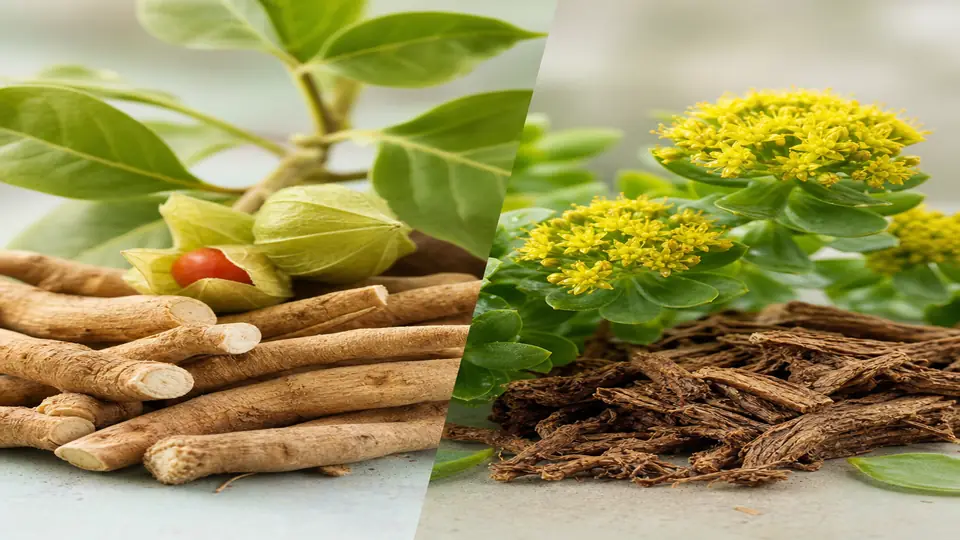
Cortisol dysregulation sits at the intersection of almost every chronic condition I see in clinical practice — from post-infectious fatigue to autoimmune flares to sleep-onset insomnia. Patients arrive with flattened diurnal curves, blunted awakening responses, or chronically elevated evening cortisol, and they want something beyond “reduce your stress.” Understanding the precise cortisol pattern — flat, inverted, or globally elevated — is best done with 4-point salivary cortisol and DHEA-S testing, and helps determine where ashwagandha fits in the protocol. Ashwagandha (Withania somnifera) is, alongside tongkat ali, one of the few adaptogens with enough randomized controlled trial data to warrant a real clinical conversation rather than a polite nod.
This article walks through the mechanism, the evidence quality, how I actually use it, and the safety nuances that most online guides miss.
How Ashwagandha Modulates the HPA Axis
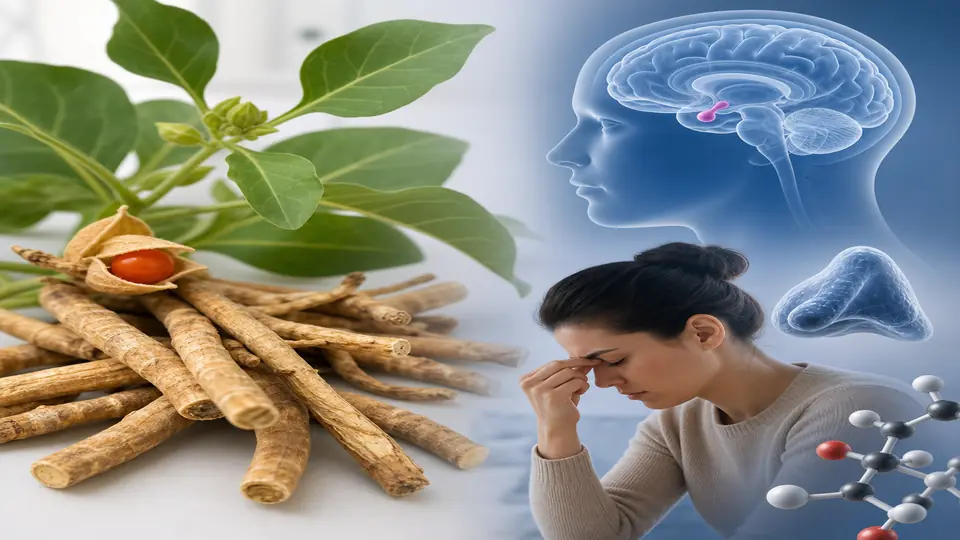
The hypothalamic–pituitary–adrenal (HPA) axis is the body’s core stress-response circuit. Chronic activation — from infection, sleep deprivation, psychological load, or inflammatory disease — produces sustained high cortisol, which then feeds back to suppress immunity, degrade muscle, impair memory consolidation, and disrupt metabolic signaling.
Ashwagandha’s effects on this axis appear to be multifactorial:
1. Withanolides and stress-signaling pathways The primary bioactive compounds, withanolides, are steroidal lactones that modulate the activity of heat-shock proteins (particularly Hsp70 and Hsp90) involved in glucocorticoid receptor sensitivity. By normalizing receptor function rather than simply blocking cortisol synthesis, the herb allows appropriate stress responses while dampening maladaptive chronic elevation.
2. GABAergic modulation Withanolide A has demonstrated affinity for GABA-A receptors in preclinical models, which partially explains the anxiolytic effects seen clinically. This is relevant because anxiety and perceived stress are among the most reliable predictors of elevated cortisol — calming the CNS reduces upstream HPA drive.
3. Adrenal steroidogenesis Animal and in-vitro data suggest withaferin A can reduce adrenocortical output directly, though this pathway is less well validated in humans. The clinical signal appears to be upstream CNS modulation more than direct adrenal suppression. Worth noting: DHEA is produced in the same adrenal zone (zona reticularis) and undergoes its own steep age-related decline independent of cortisol—patients with HPA dysfunction frequently show a suppressed DHEA:cortisol ratio that warrants separate evaluation and targeted support.
4. Inflammatory cytokine reduction NF-κB inhibition by withaferin A reduces IL-6, TNF-α, and CRP — each of which can independently stimulate HPA axis activity. In chronically ill patients, this downstream anti-inflammatory effect may contribute as much to cortisol normalization as the direct adaptogenic action.
The Clinical Trial Evidence
Randomized Controlled Trials on Cortisol
The landmark study that put ashwagandha on my radar was Chandrasekhar et al. (2012), published in the Indian Journal of Psychological Medicine. Adults with chronic stress received KSM-66 at 300 mg twice daily for 60 days. Serum cortisol fell 27.9% versus 7.9% in the placebo group (p < 0.0001). Importantly, this was morning cortisol — the clinically most relevant measurement for HPA axis tone.
A 2019 RCT by Salve et al. (Cureus) using 240 mg Sensoril daily for 60 days found a 23% cortisol reduction alongside significant improvements in sleep quality (Pittsburgh Sleep Quality Index) and self-reported stress. The dose here was notably lower than the Chandrasekhar study, suggesting that high-quality extracts provide effect even below the often-cited 600 mg/day ceiling.
Pratte et al. (2014) and Choudhary et al. (2017) replicated the cortisol-lowering finding across different populations (healthy adults under work stress; adults with anxiety and insomnia respectively), cementing the cross-population consistency that upgrades the evidence from “promising” to “clinically actionable.”
What the Trials Do NOT Show
I want to be precise about what the evidence does and doesn’t support:
- Adrenal fatigue: This is not a validated endocrine diagnosis. Ashwagandha is not a treatment for adrenal insufficiency (Addison’s disease) — those patients need hormone replacement, not an adaptogen.
- Cortisol in physiological range: If a patient has normal cortisol at baseline, the cortisol-lowering effect is attenuated. Ashwagandha appears to be buffering effect — most effective in the high-normal to elevated range.
- Acute stress: Most trials are 8–12 weeks. Single-dose or acute-stress paradigm data are limited and inconsistent.
Extract Quality Matters Enormously
KSM-66 vs. Sensoril vs. Bulk Powder
This is where the supplement industry complicates the clinical conversation. “Ashwagandha” sold online ranges from standardized, third-party tested root extract to raw powdered herb with unknown withanolide content.
KSM-66 (Ixoreal Biomed) is a root-only extract standardized to ≥5% withanolides. It’s the extract used in most of the human RCTs and is my default recommendation.
Sensoril (Natreon) uses both root and leaf, standardized to ≥10% withanolides and ≥32% oligosaccharides. The higher withanolide density means effective doses are lower (125–250 mg), but leaf extracts contain higher withaferin A concentrations — relevant for the hepatotoxicity considerations below.
Bulk/generic powder: Withanolide content is often unverified, ranging from <1% to >3%. Without standardization, dosing is guesswork. I don’t use these in clinical recommendations.
Formulation Tip
Most KSM-66 products are in capsule form. Bioavailability does not appear to require fat co-administration, unlike fat-soluble adaptogens, though some data suggests mild improvement with a light meal.
Dosing, Timing, and Duration
Dose Range
- Minimum effective dose: 240 mg Sensoril or 300 mg KSM-66 daily
- Standard dose: 300–600 mg KSM-66 daily; 250–500 mg Sensoril daily
- Upper studied range: 600 mg KSM-66 BID (1,200 mg/day) — used in athletic performance trials; not necessary for HPA axis modulation
Timing
Evening dosing is my clinical preference for cortisol dysregulation. Evening cortisol is most disruptive to sleep architecture, and taking ashwagandha 30–60 minutes before bed targets this window. Some patients with morning anxiety do better with split dosing (morning + evening).
Duration
- Subjective improvement (mood, sleep onset, perceived stress): 2–4 weeks
- Measurable cortisol change: 6–8 weeks in most trials
- Sustained use: 3–6 month courses are typical in my practice, followed by a 4–8 week washout to assess baseline and prevent tolerance (though tolerance data in humans is limited)
Who I Prescribe It For — and Who I Don’t
Good Candidates
- Chronic stress with confirmed elevated/dysregulated cortisol on a 4-point salivary cortisol panel
- Insomnia with racing thoughts and difficulty initiating sleep
- Post-infectious fatigue (particularly post-COVID, post-Lyme) with blunted morning awakening cortisol response
- HPA axis recovery following prolonged corticosteroid use
- Athletes in overtraining with elevated resting cortisol and impaired recovery
Caution or Avoidance
Thyroid conditions: Ashwagandha increases T3 and T4 in some studies, likely via thyroid-stimulating pathways. In euthyroid patients this is usually clinically irrelevant, but in patients on levothyroxine or those with subclinical hyperthyroidism, monitor thyroid panel at 6–8 weeks.
Autoimmune disease: Ashwagandha has immune-stimulating properties via Th1 upregulation. In patients with active autoimmune flares, this could theoretically worsen inflammation. In stable autoimmune patients, the anti-inflammatory withanolide effects may be beneficial — but I proceed cautiously and monitor.
Pregnancy: Traditionally used as an abortifacient in Ayurvedic texts; avoid in pregnancy.
Hepatotoxicity: Rare but documented cases of cholestatic liver injury have been reported, predominantly with high-dose, prolonged leaf-containing extracts. Check baseline LFTs in anyone with known liver disease; monitor at 8–12 weeks if using Sensoril at higher doses.
Sedative drug interactions: GABAergic activity means potential additive sedation with benzodiazepines, z-drugs, or opioids. Use with awareness in these patients.
For a full clinical review of contraindications, drug interactions, and which patient groups should avoid ashwagandha entirely, see Ashwagandha Contraindications: Who Should NOT Take It.
Integrating Ashwagandha Into a Broader Stress Protocol
In my practice, ashwagandha rarely stands alone. Cortisol dysregulation is a systems-level problem, and addressing only one node has limited ceiling. The typical integrative stack I build around it includes:
- Magnesium glycinate (300–400 mg at night): Reduces NMDA-mediated excitatory tone, improves sleep architecture, and is depleted by chronic stress
- Phosphatidylserine (400–600 mg/day): Blunts cortisol response to exercise and acute stress; additive with ashwagandha in multiple trials
- L-theanine (200 mg): Fast-acting anxiolytic without sedation; useful for daytime anxiety while ashwagandha builds over weeks
- Myo-inositol (2–4 g/day): Particularly useful when anxiety co-presents with hormonal imbalance or insulin resistance; works via PI3K serotonin-receptor signalling rather than GABA or HPA pathways, making it a genuinely additive option.
- Salivary cortisol panel (4-point): Baseline and 8-week follow-up; without data we’re guessing
For patients with severe HPA dysregulation — particularly those recovering from chronic infection, mold illness, or prolonged psychological trauma — I often combine ashwagandha with structured lifestyle interventions (zone 2 cardio, sleep hygiene protocols, cold exposure) before considering pharmaceutical options. In this subset, measuring the full steroid hormone cascade — including pregnenolone, the upstream precursor to both cortisol and DHEA — frequently reveals depletion that adaptogen support alone cannot fully address. For the wired-and-tired variant — fatigue with preserved anxiety and morning grogginess — Rhodiola rosea complements ashwagandha well: taken in the morning for its mild stimulant and monoamine-modulating properties while ashwagandha anchors the evening cortisol taper.
Related Articles
- Magnesium and Sleep: Which Form, What Dose, When to Take It — magnesium is the most complementary co-supplement for cortisol-driven insomnia
- Berberine vs. Metformin: A Physician’s Comparison — another evidence-backed supplement often paired for metabolic stress patterns
- Longevity Stack: The Supplements I Actually Take — how adaptogens fit into a broader evidence-based longevity protocol
- Post-COVID Brain Fog: HPA Axis and Neuroinflammation — cortisol dysregulation as a driver of persistent post-COVID symptoms
- Sleep Optimization Protocol — full protocol context for sleep recovery
References
-
Chandrasekhar K, Kapoor J, Anishetty S. A prospective, randomized double-blind, placebo-controlled study of safety and efficacy of a high-concentration full-spectrum extract of Ashwagandha root in reducing stress and anxiety in adults. Indian J Psychol Med. 2012;34(3):255–262. PMID 23439798
-
Salve J, Pate S, Debnath K, Langade D. Adaptogenic and Anxiolytic Effects of Ashwagandha Root Extract in Healthy Adults: A Double-blind, Randomized, Placebo-controlled Clinical Study. Cureus. 2019;11(12):e6466. PMID 32021735
-
Pratte MA, Nanavati KB, Young V, Morley CP. An alternative treatment for anxiety: a systematic review of human trial results reported for the Ayurvedic herb ashwagandha. J Altern Complement Med. 2014;20(12):901–908. PMID 25405876
-
Choudhary D, Bhattacharyya S, Joshi K. Body Weight Management in Adults Under Chronic Stress Through Treatment With Ashwagandha Root Extract: A Double-Blind, Randomized, Placebo-Controlled Trial. J Evid Based Complementary Altern Med. 2017;22(1):96–106. PMID 26609282
-
Verma N, Gupta SK, Tiwari S, Mishra AK. Safety of Ashwagandha Root Extract: A Randomized, Placebo-Controlled, study in Healthy Volunteers. Complement Ther Med. 2021;57:102642. PMID 33388582
-
Remenapp A, Coyle K, Orange T, et al. Efficacy of Withania somnifera supplementation on adult’s cognition and mood. J Ayurveda Integr Med. 2022;13(2):100510. PMID 35092701
-
Lopresti AL, Smith SJ, Malvi H, Kodgule R. An investigation into the stress-relieving and pharmacological actions of an ashwagandha extract. Medicine (Baltimore). 2019;98(37):e17186. PMID 31517876