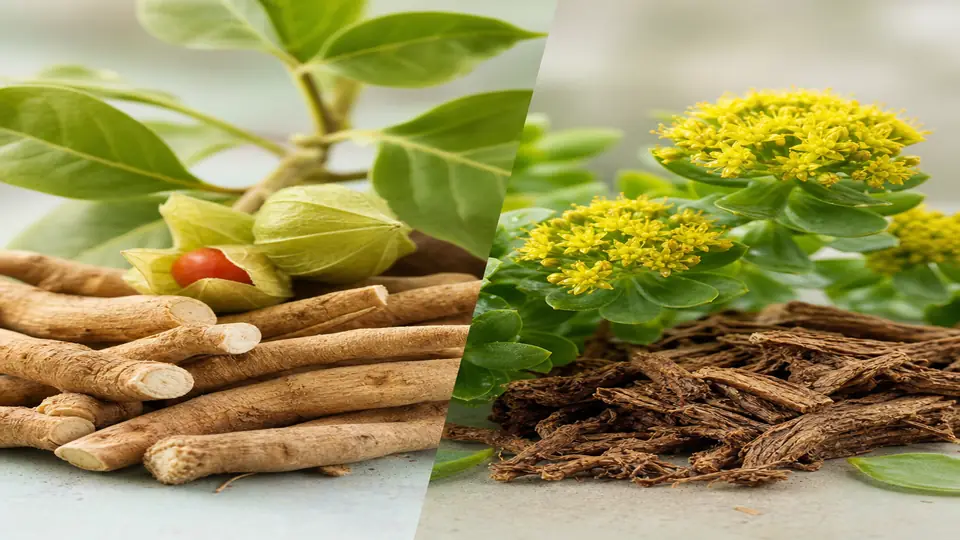
At a Glance
| Feature | Ashwagandha | Rhodiola Rosea |
|---|---|---|
| Primary action | HPA axis downregulation | HPA axis modulation + stimulant |
| Best for | Chronic stress, anxiety, sleep, low T | Acute stress, mental fatigue, endurance |
| Active compounds | Withanolides (KSM-66, Sensoril) | Rosavins + salidroside |
| Onset | 4–8 weeks | 30–60 minutes to a few days |
| Dosing range | 300–600 mg/day | 200–400 mg/day |
| Stimulating? | No — sedating tendency | Yes — avoid evening use |
| Evidence quality | RCT-supported (cortisol, testosterone) | RCT-supported (fatigue, cognition) |
| Drug interactions | Thyroid hormones, sedatives | MAOIs, stimulants (theoretical) |
| Can you stack? | Yes, but timing matters | Yes, taken AM before ashwagandha PM |
Adaptogens are among the most misused supplements in integrative medicine — patients often arrive having taken both ashwagandha and rhodiola simultaneously without understanding why. In clinical practice, the distinction matters: these two herbs act on overlapping but distinct axes, and choosing the wrong one for the wrong phenotype can make fatigue worse, not better. This article gives you the mechanistic framework and clinical decision tree I use when a patient asks which adaptogen they should prioritize.
Mechanisms: How Each Herb Works
Ashwagandha (Withania somnifera)
Ashwagandha’s pharmacology centres on withanolides — steroidal lactones that modulate the hypothalamic-pituitary-adrenal (HPA) axis primarily through a downregulating mechanism. The most studied extracts (KSM-66 and Sensoril) have demonstrated:
- Cortisol suppression: Meta-analyses consistently show 11–32% reductions in serum cortisol with 300–600 mg daily over 8 weeks.
- GABA-A receptor modulation: Withanolide A acts as a partial GABA-A agonist, contributing to anxiolytic and sleep-promoting effects without the tolerance issues of benzodiazepines.
- Testosterone support: Several RCTs show modest increases in serum testosterone (14–17%) in men under chronic stress, mediated partly by LH sensitization and partly by reducing cortisol’s suppressive effect on the HPG axis.
- Thyroid axis: Ashwagandha appears to modestly increase T3 and T4 in subclinical hypothyroidism — relevant context for dosing adjustments in patients on levothyroxine.
The net physiological direction is parasympathetic predominance: calming, anabolic, restorative.
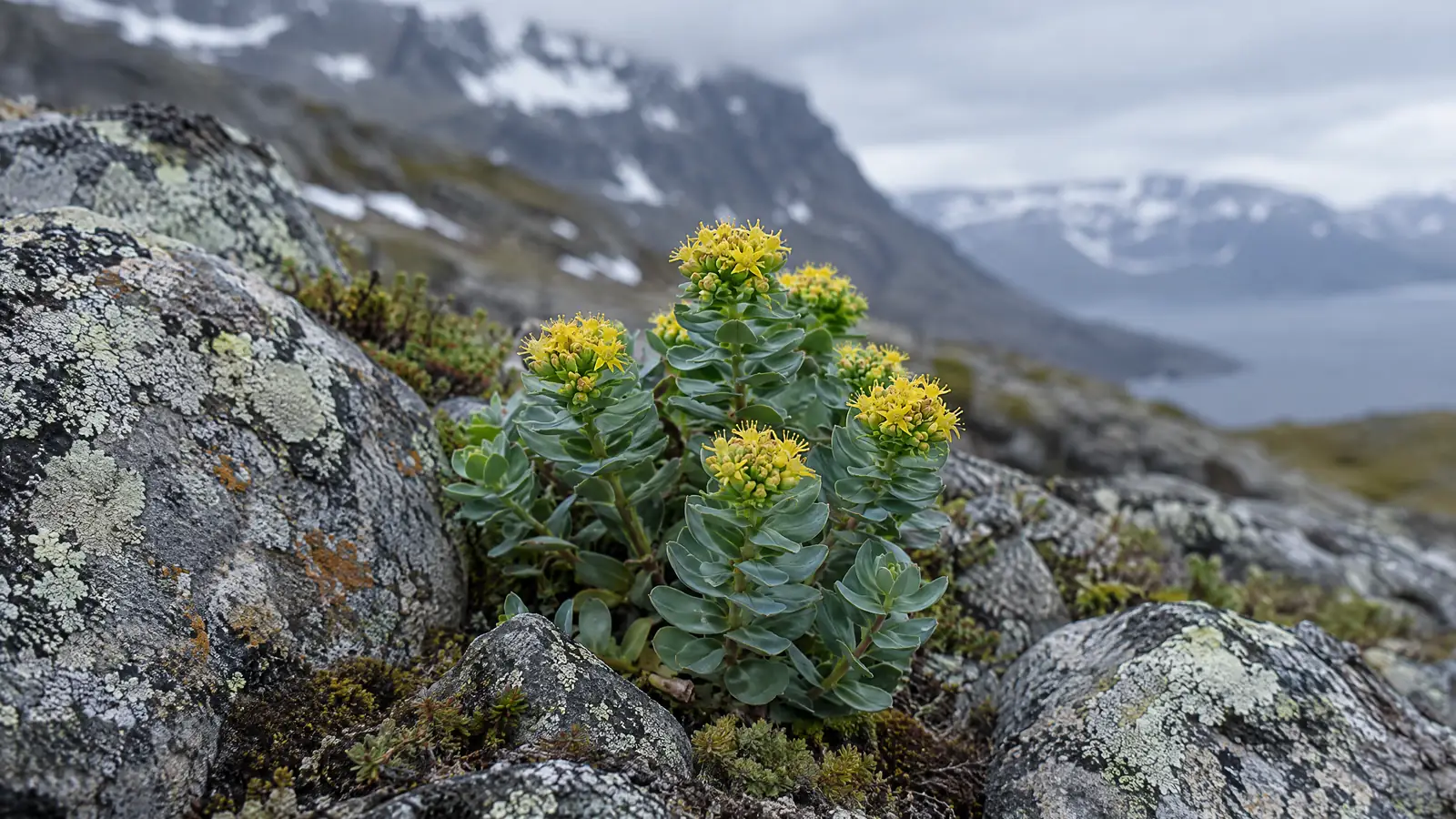
Rhodiola Rosea
Rhodiola’s activity is more complex because it operates through at least two distinct active compound classes — rosavins (specific to R. rosea) and salidroside (present across rosea and other species). Together they:
- Inhibit MAO-A and MAO-B mildly, increasing serotonin and dopamine bioavailability — the likely mechanism behind mood and endurance benefits.
- Activate AMPK in skeletal muscle, improving mitochondrial efficiency and fatty acid oxidation.
- Modulate the stress protein HSP70: Rhodiola upregulates heat shock proteins that protect cells during acute stressors, different from the cortisol-suppression approach of ashwagandha.
- Reduce reactive oxygen species: Salidroside is a potent antioxidant with neuroprotective properties in neuroinflammatory models.
The net direction is stimulatory-adaptive: alerting, ergogenic, mentally sharpening — without the adrenaline spike of caffeine.
Clinical Use Cases: Who Benefits from Which
Choose Ashwagandha When:
1. The primary complaint is chronic, sustained stress with anxiety When a patient describes persistent tension, a wound-up nervous system, difficulty switching off, and disturbed sleep — this is a cortisol-excess picture. Ashwagandha’s GABA-A modulation and cortisol-lowering effects address the root cause rather than masking it.
2. Subclinical hypogonadism in men under chronic stress I routinely check morning cortisol alongside testosterone. When cortisol is elevated (>18 µg/dL morning) and testosterone is low-normal, ashwagandha can meaningfully shift both markers before considering TRT. This is documented in the Wankhede et al. (2015) RCT showing improved serum testosterone and reproductive hormone levels in men taking KSM-66.
3. Sleep architecture disruption Ashwagandha’s glycowithanolide fraction has been shown in RCTs to improve sleep onset latency and slow-wave sleep quality. Rhodiola — being mildly stimulating — worsens sleep when taken too late in the day.
4. Post-infectious fatigue recovery After Lyme disease, long COVID, or EBV reactivation, the HPA axis is often dysregulated in the direction of hyper-activation. Ashwagandha’s calming, anti-inflammatory properties support recovery better than a stimulant-leaning adaptogen.
Choose Rhodiola When:
1. Burnout with pronounced mental fatigue and cognitive dulling Rhodiola’s MAO-inhibiting properties improve dopaminergic tone — addressing the flat, unmotivated, “brain fog” quality of burnout more directly than ashwagandha.
2. Physical endurance and athletic performance Multiple RCTs in cyclists and runners show rhodiola reduces perceived exertion and time-to-exhaustion. The AMPK activation and lactate-clearance improvements are well-supported. For athletes, rhodiola is typically more appropriate than ashwagandha pre-performance.
3. Acute situational stress (exam, presentation, travel) Because rhodiola has a meaningful acute effect (onset within 30–60 minutes at 200–400 mg), it can be used situationally before high-stakes events. Ashwagandha requires weeks of loading and is not useful acutely.
4. Depression with energy depletion In mild-to-moderate depression presenting with fatigue and anhedonia — particularly in patients who cannot tolerate SSRIs — rhodiola’s monoamine modulation offers a clinically relevant alternative. The Darbinyan et al. (2007) RCT showed significant antidepressant effect vs. placebo in a 6-week trial.
Dosing Protocols
Ashwagandha
- Standard dose: 300–600 mg/day of a root extract standardized to ≥5% withanolides (KSM-66 or Sensoril)
- Timing: Evening preferred: the GABAergic component supports sleep; split dosing (morning + evening) is acceptable
- Duration: Minimum 4 weeks to assess cortisol response; typical therapeutic window is 8–12 weeks
- Cycling: Not strictly necessary but reasonable to cycle 8 weeks on / 4 weeks off in long-term use
- Avoid in: Autoimmune conditions requiring immunosuppression (ashwagandha is immunostimulant); pregnancy; active thyroid disorders without physician monitoring
Rhodiola
- Standard dose: 200–400 mg/day of an extract standardized to ≥3% rosavins and ≥1% salidroside (classic 3:1 ratio)
- Timing: Morning, fasted, or at least 30 minutes before food for best bioavailability — never in the evening
- For acute use: 200–400 mg 30–60 minutes before the stressor
- Duration: Benefits are apparent within days; 4–6 weeks for sustained effects
- Avoid in: Patients on MAOIs; those with bipolar disorder (activating effect); evening use in insomniacs
Can You Take Both? Stacking Considerations
Yes — with attention to timing and patient phenotype. The theoretical rationale for stacking is that ashwagandha’s evening HPA downregulation and rhodiola’s daytime stimulatory support address different phases of the stress cycle.
A practical stacking protocol I use in clinic:
- Rhodiola 200 mg in the morning (fasted)
- Ashwagandha 300 mg KSM-66 in the evening with dinner or before bed
Who NOT to stack:
- Patients with thyroid instability: two herbs with thyroid-modulating properties warrant lab monitoring
- Patients on antidepressants: rhodiola’s MAO-A inhibition creates theoretical serotonin syndrome risk with SSRIs/SNRIs, though clinical cases are rare
- Those in acute burnout: starting both simultaneously makes it impossible to identify which is helping or causing side effects
Biomarker Monitoring
If you’re using these herbs therapeutically (not just casually), baseline and follow-up labs are useful:
| Marker | Relevance |
|---|---|
| Morning cortisol (serum or saliva) | Primary ashwagandha response marker |
| DHEA-S | Often low in adrenal fatigue; ashwagandha may improve |
| Free + total testosterone | For male hypogonadism use cases |
| TSH, free T3, free T4 | Thyroid — monitor if dose-adjusting levothyroxine |
| 4-point salivary cortisol curve | Best assessment of diurnal HPA axis pattern |
A 4-point salivary cortisol curve (waking, noon, 4 PM, bedtime) provides the most nuanced picture of which adaptogen is appropriate: elevated morning cortisol with normal bedtime cortisol suggests rhodiola is unnecessary; elevated bedtime cortisol with normal morning suggests ashwagandha evening dosing is the priority.
Quality and Sourcing: What to Look For
Not all extracts are equivalent. The clinical trial data is predominantly from:
- Ashwagandha: KSM-66 (Ixoreal) and Sensoril (Natreon): both are root-only, standardized to ≥5% withanolides
- Rhodiola: Extracts from Rhodiola rosea (not other rosea species) standardized to ≥3% rosavins + ≥1% salidroside
Generic “500 mg ashwagandha powder” or non-standardized rhodiola are frequently underdosed or mislabeled. Third-party certification (NSF, USP, Informed-Sport) is the minimum bar for patients in therapeutic contexts.
Related Articles
- Ashwagandha for Cortisol Reduction: What the Evidence Shows: deep dive into HPA axis modulation with ashwagandha
- Rhodiola Rosea: Physician’s Review of Evidence and Protocols: standalone pharmacology and dosing review
- Magnesium and Sleep: The Most Overlooked Recovery Supplement: synergistic with evening ashwagandha for sleep quality
- Diagnostics: HPA Axis Dysfunction Testing: how to assess adrenal fatigue before choosing an adaptogen
- Anti-Aging Supplements: A Physician’s Personal Stack: where adaptogens fit in a broader longevity protocol
References
- Chandrasekhar K, Kapoor J, Anishetty S. A prospective, randomized double-blind, placebo-controlled study of safety and efficacy of a high-concentration full-spectrum extract of Ashwagandha root in reducing stress and anxiety in adults. Indian J Psychol Med. 2012;34(3):255-262. PMID: 23439798
- Wankhede S, Langade D, Joshi K, et al. Examining the effect of Withania somnifera supplementation on muscle strength and recovery. J Int Soc Sports Nutr. 2015;12:43. PMID: 26609282
- Darbinyan V, Aslanyan G, Amroyan E, et al. Clinical trial of Rhodiola rosea L. extract SHR-5 in the treatment of mild to moderate depression. Nord J Psychiatry. 2007;61(5):343-348. PMID: 17990195
- De Bock K, Eijnde BO, Ramaekers M, et al. Acute Rhodiola rosea intake can improve endurance exercise performance. Int J Sport Nutr Exerc Metab. 2004;14(3):298-307. PMID: 15256690
- Auddy B, Hazra J, Mitra A, et al. A standardized Withania somnifera extract significantly reduces stress-related parameters in chronically stressed humans. JANA. 2008;11(1):50-56.
- Olsson EM, von Schéele B, Panossian AG. A randomised, double-blind, placebo-controlled, parallel-group study of the standardised extract SHR-5 of the roots of Rhodiola rosea in the treatment of subjects with stress-related fatigue. Planta Med. 2009;75(2):105-112. PMID: 19016404
- Pratte MA, Nanavati KB, Young V, Morley CP. An alternative treatment for anxiety: a systematic review of human trial results reported for the Ayurvedic herb ashwagandha (Withania somnifera). J Altern Complement Med. 2014;20(12):901-908. PMID: 25405876