A map is useful when you know what it can and cannot show. The hallmarks of aging are the most widely used map of why bodies age. First proposed by López-Otín and colleagues in 2013 with nine hallmarks, the framework was expanded in January 2023 to twelve (López-Otín 2023). This article goes through each one: what it is, whether it can be measured in a clinic today, and how strong the evidence is for the interventions that target it.
Every intervention carries a label. Established means consistent human outcome data. Emerging means real but early human signals, often on surrogate markers. Hypothesis means plausible reasoning without human proof. Preclinical only means animal or cell data. Not recommended outside trials is used where the risks or the evidence gap are large.
At a Glance
| Question | Short answer |
|---|---|
| What it is | A consensus framework of 12 interconnected processes that drive aging (López-Otín, Cell 2023) |
| What it is not | A diagnostic panel or a treatment menu |
| How strong is it? | Strong as a research map; each hallmark meets three criteria, mostly shown in animal models |
| Measurable in the clinic | Partly: nutrient sensing, fitness and inflammation have useful proxies; several hallmarks have none |
| Best-evidenced levers | Physical activity, blood pressure, lipids, glucose, sleep, not smoking, vaccination |
| New in 2023 | Disabled macroautophagy, chronic inflammation, dysbiosis |
What makes something a hallmark
To qualify, a process has to meet three criteria (López-Otín 2023):
- It changes with age.
- Making it worse experimentally speeds up aging.
- Easing it experimentally slows, stops or reverses aspects of aging.
Most of the evidence for criteria 2 and 3 comes from yeast, worms, flies and mice. That is the main reason the framework is a research tool first and a clinical tool second.
The 2023 paper sorts the twelve into three groups:
Primary hallmarks (where damage starts):
- Genomic instability
- Telomere attrition
- Epigenetic alterations
- Loss of proteostasis
- Disabled macroautophagy
Antagonistic hallmarks (responses that protect at first, then turn harmful): 6. Deregulated nutrient sensing 7. Mitochondrial dysfunction 8. Cellular senescence
Integrative hallmarks (system-wide consequences): 9. Stem cell exhaustion 10. Altered intercellular communication 11. Chronic inflammation 12. Dysbiosis
The order is a rough causal sketch, not a strict hierarchy. The hallmarks feed each other in loops, which is one reason single-target interventions rarely do as much as their mechanism suggests.
Primary hallmarks: where damage starts
1. Genomic instability
What it is. DNA is damaged constantly by metabolism, replication errors, radiation and chemicals. Repair keeps up for most of life, but damage and somatic mutations accumulate with age and impair cell function (Schumacher 2021).
Measurable today? Research only. Markers such as urinary 8-OHdG or γH2AX foci are used in studies, not to guide care.
What targets it
- Avoiding known mutagens: smoking, excess UV and unnecessary radiation. Established for cancer risk.
- NAD+ precursors to support DNA-repair enzymes: Hypothesis in humans; the mechanism is shown in cells and animals. See NAD+ precursors compared.
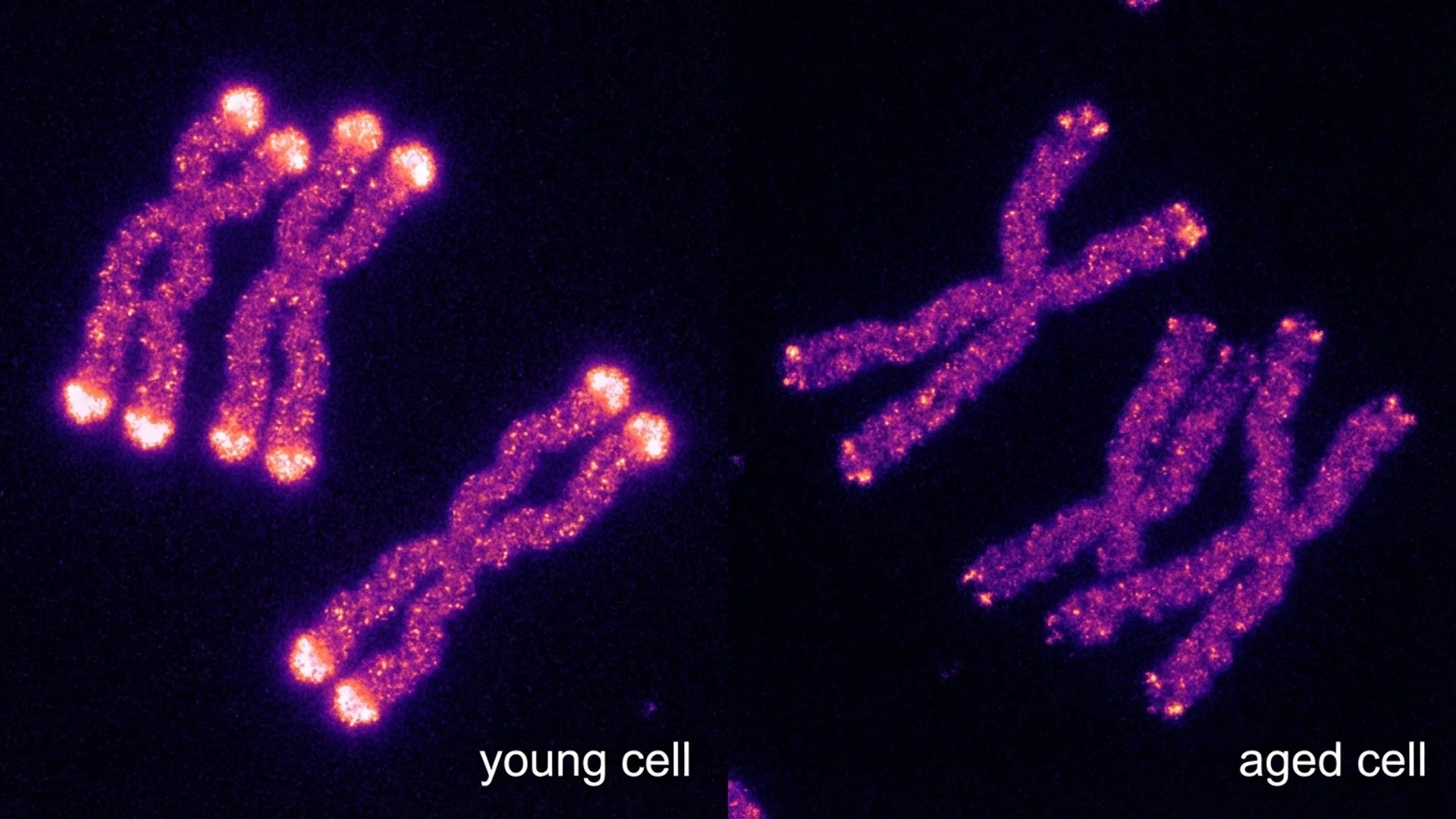
2. Telomere attrition
What it is. Telomeres cap the ends of chromosomes and shorten with cell division and stress. Critically short telomeres push cells into senescence or death. Telomere length is linked to several age-related diseases, and the relationship runs in both directions (Blackburn 2015).
Measurable today? Yes, but noisy. Results vary by method and laboratory, and a single value says little about an individual. More in telomere health.
What targets it
- Physical activity, sleep and stress reduction: Emerging; associations with longer telomeres are observational.
- Telomerase activators (TA-65, epitalon and similar): Hypothesis; no outcome trials in humans. Telomerase activation also raises theoretical cancer concerns.
Immune link. Aging T cells lose telomere length; in observational studies, the link between CMV and T-cell changes is clearer than the link with telomere length (Gadoth 2024).
3. Epigenetic alterations
What it is. Chemical marks on DNA and histones decide which genes are read. With age these marks drift: some genes that should be silent become active and vice versa.
Measurable today? Research only, for now. Epigenetic clocks such as DunedinPACE estimate the pace of aging from DNA methylation (Belsky 2022). They predict outcomes at population level, but no clock has yet been shown to guide treatment toward better outcomes. See epigenetic clock tests compared.
What targets it
- Rapamycin: Preclinical only for anything resembling epigenetic rejuvenation. The 48-week PEARL trial of low-dose rapamycin in healthy adults reported safety and missed its primary endpoint; it did not test age reversal (Moel 2025). See rapamycin and mTOR.
- Combination protocols reporting a lower “epigenetic age”: Hypothesis. The TRIIM study (growth hormone, DHEA and metformin) had nine participants and no control group (Fahy 2019).
- Alpha-ketoglutarate: Preclinical only for lifespan; human data are small and early. See alpha-ketoglutarate.
4. Loss of proteostasis
What it is. Cells fold, check and recycle proteins through chaperones, the proteasome and autophagy. With age this network weakens, and misfolded proteins accumulate. Protein aggregates are central to Alzheimer’s (amyloid, tau) and Parkinson’s (alpha-synuclein) disease (López-Otín 2023).
Measurable today? No routine test. Disease-specific imaging (amyloid PET) measures aggregates in particular conditions, not proteostasis in general.
What targets it
- Heat stress (sauna) induces heat shock proteins: Emerging as mechanism; human outcome links come from observational sauna studies. See heat shock proteins.
- Exercise: Established for mortality (Ekelund 2019); its proteostasis effects are part of the mechanism story.
5. Disabled macroautophagy
What it is. Autophagy is the cell’s recycling system for damaged organelles, protein aggregates and some intracellular microbes. The 2023 update made it a hallmark in its own right because autophagy declines with age and boosting it extends lifespan in model organisms (López-Otín 2023).
Measurable today? No. Autophagic flux markers (LC3, p62) are research assays.
What targets it
- Fasting and exercise switch on autophagy: Emerging; robust in animals, hard to quantify in people. See autophagy.
- Rapamycin: Preclinical only for lifespan; it extends lifespan in mice even when started late in life (Harrison 2009).
- Spermidine: Hypothesis; animal data and small human studies on surrogate markers. See spermidine.
Immune link. Autophagy helps cells clear intracellular pathogens and shapes immune responses, so its decline plausibly contributes to weaker defence with age (Hypothesis in humans).
Antagonistic hallmarks: responses that turn harmful
6. Deregulated nutrient sensing
What it is. Four linked pathways sense nutrients and energy: mTOR, insulin/IGF-1 signalling, AMPK and sirtuins. In youth they balance growth and repair; with age and over-nutrition they lean toward growth.
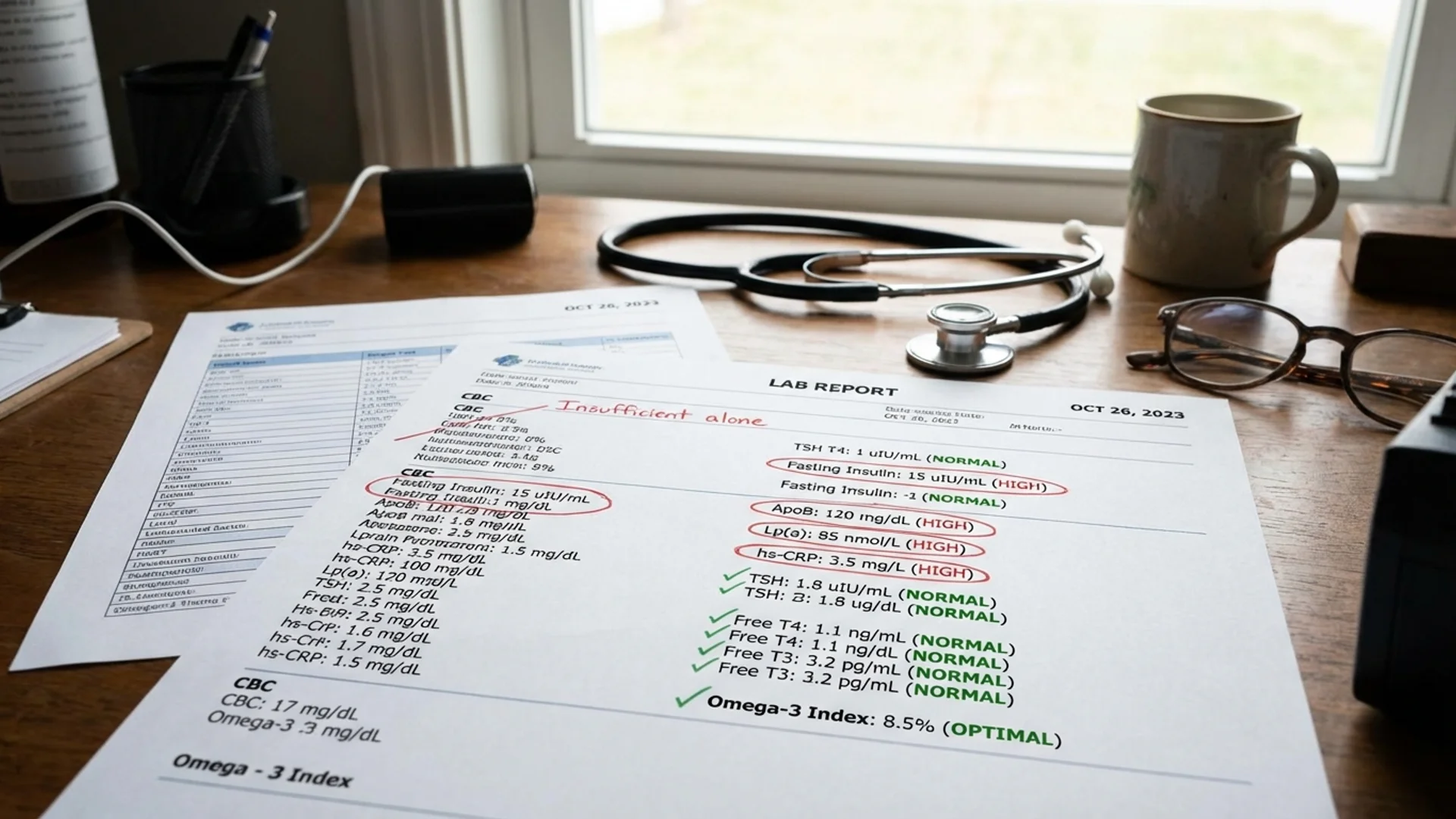
Measurable today? Yes, partly: fasting glucose, HbA1c, fasting insulin and IGF-1 describe the metabolic side. See the longevity blood panel.
What targets it
- Treating diabetes, obesity and insulin resistance: Established for disease outcomes. Semaglutide reduced major cardiovascular events in people with heart disease and overweight without diabetes (Lincoff 2023).
- Calorie restriction: Emerging in humans. In the two-year CALERIE trial, moderate calorie restriction lowered inflammatory markers without impairing cell-mediated immunity (Meydani 2016).
- Metformin for aging in people without diabetes: Hypothesis; the TAME trial was designed to test it (Barzilai 2016). See metformin.
- Rapamycin and related mTOR inhibitors: Emerging for immune endpoints (see below), preclinical for lifespan.
Immune link. In older adults, a short course of the mTOR inhibitor everolimus improved the response to flu vaccination by about 20% (Mannick 2014), and low-dose TORC1 inhibition reduced reported infections in a phase 2a trial (Mannick 2018).
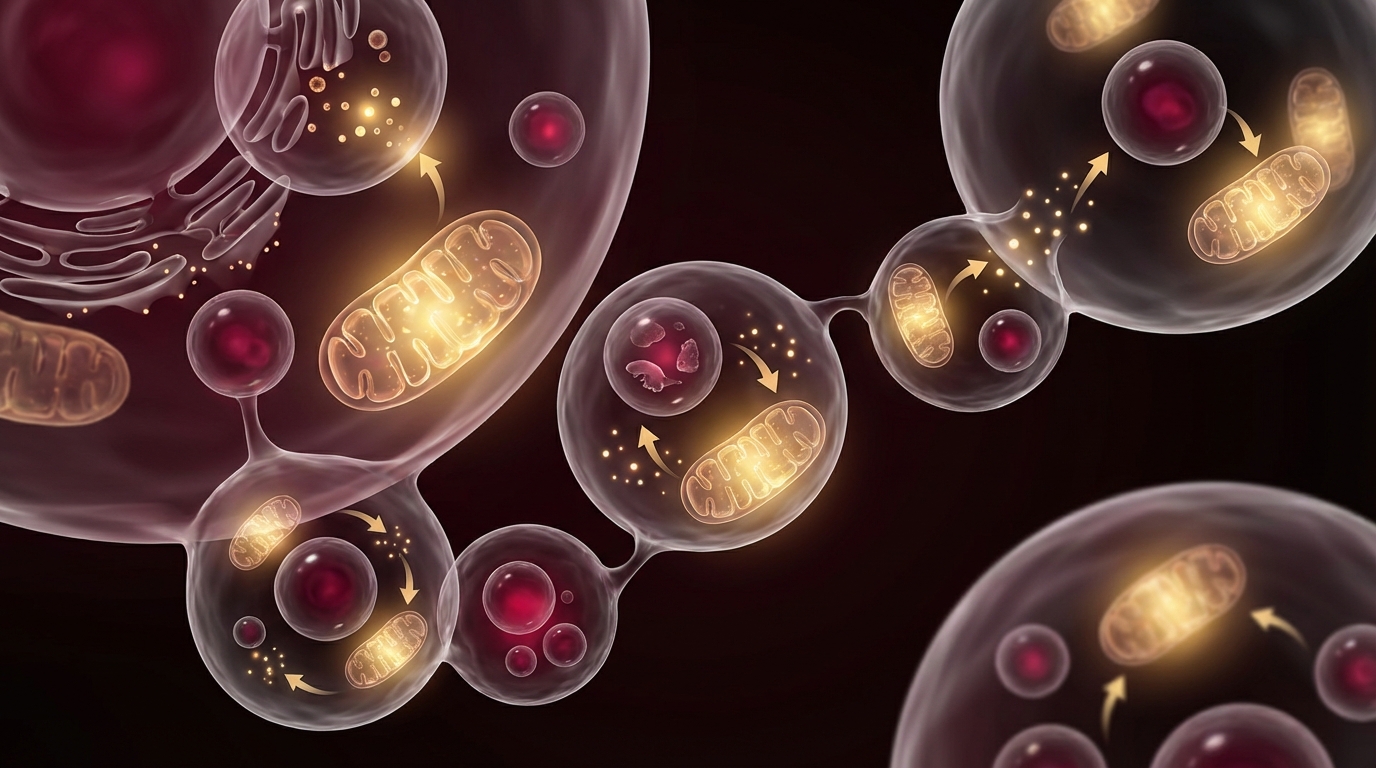
7. Mitochondrial dysfunction
What it is. Mitochondria make most of the cell’s energy. With age they become less efficient, leak more reactive oxygen species and are renewed less often.
Measurable today? Indirectly. Cardiorespiratory fitness (VO2 max) is the most practical functional measure. See VO2 max and mitochondrial medicine.
What targets it
- Exercise, especially endurance and interval training: Established. More activity and less sitting go with lower mortality in a dose-response way (Ekelund 2019).
- CoQ10, methylene blue, IHHT and similar: Hypothesis for aging; human data are small or on surrogate markers.
- Elamipretide (SS-31) received accelerated FDA approval for Barth syndrome, a rare mitochondrial disease, not for aging (Zhao 2026).
8. Cellular senescence
What it is. Cells with irreparable damage stop dividing but stay metabolically active, releasing inflammatory signals (the senescence-associated secretory phenotype, SASP) that harm neighbouring tissue.
Measurable today? No validated clinical test of senescent-cell burden exists. p16INK4a in T cells is used in research.
What targets it
- Senolytics (dasatinib plus quercetin, fisetin): Emerging, with mixed results. Small open-label studies showed feasibility and lower senescence markers (Justice 2019; Hickson 2019; Gonzales 2023), and a phase 2 randomised trial in postmenopausal women did not reduce bone resorption (Farr 2024). Not recommended outside trials. See senolytics.
- FOXO4-DRI and other senolytic peptides: Preclinical only (Baar 2017). See FOXO4-DRI.
Immune link. The immune system normally clears senescent cells. Weaker immune surveillance with age is one plausible reason they accumulate (Hypothesis in humans).
Integrative hallmarks: system-wide consequences
9. Stem cell exhaustion
What it is. Tissue renewal depends on stem cells, which decline in number and function with age. In the blood, aging stem cells skew toward myeloid output at the expense of lymphocytes, which feeds immune aging.
Measurable today? Partly, in research. Clonal hematopoiesis (CHIP), where mutated blood stem cells outgrow their neighbours, was found in 9.5% of people aged 70 to 79 and was linked to higher mortality and cardiovascular risk (Jaiswal 2014; Jaiswal 2017).
What targets it
- Mesenchymal stem cell infusions for aging: Not recommended outside trials; there are no outcome data for aging, and quality and safety vary. See stem cell therapy.
- Exercise: Established for overall outcomes; effects on stem cells are mechanistic.
10. Altered intercellular communication
What it is. Hormonal, neural and immune signalling between cells degrades with age. The thymus shrinks and produces fewer naive T cells (Nikolich-Žugich 2018); a modelling study found that falling thymic output tracks the rising incidence of many diseases with age (Palmer 2018).
Measurable today? Hormone levels, yes; immune aging, only partly and mostly in research.
What targets it
- Treating genuine hormone deficiencies: Established for the deficiency, not as anti-aging therapy. See hormone optimization for men.
- Recommended vaccinations: Established for preventing the infections they target; possible wider effects are discussed below.
- Plasma exchange to “dilute old blood”: Hypothesis; no outcome data in healthy aging.
11. Chronic inflammation
What it is. Inflammaging is chronic, low-grade, largely sterile inflammation that rises with age (Franceschi 2018). It is fed by senescent cells, visceral fat, gut barrier changes, inactivity, poor sleep and persistent infections (Furman 2019). In older adults, higher IL-6 and CRP levels predicted higher mortality (Harris 1999).
Measurable today? Yes, roughly. hsCRP is read against cardiovascular risk strata: below 1, 1 to 3 and above 3 mg/L (Pearson 2003). Any infection raises it, so a high value should be repeated.
What targets it
- Activity, weight, sleep, not smoking: Established as the basis; short or disturbed sleep is linked to higher inflammatory markers (Irwin 2016).
- Anti-inflammatory drugs: Established for cardiovascular events in coronary disease, not for aging. Canakinumab and low-dose colchicine reduced cardiovascular events; canakinumab increased fatal infections, and colchicine was associated with more non-cardiovascular deaths (Ridker 2017; Nidorf 2020).
- Finding the driver: treat active infection, metabolic disease or inflammatory disease when present. There is no therapy that clears latent EBV or other herpes viruses, and suppressing latent herpes simplex with valacyclovir in early Alzheimer’s disease did worse than placebo (Devanand 2026).
More detail: inflammaging.
12. Dysbiosis
What it is. The gut microbial community changes with age: diversity tends to fall and the barrier between microbes and the immune system weakens. In mice, microbiota from young donors counteracted some age-related behavioural deficits in old animals (Boehme 2021).
Measurable today? Stool sequencing is available but has no validated aging reference. It is a research tool for this purpose.
What targets it
- A varied, fibre-rich diet and avoiding unnecessary antibiotics: Emerging for microbiome health; low risk.
- Faecal microbiota transplantation: Established for recurrent C. difficile infection; Preclinical only for aging.
Where infection and immunity fit
The immune system runs through at least four hallmarks: stem cell exhaustion, altered intercellular communication, chronic inflammation and dysbiosis. Graded:
- Established: immune aging (thymic involution, fewer naive T cells) and inflammaging are real and linked to disease and mortality (Nikolich-Žugich 2018; Franceschi 2018).
- Emerging: CMV is associated with immune aging and, in older adults, with mortality (Savva 2013); EBV infection precedes multiple sclerosis (Bjornevik 2022); shingles vaccination is associated with less dementia in natural experiments (Eyting 2025), with a 2026 critique arguing the implied effects are implausibly large (Kivimäki 2026).
- Hypothesis (my framework): persistent and repeated infections add to immune aging and inflammaging and may speed up several hallmarks. One contributor among many; not a claim that infection causes aging.
The full review, with every study: infection, immunity and aging.
Matching interventions to hallmarks, with the evidence
| Hallmark | Interventions discussed | Best human evidence |
|---|---|---|
| Genomic instability | Avoid mutagens; NAD+ precursors | Established (cancer risk); Hypothesis (NAD+) |
| Telomere attrition | Activity, sleep; telomerase activators | Emerging (observational); Hypothesis |
| Epigenetic alterations | Rapamycin; combination protocols; AKG | Preclinical only; Hypothesis |
| Loss of proteostasis | Sauna; exercise | Emerging; Established (exercise, mortality) |
| Disabled macroautophagy | Fasting, exercise; rapamycin; spermidine | Emerging; Preclinical only; Hypothesis |
| Deregulated nutrient sensing | Treat diabetes/obesity; calorie restriction; metformin | Established; Emerging; Hypothesis |
| Mitochondrial dysfunction | Exercise; CoQ10, IHHT, methylene blue | Established; Hypothesis |
| Cellular senescence | Senolytics; FOXO4-DRI | Emerging, mixed (trials only); Preclinical only |
| Stem cell exhaustion | MSC infusions; exercise | Not recommended outside trials; Established |
| Altered intercellular communication | Treat deficiencies; vaccination; plasma exchange | Established; Established; Hypothesis |
| Chronic inflammation | Lifestyle; colchicine/IL-1β blockade; treat drivers | Established; Established for CV events only |
| Dysbiosis | Diet, antibiotic stewardship; FMT | Emerging; Preclinical only for aging |
How to use the framework sensibly
- Start with what has outcome data. Activity, blood pressure, lipids, glucose, sleep, not smoking and vaccination act on several hallmarks at once and have the best human evidence.
- Measure what changes decisions. Blood pressure, ApoB or LDL, HbA1c, hsCRP and fitness. Treat clocks and research panels as research.
- Treat frontier interventions as experiments. Rapamycin, senolytics, peptides and similar belong in trials or in closely monitored care with a clear reason, monitoring and a stopping point.
- Remember the loops. Hallmarks feed each other, so a single-target drug rarely does what its mechanism promises.
What we don’t know
- There is no validated endpoint for “aging” itself; trials use disease outcomes or surrogate markers. TAME was designed to address this with a composite of age-related diseases (Barzilai 2016).
- Epigenetic clocks predict outcomes in populations, but moving a clock has not been shown to move outcomes (Belsky 2022).
- Several hallmarks have no clinical test.
- How much of the animal evidence translates to people is unknown for most interventions.
Frequently asked questions
What are the 12 hallmarks of aging?
Genomic instability, telomere attrition, epigenetic alterations, loss of proteostasis, disabled macroautophagy, deregulated nutrient sensing, mitochondrial dysfunction, cellular senescence, stem cell exhaustion, altered intercellular communication, chronic inflammation and dysbiosis (López-Otín et al., Cell 2023).
Can I get tested for all 12 hallmarks?
No. Some have useful clinical proxies (glucose and insulin for nutrient sensing, fitness for mitochondrial function, hsCRP for inflammation). Others, such as senescent-cell burden or proteostasis, have no validated clinical test. Epigenetic clocks are research biomarkers.
Has any drug been shown to reverse aging in humans?
No. Rapamycin extends lifespan in mice, and small human trials show effects on immune responses and safety, but no trial has shown that it slows or reverses aging in people.
References
- López-Otín C, et al. Hallmarks of aging: an expanding universe. Cell. 2023. PMID: 36599349
- López-Otín C, et al. The hallmarks of aging. Cell. 2013. PMID: 23746838
- Schumacher B, et al. The central role of DNA damage in the ageing process. Nature. 2021. PMID: 33911272
- Blackburn EH, et al. Human telomere biology: a contributory and interactive factor in aging, disease risks, and protection. Science. 2015. PMID: 26785477
- Belsky DW, et al. DunedinPACE, a DNA methylation biomarker of the pace of aging. eLife. 2022. PMID: 35029144
- Moel M, et al. Influence of rapamycin on safety and healthspan metrics after one year: PEARL trial results. Aging (Albany NY). 2025. PMID: 40188830
- Fahy GM, et al. Reversal of epigenetic aging and immunosenescent trends in humans. Aging Cell. 2019. PMID: 31496122
- Harrison DE, et al. Rapamycin fed late in life extends lifespan in genetically heterogeneous mice. Nature. 2009. PMID: 19587680
- Lincoff AM, et al. Semaglutide and cardiovascular outcomes in obesity without diabetes (SELECT). N Engl J Med. 2023. PMID: 37952131
- Meydani SN, et al. Long-term moderate calorie restriction inhibits inflammation without impairing cell-mediated immunity: a randomized controlled trial in non-obese humans. Aging (Albany NY). 2016. PMID: 27410480
- Barzilai N, et al. Metformin as a tool to target aging. Cell Metab. 2016. PMID: 27304507
- Mannick JB, et al. mTOR inhibition improves immune function in the elderly. Sci Transl Med. 2014. PMID: 25540326
- Mannick JB, et al. TORC1 inhibition enhances immune function and reduces infections in the elderly. Sci Transl Med. 2018. PMID: 29997249
- Ekelund U, et al. Dose-response associations between accelerometry measured physical activity and sedentary time and all cause mortality. BMJ. 2019. PMID: 31434697
- Zhao C, et al. Elamipretide: the first cardiolipin-directed mitochondrial therapeutic for Barth syndrome approved under accelerated approval. Drug Discov Ther. 2026. PMID: 41260682
- Justice JN, et al. Senolytics in idiopathic pulmonary fibrosis: results from a first-in-human, open-label, pilot study. EBioMedicine. 2019. PMID: 30616998
- Hickson LJ, et al. Senolytics decrease senescent cells in humans: preliminary report from a clinical trial of dasatinib plus quercetin in individuals with diabetic kidney disease. EBioMedicine. 2019. PMID: 31542391
- Gonzales MM, et al. Senolytic therapy in mild Alzheimer’s disease: a phase 1 feasibility trial. Nat Med. 2023. PMID: 37679434
- Farr JN, et al. Effects of intermittent senolytic therapy on bone metabolism in postmenopausal women: a phase 2 randomized controlled trial. Nat Med. 2024. PMID: 38956196
- Baar MP, et al. Targeted apoptosis of senescent cells restores tissue homeostasis in response to chemotoxicity and aging. Cell. 2017. PMID: 28340339
- Jaiswal S, et al. Age-related clonal hematopoiesis associated with adverse outcomes. N Engl J Med. 2014. PMID: 25426837
- Jaiswal S, et al. Clonal hematopoiesis and risk of atherosclerotic cardiovascular disease. N Engl J Med. 2017. PMID: 28636844
- Nikolich-Žugich J. The twilight of immunity: emerging concepts in aging of the immune system. Nat Immunol. 2018. PMID: 29242543
- Palmer S, et al. Thymic involution and rising disease incidence with age. PNAS. 2018. PMID: 29432166
- Franceschi C, et al. Inflammaging: a new immune-metabolic viewpoint for age-related diseases. Nat Rev Endocrinol. 2018. PMID: 30046148
- Furman D, et al. Chronic inflammation in the etiology of disease across the life span. Nat Med. 2019. PMID: 31806905
- Harris TB, et al. Associations of elevated interleukin-6 and C-reactive protein levels with mortality in the elderly. Am J Med. 1999. PMID: 10335721
- Pearson TA, et al. Markers of inflammation and cardiovascular disease (AHA/CDC statement). Circulation. 2003. PMID: 12551878
- Irwin MR, et al. Sleep disturbance, sleep duration, and inflammation: a systematic review and meta-analysis. Biol Psychiatry. 2016. PMID: 26140821
- Ridker PM, et al. Antiinflammatory therapy with canakinumab for atherosclerotic disease. N Engl J Med. 2017. PMID: 28845751
- Nidorf SM, et al. Colchicine in patients with chronic coronary disease. N Engl J Med. 2020. PMID: 32865380
- Devanand DP, et al. Valacyclovir treatment of early symptomatic Alzheimer disease: the VALAD randomized clinical trial. JAMA. 2026. PMID: 41405855
- Boehme M, et al. Microbiota from young mice counteracts selective age-associated behavioral deficits. Nat Aging. 2021. PMID: 37117767
- Gadoth A, et al. Potential relationship between cytomegalovirus and immunosenescence: evidence from observational studies. Rev Med Virol. 2024. PMID: 38866595
- Savva GM, et al. Cytomegalovirus infection is associated with increased mortality in the older population. Aging Cell. 2013. PMID: 23442093
- Bjornevik K, et al. Longitudinal analysis reveals high prevalence of Epstein-Barr virus associated with multiple sclerosis. Science. 2022. PMID: 35025605
- Eyting M, et al. A natural experiment on the effect of herpes zoster vaccination on dementia. Nature. 2025. PMID: 40175543
- Kivimäki M, et al. Natural experiments of herpes zoster vaccination: quantifying the implied vaccine effectiveness against dementia. Brain Behav Immun. 2026. PMID: 42754179
This content is educational and does not constitute medical advice. Longevity interventions, including rapamycin, senolytics and hormone therapy, are medical treatments that need individual assessment, physician supervision and monitoring.