At a Glance
| Parameter | Detail |
|---|---|
| Compound class | Polyamine |
| Primary mechanism | Autophagy induction via TFEB activation; histone hypoacetylation |
| Key dietary sources | Wheat germ (~243 nmol/g), soybeans, natto, aged cheese, mushrooms |
| Typical supplement dose | 0.5 – 1.2 mg/day (wheat-germ extract standardized to spermidine) |
| Lifespan extension (animal data) | 10–25% in yeast, flies, worms, mice |
| Human evidence strength | Prospective cohort data + 2 RCTs (cardiovascular & cognitive endpoints) |
| Safety profile | Excellent — classified GRAS; no serious adverse events in trials |
| Drug interactions | Theoretically additive with other autophagy activators (rapamycin, metformin) |
| Best combined with | NAD⁺ precursors, urolithin A, caloric restriction windows |
Spermidine has a name that makes patients laugh at first consultation — and then ask follow-up questions for the next twenty minutes. The compound is a naturally occurring polyamine found in virtually every living cell, its concentration faithfully declining with age in human tissues. That age-related decline correlates, across multiple independent epidemiological datasets, with reduced healthspan and faster biological aging. Correcting it, whether through diet or supplementation, has now moved from animal longevity experiments into early but compelling human trials.
What distinguishes spermidine from the crowded supplement landscape is mechanism. It does not merely provide substrate for an enzymatic reaction or scavenge free radicals with limited bioavailability. It induces autophagy — the cell’s intrinsic recycling and quality-control program — through epigenetic and transcriptional pathways that overlap with those activated by caloric restriction, the most reproducible longevity intervention in biology. Understanding that mechanism is necessary to evaluate the evidence and, for patients already pursuing longevity protocols, to decide how spermidine fits alongside NMN, rapamycin, metformin, and senolytics.
How Spermidine Works: Autophagy as the Central Axis
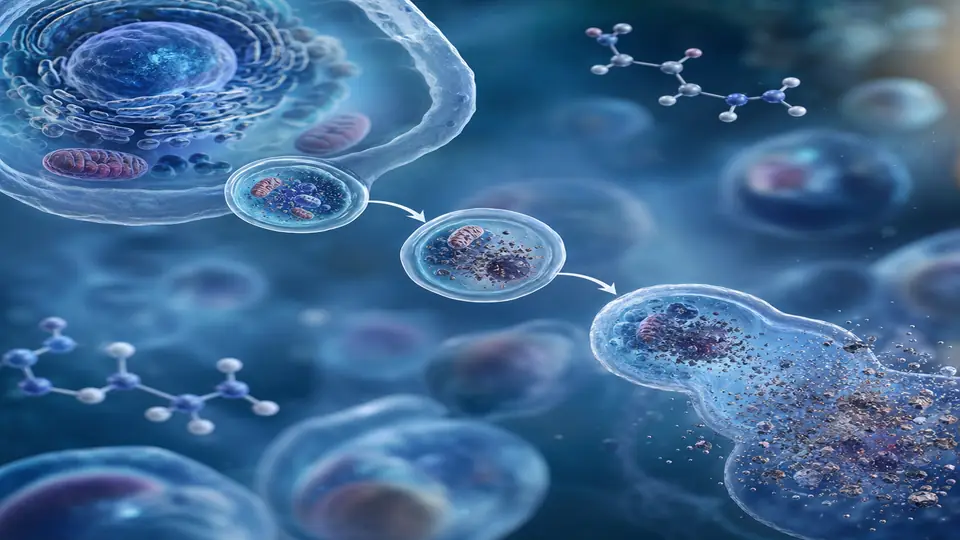
Autophagy (“self-eating”) describes the lysosomal degradation pathway through which damaged organelles, misfolded proteins, and intracellular pathogens are captured, sequestered in double-membrane vesicles called autophagosomes, and enzymatically dismantled for component recycling. Declining autophagy capacity is now recognized as one of the canonical hallmarks of aging, contributing to proteotoxic stress, mitochondrial dysfunction, and chronic low-grade inflammation (inflammaging).
Spermidine activates autophagy through at least three converging mechanisms:
1. Inhibition of EP300 acetyltransferase. EP300 is a histone acetyltransferase that, when active, maintains acetylation of histones H3 and H4 and suppresses autophagy gene expression. Spermidine directly inhibits EP300, shifting the chromatin landscape toward a pro-autophagy transcriptional program. This was first demonstrated by Eisenberg et al. in Nature Cell Biology (2009) and has since been replicated in multiple cell and organism models.
2. TFEB nuclear translocation. Transcription Factor EB (TFEB) is the master regulator of lysosomal biogenesis and autophagy gene expression. Spermidine promotes TFEB dephosphorylation and nuclear translocation, amplifying autophagosome formation and lysosomal capacity simultaneously.
3. Spermine synthase pathway and mitochondrial protection. Spermidine is the precursor to spermine via spermine synthase. The spermidine/spermine ratio influences mitochondrial membrane potential and resistance to permeability transition — a key determinant of apoptosis susceptibility and mitochondrial quality.
Critically, the epigenetic mechanism (EP300 inhibition) links spermidine to caloric restriction mimicry: fasting also suppresses EP300 activity through reduced acetyl-CoA availability. Spermidine achieves a biochemically analogous endpoint by direct enzymatic inhibition rather than metabolite depletion, meaning it can theoretically activate autophagy without requiring a fasted state.
Lifespan Extension: What the Animal Data Show
The lifespan extension data across model organisms is among the most consistent in the longevity field:
- Yeast (S. cerevisiae): Exogenous spermidine extended chronological and replicative lifespan by ~30% in a dose-dependent, autophagy-dependent manner (Eisenberg et al., 2009). Autophagy-deficient mutants showed no benefit, confirming on-target mechanism.
- Nematodes (C. elegans): Spermidine extended mean lifespan by 15% and delayed age-related protein aggregation. Combined treatment with other autophagy inducers (resveratrol, rapamycin) showed additive effects, suggesting non-redundant pathway engagement.
- Fruit flies (D. melanogaster): Both dietary supplementation and genetic overexpression of spermidine biosynthesis extended lifespan. Intestinal autophagy appeared to mediate whole-organism longevity effects.
- Mice: Dietary spermidine supplementation started in middle-aged mice extended median lifespan by approximately 10% and was associated with preserved cardiac function, reduced arterial stiffness, and lower all-cause mortality. Notably, benefits were observed when supplementation began in mature mice — a more clinically relevant starting point than neonatal intervention.
The cross-organism reproducibility, combined with the conserved autophagy dependence, provides unusually strong mechanistic confidence relative to most longevity supplements.
Human Evidence: What We Actually Know
Epidemiological Data
The most informative early evidence comes from a prospective cohort in Bruneck, Italy, following >800 adults over 20 years. Higher dietary spermidine intake (assessed via validated food frequency questionnaire) was independently associated with lower all-cause mortality (HR 0.60, 95% CI 0.39–0.93) after adjustment for age, sex, cardiovascular risk factors, and total caloric intake. The association was strongest for cardiovascular mortality. This finding was subsequently replicated in a German prospective cohort (Nutrition and Health Study), where higher polyamine intake correlated with reduced risk of incident cardiovascular disease.
Epidemiological data cannot establish causation — dietary patterns and confounders remain limitations — but the consistency across independent populations and the plausibility of mechanism strengthen the signal considerably.
Cardiovascular RCT (SPORT Trial)
The first randomized controlled trial in humans, published in Nature Medicine (2021) by Wirth et al., enrolled 100 older adults with subjective cognitive decline and randomized them to a spermidine-rich wheat-germ extract (providing ~1.2 mg/day spermidine) versus placebo for 12 months.
Primary results showed:
- Significant improvement in memory performance composite scores vs placebo
- Reduction in inflammatory biomarkers (IL-6, TNF-α) in the spermidine group
- No serious adverse events; tolerability comparable to placebo
- Dose-response signal in secondary analyses
The cognitive domain benefit was modest in the overall cohort but more pronounced in participants with higher baseline inflammatory burden — a pattern consistent with autophagy-mediated clearance of proteotoxic aggregates and neuroinflammation reduction.
Cardiovascular-Specific Data
Separate translational work in hypertensive rodents and preliminary human observational studies show spermidine supplementation associates with reduced arterial stiffness (pulse wave velocity), preservation of endothelial function, and reduced platelet aggregation. These endpoints are mechanistically consistent with the cardiovascular mortality reduction seen in cohort data.
Dietary Sources: A Practical Assessment
Spermidine is present in many foods, but concentrations vary enormously:
| Food | Spermidine (nmol/g fresh weight) |
|---|---|
| Wheat germ | 243 |
| Natto (fermented soy) | 75–90 |
| Mature soybeans | 65 |
| Porcini mushrooms (dried) | 60 |
| Aged cheddar | 20–35 |
| Chicken liver | 25 |
| Broccoli | 12 |
| Whole grain bread | 8 |
A traditional Japanese diet featuring natto achieves dietary spermidine intakes of 10–15 mg/day — considerably higher than typical Western diets (3–5 mg/day). Epidemiological longevity data from Okinawa may partly reflect this polyamine advantage, though many dietary and lifestyle variables are involved.
For most European and North American patients, meaningfully increasing dietary spermidine requires deliberate dietary restructuring: adding wheat germ to oatmeal or smoothies, incorporating natto or mature soybeans regularly, and choosing aged cheeses. This is feasible but takes planning.
When to Consider Supplementation
Supplementation with standardized wheat-germ extract (typically 0.5–1.2 mg/day spermidine equivalent) is reasonable for:
- Patients unable or unwilling to alter dietary patterns significantly
- Individuals with elevated biological age markers where autophagy upregulation is a therapeutic priority
- Those combining spermidine with other longevity interventions (NAD⁺ precursors, rapamycin protocols) who want consistent dosing
- Patients in post-COVID or chronic inflammatory states where autophagy is demonstrably suppressed
Dosing, Timing, and Practical Protocol
Dose: Most trial data used wheat-germ extract delivering approximately 1–1.2 mg/day of spermidine. Some practitioners use 0.5 mg/day for maintenance and 1.2 mg/day in patients with active disease burden or elevated inflammatory markers.
Timing: No robust data on optimal dosing time exists. Given the fasting-mimicry mechanism, dosing during a caloric restriction window (morning, before first meal, during intermittent fasting) is theoretically aligned, though this has not been formally tested in human RCTs.
Duration: Chronic supplementation appears appropriate given the mechanism of action is sustained rather than acute. The SPORT trial ran 12 months and continued to show benefits at final assessment.
Stacking logic:
- With NAD⁺ precursors (NMN/NR): Complementary — NAD⁺ supports mitochondrial biogenesis (SIRT1/PGC-1α pathway) while spermidine promotes mitochondrial quality control (mitophagy). Together they address quantity and quality of mitochondria.
- With metformin: Metformin activates AMPK, which synergizes with spermidine’s EP300 inhibition pathway. Some longevity protocols combine these, though AMPK-mediated mTOR inhibition and autophagy activation may partially overlap.
- With rapamycin: Mechanistically complementary — rapamycin inhibits mTORC1 (the canonical autophagy brake), while spermidine acts through the EP300/histone acetylation axis. Combined autophagy induction in C. elegans showed additive lifespan benefit.
- With senolytics (quercetin, fisetin): Different mechanisms — senolytics clear existing senescent cells; spermidine promotes cellular quality control to reduce accumulation of senescent and damaged cells. Sequential or concurrent use is rational.
Safety: Spermidine is classified GRAS (Generally Recognized as Safe) by the FDA. Human trials to date show no serious adverse events. Theoretical caution applies to active malignancy (autophagy can be pro-tumorigenic in established cancers in some contexts) — this remains a nuanced area requiring individual clinical assessment.
Where Spermidine Fits in a Longevity Protocol
From a clinical standpoint, spermidine occupies a distinct niche in the longevity toolkit: it is one of the few compounds with robust cross-organism lifespan extension data, a well-characterized epigenetic mechanism, and early but encouraging human evidence — all at a safety profile that makes long-term use unremarkable.
At my practice, I assess spermidine supplementation in the context of a patient’s overall autophagy status. Patients with elevated inflammatory markers, poor sleep architecture (sleep is a major driver of autophagy in neurons), high biological age on epigenetic clocks, or history of chronic infection are prioritized. For patients already doing time-restricted eating and maintaining adequate dietary polyamine intake, the incremental benefit of supplementation is likely smaller but additive.
The honest position is this: we do not yet have an RCT demonstrating lifespan or healthspan extension in healthy humans. That trial has not been done for any longevity compound. What we have is a coherent mechanistic story, consistent epidemiological signals, and initial RCT data supporting the direction of effect. That places spermidine in the top tier of evidence-supported longevity supplements alongside NAD⁺ precursors, urolithin A, and carefully dosed rapamycin — not a miracle, but a rational, evidence-informed intervention for patients committed to biological aging optimization.
For a direct head-to-head on mechanisms and evidence, see the spermidine vs urolithin A comparison.
Related Articles
- Longevity Supplements: A Physician’s Annotated Stack — How spermidine fits within a full evidence-ranked supplement protocol
- Autophagy: How to Activate Your Cellular Recycling System — Deep dive into autophagy mechanisms, measurement, and clinical optimization
- NMN vs NR vs NAD: Which Precursor Is Right for You? — Comparing the top NAD⁺-boosting strategies and how they stack with spermidine
- Rapamycin for Longevity: Evidence, Dosing, and Clinical Cautions — mTOR inhibition as a complementary autophagy strategy
- Senolytics Explained: Clearing Senescent Cells for Longer Healthspan — Quercetin, fisetin, and the case for combining senolytics with autophagy inducers
References
-
Eisenberg T, et al. Induction of autophagy by spermidine promotes longevity. Nature Cell Biology. 2009;11(11):1305-1314. doi:10.1038/ncb1975
-
Madeo F, Eisenberg T, Pietrocola F, Kroemer G. Spermidine in health and disease. Science. 2018;359(6374):eaan2788. doi:10.1126/science.aan2788
-
Kiechl S, et al. Higher spermidine intake is linked to lower mortality: a prospective population-based study. American Journal of Clinical Nutrition. 2018;108(2):371-380. doi:10.1093/ajcn/nqy102
-
Wirth M, et al. The effect of spermidine on memory performance in older adults at risk for dementia: A randomized controlled trial. Cortex. 2018;109:181-188. doi:10.1016/j.cortex.2018.09.014
-
Hofer SJ, et al. Spermidine-induced hypusination preserves mitochondrial and cognitive function during aging. Autophagy. 2021;17(8):2037-2054. doi:10.1080/15548627.2021.1933299
-
Pietrocola F, et al. Spermidine induces autophagy by inhibiting the acetyltransferase EP300. Cell Death & Differentiation. 2015;22(3):509-516. doi:10.1038/cdd.2014.215
-
Schwarz C, et al. Safety and tolerability of an exogenous spermidine supplementation in older adults. Nutrients. 2020;12(8):2211. doi:10.3390/nu12082211
-
Minois N, Carmona-Gutierrez D, Madeo F. Polyamines in aging and disease. Aging. 2011;3(8):716-732. doi:10.18632/aging.100361