
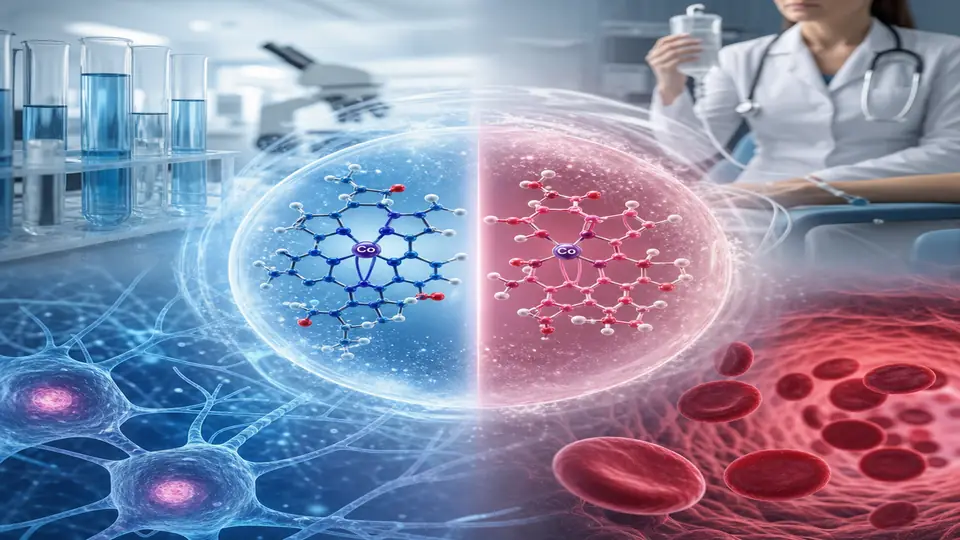
At a Glance
| Feature | Cyanocobalamin | Hydroxocobalamin | Methylcobalamin | Adenosylcobalamin |
|---|---|---|---|---|
| Bioactive? | No — requires conversion | No — intermediate form | Yes | Yes |
| MTHFR impact | High dependency | Moderate | Low | Low |
| CNS penetration | Poor | Moderate | Excellent | Moderate |
| Mitochondrial support | Indirect | Indirect | Moderate | Direct |
| Cost | Lowest | Low–Moderate | Moderate | Moderate–High |
| Best route | Oral | IM injection | Sublingual / IM | Sublingual / oral |
| Typical use case | Fortified foods | Repletion injections | Neurological support | Energy / mitochondria |
Vitamin B12 deficiency is one of the most underdiagnosed conditions in modern medicine — not because it is rare, but because standard serum B12 tests catch only the most extreme cases. In my clinical practice, I routinely see patients with “normal” B12 levels on standard panels who show clear functional deficiency on methylmalonic acid (MMA) and homocysteine testing. The form of B12 they supplement with, and whether their biochemistry can even use it, makes all the difference.
This guide covers what I actually discuss in consultation: the four major B12 forms, how each is processed, who benefits from which, and how to dose intelligently based on objective lab markers rather than guesswork.
Why B12 Form Matters More Than Most Doctors Realise
All forms of cobalamin ultimately need to reach two destinations in the cell: the cytoplasm, where methylcobalamin drives the methionine cycle, and the mitochondria, where adenosylcobalamin supports energy metabolism. Cyanocobalamin — the form used in most cheap supplements and pharmaceutical injections — must undergo multiple enzymatic conversion steps before it becomes usable.
Those steps require:
- Glutathione (for decyanation)
- NADPH and flavin reductase activity
- MTR/MTRR enzyme function (methylcobalamin synthesis)
- MMAA/MMAB enzyme activity (adenosylcobalamin synthesis)
In healthy, non-stressed patients with intact genetics, this pipeline works adequately. But in patients dealing with chronic infection, oxidative stress, MTHFR or MTRR variants, or depleted glutathione — a significant overlap with the kind of complex patients I see — this conversion pathway is functionally compromised. They absorb B12 but cannot activate it, leaving both the methylation cycle and mitochondrial function starved.
The Methylation Cycle Connection
Methylcobalamin serves as a cofactor for methionine synthase (MTR), the enzyme that converts homocysteine back to methionine. This reaction also regenerates tetrahydrofolate (THF), linking B12 status directly to folate metabolism. Elevated homocysteine — above 8–9 µmol/L on functional ranges — is often the first objective signal of methylcobalamin insufficiency even when serum B12 reads “normal.” Our homocysteine clinical guide covers the full range of consequences and the evidence-based lowering protocol in detail.
Methionine, downstream of this reaction, is the precursor to S-adenosylmethionine (SAM). SAM is the universal methyl donor used for DNA methylation, neurotransmitter synthesis, phosphatidylcholine production, and hundreds of other enzymatic reactions. Poor B12 status thus cascades into impaired epigenetic regulation, reduced serotonin and dopamine synthesis, and compromised myelin maintenance.
The Four Forms: Clinical Profile
Cyanocobalamin
Cyanocobalamin is a synthetic form created during the manufacturing process. It is stable, cheap, and widely used — but it is not a naturally occurring form in human physiology. The cyanide moiety, though present in tiny amounts, requires glutathione for removal, adding a detoxification burden in patients who are already glutathione-depleted (smokers, heavy metal-toxic patients, chronically ill).
When I use it: Rarely, and only in patients who specifically need a stable oral form for long-term maintenance after confirmed repletion with active forms, or where cost is a major barrier and genetic testing shows no significant MTHFR/MTRR variants.
Hydroxocobalamin
Hydroxocobalamin is the primary natural form found in food and produced by gut bacteria. It has a longer half-life than other injectable forms (making it useful for intramuscular repletion injections that last 2–4 weeks) and has additional properties as a nitric oxide scavenger and cyanide antidote.
When I use it: As the injectable repletion form in confirmed B12 deficiency, particularly in patients with pernicious anaemia or malabsorption where oral supplementation cannot overcome the deficit. It is also my first-choice form for patients with high nitric oxide states or suspected cyanide exposure.
Methylcobalamin
Methylcobalamin is the primary B12 form in the cytoplasm and central nervous system. It crosses the blood-brain barrier far more efficiently than other forms and is the most studied in the context of neurological protection, nerve regeneration, and peripheral neuropathy.
Clinical evidence supports methylcobalamin for:
- Peripheral neuropathy (particularly diabetic and idiopathic)
- Cognitive decline and neurodegeneration
- Homocysteine reduction
- Sleep regulation (it normalises circadian melatonin secretion via methylation of serotonin N-acetyltransferase)
- Post-COVID neurological symptoms
When I use it: In nearly all patients with neurological complaints, elevated homocysteine, MTHFR variants, or chronic fatigue with cognitive symptoms. Sublingual administration achieves bioavailability approaching intramuscular injection, making it practical for home use.
Adenosylcobalamin
Adenosylcobalamin (also called dibencozide or coenzyme B12) is the mitochondrial form. It is the cofactor for methylmalonyl-CoA mutase, the enzyme that converts methylmalonyl-CoA to succinyl-CoA — a critical step in the citric acid cycle and fatty acid oxidation. Elevated methylmalonic acid (MMA) on organic acid testing is a direct, specific marker of adenosylcobalamin insufficiency.
Patients with high MMA but normal or low-normal homocysteine typically have an adenosylcobalamin deficit rather than a methylcobalamin one — a distinction that standard serum B12 testing completely misses.
When I use it: In patients with documented mitochondrial dysfunction, elevated MMA, chronic fatigue disproportionate to other findings, or in combination with methylcobalamin as a broad “active B12” supplement strategy.
Testing: Going Beyond Serum B12
Standard serum B12 testing has a poor sensitivity for functional deficiency. Reference ranges (typically 200–900 pg/mL) were established in populations with limited variation and do not reflect the intracellular and functional status that matters clinically.
What I Actually Order
1. Serum B12 — Still useful as a screen, but I apply a functional lower threshold of 400 pg/mL rather than the lab’s lower reference limit of 200 pg/mL.
2. Methylmalonic acid (MMA) — The most specific functional marker for adenosylcobalamin status. Elevated MMA (>0.26 µmol/L in urine, or >0.37 µmol/L in serum) confirms functional insufficiency even with normal serum B12.
3. Homocysteine — Elevated levels (I target <8 µmol/L functionally, versus the standard <15 µmol/L) indicate methylcobalamin and/or folate insufficiency.
4. FIGLU (formiminoglutamic acid) — A urinary marker of folate depletion that often co-occurs with B12 problems, useful for distinguishing pure B12 from combined B12/folate deficiency.
5. MTHFR/MTRR genotyping — Particularly the C677T and A1298C variants. Homozygous C677T carriers have substantially impaired conversion of cyanocobalamin to active forms and elevated homocysteine as a baseline risk.
Dosing Protocols in Clinical Practice
There is no universal dose for B12. Therapeutic needs vary enormously based on the underlying cause of deficiency (dietary, absorptive, genetic, or functional), the severity of depletion, and which downstream pathways are most compromised.
Repletion (Confirmed Deficiency)
Intramuscular hydroxocobalamin: 1 mg IM every other day for 2 weeks (confirmed pernicious anaemia or severe deficiency), then 1 mg monthly maintenance. In patients without pernicious anaemia or malabsorption, high-dose oral or sublingual active B12 can often achieve adequate repletion.
High-dose sublingual methylcobalamin: 1,000–5,000 mcg daily. Sublingual absorption bypasses intrinsic factor dependence, making it effective even with reduced gastric production.
Optimisation (Functional Insufficiency)
Methylcobalamin sublingual: 1,000 mcg daily — sufficient for most patients with functional insufficiency and neurological symptoms.
Adenosylcobalamin oral: 500–1,000 mcg daily, ideally on an empty stomach or combined with methylcobalamin for full pathway coverage.
Combined active B12: Many practitioners (myself included) now prefer combination products providing both methylcobalamin and adenosylcobalamin, recognising that both pathways benefit from simultaneous support.
Special Considerations
- MTHFR C677T homozygous: Start lower (500 mcg methylcobalamin) and titrate, since methylation activation can trigger start-up reactions if folate status is also poor. Always co-supplement with methylfolate.
- Hydroxocobalamin over methylcobalamin for over-methylators: Patients with anxiety, insomnia, or irritability from methylation excess may tolerate hydroxocobalamin better — it acts as a methyl buffer.
- IV B12 in complex neurological cases: 1 mg methylcobalamin IV push in 5% dextrose, 2–3 times weekly for 4–8 weeks, produces faster CNS replenishment in severe peripheral neuropathy. This is part of my approach in selected post-COVID and Lyme-associated neuropathy cases.
B12 and Chronic Illness: The Clinical Overlap
In my practice, B12 functional insufficiency shows up most consistently in four patient populations:
1. Post-COVID and long COVID: Vascular injury, gut dysbiosis (disrupting B12-producing bacteria), elevated nitric oxide (consuming hydroxocobalamin), and high oxidative stress all combine to deplete active B12. These patients almost universally show elevated homocysteine and MMA despite “normal” serum B12.
2. Chronic Lyme and tick-borne co-infections: Neurological Lyme is associated with significant B12 wasting, and the methylation pathway impairment characteristic of MTHFR variants appears to increase susceptibility to neuroinvasive infection. Supporting B12 and methylation is standard in my Lyme protocols.
3. MTHFR variants with psychiatric symptoms: Depression, anxiety, and cognitive fog in patients with MTHFR variants often respond substantially to active B12 combined with methylfolate — the two nutrients are inseparable in the methylation cycle. I have seen profound clinical shifts from this simple intervention when other approaches have failed.
4. Proton pump inhibitor (PPI) users: Long-term acid suppression impairs B12 absorption from food (which requires acid for protein-bound B12 release). This is one of the most common iatrogenic causes of B12 insufficiency I encounter.
Related Articles
- MTHFR and Methylation: What the Variants Actually Mean for Your Health — Understanding C677T and A1298C variants in clinical context, and the full methylation support protocol.
- Functional Medicine Lab Testing: What to Order and Why — How to interpret MMA, homocysteine, and organic acid tests alongside standard panels.
- Magnesium, B6, and Cofactor Synergies for Methylation Support — Magnesium is a cofactor for MTHFR enzyme activity; deficiency amplifies B12 pathway impairment.
- Post-COVID Brain Fog: Mechanisms and Treatment — Why methylcobalamin IV is part of my post-COVID neurological recovery protocol.
- NAC and Glutathione: The Master Antioxidants — Glutathione depletion impairs cyanocobalamin conversion; NAC supports the decyanation pathway.
References
-
Obeid R, Fedosov SN, Nexo E. Cobalamin coenzyme forms are not likely to be superior to cyano- and hydroxyl-cobalamin in prevention or treatment of cobalamin deficiency. Mol Nutr Food Res. 2015;59(7):1364–1372. doi:10.1002/mnfr.201500019
-
Selhub J, Morris MS, Jacques PF. In vitamin B12 deficiency, higher serum folate is associated with increased total homocysteine and methylmalonic acid concentrations. Proc Natl Acad Sci USA. 2007;104(50):19995–20000. doi:10.1073/pnas.0709487104
-
Okamoto N, Hara O, Kajitani K, Nakashima M, Kariya R, Okuno E. Normal range of serum vitamin B12 is insufficient for preventing loss of intrinsic factor in healthy adults. J Nutr Biochem. 2010;21(3):194–200.
-
Herrmann W, Obeid R. Cobalamin deficiency. Subcell Biochem. 2012;56:301–322. doi:10.1007/978-94-007-2199-9_16
-
Zhang M, Han W, Hu S, Xu H. Methylcobalamin: a potential vitamin of pain killer. Neural Plast. 2013;2013:424651. doi:10.1155/2013/424651
-
Froese DS, Gravel RA. Genetic disorders of vitamin B₁₂ metabolism: eight complementation groups — eight genes. Expert Rev Mol Med. 2010;12:e37. doi:10.1017/S1462399410001651
-
Allen LH. How common is vitamin B-12 deficiency? Am J Clin Nutr. 2009;89(2):693S–696S. doi:10.3945/ajcn.2008.26947A