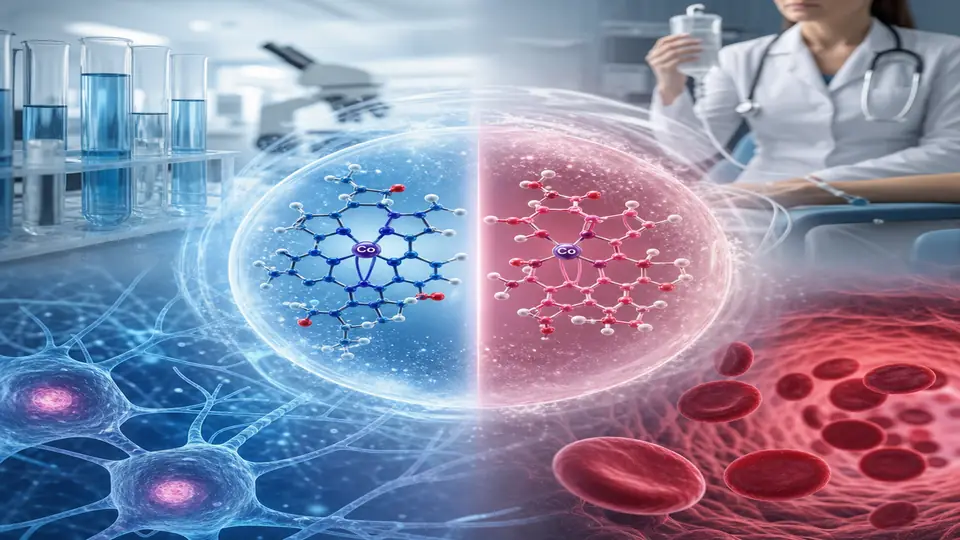

At a Glance
| Parameter | Detail |
|---|---|
| Compound | Trimethylglycine (TMG); also called betaine anhydrous or betaine |
| Primary mechanism | Methyl donor via BHMT pathway; lowers homocysteine independently of folate/B12 |
| Typical dose | 500–1,500 mg/day (general); up to 3,000 mg/day for elevated homocysteine or MTHFR |
| Key benefits | Homocysteine reduction, liver fat metabolism, athletic power output, MTHFR support |
| Safety | Well-tolerated; GI discomfort at high doses; may raise LDL-C in some individuals |
| Contraindications | Caution in bipolar disorder; avoid >3,000 mg/day without monitoring |
| Food sources | Beets, spinach, quinoa, wheat germ, shellfish |
Trimethylglycine sits at an unusual intersection in clinical nutrition: it is both a common dietary compound found in beets and a targeted therapeutic agent for cardiovascular risk, liver disease, and athletic performance. Despite its long research track record, TMG remains underutilized in integrative clinical settings, often overshadowed by its metabolic cousin betaine HCl (which is primarily used for stomach acid support and is a different preparation). This article focuses on betaine anhydrous — the form used for systemic methylation effects.
The compound earned its name from its chemical structure: glycine with three methyl groups attached. Those methyl groups are precisely what make it clinically interesting. TMG donates one of them to homocysteine via the betaine-homocysteine methyltransferase (BHMT) enzyme, converting homocysteine back to methionine — a reaction that bypasses the folate cycle entirely. This pathway independence is its most distinctive clinical advantage.
How TMG Works: The BHMT Pathway
Methylation is the transfer of a –CH₃ group from a donor molecule to an acceptor. The body depends on this process for DNA synthesis and repair, neurotransmitter production, detoxification, creatine synthesis, phospholipid production, and histamine clearance — among roughly 200 known methylation reactions.
The main methylation currency is S-adenosylmethionine (SAMe). SAMe is synthesized from methionine, which in turn is recycled from homocysteine. There are two routes to remethylate homocysteine:
- Folate/B12-dependent route — 5-methyltetrahydrofolate (5-MTHF) donates a methyl group via methionine synthase (MTR), requiring B12 as a cofactor. This is the primary pathway and the one impaired in MTHFR polymorphisms.
- BHMT route — TMG donates a methyl group directly to homocysteine via betaine-homocysteine methyltransferase, generating methionine and dimethylglycine (DMG). This pathway is independent of folate, B12, and MTHFR status.
Clinical implication: In patients with MTHFR C677T or A1298C polymorphisms, the folate-dependent pathway is partially blocked. Even with optimized methylfolate and B12 supplementation, some homocysteine accumulation persists. TMG provides a parallel route that sidesteps this bottleneck.
Beyond homocysteine remethylation, BHMT activity also feeds the methionine cycle that generates SAMe, potentially augmenting total methylation capacity when demand is high — during rapid growth, infection, or significant metabolic stress.
Clinical Evidence: Homocysteine Reduction
The evidence base for TMG’s effect on plasma homocysteine is robust and consistent.
A landmark randomized controlled trial by Olthof et al. (2003) demonstrated that betaine supplementation at 6 g/day reduced plasma homocysteine by 1.8 µmol/L in healthy adults — a meaningful reduction given that each 5 µmol/L increment above 10 µmol/L is associated with approximately 40% increased cardiovascular risk. At lower doses (1.5–3 g/day), reductions of 10–20% from baseline are consistently observed across multiple populations.
A 2005 RCT in patients with homocystinuria — a severe genetic methylation defect — found TMG to be the most effective single agent for lowering markedly elevated homocysteine levels, outperforming methionine restriction alone.
In MTHFR C677T homozygotes, who carry the highest genetic burden for hyperhomocysteinemia, TMG supplementation produced greater homocysteine reduction than methylfolate supplementation alone (Stead et al., 2006). This finding is critical for personalizing methylation protocols: some MTHFR patients are non-responders to folate-based interventions but respond well to TMG.
Practical benchmarks from clinical practice:
- Starting homocysteine 12–15 µmol/L → TMG 1,000 mg/day → expected reduction to 10–13 µmol/L
- Starting homocysteine 15–20 µmol/L → TMG 2,000 mg/day + methylfolate + B12 → typically achieves <12 µmol/L
- Starting homocysteine >20 µmol/L → typically requires 3,000 mg/day TMG plus full methylation stack; monitor every 8–12 weeks
Liver Health and NAFLD
Beyond cardiovascular effects, TMG has an established role in hepatic lipid metabolism. In the liver, the BHMT enzyme is highly expressed, and hepatic TMG availability directly influences liver methionine metabolism and phosphatidylcholine synthesis.
Phosphatidylcholine is required for very-low-density lipoprotein (VLDL) assembly and secretion — the mechanism by which the liver exports triglycerides. When hepatic choline or TMG availability falls, triglyceride export is impaired and fat accumulates in hepatocytes. This is the biochemical basis for choline deficiency-induced fatty liver.
Several animal studies demonstrate that TMG supplementation reverses diet-induced hepatic steatosis. Human evidence is more limited but directionally consistent: a randomized trial by Abdelmalek et al. (2009) in patients with nonalcoholic steatohepatitis (NASH) found that betaine 20 g/day for 12 months improved hepatic steatosis and inflammation scores, though the dose was high and the response modest.
At functional-medicine doses (500–2,000 mg/day), TMG appears useful as an adjunct in patients with fatty liver, particularly when combined with choline and phosphatidylcholine — rather than as monotherapy. The combination addresses both the direct hepatic fat export pathway (phosphatidylcholine) and the methylation recycling that supports it.
Athletic Performance and Power Output
TMG has gained traction in sports nutrition based on its role in creatine biosynthesis. Creatine synthesis from guanidinoacetate to creatine is one of the largest single consumers of SAMe in the body — accounting for up to 40% of total daily methylation demand. By supporting the methionine/SAMe cycle via BHMT, TMG indirectly sustains creatine synthesis under high metabolic demand.
A 2013 study by Cholewa et al. demonstrated that betaine supplementation (2.5 g/day for 6 weeks) significantly increased back squat volume and bench press volume compared to placebo in trained athletes. A subsequent 2017 meta-analysis by Gao et al. of six RCTs found consistent modest improvements in power output (effect size ~0.33) and endurance capacity with betaine supplementation.
The ergogenic effect appears most reliable in resistance training and sprint-type activities rather than aerobic endurance. Effect sizes are smaller than creatine monohydrate and the evidence base is less mature, but TMG is frequently used in combination with creatine — and the two compounds share mechanistic synergy through the creatine-methionine cycle.
Practical point: Athletes using creatine monohydrate (which, paradoxically, partially replaces the body’s need to synthesize creatine, thus reducing SAMe demand) may see less incremental benefit from TMG than those not using creatine.
Dosing, Forms, and Protocols
Standard Dosing
| Indication | Suggested Dose | Notes |
|---|---|---|
| General methylation support | 500–1,000 mg/day | With meals |
| Elevated homocysteine (12–18 µmol/L) | 1,000–2,000 mg/day | Combine with methylfolate + B12 |
| MTHFR C677T homozygous | 1,500–3,000 mg/day | Monitor homocysteine and LDL-C |
| Athletic performance | 2,000–2,500 mg/day | Split dosing (morning and pre-workout) |
| Fatty liver adjunct | 1,000–2,000 mg/day | Combine with choline and phosphatidylcholine |
Forms and Considerations
Betaine anhydrous is the standard form for systemic methylation effects and athletic use. It is not the same as betaine hydrochloride (betaine HCl), which provides hydrochloric acid for gastric support and should not be confused with TMG for methylation purposes.
TMG is available as powder (slightly sweet, water-soluble — the most cost-effective form) or capsules. Powder allows flexible dosing and is easily incorporated into a morning stack.
Timing
TMG is best taken with meals containing protein to optimize BHMT enzyme activity and reduce GI discomfort. Split dosing (e.g., 1,000 mg with breakfast and 1,000 mg with lunch) improves tolerability at higher doses and may provide more sustained BHMT substrate availability through the day.
Safety Profile and Adverse Effects
TMG has a favorable safety profile at standard doses. The most commonly reported adverse effects are gastrointestinal: nausea, bloating, and fishy body odor (from DMG metabolite conversion to trimethylamine). These are dose-dependent and typically manageable with dose reduction or split dosing.
LDL-C elevation: Several trials have noted modest increases in LDL cholesterol with high-dose TMG (≥6 g/day). The effect at lower doses (≤3 g/day) is inconsistent and likely not clinically significant in most patients, but baseline lipid panels and periodic monitoring are appropriate in those with cardiovascular risk factors.
Bipolar disorder: There is theoretical concern that enhanced methylation could exacerbate mania in susceptible individuals. This is speculative, but caution is warranted in patients with bipolar disorder or a family history of the condition; methylation augmentation should be approached conservatively.
Drug interactions: TMG may enhance the effects of methotrexate (competes for similar metabolic pathways), though clinical significance at standard supplement doses is unclear. Disclosure to prescribing physicians is appropriate.
TMG in the Context of a Methylation Stack
In clinical practice, TMG is rarely used in isolation. A rational methylation protocol for patients with MTHFR polymorphisms or elevated homocysteine typically includes:
- Methylfolate (L-5-MTHF): 400–1,000 µg/day — replaces folic acid, bypasses MTHFR
- Methylcobalamin (B12): 500–1,000 µg/day — cofactor for methionine synthase
- TMG: 1,000–2,000 mg/day — BHMT pathway support, MTHFR-independent
- Riboflavin (B2): 10–30 mg/day — required for MTHFR enzyme function
- Zinc: 15–30 mg/day — cofactor for multiple methylation enzymes
The rationale for combining the folate-dependent pathway (methylfolate + B12) with the BHMT pathway (TMG) is that they are additive, not redundant. Patients with partial MTHFR impairment benefit from supporting both routes simultaneously. Reassay of homocysteine at 8–12 weeks allows dose adjustment.
Related Articles
- MTHFR and Methylation: A Clinical Guide — Understanding the genetic variants and how to support impaired methylation pathways
- Homocysteine: Interpretation and Reduction Strategies — Full reference for interpreting homocysteine labs and building a reduction protocol
- NAC vs Glutathione: Which to Supplement? — How glutathione recycling intersects with methylation and oxidative stress management
- Phosphatidylcholine: Brain and Liver Applications — The phospholipid that shares the choline-methyl-donor pathway with TMG in hepatic function
- Functional Medicine Lab Testing Guide — Which panels to order when evaluating methylation status, homocysteine, and nutrient sufficiency
References
-
Olthof MR, Verhoef P. Effects of betaine intake on plasma homocysteine concentrations and consequences for health. Curr Drug Metab. 2005;6(1):15-22. PMID: 15720203.
-
Stead LM, Au KP, Jacobs RL, et al. Methylation demand and homocysteine metabolism: effects of dietary provision of creatine and guanidinoacetate. Am J Physiol Endocrinol Metab. 2001;281(5):E1095-100. PMID: 11595661.
-
Abdelmalek MF, Sanderson SO, Angulo P, et al. Betaine for nonalcoholic fatty liver disease: results of a randomized placebo-controlled trial. Hepatology. 2009;50(6):1818-26. PMID: 19824078.
-
Cholewa JM, Guimarães-Ferreira L, Zanchi NE. Effects of betaine on performance and body composition: a review of recent findings and potential mechanisms. Amino Acids. 2014;46(8):1785-93. PMID: 24760587.
-
Gao X, Zhang H, Guo XF, et al. Effect of betaine on reducing body fat — a systematic review and meta-analysis of randomized controlled trials. Nutrients. 2019;11(10):2480. PMID: 31619000.
-
Craig SA. Betaine in human nutrition. Am J Clin Nutr. 2004;80(3):539-49. PMID: 15321791.
-
Ueland PM. Choline and betaine in health and disease. J Inherit Metab Dis. 2011;34(1):3-15. PMID: 20446114.