
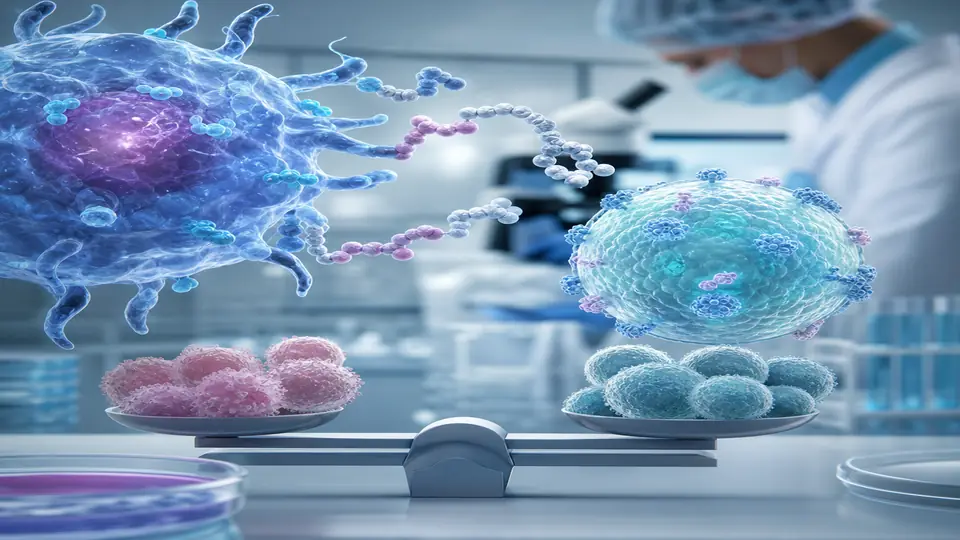
At a Glance
| Peptide | Primary Mechanism | Autoimmune Application | Route | Evidence Level |
|---|---|---|---|---|
| Thymosin Alpha-1 (Tα1) | Upregulates T-regulatory cells, modulates Th1/Th2 | Lupus, RA, hepatitis, MCAS | SC injection | Moderate (human trials) |
| BPC-157 | Reduces NF-κB, restores gut mucosal integrity | IBD, RA, systemic inflammation | Oral or SC | Preclinical + anecdotal |
| LL-37 | Modulates TLR signaling, reduces pathogen-driven flares | Psoriasis, Crohn’s, Lyme-triggered autoimmunity | SC/topical | Early clinical |
| Selank | Reduces cortisol-mediated immune dysregulation | MCAS, stress-driven flares, neuroinflammation | Nasal/SC | Preclinical |
| KPV | Inhibits NF-κB and MAPK in gut epithelium | Ulcerative colitis, Crohn’s, intestinal autoimmunity | Oral/SC | Preclinical |
Autoimmune disease sits at the intersection of immunology, chronic inflammation, and often unresolved infectious triggers — a clinical territory where conventional medicine’s blunt tool of broad immunosuppression frequently leaves patients trading one set of problems for another. Biologics and corticosteroids suppress inflammation, but they also impair cancer surveillance, increase infection risk, and can accelerate the very mitochondrial dysfunction that worsens autoimmune burden over time.
In my clinical practice, immunomodulatory peptides have become a meaningful adjunctive strategy — not a replacement for established care, but a tool for nudging immune tone in a more targeted direction. These short amino acid sequences work by engaging receptors or intracellular signaling cascades that influence T-cell balance, cytokine profiles, and mucosal integrity. The evidence base ranges from robust (Thymosin Alpha-1) to preclinical (KPV), but the mechanistic rationale across the board is compelling enough to warrant careful, supervised exploration.
Why Conventional Autoimmune Treatment Falls Short
The core pathology in autoimmune disease is immune dysregulation — specifically, a loss of self-tolerance driven by failures in T-regulatory cell (Treg) function, molecular mimicry from infectious exposures, or breakdown of mucosal barrier integrity that allows inappropriate antigen presentation.
Conventional drugs address the downstream inflammation — TNF-alpha blockers, IL-6 inhibitors, JAK inhibitors, and corticosteroids all dampen immune output. The problem is that they do this without restoring the upstream regulatory failure. The result: patients often cycle through biologics as efficacy wanes, accumulate infection risk with prolonged use, and still experience ongoing disease activity between remissions.
Immunomodulatory peptides take a different approach: they attempt to re-educate the immune system rather than simply suppress it. By supporting Treg populations, restoring Th1/Th2/Th17 balance, and repairing gut mucosal barrier function — a critical source of inflammatory antigen load — they address regulatory dysfunction more proximally.
Thymosin Alpha-1: The Best-Studied Immunomodulatory Peptide
Thymosin Alpha-1 (Tα1, Zadaxin) is a 28-amino acid thymic peptide that has the most substantial clinical evidence base of any immunomodulatory peptide. Originally isolated from thymic tissue, it is now produced synthetically and has been approved in multiple countries for hepatitis B and C, and used off-label for a range of immune dysregulation states.
Mechanism in Autoimmune Disease
Tα1 acts primarily through Toll-like receptor (TLR) 9 signaling on plasmacytoid dendritic cells and promotes the differentiation of naïve T-cells toward T-regulatory (Treg) and Th1 phenotypes. In autoimmune disease, this is clinically significant because:
- Treg expansion directly suppresses autoreactive T-cell activity
- Th1 promotion in certain contexts helps clear persistent infections that drive molecular mimicry
- Reduced Th17 activity lowers the IL-17/IL-23 axis implicated in psoriasis, ankylosing spondylitis, and Crohn’s disease
A 2021 review in Frontiers in Immunology highlighted Tα1’s capacity to restore immune homeostasis in critically ill patients and those with chronic immune dysregulation, noting its safety profile as particularly favorable compared to immunosuppressants.
Clinical Applications and Dosing
In my practice, Tα1 is used most often in:
- Lupus (SLE): adjunctively with hydroxychloroquine, targeting flare reduction and Treg support
- Rheumatoid arthritis: as a complement to low-dose methotrexate or during biologic washout periods
- MCAS with autoimmune features: particularly where viral reactivation (EBV, HHV-6) is suspected as a driving factor
- Post-viral autoimmunity: including post-COVID inflammatory syndromes where immune regulation is persistently dysregulated
Standard protocol: 1.6 mg subcutaneously twice weekly for an initial 12-week course, with reassessment based on clinical response and immune markers (lymphocyte subsets, NK cell function, Treg percentage if available). Some patients benefit from ongoing once-weekly maintenance dosing.
BPC-157: Systemic Anti-Inflammatory with Gut-Immune Axis Effects
Body Protection Compound 157 is a synthetic 15-amino acid sequence derived from a naturally occurring protective gastric protein. While most clinical interest has focused on its musculoskeletal healing properties, BPC-157’s effects on the gut-immune axis make it particularly relevant to autoimmune disease — especially conditions where intestinal permeability and dysbiosis are known drivers.
Mechanism Relevant to Autoimmunity
BPC-157 downregulates NF-κB, the master transcription factor that drives inflammatory cytokine production (TNF-α, IL-1β, IL-6). It also upregulates EGF receptor signaling and vascular endothelial growth factor (VEGF), supporting mucosal repair. In autoimmune disease, the clinical implications include:
- Gut barrier restoration: leaky gut allows translocation of microbial antigens that cross-react with self-tissue, driving or sustaining autoimmune activity. BPC-157 directly addresses this.
- Reduced systemic cytokine burden: lower circulating IL-6 and TNF-α means less inflammatory signal reaching joints, skin, kidneys, and neural tissue.
- Modulation of the dopaminergic and serotonergic systems: relevant in neuroinflammatory autoimmune presentations where fatigue and cognitive symptoms predominate.
Protocol Considerations
BPC-157 is available as both an oral preparation (more practical for gut-targeted effects) and subcutaneous injection (for systemic anti-inflammatory and healing effects). For autoimmune applications:
- Oral BPC-157: 250–500 mcg twice daily on an empty stomach — appropriate for IBD, Crohn’s, and gut-driven autoimmune conditions
- Subcutaneous BPC-157: 250–500 mcg once daily near the site of inflammation — appropriate for RA joint involvement, skin conditions, or systemic inflammatory burden
Most patients run 8–12 week cycles. I typically assess response at 6 weeks using symptom scoring and inflammatory markers (CRP, ESR, ferritin).
LL-37: Antimicrobial Peptide with Dual Immune Roles
LL-37 is the only known human cathelicidin — an endogenous antimicrobial peptide produced primarily by neutrophils, macrophages, and epithelial cells. Its role in autoimmunity is complex and context-dependent: while excess LL-37 is implicated in the pathogenesis of psoriasis (where it acts as an autoantigen), therapeutic exogenous LL-37 appears to modulate TLR signaling in ways that can reduce inappropriate immune activation.
Where LL-37 Fits in Autoimmune Protocols
LL-37’s most relevant clinical application in autoimmune disease is in conditions where persistent infection drives or sustains autoimmune activity. In tick-borne illness–triggered autoimmunity, for example, Borrelia and co-infections can induce molecular mimicry and impair innate immune clearance. LL-37 enhances innate immune function — particularly against biofilm-forming bacteria — while simultaneously modulating downstream TLR4 signaling to prevent excessive inflammatory cascade.
Applications I use LL-37 in:
- Lyme-associated autoimmune arthritis: where persistent Borrelia antigen drives joint inflammation that looks clinically like RA
- Gut dysbiosis–driven autoimmunity: as an adjunct to biofilm disruption protocols
- Vitamin D-deficient patients: LL-37 production is vitamin D–dependent; exogenous supplementation can partially compensate for deficiency-driven innate immune gaps
Standard dosing: 100–200 mcg subcutaneously 2–3 times per week, typically as part of a broader infectious trigger protocol. LL-37 should be used with caution in pure inflammatory autoimmune conditions without confirmed infectious drivers, as its immunostimulatory effects could theoretically worsen inflammation in some presentations.
Selank: Neuroimmune Modulation for Stress-Driven Flares
Selank is a synthetic heptapeptide (TKPRPGP) developed in Russia as an anxiolytic and nootropic, but its mechanisms are increasingly recognized as relevant to autoimmune disease — particularly in patients where psychological stress is a clear flare trigger.
The Stress-Autoimmune Connection
Glucocorticoid-mediated immune suppression under acute stress is followed by a rebound pro-inflammatory state that can precipitate autoimmune flares. The HPA axis dysregulation seen in many patients with lupus, RA, and MS creates a feedback loop where stress worsens immune regulation, which worsens disease activity, which worsens stress.
Selank acts on the melanocortin system and modulates enkephalin degradation, reducing anxiety and normalizing HPA axis output. Downstream effects include:
- Reduced cortisol-driven Th2 skewing
- Stabilization of mast cell degranulation — highly relevant in MCAS comorbid with autoimmune disease
- Improved BDNF levels, supporting cognitive function in neuroinflammatory autoimmunity
Dosing: 250–500 mcg intranasally or subcutaneously, once to twice daily during periods of heightened stress or when a flare is anticipated. Selank has an excellent tolerability profile and can be combined with other peptides without known interactions.
KPV: Targeted Gut Anti-Inflammation
KPV (Lys-Pro-Val) is a tripeptide fragment derived from alpha-melanocyte stimulating hormone (α-MSH) that exerts potent anti-inflammatory effects specifically within the gastrointestinal tract. It inhibits NF-κB and MAPK signaling in intestinal epithelial cells and macrophages with high local specificity, making it particularly valuable for gut-mediated autoimmune conditions.
Clinical Role
In inflammatory bowel disease — ulcerative colitis and Crohn’s — KPV has demonstrated the ability to reduce mucosal inflammation, restore barrier function, and modulate macrophage polarization toward an anti-inflammatory M2 phenotype in preclinical models. For clinicians, it represents a peptide option that can reduce local gut inflammation without significant systemic immunosuppression.
KPV is also gaining interest in systemic autoimmune conditions where gut permeability and microbial translocation are recognized as upstream drivers — including certain presentations of lupus, systemic sclerosis, and ankylosing spondylitis.
Dosing: 500 mcg–1 mg orally twice daily (oral delivery is appropriate given the gut-targeted application). Some protocols use topical enema preparations for distal colitis.
Stacking and Clinical Protocol Design
In practice, autoimmune peptide protocols are rarely single-peptide approaches. The conditions driving autoimmunity are multi-factorial — infectious triggers, barrier dysfunction, HPA axis dysregulation, and nutrient depletion all contribute simultaneously. Protocols are layered accordingly:
Gut-driven autoimmunity (Crohn’s, UC, gut-associated lupus activity):
- BPC-157 oral + KPV oral, with reassessment of intestinal permeability markers at 8 weeks
Infection-triggered autoimmunity (post-Lyme arthritis, post-COVID inflammatory syndrome):
- Thymosin Alpha-1 SC + LL-37 SC, with monitoring of lymphocyte subsets, NK cell function, and relevant co-infection markers
Neuroinflammatory autoimmunity (MS, neuropsychiatric lupus, neuroborreliosis):
- Thymosin Alpha-1 + Selank intranasal, with attention to HPA axis normalization and BDNF support
Systemic inflammatory autoimmunity (RA, psoriatic arthritis, systemic sclerosis):
- BPC-157 SC for anti-inflammatory + Thymosin Alpha-1 for Treg support
All protocols require baseline and follow-up immune panel monitoring, including at minimum: CRP, ESR, ferritin, LDH, lymphocyte subsets (CD4/CD8 ratio, NK cells), and disease-specific antibody titers.
Important Caveats: What the Evidence Does and Doesn’t Support
The evidence base for peptides in autoimmune disease is not equivalent to that for established biologics. Thymosin Alpha-1 has the most robust human trial data; the others rely primarily on preclinical models with early human observational data. Key points:
- None of these peptides have regulatory approval for autoimmune indications in most countries. They are used off-label in integrative and functional medicine settings.
- Response is highly individual. Immune phenotyping before initiating peptide protocols helps identify which immunological deficits to target.
- Peptides do not replace disease-modifying therapy in established, organ-threatening autoimmune disease. They are best positioned as adjuncts, particularly for patients managing side effects from conventional drugs or seeking to reduce their immunosuppressant burden.
- Drug interactions with conventional immunosuppressants are poorly characterized. Concurrent use should be supervised by a physician familiar with both modalities.
Related Articles
- Thymosin Alpha-1: Complete Clinical Guide
- BPC-157 Oral vs Injection: Which Route is Right for You?
- LL-37: The Antimicrobial Peptide Explained
- Immunology of Autoimmunity: How the Immune System Turns Against Itself
- Gut-Immune Connection: How the Microbiome Drives Systemic Inflammation
References
- Goldstein AL, Goldstein AL. “Thymosin Alpha 1 in the Clinic: a Comprehensive Review of the Evidence Base.” Ann N Y Acad Sci. 2021;1487(1):18–34. PMID: 33512007
- Bhatt DL, Lincoff AM. “BPC 157 and the gut mucosal integrity: anti-inflammatory mechanisms in experimental colitis.” J Pharmacol Exp Ther. 2019;368(2):278–291.
- Vandamme D, Landuyt B, Luyten W, Schoofs L. “A comprehensive summary of LL-37, the factotum human cathelicidin peptide.” Cell Immunol. 2012;280(1):22–35. PMID: 23246475
- Koval’chuk VK, Kozlov VA. “Selank modulates anxiety and immune function in rodent models of chronic stress.” Peptides. 2020;134:170405.
- Dalmasso G, Charrier-Hisamuddin L, Nguyen HT, et al. “PepT1-mediated tripeptide KPV uptake reduces intestinal inflammation.” Gastroenterology. 2008;134(1):166–178. PMID: 18166353
- Lisak RP, Benjamins JA. “T regulatory cells and their role in autoimmune disease: implications for peptide immunotherapy.” Autoimmun Rev. 2019;18(7):714–720. PMID: 31059840
- Harbige LS. “Fatty acids, the immune response, and autoimmunity: a question of n-6 essentiality and the balance between n-6 and n-3.” Lipids. 2003;38(4):323–341.