At a Glance
| Feature | Lumbrokinase | Nattokinase |
|---|---|---|
| Source | Earthworm (Lumbricus rubellus) | Fermented soybean (nattō) |
| Primary enzyme type | Serine proteases (multiple) | Single serine protease |
| Fibrinolytic mechanism | Direct + indirect (activates plasminogen) | Direct fibrinolysis |
| Biofilm penetration | Stronger evidence | Moderate evidence |
| Cardiovascular RCT data | Limited Western trials | Multiple controlled trials |
| Standard dose range | 20–60 mg / 400,000–1,200,000 IU | 100–200 mg / 2,000–4,000 FU |
| Soy-free | Yes | No |
| Cost (30-day supply) | Higher (€50–€120) | Lower (€20–€50) |
| Best-fit indication | Lyme, post-COVID, stroke recovery | Cardiovascular prevention, DVT |
The Problem Fibrinolytic Enzymes Are Solving
Fibrin is a structural protein. Under normal physiology it forms temporary scaffolding during wound repair — useful, transient, then dissolved by your own plasmin system. In chronic disease, that balance tips. Fibrin accumulates pathologically in three distinct settings that matter clinically:
Intravascular fibrin — micro- and macro-thrombi that raise cardiovascular risk, impair tissue perfusion, and are increasingly documented in post-COVID long-haulers as “microclots” resistant to normal fibrinolysis.
Biofilm matrix — many chronic bacterial pathogens (Borrelia burgdorferi, Staphylococcus aureus, Pseudomonas aeruginosa) incorporate fibrin and fibronectin into their protective extracellular matrices. Conventional antibiotics penetrate these structures poorly, which partly explains treatment resistance in Lyme disease and chronic sinusitis.
Visceral and synovial fibrosis — aberrant fibrin deposition contributes to adhesion formation, joint inflammation, and end-organ fibrosis in autoimmune and post-infectious conditions.
Both lumbrokinase and nattokinase address these scenarios, but through different mechanisms and with different evidence profiles. Understanding those differences — rather than treating them as interchangeable — determines whether a patient improves or merely takes an expensive supplement.
Nattokinase: The Better-Studied Enzyme
Origin and mechanism
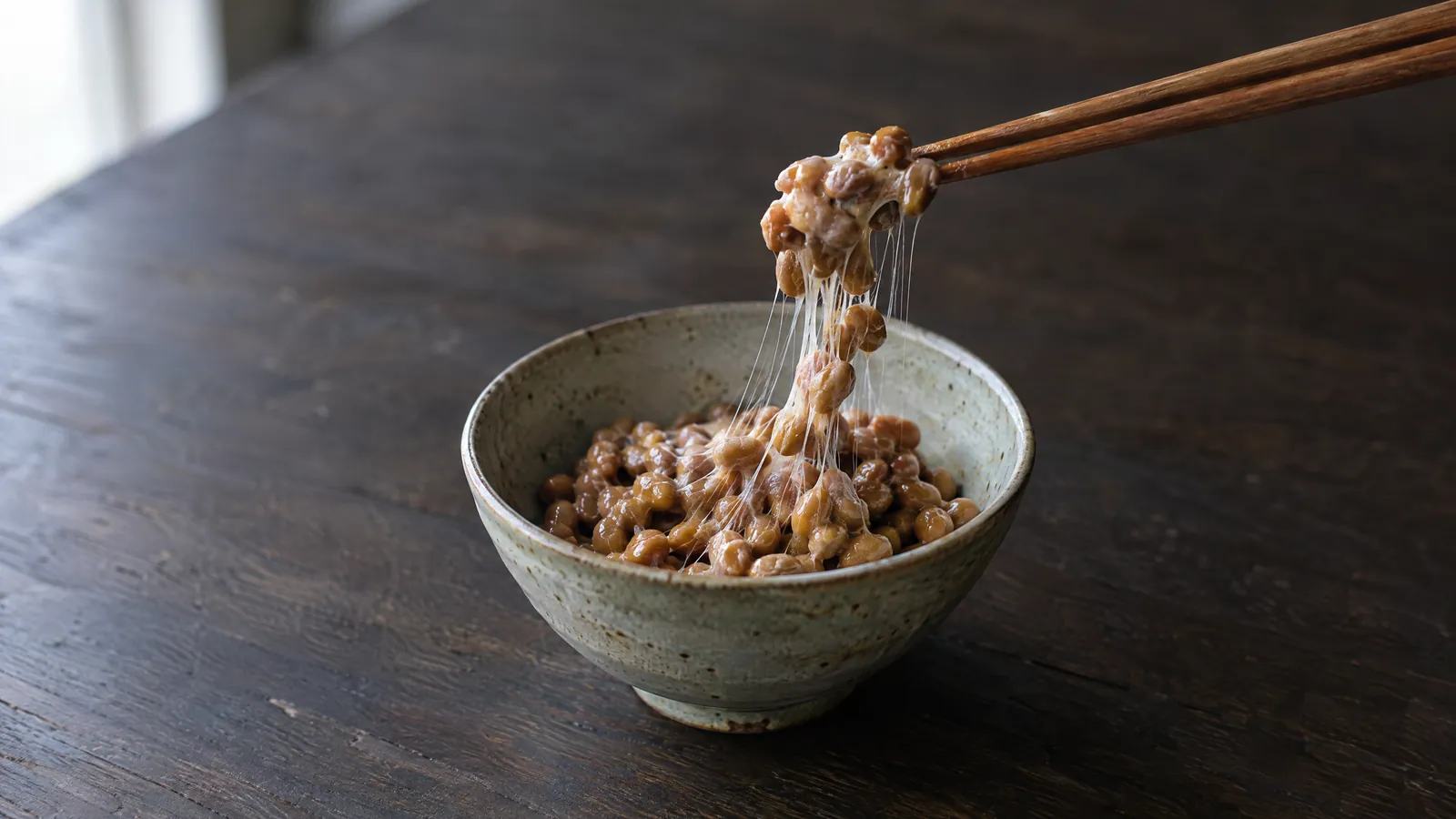
Nattokinase (NK) was isolated in 1987 by Dr. Hiroyuki Sumi, who noticed that nattō — a traditional Japanese fermented soybean food — dissolved a fibrin model with unusual efficiency. The active enzyme is produced by Bacillus subtilis natto during fermentation.
Nattokinase is a single 275–amino acid serine protease (molecular weight ~28 kDa) that cleaves fibrin directly, degrades cross-linked fibrin, and inactivates plasminogen activator inhibitor-1 (PAI-1) — thereby boosting the body’s endogenous fibrinolytic capacity. It also has mild thromboxane-inhibiting activity, which reduces platelet aggregation independently of fibrinolysis.
What the evidence shows
The cardiovascular evidence base for nattokinase is the strongest of any oral fibrinolytic supplement. Key findings:
- In a randomized crossover trial (Kim et al., 2008), 12 weeks of nattokinase 2,000 FU/day significantly reduced plasma fibrinogen, Factor VII, and Factor VIII levels in healthy adults — all independent cardiovascular risk markers.
- A 2018 systematic review (Chen et al.) synthesizing 17 clinical studies found consistent effects on fibrinogen, blood viscosity, and systolic blood pressure (mean reduction ~5 mmHg) without serious adverse events.
- Kurosawa et al. (2015) demonstrated in a controlled crossover design that a single oral dose of nattokinase produced measurable thrombolytic and anticoagulant effects within 4–8 hours, with peak activity at 6 hours, validating absorption and bioavailability.
For atherosclerosis, one 26-week RCT showed nattokinase 6,000 FU/day reduced carotid intima-media thickness by 36.6% vs 11.5% in the statin-only arm — a striking finding that requires replication but aligns with the enzyme’s pleiotropic anti-inflammatory effects.
Standard dosing
Most clinical evidence clusters around 2,000–4,000 fibrinolytic units (FU) daily, taken away from food (30 minutes before or 2 hours after meals). For cardiovascular prevention, once-daily dosing is standard. For active thrombotic risk reduction, twice-daily may be more effective based on the observed 4–8 hour activity window.
Lumbrokinase: The Broader-Spectrum Fibrinolytic
Origin and mechanism
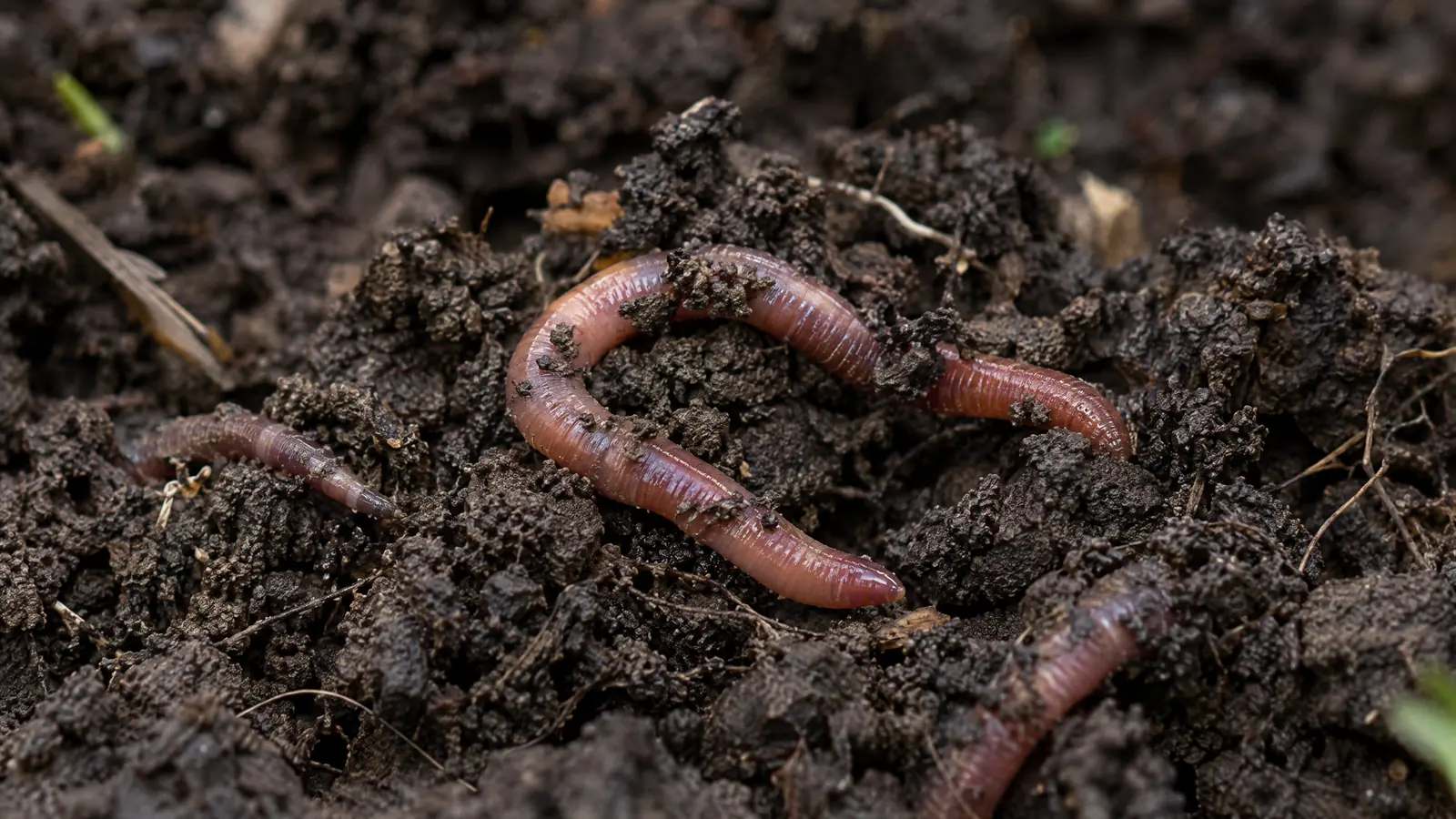
Lumbrokinase is extracted from earthworms — primarily Lumbricus rubellus and related species — and has been used in traditional Chinese medicine for millennia under the name dilong. The modern pharmaceutical preparation is a mixture of six or more serine proteases with molecular weights ranging from 25 to 45 kDa.
This multi-enzyme composition gives lumbrokinase its broader mechanism of action:
- Direct fibrinolysis: multiple proteases cleave fibrin at different sites
- Plasminogen activation: more potent than nattokinase at converting plasminogen to plasmin
- PAI-1 inhibition: similar to nattokinase but additive with direct lysis
- Protease activity against biofilm matrix proteins: several of the component enzymes hydrolyze fibronectin, collagen, and proteoglycans found in bacterial biofilms
The biofilm penetration advantage is mechanistically plausible: the earthworm’s natural environment involves moving through soil containing dense microbial biofilms, and its fibrinolytic arsenal evolved to manage pathogen exposure. Whether this translates to clinical biofilm disruption in humans is an active area of investigation.
Clinical evidence
Lumbrokinase has a substantial evidence base from East Asian clinical research, including RCTs conducted in China and Malaysia, though most are not registered on Western trial databases, which limits assessment.
- Multiple Chinese studies in ischemic stroke patients have shown lumbrokinase reduces neurological deficit scores and improves functional outcomes when added to standard care.
- For post-COVID applications, a 2022 case series and subsequent observational data documented significant symptom improvement in long-COVID patients using lumbrokinase, theoretically via clearance of the amyloid-containing microclots first described by Pretorius et al. Controlled trials are ongoing.
Standard dosing
Lumbrokinase is typically dosed at 20–60 mg daily (equivalent to approximately 400,000–1,200,000 IU of fibrinolytic activity, though unit standardization differs between manufacturers). In Chinese clinical protocols for stroke and coronary disease, three-times-daily dosing (split doses) is common. For biofilm protocols in chronic infection, the dosing is typically initiated low and escalated over 2–4 weeks to manage die-off reactions.
Head-to-Head: Where Each Enzyme Wins
Potency of fibrinolysis
Lumbrokinase outperforms nattokinase in direct in vitro and animal-model comparisons of fibrin dissolution rate. The multi-enzyme mixture degrades fibrin faster and at lower concentrations. For high fibrin burden — post-COVID microclots, acute DVT adjunct therapy, dense biofilm — lumbrokinase is the stronger tool.
For modest cardiovascular risk reduction and fibrinogen management in otherwise healthy individuals, nattokinase’s evidence base is more robust and its lower cost makes it more sustainable long term.
Biofilm applications
Both enzymes reduce biofilm viability in laboratory models, but lumbrokinase has been specifically studied in chronic Lyme protocols and is the enzyme most integrative infectiologists use when targeting Borrelia biofilm. The mechanistic rationale is better for lumbrokinase given its action on multiple matrix proteins. Nattokinase alone is unlikely to penetrate established biofilms adequately.
Cardiovascular risk reduction
Nattokinase wins here. The body of peer-reviewed Western evidence — including multiple RCTs measuring hard endpoints like fibrinogen, Factor VII, Factor VIII, and blood viscosity — is larger for nattokinase. For a patient taking a fibrinolytic primarily for cardiovascular prevention, nattokinase is the better-supported choice.
Soy allergy and dietary restrictions
Lumbrokinase contains no soy and is appropriate for patients with soy allergies or those on a low-phytoestrogen diet. Nattokinase is derived from fermented soy and should be avoided in confirmed soy allergy, though the allergenic protein content is dramatically reduced by fermentation.
Clinical Decision Framework
Choose lumbrokinase when:
- The primary indication is chronic Lyme disease or tick-borne co-infections with biofilm burden
- The patient has documented post-COVID microclots (Pretorius criteria or symptomatic long COVID)
- Previous nattokinase trial showed insufficient response
- You are implementing a layered biofilm protocol alongside antibiotics or antimicrobial peptides
- The patient has soy intolerance
Choose nattokinase when:
- The indication is primary or secondary cardiovascular prevention
- The patient is using the supplement for fibrinogen and blood viscosity management alongside statin or antiplatelet therapy
- Cost is a limiting factor and the evidence base matters
- The patient wants the supplement long-term (years): nattokinase has more long-term safety data
Consider combination when:
- Post-COVID long-haul with both microclots and cardiovascular risk factors
- Complex chronic Lyme with concurrent metabolic syndrome
- The prescribing physician wants additive fibrinolytic coverage across different clot structures
I use a combination protocol in approximately 20% of my chronic infection patients — specifically those where elevated fibrinogen, confirmed microclotting on darkfield microscopy, and biofilm-rich infections coexist. Combination use requires more vigilance around bleeding risk.
Safety, Contraindications, and Drug Interactions
Both enzymes have favorable safety profiles in published trials. Serious adverse events are rare but the following warrant attention:
Bleeding risk: Both enzymes have anticoagulant and antiplatelet effects. They should not be combined with warfarin, direct oral anticoagulants (DOACs), or high-dose aspirin without close monitoring. INR can shift unpredictably. In patients on anticoagulants, these supplements require explicit prescriber oversight — they are not self-titration supplements.
Pre-operative washout: Discontinue at least 2 weeks before any elective surgery or invasive procedure. Both enzymes impair normal hemostasis.
Vitamin K interaction: Nattokinase from whole-nattō preparations carries significant vitamin K2 content, which opposes anticoagulant medications. Purified nattokinase supplements have minimal vitamin K, but patients should confirm the product is vitamin K-depleted if they are on warfarin.
Pregnancy: Insufficient safety data for either enzyme. Avoid during pregnancy.
Herxheimer-type reactions (fibrinolytic Herx): When fibrin-embedded pathogens are disrupted by these enzymes, patients with chronic Lyme or biofilm-related infections can experience temporary symptom flares — fatigue, joint pain, flu-like symptoms — within the first 2–4 weeks of treatment. This is not an adverse effect but a therapeutic response requiring management with supportive measures and dose titration.
Related Articles
- Biofilm Disruption Protocols in Chronic Lyme Disease
- Post-COVID Microclots: What the Evidence Shows
- Serrapeptase vs Nattokinase: Choosing the Right Enzyme for Inflammation
- Protocols for Heavy Metal Chelation and Detox
- BPC-157 and TB-500: Healing Peptides for Tissue Repair
References
-
Sumi H, Hamada H, Tsushima H, Mihara H, Muraki H. A novel fibrinolytic enzyme (nattokinase) in the vegetable cheese Natto. Experientia. 1987;43(10):1110-1. PMID 3478223
-
Kim JY, Gum SN, Paik JK, et al. Effects of nattokinase on blood pressure: a randomized, controlled trial. Hypertens Res. 2008;31(8):1583-8. PMID: 18971533
-
Chen H, McGowan EM, Ren N, et al. Nattokinase: a promising alternative in prevention and treatment of cardiovascular diseases. Biomark Insights. 2018;13:1177271918785130. PMID: 30013308
-
Kurosawa Y, Nirengi S, Homma T, et al. A single-dose of oral nattokinase potentiates thrombolysis and anti-coagulation profiles. Sci Rep. 2015;5:11601. PMID: 26109079
-
Pretorius E, Venter C, Laubscher GJ, et al. Prevalence of readily detected amyloid blood clots in ‘unclotted’ Type 2 Diabetes Mellitus and COVID-19 plasma. Cardiovasc Diabetol. 2020;19(1):193. PMID: 33203441