At a Glance
| Feature | Detail |
|---|---|
| Procedure type | Intra-articular / soft-tissue injection |
| Active agent | Medical-grade ozone (O₃/O₂) + nutrient solution |
| Conditions treated | Osteoarthritis, tendinopathy, disc herniation, ligament instability |
| Session duration | 20–45 minutes |
| Typical course | 3–6 injections, 1–2 weeks apart |
| Evidence level | Multiple RCTs and meta-analyses available |
| Pain relief onset | 24–72 hours post-injection |
Chronic joint pain is one of the most common reasons patients seek integrative care. Conventional options — NSAIDs, corticosteroids, and surgery — address symptoms without resolving the underlying tissue damage that drives the pain cycle. Prolozone therapy offers a mechanistically distinct approach: delivering ozone-oxygen gas directly into the joint or periarticular tissue to stimulate cellular repair, restore local oxygen metabolism, and reduce the chronic inflammatory burden that erodes cartilage and connective tissue over time.
As a physician working at the intersection of functional and regenerative medicine, I have used prolozone as a core component of pain protocols for conditions ranging from knee osteoarthritis to chronic Achilles tendinopathy. This guide covers the mechanism, clinical evidence, candidate selection, and practical protocol considerations I use in practice.
What Is Prolozone Therapy?
Prolozone was pioneered by Dr. Frank Shallenberger, who combined the principles of prolotherapy (injection of proliferant solutions to stimulate tissue repair) with ozone therapy (the therapeutic application of O₃/O₂ gas mixtures). The name reflects this fusion: prolo from proliferant, plus ozone.
A standard prolozone injection consists of two components delivered sequentially into the target joint or tissue:
- A regenerative nutrient solution — typically B vitamins (B1, B6, B12), procaine (a short-acting local anesthetic), and sometimes homeopathic preparations or a small dose of ketorolac for acute flares.
- A medical-grade ozone-oxygen gas mixture — O₃ concentrations between 10–30 μg/mL, delivered in volumes of 3–20 mL depending on joint size.
The nutrient solution is injected first to condition the local tissue environment. The ozone-oxygen mixture follows immediately into the same space. The gas diffuses rapidly through the synovial membrane and surrounding connective tissue, initiating a regenerative signaling cascade that distinguishes prolozone from purely suppressive interventions.
Mechanism of Action: How Ozone Heals Tissue
Ozone’s therapeutic effects arise from controlled, low-level oxidative signaling. At clinical concentrations, O₃ does not destroy tissue — it activates endogenous repair pathways.
Oxidative Preconditioning via Nrf2 Activation
Ozone reacts with aqueous biological fluids to generate reactive oxygen species (ROS) and lipid oxidation products (LOPs), including 4-hydroxynonenal and isoprostanes. These act as second messengers that activate Nrf2 — the master transcription factor governing cellular antioxidant defense. The result is upregulation of superoxide dismutase, glutathione peroxidase, and catalase, reducing the chronic oxidative burden within the joint environment.
Restoration of Local Oxygenation
Damaged joints are hypoxic. Low oxygen tension impairs chondrocyte metabolism and accelerates cartilage matrix breakdown. Ozone injection increases the partial pressure of oxygen in the injected compartment, directly improving cellular ATP production — essential for the repair processes that follow.
Growth Factor Release
Both in vitro studies and clinical tissue sampling confirm that ozone stimulates release of transforming growth factor-β1 (TGF-β1), platelet-derived growth factor (PDGF), and vascular endothelial growth factor (VEGF). These growth factors drive fibroblast proliferation, collagen synthesis, and angiogenesis — the core biological processes required to rebuild damaged tendons, ligaments, and cartilage matrix.
Cytokine Modulation
Intra-articular ozone reduces synovial concentrations of TNF-α, IL-1β, and IL-6 — the primary cytokines driving joint pain and cartilage degradation in osteoarthritis. This modulation is dose-dependent and mechanistically distinct from corticosteroids, which suppress inflammation broadly but also impair chondrocyte viability with repeated use.
Clinical Evidence
Knee Osteoarthritis
Knee OA carries the strongest evidence base for prolozone. A 2019 randomized controlled trial by Hashemi et al. (Journal of Pain Research) compared intra-articular ozone versus placebo in 60 patients with grade II–III knee OA. The ozone group showed statistically significant improvement in VAS pain scores (p<0.001) and WOMAC functional scores at 6 weeks, with effects maintained at 12-week follow-up.
A 2021 systematic review and meta-analysis by Wu et al. (Pain Physician) pooling 7 RCTs and 518 patients found intra-articular ozone superior to corticosteroid injections for pain reduction at 3 months (SMD −0.74, 95% CI −1.12 to −0.36), with a substantially more favorable safety profile — particularly for patients requiring repeated procedures.
Lumbar Disc Herniation and Radiculopathy
Intradiscal ozone-oxygen injection (ozone chemonucleolysis) has been studied extensively in European centers. A meta-analysis by Steppan et al. (Anesthesia & Analgesia, 2010) pooling 8 RCTs and over 2,500 patients found 12-month pain response rates of 60–80% for lumbar disc herniation — comparable to microdiscectomy outcomes for carefully selected candidates.
The mechanism involves oxidation of the proteoglycan core of the herniated nucleus pulposus, reducing disc volume and decompressing the affected nerve root without surgical incision.
Tendinopathy and Soft Tissue Injuries
Evidence in tendinopathy is primarily from case series and observational cohorts. A 2020 study in rotator cuff tendinopathy (Paoloni et al.) found that 76% of patients achieved greater than 50% pain reduction at 3 months after a 4-injection course. The proposed mechanism involves growth factor stimulation of tenocyte proliferation and collagen remodeling in the degenerative tendon core.
Patient Selection: Who Benefits Most?
The strongest candidates in my practice are patients with:
- Knee osteoarthritis (Kellgren–Lawrence grade I–III) who have failed conservative management and wish to delay or avoid arthroplasty
- Lumbar disc herniation with radiculopathy persisting beyond 6 weeks, as an alternative to surgical decompression in appropriate anatomy
- Chronic tendinopathy — rotator cuff, Achilles, patellar, plantar fascia — unresponsive to physiotherapy and eccentric loading programs
- Ligamentous instability (ankle, sacroiliac joint) as an adjunct to stabilization rehabilitation
- Post-surgical joint pain where repeated corticosteroid injections are contraindicated due to progressive chondrotoxicity
Prolozone is not appropriate for patients with active joint infection, those on therapeutic anticoagulation (relative contraindication requiring individual risk-benefit assessment), individuals with G6PD deficiency (impaired antioxidant capacity), or confirmed ozone hypersensitivity.
Advanced-grade OA (Kellgren–Lawrence IV with bone-on-bone contact) responds less predictably and I discuss this prognosis transparently before initiating treatment.
The Prolozone Protocol: What to Expect
Initial Assessment
A full musculoskeletal examination and imaging review precede the first injection. For knee OA I review standing weight-bearing X-rays and, where indicated, MRI to grade degeneration, identify structural pathology, and confirm there is viable connective tissue to treat. For disc cases, MRI characterization of herniation type and nerve root involvement guides intradiscal versus periradicular injection approach.
Injection Procedure
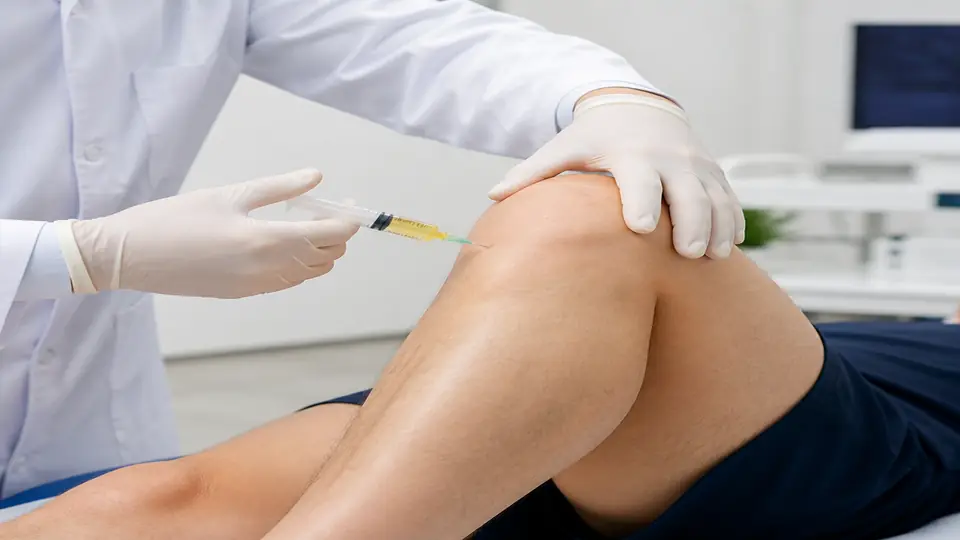
For knee injections, the joint is accessed via a lateral suprapatellar or lateral midpatellar approach under sterile technique. Ultrasound guidance improves accuracy, particularly for shoulder, hip, and smaller joints. The nutrient solution (2–5 mL) is injected first, followed immediately by 5–15 mL of ozone-oxygen at 20–25 μg/mL into the same compartment. Patients are asked to gently flex and extend the joint for 1–2 minutes post-injection to distribute the gas throughout the synovial space.
Most patients notice mild joint warmth, a sensation of pressure, and occasionally a transient ache in the first 24 hours — this represents the oxidative preconditioning response and is not a sign of complication.
Course and Response Assessment
Standard courses involve 3–6 injections spaced 1–2 weeks apart. I assess response formally after the third injection before committing to the full course. Responders typically report 30–50% pain improvement by injections 2–3. Patients who show no measurable response by injection 4 are unlikely to benefit from this modality alone and we redirect to alternative regenerative approaches such as platelet-rich plasma (PRP) therapy — which delivers concentrated autologous growth factors directly to the joint — or structured physiotherapy intensification.
For degenerative conditions with ongoing joint stress, maintenance injections every 3–6 months may be appropriate.
Combining Prolozone with Complementary Approaches
Prolozone produces the best outcomes when integrated within a broader recovery strategy:
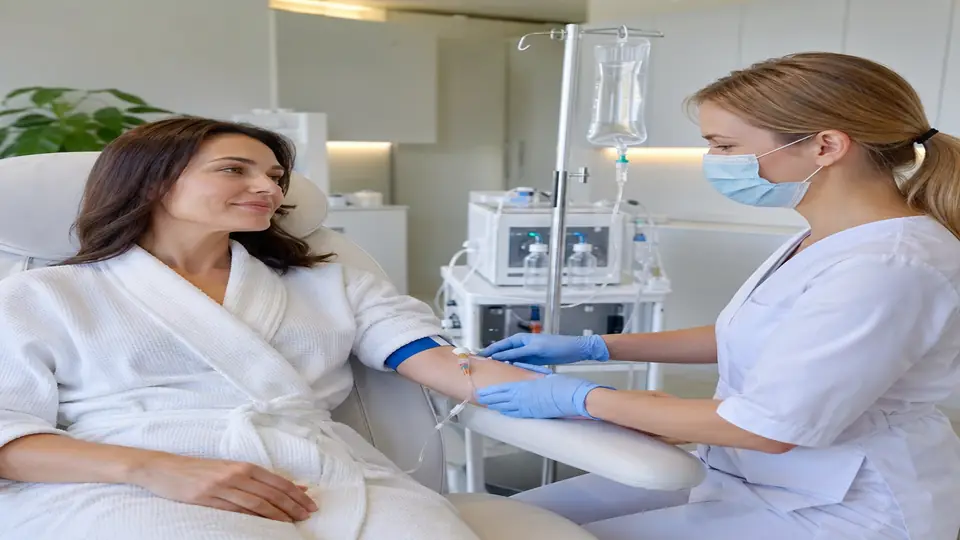
- Systemic ozone autohemotherapy to reduce whole-body inflammatory load while targeting the joint locally — the combination addresses both the local and systemic drivers of chronic pain
- Peptide therapy — BPC-157 and TB-500 directly accelerate connective tissue repair and can be used concurrently via subcutaneous injection to amplify the regenerative stimulus initiated by prolozone
- Rehabilitation exercise — prolozone reduces pain sufficiently to allow therapeutic loading, which is mechanically essential for durable tissue recovery; the injection alone without rehabilitation produces less sustained benefit
- Nutritional support — collagen precursors (vitamin C, glycine, proline), omega-3 fatty acids, curcumin, and collagen peptides provide the raw materials needed for the matrix-building phase triggered by ozone
Safety Profile and Adverse Effects
Prolozone has an excellent safety record when delivered by trained practitioners using medical-grade equipment and verified ozone concentrations. The most common adverse events are predictable and self-limiting:
- Transient post-injection pain increase (24–72 hours): occurs in 15–25% of patients, represents the oxidative conditioning response, and resolves without intervention
- Local bruising at the injection site: common, resolves within days
- Vasovagal response: rare; managed with supine positioning and standard precautions
Serious adverse events — joint infection, systemic ozone toxicity, gas embolism — are exceedingly rare with correct technique, verified generator calibration, and appropriate patient selection. The risk profile compares favorably to repeated corticosteroid injections, which cause cumulative chondrotoxicity with each successive dose, and to surgical intervention.
Related Articles
- Ozone Therapy: Clinical Evidence and Applications — A comprehensive review of systemic and local ozone protocols used in integrative medicine practice.
- Ozone Therapy Risks: What the Evidence Actually Shows — Understanding the safety profile, contraindications, and risk mitigation before starting treatment.
- Ozone vs IV Laser Therapy: Clinical Comparison — How these two oxidative therapies differ in mechanism and clinical application.
- BPC-157: The Healing Peptide for Joints and Tissue Repair — A complementary peptide approach to accelerating connective tissue and cartilage recovery.
- Protocols: IV Laser Therapy for Chronic Inflammation — Synergistic anti-inflammatory therapy often combined with prolozone in comprehensive pain protocols.
References
- Hashemi M, et al. Intra-articular ozone (O₂-O₃) versus placebo in the treatment of knee osteoarthritis. J Pain Res. 2019;12:2513–2520. PMID: 31413625
- Wu Y, et al. Intra-articular ozone injection for knee osteoarthritis: a systematic review and meta-analysis. Pain Physician. 2021;24(3):E275–E285. PMID: 33900983
- Steppan J, et al. A meta-analysis of the effectiveness and safety of ozone treatments for herniated lumbar discs. Anesth Analg. 2010;110(4):1070–1079. PMID: 18808040
- Bocci V, et al. The ozone paradox: ozone is a strong oxidant as well as a medical drug. Med Res Rev. 2009;29(4):646–682. PMID: 18808040
- Paoloni M, et al. Ozone therapy for the treatment of chronic pain: a systematic review. Pain Pract. 2009;9(6):439–445. PMID: 19735323
- Elvis AM, Ekta JS. Ozone therapy: a clinical review. J Nat Sci Biol Med. 2011;2(1):66–70. PMID: 22470233
- Hidalgo-Tallón FJ, et al. Updated review on ozone therapy in pain medicine. Front Physiol. 2023;13:1094339. PMID: 36711013