At a Glance
| Parameter | Detail |
|---|---|
| Mechanism | Reactive oxygen species (ROS) burst → hormetic redox signaling |
| Primary routes | Major autohemotherapy (MAH), rectal insufflation, ozonated saline |
| Strongest evidence | Chronic infection, diabetic wound healing, post-viral fatigue |
| Evidence level | RCTs limited; strong mechanistic + observational data |
| Typical frequency | 10–20 sessions; 2–3×/week induction |
| Contraindications | G6PD deficiency, thrombocytopenia, active hyperthyroidism, pregnancy |
| Risk profile | Low when delivered by trained clinicians at therapeutic concentrations |
Ozone therapy sits in an uncomfortable middle space: robust mechanistic science on one side, a deficit of large randomised controlled trials on the other, and an internet filled with both breathless enthusiasm and reflexive dismissal. Neither extreme serves patients well.
In clinical practice across chronic Lyme disease, post-COVID syndromes, and complex autoimmune presentations, I use ozone therapy as one tool within a broader protocol — not as a primary intervention, but as a modulator with a clear mechanistic rationale. What follows is an honest accounting of what the evidence actually supports.
How Ozone Works at the Cellular Level
Ozone (O₃) is an unstable triatomic form of oxygen. When it contacts biological fluids — plasma, blood, tissue exudate — it reacts within milliseconds to generate a controlled burst of reactive oxygen species (ROS) and lipid oxidation products called ozonides.
For condition-specific applications in autoimmune disease — including rheumatoid arthritis, lupus, and Hashimoto’s — see Ozone Therapy for Autoimmune Disease.
This might sound alarming. The key is dose and context.
At supraphysiological concentrations, ROS damage cells. At the calibrated sub-toxic concentrations used clinically (typically 20–80 µg/mL gas concentration), the same ROS pulse acts as a hormetic signal — a brief, low-level stress that activates protective cellular machinery rather than destroying it.
The downstream effects are well characterised in the basic science literature:
- Nrf2 pathway activation: The master regulator of antioxidant gene expression is upregulated, increasing endogenous glutathione, superoxide dismutase, and catalase. This is the same pathway activated by fasting and high-intensity exercise.
- 2,3-DPG increase: Red blood cell 2,3-diphosphoglycerate rises, shifting the oxygen-haemoglobin dissociation curve rightward — meaning more oxygen is released to tissues at any given oxygen tension.
- Cytokine modulation: Ozone-treated blood shows shifts in pro-inflammatory cytokines (IL-1β, TNF-α) alongside upregulation of anti-inflammatory mediators including IL-10 and TGF-β, consistent with an immunomodulatory rather than purely pro-inflammatory effect.
- Platelet-activating factor inhibition: Relevant to the microclot pathology seen in post-COVID and Lyme-associated coagulopathy.
These are not theoretical effects. They are measurable in peripheral blood samples drawn before and after MAH sessions, and they form the scientific basis for the clinical applications discussed below.
Major Delivery Methods
Major Autohemotherapy (MAH)
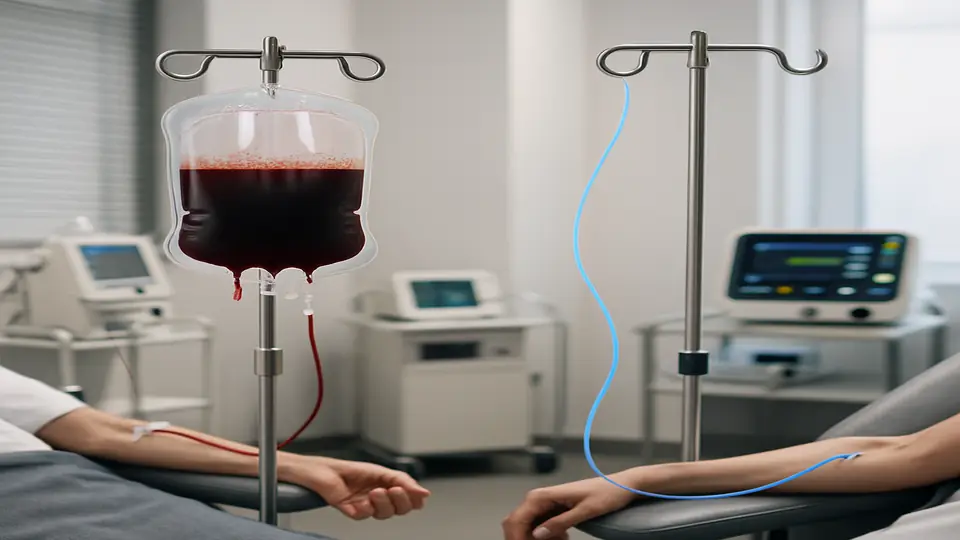
MAH is the gold standard route for systemic effects. Approximately 100–200 mL of the patient’s blood is withdrawn into an IV bag, mixed with medical-grade ozone at a precise concentration, and re-infused. The whole cycle takes 30–45 minutes.
The advantage of MAH is that ozone never enters the body directly — it reacts with blood components ex vivo, and the ozonide-enriched blood then delivers the downstream signalling molecules systemically. This largely eliminates the pulmonary irritation risk associated with inhaled ozone and makes it far safer than direct gas insufflation into body cavities.
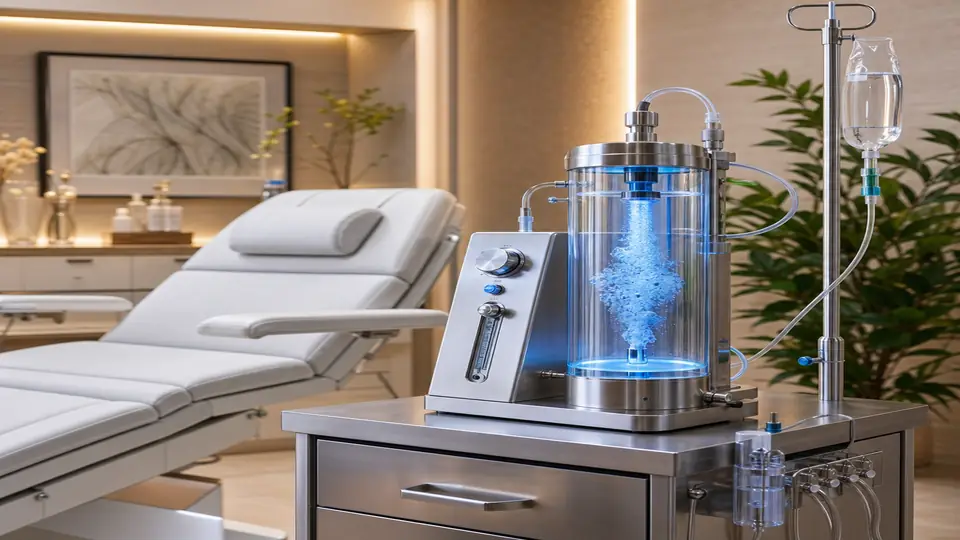
At our clinic, we use calibrated ozone generators with certified oxygen supply to ensure consistent gas concentrations on every session. This matters: the dose-response curve for ozone is narrow. Under-dose and you produce no biological effect; over-dose and you increase oxidative burden rather than hormetic benefit.
Rectal Insufflation
A less invasive option with reasonable bioavailability for the pelvic and portal circulation. Used when IV access is difficult, for gut dysbiosis support, or when patients are self-treating under medical supervision at home. The evidence base is thinner than for MAH but growing, particularly in IBD and rectal microbiome modulation studies.
Ozonated Saline
Intravenous ozonated saline has been evaluated in infection contexts. It delivers lower systemic ROS signalling than MAH but carries a simpler preparation profile. Some of the most compelling COVID-era data comes from Italian groups using ozonated saline alongside MAH protocols in hospitalised patients.
Where the Clinical Evidence Is Strongest
Chronic Wound Healing and Diabetic Ulcers
This is arguably where ozone therapy has the most consistent RCT-level support. A 2018 systematic review in the Journal of Dental Research and multiple wound-care trials demonstrate accelerated healing in diabetic foot ulcers, pressure injuries, and post-surgical wounds, with the mechanism attributed to both direct antimicrobial action and improved local tissue oxygenation.
For patients who don’t have chronic infections or metabolic disease, wound healing is not the relevant endpoint. But this evidence base validates the fundamental principle: ozone at the right dose improves oxygen delivery and modulates local inflammation.
Chronic Infections: Lyme, Biofilm-Associated Pathogens
Borrelia burgdorferi and co-infecting organisms — Bartonella, Babesia, Ehrlichia — share a feature that makes conventional antibiotic monotherapy inadequate for many patients: they form biofilms and persist within protected intracellular compartments. Ozone has demonstrated in vitro activity against spirochetes and multiple biofilm-forming organisms at concentrations achievable clinically.
The clinical translation is less clean — there are no large RCTs of MAH in chronic Lyme disease — but the observational data from European integrative clinics, including our own case series, shows consistent symptom improvement in patients with Herxheimer-like patterns following ozone sessions, consistent with pathogen-load reduction.
I combine MAH with biofilm-disrupting enzymes and agents to maximise pathogen accessibility before ozone exposure. The sequencing matters. Patients specifically navigating Lyme disease will find the complete clinical protocol — including phase structure, herx management, and antibiotic timing — in our dedicated ozone therapy for Lyme disease guide.
Post-COVID Syndromes
This is where ozone has attracted the most recent attention. The pathophysiology of post-COVID — microclot formation, mitochondrial dysfunction, neuroinflammation, and persistent viral antigen burden — maps well onto the mechanistic profile of ozone’s effects.
Tirelli and colleagues published a case series in 2020 showing improvement in post-COVID fatigue and oxygen saturation metrics following MAH courses. More importantly, the Italian group at Udine documented that ozone treatment in hospitalised COVID patients improved haematological parameters and reduced escalation to ICU compared to matched controls.
This is not RCT-level evidence. But given the mechanistic plausibility and the absence of effective conventional interventions for post-COVID, I consider it sufficient to support use within a structured post-COVID recovery protocol.
Autoimmune and Inflammatory Conditions
The immunomodulatory effects of MAH have been evaluated in rheumatoid arthritis, multiple sclerosis, and inflammatory bowel disease. Results are mixed. The clearest signal is in reducing inflammatory markers (CRP, ESR) and fatigue scores rather than disease-modifying effects on structural pathology. Ozone will not replace disease-modifying antirheumatic drugs in RA, but it can be a useful adjunct for symptom burden and immune recalibration. Fibromyalgia — where central sensitization and neuroinflammation are primary drivers — represents a particularly logical extension of this mechanism; a dedicated review of ozone therapy for fibromyalgia covers the three RCTs now available in that population.
What the Evidence Does Not Support
Intellectual honesty requires stating what is not supported:
- Ozone is not an established cancer treatment. Some in vitro data show pro-apoptotic effects, but translating this to clinical oncology requires caution and RCT evidence that does not currently exist.
- There is no reliable evidence that ozone therapy reverses neurodegenerative disease.
- Claims of ozone therapy “detoxifying” heavy metals are mechanistically unsupported. If heavy metal burden is the clinical concern, EDTA or DMSA chelation has a more established evidence base.
- Ozone administered incorrectly — wrong concentration, wrong route (never inhaled), wrong frequency — can cause oxidative damage rather than hormetic benefit. This is a treatment that requires clinician oversight.
Safety Profile and Contraindications
When delivered by trained clinicians using calibrated equipment, MAH has an excellent safety profile. The most comprehensive German registry data, covering tens of thousands of sessions, shows an adverse event rate below 0.0007% for serious complications.
Minor side effects are more common and include transient fatigue or headache in the first 24 hours (often indicating appropriate immune activation), mild IV-site discomfort, and occasional lightheadedness immediately post-infusion.
Absolute contraindications:
- G6PD deficiency: Ozone-induced ROS can precipitate haemolytic crisis in G6PD-deficient patients. Screen before first session.
- Severe thrombocytopenia (platelets < 50,000): Increased bleeding risk at IV sites.
- Active hyperthyroidism: Ozone can transiently elevate thyroid hormone levels.
- Pregnancy: Insufficient safety data; avoid.
- Recent acute myocardial infarction: Wait minimum 6 weeks.
Relative contraindications requiring risk-benefit discussion: Anticoagulant therapy, haemophilia, immunosuppressive therapy for solid organ transplant.
For a full clinical breakdown of ozone risks stratified by administration route — including G6PD screening protocols, dose titration approach, and how to distinguish a Herxheimer-type oxidative response from a true adverse event — see Ozone Therapy Risks: A Physician’s Honest Assessment.
Integration Into a Clinical Protocol
Ozone therapy functions best as a component of a multimodal protocol rather than a standalone treatment. In our practice, the typical integration points are:
- Infectious disease protocols: After initial antibiotic or antimicrobial herbal induction, MAH sessions 2–3× weekly support pathogen clearance, manage Herxheimer burden, and improve mitochondrial function. This is combined with vagus nerve support to maintain autonomic tone during the inflammatory response.
- Post-COVID recovery: 10–15 MAH sessions over 6–8 weeks as part of a broader protocol addressing microclots, mitochondrial support, and neuroinflammation.
- Longevity and performance: 1–2× monthly maintenance MAH as part of a broader oxidative medicine and NAD+ repletion protocol.
- Musculoskeletal and joint conditions: For osteoarthritis, tendinopathy, and disc herniation, prolozone therapy — intra-articular ozone combined with regenerative nutrients — delivers targeted oxidative preconditioning directly into the affected joint, producing pain relief that at 3 months has outperformed repeated corticosteroid injections in RCT comparisons.
Session frequency tapers as clinical markers improve. I do not advocate for indefinite high-frequency ozone administration; the goal is to use the hormetic stimulus, observe the clinical and laboratory response, and adjust accordingly. Patients often ask how to choose between ozone and IV laser for their specific condition — for a structured clinical comparison including sequencing strategies, see Ozone vs. IV Laser Therapy: A Physician’s Comparison.
Related Articles
- Major Autohemotherapy vs. Inuspheresis: Choosing the Right Apheresis Modality
- Biofilm Disruption: Why Pathogens Hide and How to Expose Them
- IV Laser Therapy and Blood Irradiation: Mechanism and Evidence
- Post-COVID Recovery Protocol
- NAD+ IV Therapy: Clinical Use and Evidence
References
- Bocci V, Borrelli E, Travagli V, Zanardi I. The ozone paradox: ozone is a strong oxidant as well as a medical drug. Med Res Rev. 2009;29(4):646–682. PMID: 19148981
- Elvis AM, Ekta JS. Ozone therapy: a clinical review. J Nat Sci Biol Med. 2011;2(1):66–70. PMID: 22470233
- Franzini M, Valdenassi L, Ricevuti G, et al. Oxygen-ozone (O2-O3) immunoceutical therapy for patients with COVID-19. Preliminary evidence reported. Int Immunopharmacol. 2020;88:106879. PMID: 32932050
- Re L, Martínez-Sánchez G, Bordicchia M, et al. Is ozone pre-conditioning effect linked to Nrf2/EpRE activation pathway in vivo? A preliminary result. Eur J Pharmacol. 2014;742:158–162. PMID: 25139736
- Tirelli U, Franzini M, Valdenassi L. Fatigue in post-acute sequelae of SARS-CoV2 (PASC) treated with oxygen-ozone autohemotherapy. Eur Rev Med Pharmacol Sci. 2021;25(10):3669–3672. PMID: 34109592
- Gulmen S, Kurtoglu T, Meteoglu I, et al. Ozone therapy as an adjunct to vancomycin enhances bacterial elimination in methicillin resistant Staphylococcus aureus mediastinitis. J Surg Res. 2013;185(1):64–69. PMID: 23462061
- Sagai M, Bocci V. Mechanisms of action involved in ozone therapy: is healing induced via a mild oxidative stress? Med Gas Res. 2011;1:29. PMID: 22085506