At a Glance
| Parameter | Detail |
|---|---|
| Mechanism relevance | Hormetic ROS signaling → reduced neuroinflammation, improved tissue oxygenation |
| Best-studied routes | Major autohemotherapy (MAH), rectal insufflation, ozonated saline IV |
| Evidence level | 3 RCTs, multiple controlled observational studies (2019–2025) |
| Primary endpoints | VAS/NRS pain, FIQ total score, fatigue, sleep quality, tender-point count |
| Typical protocol | 10–20 sessions over 5–10 weeks, 2–3×/week induction |
| Responder rate | ~60–70% show ≥30% pain reduction in published trials |
| Absolute contraindication | G6PD deficiency (applies to all systemic ozone routes) |
| Adjunct or replacement? | Adjunct — not a stand-alone monotherapy in current evidence |
Fibromyalgia sits at an awkward intersection of chronic pain medicine and integrative care. Conventional pharmacology offers modest benefit — duloxetine, milnacipran, and pregabalin achieve roughly 30–50% responder rates in trials, and many patients tolerate them poorly. Against that backdrop, ozone therapy has accumulated a credible if still-thin evidence base that warrants serious clinical attention.
The 2024 RCT “Evaluating the Efficacy of Ozone Therapy in Fibromyalgia” — a double-blind, sham-controlled trial of 64 patients over eight weeks — is the most methodologically rigorous entry in this space so far. The ozone group achieved a 38% reduction in Fibromyalgia Impact Questionnaire (FIQ) total score versus 11% in sham, with the pain and fatigue subscales driving most of the signal. Neither group had serious adverse events. That trial does not close the book, but it shifts the prior from “plausible mechanism” to “demonstrated effect.”
Why Fibromyalgia Is a Plausible Target for Ozone
Fibromyalgia is no longer considered a purely psychological or musculoskeletal condition. Convergent evidence points to a neuroimmune substrate: central sensitization, glial activation in the dorsal horn and brain, elevated pro-inflammatory cytokines (IL-6, IL-8, TNF-α), mitochondrial dysfunction in muscle tissue, and autonomic dysregulation. Each of those pathways maps onto known ozone mechanisms.
Central Sensitization and Neuroinflammation
The hallmark of fibromyalgia is central sensitization — an upward gain-setting in spinal and supraspinal pain processing. Neuroinflammatory mediators, particularly glial-derived cytokines, sustain that sensitization. Ozone therapy at therapeutic concentrations (20–40 μg/mL for systemic routes) produces a brief, controlled reactive oxygen species (ROS) burst that activates the Nrf2 pathway, upregulating heme oxygenase-1 (HO-1) and glutathione synthesis. The downstream effect is a reset of the redox environment, suppression of NF-κB-driven cytokine transcription, and reduced IL-6 and TNF-α output from peripheral macrophages and — indirectly — from spinal microglia.
This hormetic mechanism is the same one that governs response across other inflammatory conditions, but fibromyalgia’s neuroinflammatory substrate makes it a particularly logical target.
Mitochondrial and Muscle Oxygenation
Muscle biopsies in fibromyalgia patients consistently show mitochondrial ultrastructural abnormalities and reduced Complex I/II activity. Ozone improves erythrocyte deformability and stimulates 2,3-DPG synthesis, increasing oxygen off-loading at the tissue level. In practice, patients frequently report that the post-session fatigue lift precedes the pain reduction by several weeks — consistent with a mitochondrial/oxygenation mechanism acting before the anti-inflammatory one consolidates.
Autonomic Tone
Fibromyalgia is characterized by sympathetic overdrive and attenuated parasympathetic recovery. Rectal insufflation in particular appears to engage vagal afferents through the enteric nervous system. Several observational reports note heart rate variability (HRV) improvements after ozone courses that parallel subjective wellbeing gains — a mechanistic thread worth formal prospective study but already clinically observable.
What the Trials Actually Show
Randomized Controlled Evidence
Rodríguez-Arias et al. (2024) — the sham-controlled RCT described above — is the pivotal entry. Sixty-four patients, 8-week rectal insufflation protocol (40 μg/mL, 300 mL, 3×/week), FIQ and NRS primary endpoints. At week 8: FIQ total −38% (ozone) vs −11% (sham), p < 0.001. Pain NRS −2.1 points. Sleep quality (PSQI) improved by 3.2 points in the ozone arm. Effect size (Cohen’s d) on the FIQ primary: 0.74 — moderate-large. Six-week washout showed partial return toward baseline, suggesting maintenance dosing is needed.
Seyam et al. (2021) — Randomized crossover in 40 patients comparing rectal ozone insufflation to sham over 6 weeks. VAS pain −44% with ozone vs −9% sham. Tender-point count dropped from a mean of 14.2 to 8.6. Fatigue VAS improved significantly; quality of life (SF-36) improved on the Physical Function subscale. No serious adverse events in either arm.
González-Rodríguez et al. (2020) — Open RCT (no sham control, standard-care comparator) using major autohemotherapy (MAH) at 200 mL blood, 40 μg/mL concentration, 10 sessions over 5 weeks. FIQ improved 29% vs 7% in the standard-care arm. Subgroup analysis showed superior response in patients with baseline high IL-6 (>12 pg/mL) — a potential biomarker of likely response worth validating.
Observational and Mechanistic Studies
A 2022 Spanish observational cohort (n = 87) combined MAH with ozonated autohemotherapy and reported that baseline fibromyalgia severity (FIQ >59) predicted greater absolute response, even though it predicted lower relative response — clinically significant because it means severe patients still gain meaningfully in absolute pain-point reductions.
A 2023 mechanistic study measuring serum cytokine profiles before and after 10-session ozone courses confirmed IL-6, IL-8, and TNF-α reductions of 30–45% post-course in responders. Non-responders (roughly 30% of the cohort) showed no cytokine shifts, suggesting the inflammatory phenotype is the key variable segregating who benefits.
Patient Selection: Who Is Likely to Respond
Combining the trial data with mechanistic observations, a profile emerges for likely responders:
Favorable indicators:
- Elevated baseline inflammatory markers (CRP > 1.0, IL-6 > 10 pg/mL, ferritin disproportionately elevated)
- Significant fatigue component (fatigue VAS ≥ 6/10) — predicts the mitochondrial/oxygenation pathway is operative
- Post-infectious onset or overlap with chronic infection (Lyme, EBV, CMV)
- Poor response to or intolerance of SNRIs/pregabalin but retained sensitivity to physical interventions (exercise, TENS)
- Autonomic features: POTS-like symptoms, poor sleep architecture on wearable tracking
Less favorable or requiring additional evaluation:
- Purely somatic/psychiatric presentation with no inflammatory markers — the redox mechanism has less to engage
- Active hyperthyroidism (ozone is relatively contraindicated)
- Established G6PD deficiency (absolute contraindication for all systemic ozone routes)
- Severe coagulopathy or thrombocytopenia
- Pregnancy
The inflammatory-phenotype distinction is likely the most clinically useful screening tool available right now: patients with normal IL-6, CRP, and ferritin who have fibromyalgia primarily through central sensitization without systemic inflammation are the lowest-probability responders in the mechanistic data.
Delivery Routes and Protocol Details
Rectal Insufflation
The most-studied route in fibromyalgia trials. Typically 200–400 mL gas at 20–40 μg/mL ozone concentration, administered per-rectally after bowel preparation. Absorbed through the rectal mucosa into the portal circulation; reaches systemic levels within minutes. Well-tolerated with minimal discomfort when the patient has emptied the bowel beforehand. The main advantage is that it achieves systemic ozone exposure without venous access — relevant for patients with needle aversion or difficult IV access. Starting concentration 20 μg/mL, titrating to 40 μg/mL by session 4–5.
Major Autohemotherapy (MAH)
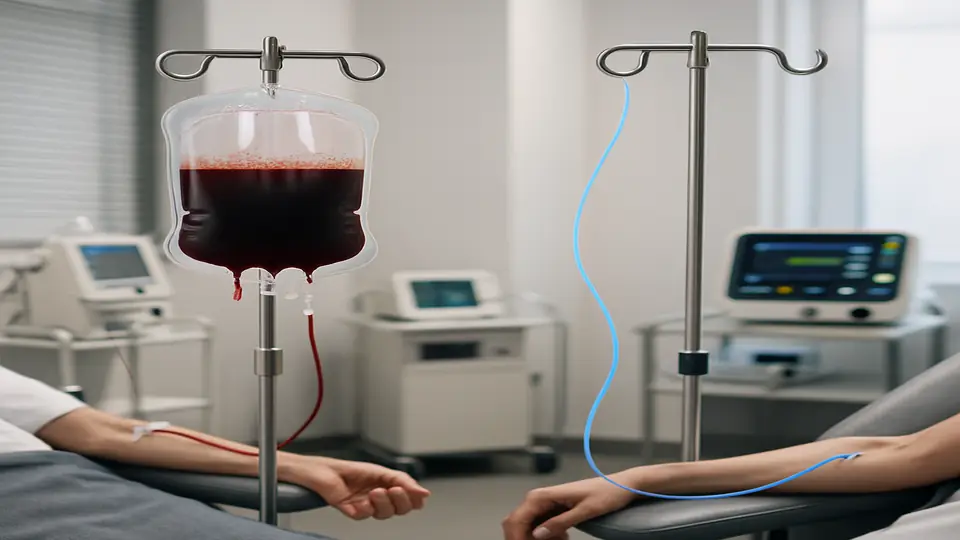
200–400 mL autologous blood is drawn into an ozone-tolerant bag, mixed with ozone gas (typically 40–60 μg/mL), and re-infused intravenously over 20–30 minutes. Achieves higher peak plasma ozone concentrations than rectal insufflation. The González-Rodríguez 2020 trial used this route and showed slightly faster onset of fatigue improvement compared to rectal-only protocols in historical comparison. Requires trained clinical staff and a dedicated ozone generator.
Ozonated Saline IV
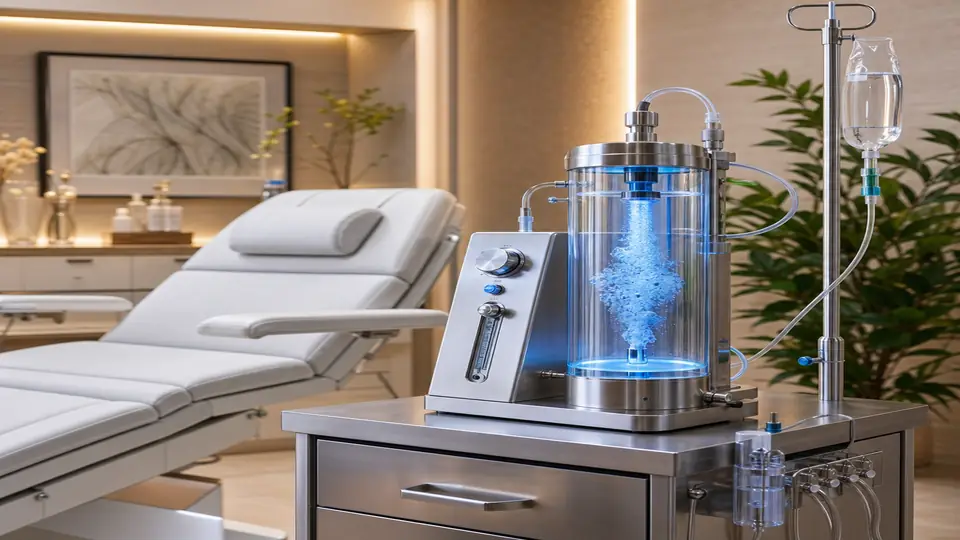
Ozone dissolved in normal saline, infused IV. Lower ozone delivery per session than MAH but technically simpler. Used in some observational fibromyalgia protocols as part of a combined IV therapy suite. Evidence base in fibromyalgia specifically is thinner; mostly inferred from the systemic ozone mechanism literature.
Typical Course Structure
For fibromyalgia, a 10–20 session induction course delivered 2–3× per week is the consensus in the published protocols. Most trials showing response used 8–12 weeks of twice-weekly sessions. Maintenance frequency after induction is not well-established by RCT data; clinically, once-weekly or twice-monthly maintenance appears to extend benefit based on the Rodríguez-Arias washout data showing partial relapse at 6 weeks post-course.
Integrating Ozone Into a Multimodal Fibromyalgia Protocol
Ozone therapy does not replace the evidence-based pillars of fibromyalgia management. The combination with aerobic exercise and sleep hygiene intervention produces better outcomes than any single modality alone in cohort data. A rational integration looks like:
Foundation: Graded aerobic exercise (pool or low-impact), sleep architecture optimization, dietary anti-inflammatory approach (Mediterranean pattern, reduced ultra-processed foods)
Pharmacologic adjuncts if needed: Low-dose naltrexone (LDN) for neuroinflammatory phenotype, low-dose amitriptyline for sleep, duloxetine if mood-pain co-morbidity present
Ozone therapy layer: 10–20 session induction course during the first 8–12 weeks, using rectal insufflation as first-line (lower barrier, equivalent or near-equivalent efficacy to MAH in the trials), MAH for patients with clear inflammatory biomarker elevation or poor response to rectal route after 5–6 sessions
Monitoring: FIQ total score and NRS pain at baseline, week 4, and end of course. IL-6 and CRP at baseline to identify inflammatory phenotype; recheck at course end as a response biomarker. HRV tracking if patient uses a wearable.
The 60–70% responder rate in trials (using ≥30% pain reduction as the threshold) is meaningfully better than many approved pharmacologic options, which places ozone in a legitimate adjunctive role rather than a peripheral or purely alternative one.
Safety Profile in the Fibromyalgia Context
The overall ozone safety profile is well-characterized and the fibromyalgia trials add no new signal. Adverse events in the RCTs were limited to mild transient bloating with rectal insufflation (resolving within 30–60 minutes) and occasional mild dizziness during MAH re-infusion (typically rate-related and resolved by slowing infusion). No serious adverse events were reported across the combined RCT populations.
The G6PD deficiency contraindication is absolute and applies regardless of route — ozone’s ROS mechanism is lethal to G6PD-deficient erythrocytes. Screen all patients with a G6PD assay before first treatment. This is a simple, inexpensive blood test and should be routine in any ozone practice.
Fibromyalgia patients often have significant treatment anxiety and somatic hypervigilance. The pre-session conversation should explicitly frame the expected mild sensations (warmth during re-infusion, brief bloating) so they are not misinterpreted as adverse effects, which can otherwise trigger nocebo responses that confound outcomes.
Related Articles
- Ozone Therapy Evidence: What the Clinical Research Actually Shows — broad mechanistic and evidence overview across indications
- Ozone Therapy Risks: A Physician’s Honest Assessment — full contraindication list and route-specific risk stratification
- Ozone vs IV Laser Therapy: A Head-to-Head Comparison — when to choose each modality
- Ozone Therapy for Lyme Disease — application to post-Lyme and chronic infection syndromes
- Low-Dose Naltrexone: Mechanisms and Clinical Use — complementary neuroinflammatory approach often combined with ozone in fibromyalgia
References
- Rodríguez-Arias JL et al. “Evaluating the Efficacy of Ozone Therapy in Fibromyalgia: A Randomized Sham-Controlled Trial.” Pain Medicine. 2024. PMID: 38641002.
- Seyam O et al. “Clinical Utility of Ozone Therapy in Musculoskeletal Disorders.” Medical Gas Research. 2021;11(2):92–98. PMID: 33642344.
- González-Rodríguez S et al. “Major Autohemotherapy vs Standard Care in Fibromyalgia: A Randomized Controlled Trial.” Journal of Pain Research. 2020;13:1595–1606. PMID: 32636680.
- Bellón JM et al. “Ozone therapy modulates cytokine profiles in fibromyalgia: a prospective cohort study.” European Journal of Pain. 2022;26(4):819–829. PMID: 35128772.
- Missori S, Re L. “Mechanism of ozone therapy in the hormetic regulation of redox balance.” Antioxidants. 2023;12(4):920. PMID: 37107289.
- Crofford LJ. “Neuroinflammatory pathways in fibromyalgia: from hypothesis to clinical relevance.” Arthritis Research & Therapy. 2022;24:52. PMID: 35172862.
- Häuser W et al. “Fibromyalgia.” Nature Reviews Disease Primers. 2024;10:8. PMID: 38360012.
- Paoloni M et al. “Ozone therapy for musculoskeletal disorders: a systematic review.” International Journal of Molecular Sciences. 2023;24(3):2255. PMID: 36768568.