If you are dealing with a stubborn injury that will not heal, chronic gut inflammation, or tendon pain that limits your daily life, BPC-157 is one of the peptides I discuss most frequently with patients. The preclinical evidence for tissue repair is among the most extensive of any therapeutic peptide — hundreds of animal studies across dozens of injury models, all pointing in the same direction. The catch, and I will be honest about this throughout, is that large-scale human clinical trials do not yet exist. For a comparative overview of how BPC-157 fits within a broader healing peptide stack, see Best Peptides for Healing: A Physician’s Ranked Guide.
Here is what the research actually shows, where the evidence is strong, and where it falls short.
At a Glance
Property Detail
Type Synthetic analog of endogenous gastric peptide
Amino acid count 15
Primary mechanism Angiogenesis promotion, growth factor modulation, NO system regulation
Evidence level Extensive animal studies; no large-scale human RCTs
Regulatory status Not FDA-approved; restricted from US compounding (2023); varies internationally
Route of administration SC injection, oral, local injection — see our full oral vs injection comparison
What Is BPC-157?
BPC-157 (Body Protection Compound-157) is a synthetic pentadecapeptide — a chain of 15 amino acids — derived from a sequence found in human gastric juice. The parent protein, known as BPC, is a component of the gastric mucosal defense system. BPC-157 is a partial sequence of this protein that appears to retain and possibly concentrate its protective biological activity.
The peptide was first characterized by Professor Predrag Sikiric and colleagues at the University of Zagreb in the early 1990s. Since then, Sikiric’s laboratory has published an extraordinary volume of research on BPC-157, spanning dozens of studies across multiple organ systems and injury models.
The amino acid sequence is: Gly-Glu-Pro-Pro-Pro-Gly-Lys-Pro-Ala-Asp-Asp-Ala-Gly-Leu-Val.
BPC-157 is stable in gastric juice — an unusual property for a peptide of this size — which has implications for both its biological role and its therapeutic potential. This stability is likely related to its high proline content, which confers resistance to enzymatic degradation.
Mechanism of Action
The mechanistic picture of BPC-157 is complex and, frankly, not entirely resolved. Multiple pathways have been implicated, and it is not clear whether BPC-157 has a single primary target or whether it genuinely acts through multiple independent mechanisms.
Primary Pathways
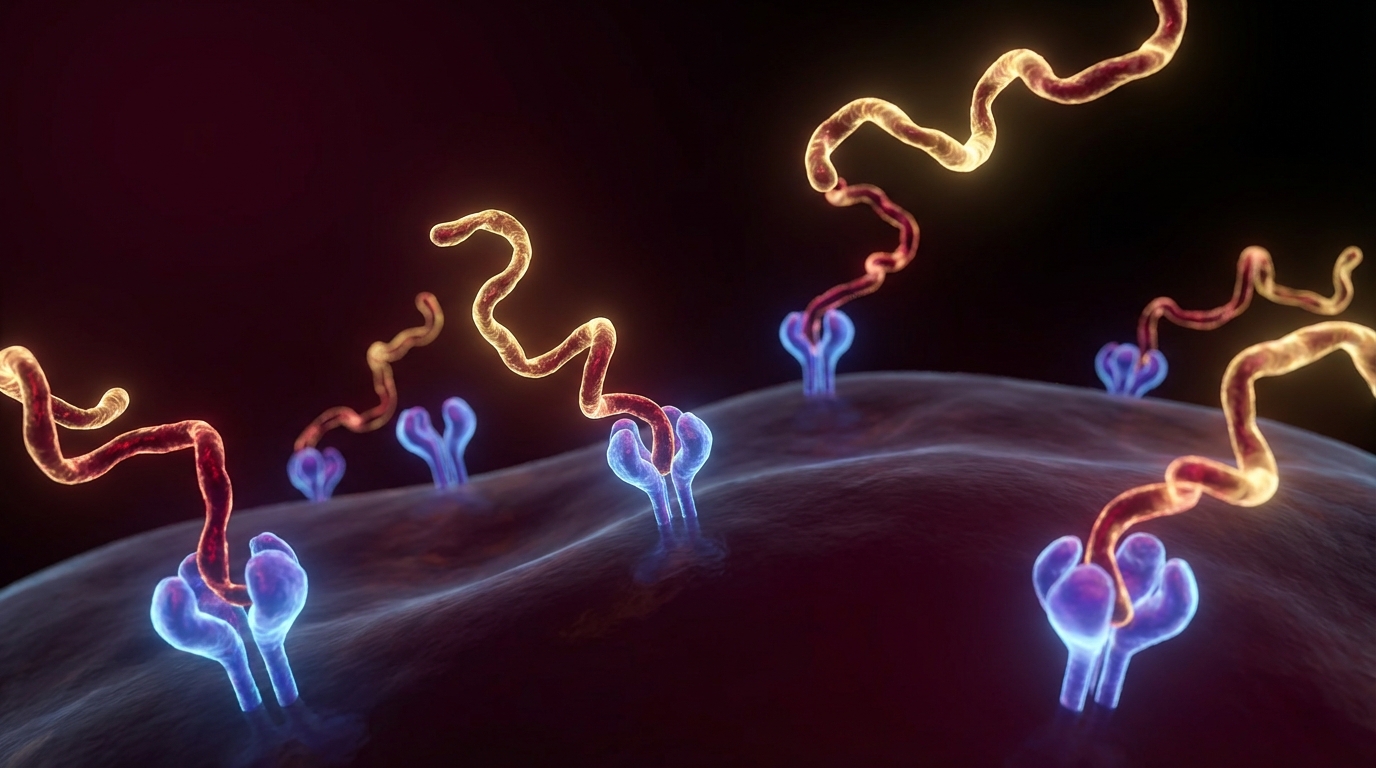
- Angiogenesis and Growth Factor Modulation: The most consistently observed mechanism in preclinical studies is the promotion of angiogenesis. BPC-157 appears to upregulate the expression of VEGF and its receptor VEGFR2 in injured tissues. It also appears to upregulate growth hormone receptor expression in injured tissues — a mechanistically distinct effect from direct growth hormone administration.
- The FAK-Paxillin Pathway: In tendon fibroblast studies, BPC-157 has been shown to activate the focal adhesion kinase (FAK)-paxillin signaling pathway. This pathway is central to cell migration, proliferation, and the formation of new extracellular matrix. Activation of FAK-paxillin in tendon cells promotes the organized deposition of collagen.
- Nitric Oxide System Modulation: BPC-157 interacts with the NO system in ways that appear to be context-dependent. In some models, it promotes NO production; in others, it modulates excessive NO production. This context-dependency has led some researchers to describe BPC-157 as a “NO system modulator” rather than a simple NO promoter or inhibitor.
- Gastrointestinal Protection: Given its origin in gastric juice, BPC-157 has demonstrated significant gastrointestinal protective effects in animal models, including protection against NSAID-induced ulceration, acceleration of ulcer healing, and reduction of inflammation in IBD models. For patients dealing with gut barrier dysfunction, BPC-157 is often combined with KPV peptide therapy as part of a comprehensive gut healing protocol.
- Neuroprotective Effects: Several studies have demonstrated neuroprotective effects including protection against dopaminergic neurotoxicity, reduction of brain damage following traumatic injury, and modulation of serotonergic and dopaminergic neurotransmission.
Research Assessment
What the Evidence Shows
Here is where I need to be direct with you. The BPC-157 research literature has specific characteristics that every informed reader should understand.
The animal model data for BPC-157 is, by any reasonable standard, impressive. Across hundreds of published studies, BPC-157 has demonstrated protective and healing effects in nearly every organ system and injury model tested. The consistency of positive results across different research groups and different injury types is notable.
Claimed Effect Evidence Level Key Studies Assessment
Gastric ulcer protection Animal studies Sikiric 2013 Strong preclinical signal
Inflammatory bowel disease Animal + early human Sikiric 2006 Promising
Neuroprotection Animal studies Vukojevic 2022 Preliminary
Muscle injury repair Animal studies Seiwerth 2018 Promising
Cardiac protection Animal studies Sikiric 2016 Preliminary
What the Evidence Does Not Show
Virtually all of this data comes from animal models. Predominantly rats. As of this writing, there are no published, peer-reviewed, large-scale randomized controlled human trials of BPC-157 for any indication. There have been early-phase clinical trials initiated by Diagen, a Croatian pharmaceutical company, for inflammatory bowel disease, but the results have not been published as full trial reports.
A secondary concern is that an outsized proportion of the BPC-157 literature comes from a single research group. Professor Sikiric’s laboratory has made enormous contributions, and their work is generally well-designed within the constraints of preclinical research. But in evidence-based medicine, independent replication by multiple groups is an important criterion for confidence.
Clinical Applications
In clinical practice, BPC-157 is most commonly used for:
Musculoskeletal injuries. Tendon injuries, ligament sprains, muscle tears, joint inflammation, and post-surgical recovery. This is the application with the most direct preclinical support and the most clinical observation. For tissue repair applications, BPC-157 is often compared with TB-500, and in many protocols they are used together for synergistic healing effects.
Gastrointestinal conditions. Inflammatory bowel disease, leaky gut, NSAID-induced gastropathy, and gastric ulceration.
Post-traumatic brain injury and concussion recovery. Based on the neuroprotective animal data. The clinical evidence here is purely observational.
General tissue healing and recovery. Some clinicians and patients use BPC-157 as a general recovery agent following surgery, intense training, or injury.
Dosing
Route Dose Range Frequency Duration Source of Data
Subcutaneous (local) 200-500 mcg Once or twice daily 4-8 weeks Clinical practice
Oral 250-500 mcg Once daily, empty stomach 4-8 weeks Clinical practice
Important: Dosing information is presented for educational purposes based on published literature. This is not medical advice. Peptide therapy should only be administered under the supervision of a qualified physician. Self-administration carries significant risks.
For patients and clinicians considering BPC-157, a dedicated guide to BPC-157 contraindications covers which populations — including active cancer patients, transplant recipients, and those on anticoagulants — require careful evaluation before use.
Note: These dosing ranges are derived from allometric scaling of effective animal doses and clinical observation. They are not based on human dose-finding clinical trials.
Safety and Side Effects
Known
In the published preclinical literature, BPC-157 has demonstrated an unusually clean safety profile. No lethal dose has been identified in animal studies. No organ toxicity has been reported. No serious adverse events have been reported in the limited human clinical experience. The most common side effects reported by patients are injection site reactions (mild redness, occasional bruising) and transient warmth or flushing.
Theoretical Concerns
The angiogenesis-promoting properties of BPC-157 raise a theoretical concern in the context of existing malignancies. Tumor growth depends on angiogenesis, and any agent that promotes new blood vessel formation could theoretically support tumor vascularization. This concern has not been borne out in animal studies, but it deserves acknowledgment in oncology patients. For a broader discussion of peptide safety considerations, see our peptide safety overview.
Contraindications
No formal contraindications have been established through clinical trials. Based on mechanism of action and clinical judgment: active malignancy (theoretical concern), pregnancy and lactation (no safety data), and children (no pediatric data). Patients on anticoagulant therapy should exercise caution given the vascular effects.
Drug and Supplement Interactions
No drug interactions have been formally studied in humans. This represents a gap in the evidence, not evidence of safety. Based on mechanistic considerations, theoretical interactions could exist with anticoagulants (given effects on vascular biology) and immunomodulatory agents.
Clinical Perspective
In my practice at Klinik St. Georg, I have used BPC-157 primarily in the context of musculoskeletal injury recovery and gastrointestinal healing, always as part of broader treatment protocols rather than as a standalone intervention. For patients new to peptide therapy, I recommend reading our peptide injection guide before beginning any subcutaneous protocol.
In patients with tendon injuries — particularly Achilles tendinopathy and lateral epicondylitis — who received BPC-157 as part of a comprehensive rehabilitation protocol, recovery timelines have in many cases been shorter than I would have expected based on the natural history of these injuries. I cannot attribute this solely to BPC-157, because the protocols include other interventions. But the patterns have been encouraging enough to continue incorporating BPC-157 where appropriate. For patients with significant intra-articular pathology such as knee osteoarthritis, I combine BPC-157 with prolozone therapy — intra-articular ozone injections that reduce synovial inflammation and prime the joint environment for repair. In cases where cartilage degeneration is the primary driver, platelet-rich plasma (PRP) injections can be added: PRP delivers concentrated autologous growth factors including VEGF and TGF-β that work through the same angiogenic pathways BPC-157 activates systemically, creating a complementary local-plus-systemic healing signal.
I have not seen the dramatic, transformative results that are sometimes described in online testimonials. BPC-157, in my experience, is a useful adjunct that appears to modestly but meaningfully accelerate healing processes. It is not a miracle compound. Patients who approach it with realistic expectations tend to be more satisfied than those who expect dramatic overnight improvements.
The honest answer is that BPC-157 is a peptide that deserves continued research, but until that research is complete, honest uncertainty is the most responsible position.
Clinical Perspective — Julian Douwes M.D.
In my practice, the application I prescribe BPC-157 for most often is post-surgical tendon and ligament recovery — particularly rotator cuff repairs and Achilles reconstructions where conventional rehabilitation timelines are frustratingly long. I typically start patients at 250 mcg subcutaneously twice daily, injected as close to the injury site as practical, for six weeks. What I have learned is that BPC-157 works best when combined with TB-500 at 750 mcg twice weekly — the two peptides appear to complement each other through different angiogenic pathways. I also pair BPC-157 with oral hydrolyzed collagen peptides (10 g/day with vitamin C) — BPC-157 delivers the receptor-level angiogenic signal while collagen provides the hydroxyproline-rich building blocks fibroblasts and chondrocytes need to deposit new matrix. I do not use BPC-157 as a standalone therapy, and I am skeptical of the dramatic overnight recovery stories that circulate online. The realistic clinical picture is a modest but meaningful acceleration of tissue repair — typically shaving two to three weeks off expected recovery timelines rather than producing miraculous results.
This reflects my clinical experience and professional opinion. It is not a substitute for individual medical advice.
References
- Sikiric P, et al. “Brain-gut Axis and Pentadecapeptide BPC 157: Theoretical and Practical Implications.” Curr Neuropharmacol. 2016;14(8):857-865.
- Sikiric P, et al. “Pentadecapeptide BPC 157 and its role in accelerating musculoskeletal soft tissue healing.” PM&R. 2020;12(12):1326-1334.
- Chang CH, et al. “BPC-157 promotes muscle regeneration by modulating the autophagy-mediated pathway.” J Orthop Surg Res. 2021;16(1):519.
- Krivic A, et al. “Achilles detachment in rat and stable gastric pentadecapeptide BPC 157: promoted tendon-to-bone healing.” J Orthop Surg Res. 2006;1:23.
- Sikiric P, et al. “Stable gastric pentadecapeptide BPC 157 in trials for inflammatory bowel disease.” Ann N Y Acad Sci. 2006;1070:324-340.
- Seiwerth S, et al. “BPC 157 and Standard Angiogenic Growth Factors.” Curr Pharm Des. 2018;24(18):1972-1989.
- Vukojevic J, et al. “Pentadecapeptide BPC 157 and the central nervous system.” Neural Regen Res. 2022;17(3):482-487.
- Sikiric P, et al. “Toxicity by NSAIDs. Counteraction by stable gastric pentadecapeptide BPC 157.” Curr Pharm Des. 2013;19(1):76-83.
- Hsieh MJ, et al. “Therapeutic potential of pro-angiogenic BPC157 is associated with VEGFR2 activation.” J Mol Med. 2017;95(3):323-333.
- Gwyer D, et al. “Gastric pentadecapeptide body protection compound BPC 157 and its role in accelerating musculoskeletal soft tissue healing.” Cell Tissue Res. 2019;377(2):153-159.
Disclaimer: This article is intended for educational purposes. It reflects current published research and one physician’s clinical perspective. It is not medical advice. BPC-157 is not approved by the FDA for any therapeutic indication. Consult a qualified physician before pursuing any peptide therapy.