At a Glance
| Feature | Ozone Therapy (MAH) | IV Laser Therapy (ILIB) |
|---|---|---|
| Mechanism | Controlled oxidative stress, ozone–blood reaction products | Photonic activation of chromophores in blood cells |
| Primary effect | Anti-infective, mitochondrial upregulation | Anti-inflammatory, erythrocyte optimization, NK activation |
| Session length | 30–60 min | 30–60 min |
| Typical course | 10–20 sessions | 10–20 sessions |
| Best evidence for | Chronic infections, wound healing, musculoskeletal pain | Chronic fatigue, post-viral syndromes, immune dysregulation |
| Side effect burden | Low–moderate (Herxheimer in infection context) | Very low |
| Can combine? | Yes — often sequenced with ILIB | Yes — complementary, not competing |
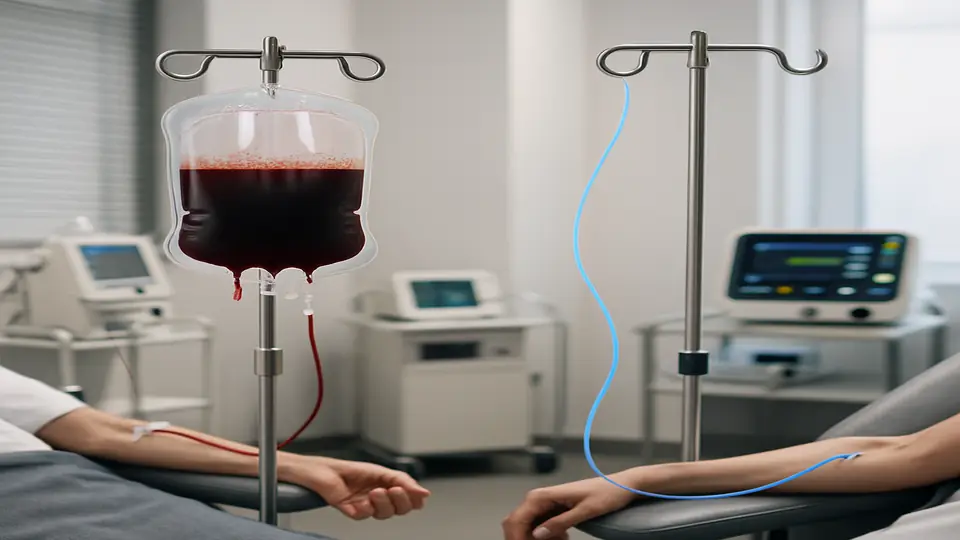
| IV access required? | Yes (MAH draws and re-infuses blood) | Yes (fiber-optic catheter in vein) |
Patients sitting across from me in consultation often frame the question simply: “Doctor, which is better — the ozone or the laser?” After two decades of applying both therapies in the context of chronic Lyme disease, post-viral syndromes, autoimmunity, and cancer support, my answer is almost always the same: the question assumes a competition that does not exist. Ozone therapy and intravenous laser therapy (ILIB) occupy different mechanistic niches. Understanding those niches — where they overlap, where they diverge, and when to stack them — is the clinical skill that separates good integrative care from protocol-following.
This article walks through both modalities with the rigor I’d apply at a case conference: mechanism, evidence, patient selection, and practical considerations.
How Ozone Therapy Works
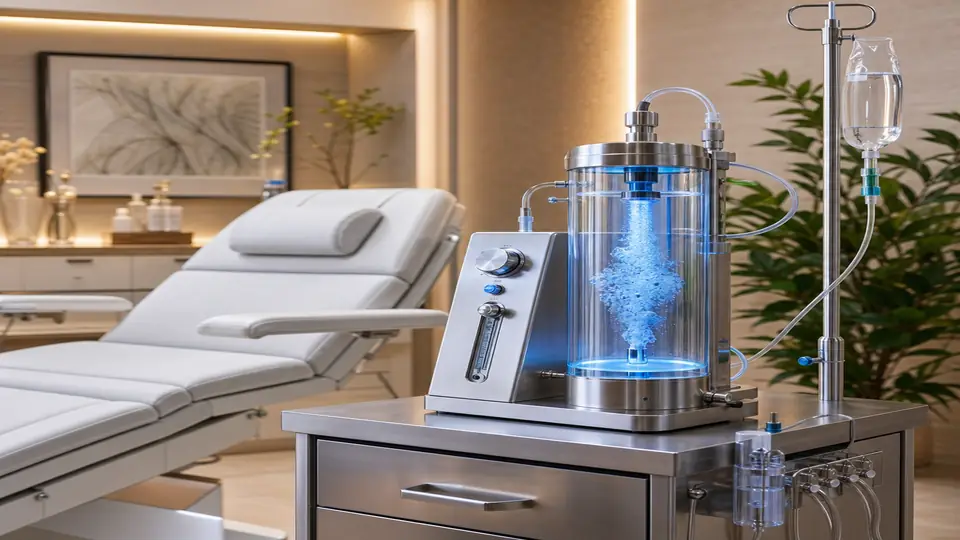
Medical ozone (O₃) is an unstable triatomic oxygen molecule. When it contacts blood in a major autohemotherapy (MAH) session — typically 100–200 mL of blood mixed with 100–200 mL of ozone gas at concentrations of 20–80 µg/mL — a rapid cascade of lipid oxidation products (LOPs) forms. These include lipid ozonides, 4-hydroxynonenal, and various isoprostanes.
These molecules are not toxic at therapeutic concentrations. They act as signaling molecules that:
- Activate Nrf2, the master redox transcription factor, upregulating superoxide dismutase, catalase, and glutathione peroxidase
- Stimulate 2,3-DPG production in red blood cells, improving oxygen delivery to hypoxic tissue
- Directly disrupt microbial membranes — particularly effective against gram-negative bacteria and lipid-enveloped viruses
- Trigger mitochondrial biogenesis via PGC-1α activation
- Modulate the innate immune response, increasing interferon-gamma and natural killer cell cytotoxicity
The transient oxidative pulse — lasting only minutes after re-infusion — paradoxically upregulates antioxidant defenses rather than depleting them, provided dosing is within therapeutic windows. This hormetic principle is central to understanding why ozone is both oxidative and ultimately protective.
Clinical Indications Where Ozone Leads
Ozone therapy holds its strongest evidence base in settings where direct antimicrobial action or aggressive mitochondrial support is the priority:
- Chronic Lyme disease and co-infections: Borrelia and associated pathogens reside within biofilms and intracellular compartments. Ozone’s LOPs can penetrate these environments in ways that conventional antibiotics often cannot. We use MAH as part of our co-infection clearing protocol before and during antibiotic or herbal antibiotic cycles.
- Dental and ENT infections: Rectal ozone and ozone saline nasal irrigation for sinusitis and dental foci have solid clinical rationale given ozone’s direct bactericidal properties.
- Musculoskeletal pain and joint pathology: Intra-articular ozone for knee osteoarthritis has randomized trial support showing outcomes comparable to corticosteroid injection without the cartilage-degrading effects.
- Diabetic wound healing: Topical ozone chambers accelerate ulcer closure via angiogenesis promotion.
- Hepatitis B and C: Multiple European trials document viral load reduction with high-dose MAH protocols.
How IV Laser Therapy Works
Intravenous laser irradiation of blood (ILIB), sometimes called intravascular laser therapy or, when ultraviolet wavelengths are used, UVBI (ultraviolet blood irradiation), delivers coherent photonic energy directly to circulating blood via a thin fiber-optic catheter placed in a peripheral vein.
Unlike surface-level red light or photobiomodulation panels, ILIB bypasses the skin barrier entirely. A single 60-minute session irradiates the entire circulating blood volume multiple times, exposing every erythrocyte, leukocyte, and platelet to therapeutic photons. For a detailed standalone guide to this modality — including what to expect during treatment, contraindications, and full protocol details — see IV Laser Therapy: A Physician’s Complete Guide.
The wavelengths used determine the biological targets:
| Wavelength | Color | Primary Blood Target |
|---|---|---|
| 405–415 nm | Violet/blue | Platelet activation, bacterial membrane disruption |
| 520–535 nm | Green | Hemoglobin structure, nitric oxide release |
| 630–650 nm | Red | Cytochrome c oxidase in mitochondria of leukocytes |
| 780–850 nm | Near-infrared | Deep mitochondrial activation, anti-inflammatory signaling |
The Erchonia and THOR systems used in our clinic deliver multi-wavelength protocols simultaneously, allowing us to address several targets in a single session.
Key documented effects of ILIB include:
- Erythrocyte deformability improvement: Red cells become more flexible, improving microcirculation in capillary beds — clinically significant in post-COVID microclot syndromes
- Nitric oxide upregulation: Vasodilatory, anti-platelet-aggregation, and antimicrobial
- NK cell activation: Natural killer cell cytotoxicity increases measurably post-session
- Anti-inflammatory cytokine shift: IL-10 rises, TNF-α and IL-6 fall in most published series
- Mitochondrial Complex IV stimulation: Cytochrome c oxidase absorbs red/NIR photons, accelerating ATP synthesis — the same principle as transcranial photobiomodulation, applied systemically
Clinical Indications Where ILIB Leads
ILIB’s gentler side-effect profile and immunomodulatory precision make it particularly well-suited for:
- Post-COVID and long-COVID syndromes: The combination of erythrocyte flexibility restoration and inflammatory cytokine reduction addresses two central pathophysiological drivers
- Chronic fatigue syndromes (ME/CFS): Multiple series report significant fatigue score improvements after 10 sessions; the mitochondrial activation mechanism aligns with proposed ME/CFS pathology
- Autoimmune conditions with active flares: The IL-10 upregulation and NK normalization make ILIB safer than ozone in highly inflamed patients who might Herxheimer aggressively
- Adjunct in oncology: Immune system support, improved chemo drug delivery via erythrocyte deformability, and quality-of-life maintenance
- Cardiovascular risk optimization: Nitric oxide upregulation, fibrinogen reduction, and LDL oxidation decrease make ILIB a compelling preventive cardiology tool
Safety Profile: Where They Differ Most
Both therapies have excellent safety records when administered by trained physicians with appropriate patient selection. The distinctions matter for specific patient populations.
Ozone therapy considerations:
- Contraindicated in G6PD deficiency (hemolytic risk)
- Herxheimer-type reactions are common in Lyme patients during initial ozone sessions — this is expected and manageable but requires patient preparation
- Ozone gas must never be inhaled — proper MAH technique is non-negotiable
- Rare air embolism risk with poor technique (essentially eliminated with proper IV management)
- Should be used cautiously in patients on strong anticoagulants
ILIB considerations:
- No known absolute contraindications in the literature
- Photosensitizing drugs (certain antibiotics, amiodarone, psoralens) require dose adjustment or avoidance of UV wavelengths
- Theoretical concern about irradiating malignant cells directly — in practice, the NK activation benefit typically outweighs this in our oncology-adjacent use cases
- Mild transient fatigue reported in a minority of patients after first sessions
For patients with very high inflammatory burden, severe autonomic dysfunction, or significant cardiovascular compromise, ILIB is often the safer starting point before introducing ozone.
Combining Ozone and ILIB: The Sequenced Protocol
In our clinic, the majority of complex chronic disease patients receive both modalities, typically sequenced rather than simultaneous. The standard approach:
- Session 1–3: ILIB only — stabilize erythrocyte function, begin NK activation, establish baseline tolerance
- Session 4 onward: MAH ozone added, often on alternating days with ILIB, or same-day with ILIB administered first
- Reassessment at 10 sessions: Clinical and lab markers (NK function, inflammatory cytokines, CD57 if Lyme context) guide continuation
The rationale for ILIB-first: improved red cell deformability means ozone LOPs are distributed more efficiently to tissue. Pre-activating NK cells also means the immune system is primed to respond to microbial kill. In practice, we observe better tolerance and faster clinical response with this sequence versus starting ozone immediately.
Some protocols additionally incorporate hyperthermia on treatment days — fever-range whole-body hyperthermia creates synergy with ozone’s mitochondrial effects and can push intracellular pathogens into lytic phases that either ozone or antibiotics can then target more effectively. A third photobiological modality, ultraviolet blood irradiation (UVBI), targets leucocyte immune reprogramming via UV photons and can be added on alternating sessions to address the immune dysregulation axis that neither ozone nor ILIB fully covers on their own.
How to Choose: A Clinical Decision Framework
Start with ozone if:
- Primary complaint is active infection burden (Lyme, co-infections, reactivated EBV/HHV-6)
- Patient has documented mitochondrial dysfunction without severe autonomic fragility
- Wound healing or musculoskeletal indication is primary
Start with ILIB if:
- Primary complaint is fatigue, brain fog, or post-viral syndrome
- Patient has significant autoimmune involvement with active inflammation
- Patient is photosensitive or reacting to almost everything (mast cell involvement)
- Cardiovascular fragility or severe orthostatic intolerance is present
Use both when:
- Complex multi-system chronic illness (most of our Lyme, post-COVID, or cancer support patients)
- Patient has plateaued on either therapy alone
- Goal is sustained immune normalization, not just acute antimicrobial effect
The cost consideration is real for patients traveling internationally for care. ILIB adds meaningful time and expense. For budget-constrained patients, ozone MAH alone delivers the larger antimicrobial and mitochondrial benefit; ILIB is the refinement layer that optimizes outcomes in those who can access it.
Related Articles
- Ozone Therapy: Evidence Review and Clinical Protocols
- IV Laser Therapy and Immune Modulation
- What to Expect from Apheresis
- Hyperthermia for Lyme Disease: Why Two Sessions
- Peptides for Lyme Disease: A Support Protocol
References
- Bocci V, Borrelli E, Travagli V, Zanardi I. The ozone paradox: ozone is a strong oxidant as well as a medical drug. Med Res Rev. 2009;29(4):646–682. PMID: 19148865
- Elvis AM, Ekta JS. Ozone therapy: a clinical review. J Nat Sci Biol Med. 2011;2(1):66–70. PMID: 22470237
- Hamblin MR. Mechanisms and applications of the anti-inflammatory effects of photobiomodulation. AIMS Biophys. 2017;4(3):337–361. PMID: 28748217
- Peng Q, Juzeniene A, Chen J, et al. Lasers in medicine. Rep Prog Phys. 2008;71(5):056701.
- Schulz E, Gori T, Münzel T. Oxidative stress and endothelial dysfunction in hypertension. Hypertens Res. 2011;34(6):665–673. PMID: 21512515
- Baxter GD, Liu L, Petrich S, et al. Low level laser therapy (photobiomodulation therapy) for breast cancer-related lymphoedema: a systematic review. BMC Cancer. 2017;17(1):833. PMID: 29258449
- Zanardi I, Borrelli E, Valacchi G, Travagli V, Bocci V. Ozone: a multifaceted molecule with unexpected therapeutic activity. Curr Med Chem. 2016;23(4):304–314. PMID: 26758817
- Ferraresi C, Huang YY, Hamblin MR. Photobiomodulation in human muscle tissue: an advantage in sports performance? J Biophotonics. 2016;9(11-12):1273–1299. PMID: 27874264