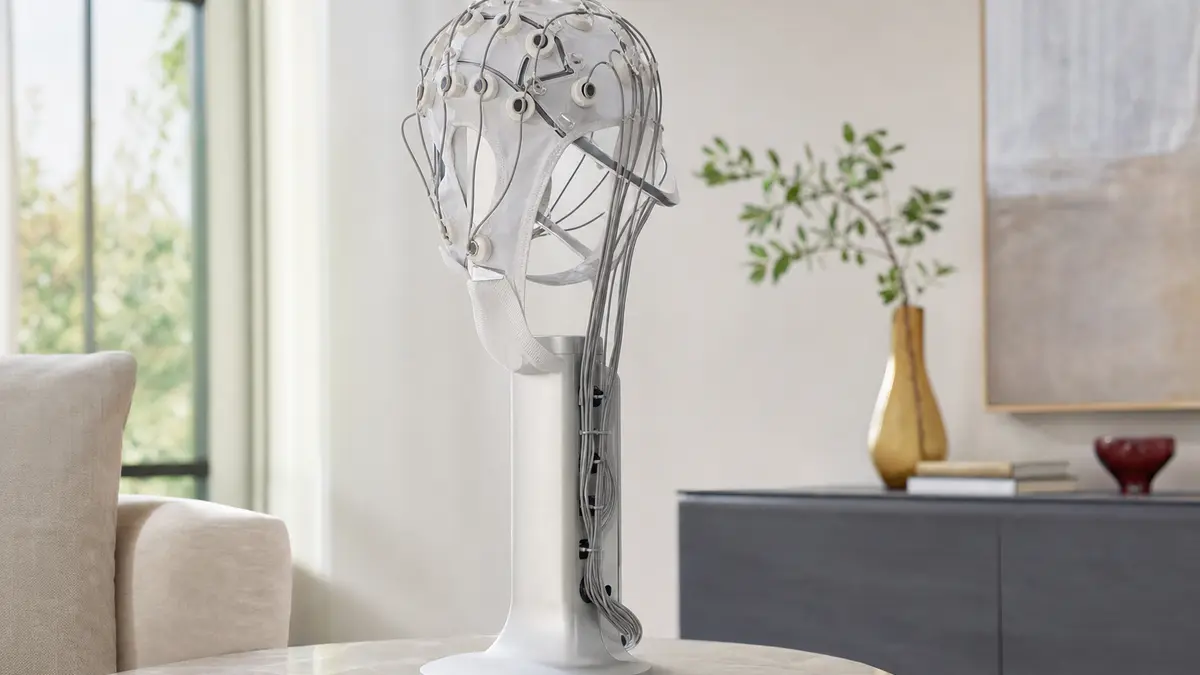
Warning: ECT is a treatment with no going back. Electroconvulsive therapy can permanently erase memories of your own life. A 2026 meta-analysis found that autobiographical memories lost after ECT are not regained, and there is no known treatment that brings them back. Once a course has been given, it cannot be undone. Read this before anyone asks for your signature.
Some of the patients who come to me after electroconvulsive therapy bring a PET scan. In several of them, twelve months or more after the last session, I see glucose metabolism reduced across the frontal and temporal lobes, in a pattern I otherwise associate with early frontotemporal dementia. These are people who were depressed, not demented, when they went into treatment.
I cannot prove from my own cases that ECT caused what I see. Depression itself lowers frontal metabolism, and registry studies have not found more dementia diagnoses after ECT. But registries count diagnoses. They do not measure how a brain uses glucose a year later, and systematic FDG-PET follow-up after ECT barely exists. The published PET and SPECT studies that do exist point in the same direction as my scans, as you will see below. That is why I no longer accept “ECT is safe for the brain” as a settled statement.
I have zero tolerance for this treatment. It should be avoided at all costs, and it should be forbidden. What I can document is the rest of this article. Every number below comes from peer-reviewed research, most of it published in the last few years.
At a Glance
| Question | What the research shows |
|---|---|
| What ECT does | Triggers a generalized seizure with electrical current under anesthesia, usually 2-3 times a week |
| How it works | Still debated after 88 years of use |
| Autobiographical memory | Lost memories are not regained, per a 2026 meta-analysis [1] |
| Persistent memory loss reported by patients | At least one third [2] |
| Brain metabolism and blood flow after ECT | Reduced on PET and SPECT, most consistently in the frontal cortex [17-20] |
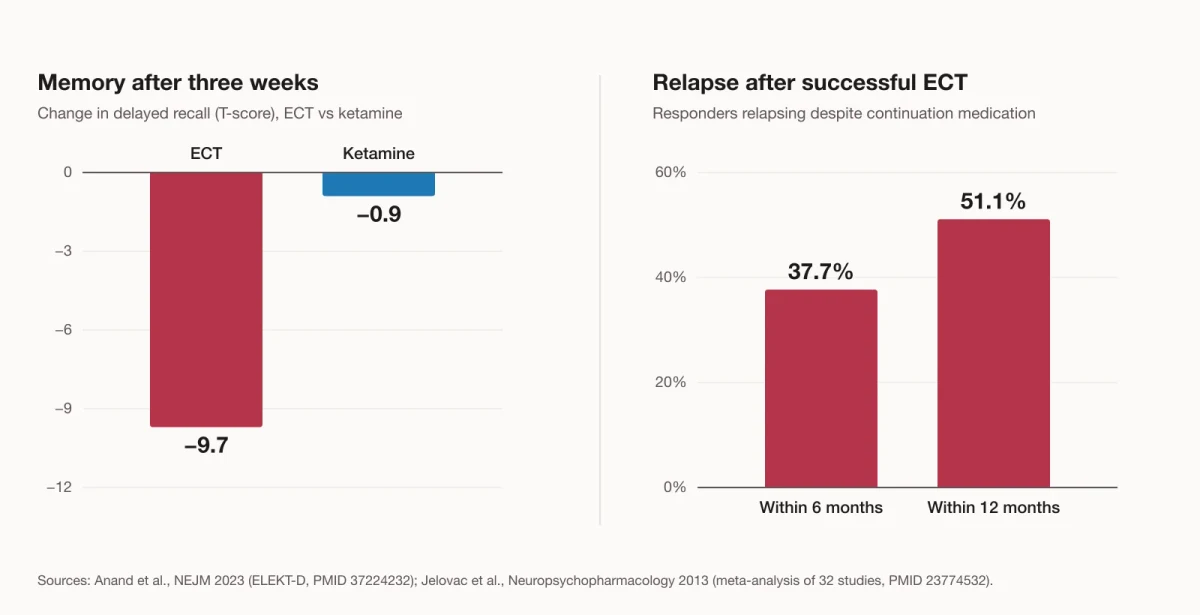
| Relapse after successful ECT | 37.7% within 6 months, 51.1% within 12 months, despite continuation medication [3] |
| Recall being told about permanent memory risk | 17% of 858 recipients [4] |
| Head-to-head vs ketamine (NEJM, 403 patients) | Ketamine noninferior, response 55.4% vs 41.2%, with far less memory decline [5] |
| My evidence grade for this article | B: large prospective studies and meta-analyses for the harms, smaller RCTs for the alternatives |
What ECT Actually Does to the Brain
ECT is a relic of 1938. Anesthesia, a muscle relaxant and shorter pulses have made it look more modern. The principle is the same as on the first day: electrical current is driven through the scalp until the whole brain convulses in a generalized seizure. Worldwide, a course averages about eight of these seizures [6].
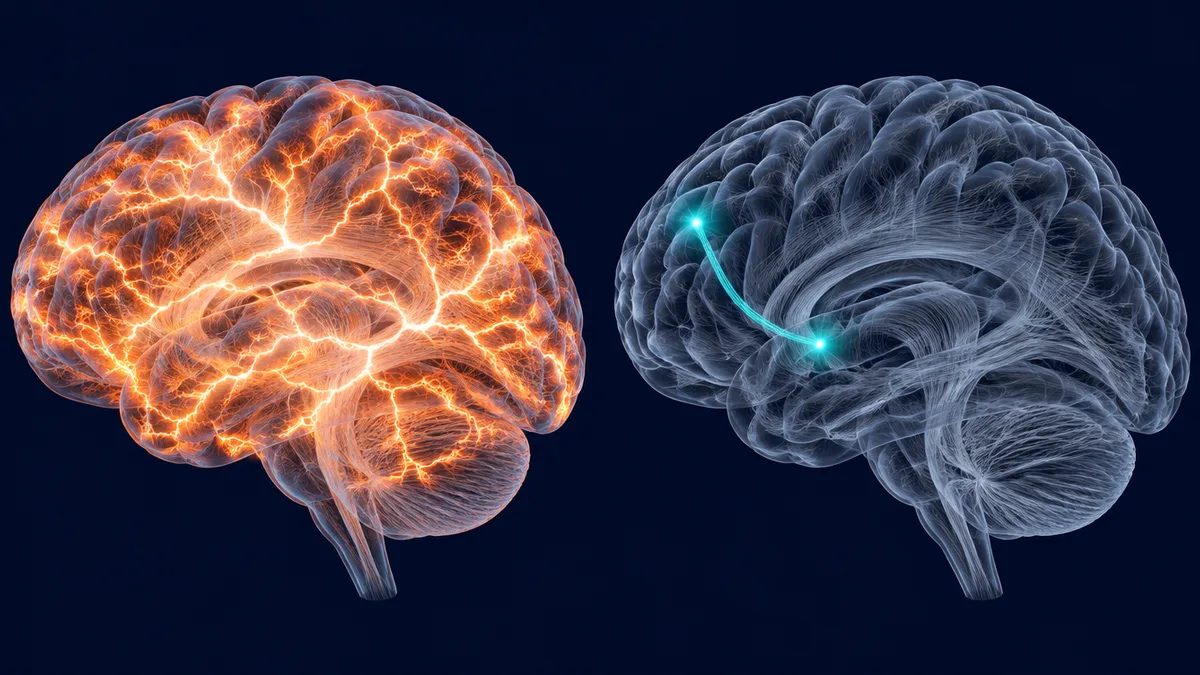
Everything else in modern brain stimulation moves in the opposite direction. We map the patient’s networks, find the circuit that is out of balance, and aim at it. ECT has no target. The seizure tears through every network at once, the healthy ones included, and after nearly nine decades nobody can say which part of that storm is supposed to do the antidepressant work.
That is what I mean when I call it undirected. We can now measure the brain circuit by circuit. Answering that precision by switching the entire organ off and on again with electricity is not medicine I can defend.
The Memory Cost
Memory loss is the side effect patients fear most, and it is also the best-documented one.
The largest prospective study
The first large prospective study of ECT’s cognitive effects followed 347 patients treated at seven New York facilities [7]. Six months after the course ended, cognitive deficits were still measurable. Bilateral electrode placement caused more severe and more persistent retrograde amnesia than right unilateral placement. Older patients and women were hit harder. Outcomes also differed significantly between hospitals, even after controlling for patient characteristics, so the damage a patient takes home depends partly on which clinic they walked into.
Memories that do not come back
Autobiographical memory is the record of your own life: the summer your father got sick, the trip where you met your partner, the first year of your child’s life. In 2026 the British Journal of Psychiatry published a meta-analysis of nine longitudinal studies on exactly this [1]. ECT patients lost significantly more autobiographical memory than controls. With bilateral ECT the effect was large. The loss was still there at long-term follow-up, and the authors concluded that lost memories are not regained.
A second 2026 meta-analysis of 837 patients found something just as uncomfortable [8]. Beyond the first month, measured autobiographical memory kept declining while patients rated their own memory as improving. Feeling fine is not proof that nothing was lost.
What patients report
A systematic review in the BMJ pooled the patients’ perspective [2]. At least one third reported persistent memory loss. The authors called the Royal College of Psychiatrists’ statement that over 80% of patients are satisfied, and that memory loss is not clinically important, unfounded.
In the largest head-to-head trial against ketamine [5], ECT patients’ delayed-recall T-scores dropped by 9.7 points after three weeks. The ketamine group dropped 0.9.

What PET and SPECT Show, and What MRI Cannot
Defenders of ECT like to point to MRI. Structural scans after ECT show no lesions, and the hippocampus even grows in volume, which is taken as proof that the brain is unharmed. I think that conclusion is premature. Just because we do not find damage on an MRI does not mean there is no damage.
Metabolism goes down
Functional imaging tells a different story from structural imaging. In one PET study, ten patients were scanned before and about five days after a course of bilateral ECT. Glucose metabolism had fallen across wide regions: the frontal and parietal cortex, the anterior and posterior cingulate, and the left temporal cortex [17].
Blood-flow studies point the same way. Depression already lowers frontal perfusion. ECT did not reverse that, and in the patients who responded it added further reductions, especially in the anterior cortex [18]. A SPECT study compared treatments directly. When patients responded to antidepressant medication, their frontal hypoperfusion normalized. When they responded to ECT, perfusion dropped further in parietotemporal and cerebellar regions [19]. A review of the PET literature found reduced frontal glucose metabolism to be the most consistent finding after ECT, and called for follow-up scans at six or twelve months to test whether the changes persist [20]. That review was published in 2008.
The researchers behind these studies read the lower metabolism as part of how ECT works, a kind of anticonvulsant calming of the brain. I read the same data as an open question. A brain that responds to treatment by running at lower metabolism in its frontal and temporal lobes, the regions that fail in frontotemporal dementia, may be calmed, or it may be injured. The systematic twelve-month scans that would tell us which still have not been done. The scans I see in my own patients are the reason I am writing this.
Volume is not health
The hippocampal growth seen on MRI is often presented as repair. In the largest MRI collaboration to date, with 435 patients, enlargement of the hippocampal body and tail after ECT was associated with worse verbal fluency, and shrinkage back at six months went with better cognitive performance [21]. Swelling that tracks with cognitive decline is not reassurance. In mice, a clinically relevant schedule of electroconvulsive shock weakened signalling into the dentate gyrus of the hippocampus and impaired associative memory [22].
MRI measures shape and size. It does not show synapses, metabolism or memory.
The pathology is still unknown
Blood markers of neuronal injury such as neurofilament light have been measured in ECT patients, but only across the first sessions of a course [23]. A blood sample taken in week two says nothing about what a brain looks like a year later. To my knowledge, there are no systematic long-term studies of tissue pathology in people treated with modern ECT. We have to show the actual pathology behind the changes we see in people, and until then nobody can claim the brain comes through unharmed.
Half of Responders Relapse Within a Year
Suppose a patient accepts the memory risk because ECT offers relief. How long does the relief last?
A meta-analysis of 32 studies in Neuropsychopharmacology answered that [3]. Even with modern continuation medication, 37.7% of patients who responded to ECT relapsed within six months and 51.1% within twelve months. Continuation ECT did no better at six months (37.2%).
The cost is paid up front. For about half the patients the benefit is gone again within a year, and the usual answer to relapse is more ECT.
Consent Without the Numbers
Informed consent is only as good as the information behind it. Two independent investigations looked at what that information is in practice.
The 2019 audit of ECT in England, based on Freedom of Information requests to NHS Trusts, found that 37% of ECT was given without the patient’s consent [9]. Two thirds of recipients were women and 58% were over 60. Only one Trust could say whether patients had received psychological therapy first, as national guidelines require, and not a single Trust reported efficacy or adverse effects beyond the end of treatment. Nobody was counting what happened to these patients afterwards.
A 2026 survey of 858 ECT recipients from 44 countries, published in the Journal of Medical Ethics, asked what they recalled being told [4]. 59% said they had not received adequate information. 63% remembered hearing that ECT can cause temporary memory problems. Only 17% remembered hearing that it can cause long-term or permanent ones. 42% had been told that ECT “corrects a chemical imbalance or other brain abnormality”. The respondents were self-selected, and the pattern still matches the audits of patient leaflets the authors cite.
A patient cannot weigh a risk nobody mentioned.
”But It Is the Most Effective Treatment We Have”
This is the sentence that keeps ECT on the menu. It deserves a direct answer.
Start with the placebo-controlled evidence. A review of the trials comparing real ECT with simulated ECT (anesthesia without the current) found minimal support for benefit during the course and no evidence of benefit beyond the treatment period [10]. The same review found no placebo-controlled study testing the claim that ECT prevents suicide.
Then look at the head-to-head data. In the ELEKT-D trial, 403 patients referred to ECT clinics for treatment-resistant depression without psychosis were randomized to ECT or IV ketamine [5]. Ketamine was noninferior. Response was 55.4% with ketamine and 41.2% with ECT, and ECT carried the memory decline described above.
A 2025 network meta-analysis of 35 randomized trials compared ECT, rTMS and IV ketamine for treatment-resistant depression [11]. It found no significant difference in response, remission or tolerability between the three, and ketamine had better acceptability. The authors rated their confidence as very low because most trials were small, and concluded that rTMS and ketamine showed no apparent inferiority to ECT.
The efficacy advantage that once justified ECT’s risks is not showing up in the newer evidence. The memory cost keeps showing up. In my view, that changes the calculation.
I cite the ketamine trial to show that ECT is not untouchable. I do not cite it to recommend ketamine as a stand-alone drug, for reasons I explain below.
What I Do Instead: Look for the Cause
“Depression” describes how a person feels. It does not say why. Before anyone reaches for a seizure, or for the next pill, I want to know what is driving it. I am not a fan of pure drug interventions either. In my practice, the work starts with four questions.
What is the brain doing? qEEG, and imaging where it is indicated, show which networks are out of balance. That map is what targeted TMS is aimed at.
What is the immune system doing? In a meta-analysis of 37 studies with more than 13,000 patients, 27% of people with depression had low-grade inflammation, with a CRP above 3 mg/L [24]. Inflammation changes how the brain works, and it shows up in an ordinary blood test that too few depressed patients ever get. I explain the mechanism in neuroinflammation and brain fog.
Is there an infection behind it? In a Danish cohort of 3.56 million people followed for 78 million person-years, a hospital contact for infection raised the later risk of a mood disorder by 62%, an autoimmune disease by 45%, and the two together more than doubled it [25]. In patients with Lyme disease, co-infections or reactivated viruses, depression can be the most visible symptom of an illness nobody has looked for.
Who is around the person? Some patients do not need a stronger treatment. They need distance. A manipulative, abusive or narcissistic partner, parent or boss can keep a nervous system in permanent alarm. In a 2025 meta-analysis of longitudinal studies, women who had experienced intimate partner violence had almost twice the odds of developing depression afterwards [26]. Helping a patient get out of contact with the person who is harming them is, in my view, worth more than putting their brain through a seizure.
Where ketamine fits
Ketamine has a place, but a limited one. I use it together with TMS, as a time-limited intervention, and as short-term relief for patients with acute suicidal thoughts. In an individual-patient meta-analysis, a single dose of ketamine reduced suicidal ideation within one day, with the effect lasting up to a week [27]. That is exactly its value: it buys time and opens a window, while TMS and the search for the cause do the lasting work. A drug-only strategy, ketamine included, treats the symptom and leaves the cause untouched.
What Precision Looks Like
The approach I work with measures first and stimulates one circuit.
The target comes from the patient’s own brain. In 2012, Michael Fox and colleagues showed that TMS works better the more strongly the stimulated spot in the left dorsolateral prefrontal cortex is anticorrelated with the subgenual anterior cingulate, a deep hub of mood regulation [12]. That spot sits in a slightly different place in every brain, and functional MRI can find it.
The dose is concentrated. Stanford Neuromodulation Therapy (SNT) combines that fMRI-guided target with accelerated intermittent theta-burst stimulation: ten short sessions a day for five days. In the open-label study, remission was about 90% [13]. In the double-blind sham-controlled trial, depression scores fell by 52.5% with active treatment versus 11.1% with sham four weeks later [14]. These are small trials, and the authors themselves call for comparisons with other treatments. The results land in the range ECT is praised for, without a seizure.
Targeting keeps improving. A 2026 randomized double-blind trial in the American Journal of Psychiatry compared connectivity-guided targets with the old scalp-measurement method in 123 patients [15]. Both connectivity-guided arms beat the conventional target at week 6, adverse events were comparable across groups, and there were no seizures. By week 12 the groups had converged, which tells us maintenance still matters.
The safety profile is a different category. In the pivotal multisite TMS trial, 4.5% of patients dropped out for adverse events, which were mostly transient scalp discomfort [16]. TMS needs no anesthesia and no seizure, and most patients drive themselves home afterwards.
In my practice I add another layer: qEEG to see how a patient’s networks behave before we choose a protocol, and again afterwards to see whether they changed. The evidence for qEEG-guided individualization is still emerging, so I use the measurement to monitor each patient, not as a promise. You can read how that works in my qEEG brain mapping guide, and the full TMS evidence in TMS for depression.
For patients in acute crisis, I combine TMS with a short, time-limited course of ketamine for fast relief, while the TMS and the work on the cause take hold. For patients who cannot travel to a clinic but want a physician-supervised, non-drug option earlier in the treatment pathway, the FDA approved two at-home devices in late 2025 — a tDCS headset (Flow FL-100) and a peripheral nerve stimulator (ProlivRx) — with modest but real controlled-trial evidence; they are not substitutes for in-clinic TMS in treatment-resistant cases, but they expand the accessible alternatives between first-line antidepressants and the full TMS course (at-home brain stimulation for depression: what the 2025–2026 FDA approvals mean).
My Position: Zero Tolerance
I have zero tolerance for ECT. It should have no place in the treatment of depression, and it should be forbidden. It belongs in the history books: out of the guidelines, off the hospital menu and off the list of options a desperate patient is offered at the lowest point of their life. Exposing a patient to a documented risk of permanent memory loss while targeted, seizure-free alternatives exist is, in my view, indefensible.
Getting it forbidden is our job
I believe it is the job of neuromodulation specialists to get this treatment banned. We are the physicians who know, from daily practice, that the brain can be stimulated precisely, without anesthesia and without a seizure. If we stay quiet, ECT stays on the menu, and every patient who hears “brain stimulation” keeps picturing electroshock.
Concretely, that means:
- Documenting what we see. Every neuromodulation clinic that treats patients after ECT should record their memory complaints and, where indicated, their PET or SPECT findings, and publish them as case series.
- Offering the alternative first, loudly. No patient with depression should reach an ECT consent form before someone has looked at their brain, their immune system, possible infections and the people around them, and offered targeted TMS. The step-by-step workup for treatment-resistant depression — qEEG, inflammation panel, Lyme/viral infection screening, and relational environment — is detailed in a dedicated protocol article: treatment-resistant depression: the cause-first workup before TMS.
- Taking it to the people who write the rules. Guideline committees, medical associations, regulators and lawmakers need to hear from our field that ECT is no longer necessary and that it should be prohibited.
- Standing with patients. People who lost parts of their memory deserve physicians who take them seriously, examine them properly and say publicly what happened to them.
Until it is gone, two lines should never be crossed.
Never without consent. ECT without the patient’s own informed consent should not happen, under any circumstances. A treatment that can permanently erase parts of a person’s life story cannot be decided over their head.
Never without a judge and an independent reviewer. Every single course of ECT, consented or not, should require approval by a judge and review by an independent physician who has no stake in the clinic performing it. We apply that level of oversight when we take away a person’s liberty. Taking away their memories deserves no less.
Where ECT is still given, the consent form should state in writing, with numbers, that long-term and permanent memory loss can occur. Autobiographical memory should be measured before and after every course, and outcomes should be reported beyond the last session, which the English audit shows almost no clinic does today.
The studies we owe patients
The burden of proof belongs to the treatment, not to the patient. These are the studies that should have been done decades ago:
- FDG-PET and perfusion SPECT before ECT, after the course, and at six and twelve months, compared with matched patients treated with TMS or medication.
- Autobiographical memory and neuropsychological testing on the same schedule, so the scans can be read against what patients actually lose.
- Injury and inflammation markers such as neurofilament light, GFAP and tau, followed well beyond the first weeks.
- Brain donation programmes, so that pathologists can examine the tissue of people who received ECT and show what the metabolic changes correspond to.
Until those studies show that the brain comes through unharmed, nobody should be telling patients that it does.
This matters beyond ECT. Almost every TMS patient I meet has had to get past the image of electroshock first. As long as our field accepts its bluntest instrument without question, the public will judge all of neuromodulation by it, and it will deserve to be judged that way.
If You Have Been Offered ECT
Ask these questions before you sign anything:
- Has anyone looked for the cause? Inflammation markers, infections, my relationships and living situation? Have I had targeted, neuronavigated or accelerated TMS?
- Is the plan bilateral or right unilateral ECT, and why?
- How will my autobiographical memory be measured before and after?
- What is the plan for the first six months, when relapse risk is highest?
- Can an independent physician, with no connection to this clinic, review the decision first?
A good clinician will answer every one of these without irritation. You have the right to refuse ECT.
If you are in acute danger, have stopped eating or drinking, or are experiencing psychotic symptoms, do not wait for a second opinion from a website. Contact your treating team or emergency services today.
If you want to discuss whether a measured, targeted approach fits your situation, you can reach my team here.
Frequently asked questions
Does ECT cause permanent memory loss?
For a substantial share of patients, yes. A 2026 meta-analysis in the British Journal of Psychiatry found autobiographical memory loss after ECT that stayed stable at long-term follow-up, meaning lost memories were not regained. The effect was large with bilateral electrode placement. In a BMJ systematic review, at least one third of patients reported persistent memory loss.
Is TMS as effective as ECT?
No trial has yet compared fMRI-guided accelerated TMS with ECT directly. A 2025 network meta-analysis of 35 randomized trials found no significant difference in response or remission between rTMS, IV ketamine and ECT, with very low confidence because most trials were small. In the largest head-to-head trial so far, ketamine was noninferior to ECT and caused far less memory decline.
What is the alternative to ECT?
Look for the cause before treating the symptom: map the brain networks with qEEG, check the immune system for inflammation, search for infections such as Lyme disease or reactivated viruses, and look at the people around the patient, because an abusive or narcissistic relationship can keep a nervous system in constant alarm. Then treat with targeted TMS. Ketamine can be added for a limited time or as short-term relief in a suicidal crisis, but not as a stand-alone drug strategy.
I already had ECT and my memory is not the same. What should I do?
Take it seriously and ask for a proper work-up: structured neuropsychological testing, and imaging where it is indicated. Do not accept 'that is just the depression' as an answer without measurement. Memory complaints after ECT are documented in the literature and deserve the same attention as any other neurological symptom.
Does a normal MRI prove that ECT does not damage the brain?
No. MRI measures the shape and size of brain structures. It does not show metabolism, synapses or memory. PET and SPECT studies show reduced glucose metabolism and blood flow after ECT, and in the largest MRI study, hippocampal swelling after ECT tracked with worse verbal fluency. The long-term pathology behind these changes has not been studied systematically.
Should ECT ever be given without consent?
In my view, never. And I believe every course of ECT, consented or not, should require approval by a judge and review by an independent physician with no stake in the clinic performing it.
My psychiatrist recommends ECT. Should I refuse?
My position is that ECT should be avoided. You have the right to refuse it, and you have the right to an independent second opinion before you decide. Ask which targeted alternatives have been tried, which ECT technique is planned, and how your memory will be measured before and after. If you are in acute danger, are not eating or drinking, or have psychotic symptoms, this is an emergency: contact your treating team or emergency services today.
References
- Mathiassen AB, et al. Autobiographical memory after electroconvulsive therapy: systematic review and meta-analysis. British Journal of Psychiatry. 2026. PMID: 40357797.
- Rose D, et al. Patients’ perspectives on electroconvulsive therapy: systematic review. BMJ. 2003. PMID: 12816822.
- Jelovac A, et al. Relapse following successful electroconvulsive therapy for major depression: a meta-analysis. Neuropsychopharmacology. 2013. PMID: 23774532.
- Read J, et al. A large exploratory survey of electroconvulsive therapy recipients, family members and friends: what information do they recall being given? Journal of Medical Ethics. 2026. PMID: 40813058.
- Anand A, et al. Ketamine versus ECT for nonpsychotic treatment-resistant major depression. New England Journal of Medicine. 2023. PMID: 37224232.
- Leiknes KA, et al. Contemporary use and practice of electroconvulsive therapy worldwide. Brain and Behavior. 2012. PMID: 22741102.
- Sackeim HA, et al. The cognitive effects of electroconvulsive therapy in community settings. Neuropsychopharmacology. 2007. PMID: 16936712.
- Verspecht S, et al. Subjective and objective memory effects after electroconvulsive therapy for depressive disorders: systematic review and meta-analysis. Journal of Psychiatric Research. 2026. PMID: 42785233.
- Read J, et al. A second independent audit of electroconvulsive therapy in England, 2019: usage, demographics, consent, and adherence to guidelines and legislation. Psychology and Psychotherapy. 2021. PMID: 33728773.
- Read J, Bentall R. The effectiveness of electroconvulsive therapy: a literature review. Epidemiologia e Psichiatria Sociale. 2010. PMID: 21322506.
- Terao I, et al. Comparative efficacy and safety of intravenous racemic ketamine, repetitive transcranial magnetic stimulation and electroconvulsive therapy for treatment-resistant depression: a network meta-analysis. PCN Reports. 2025. PMID: 40590032.
- Fox MD, et al. Efficacy of transcranial magnetic stimulation targets for depression is related to intrinsic functional connectivity with the subgenual cingulate. Biological Psychiatry. 2012;72(7):595-603. PMID: 22658708.
- Cole EJ, et al. Stanford Accelerated Intelligent Neuromodulation Therapy for treatment-resistant depression. American Journal of Psychiatry. 2020;177(8):716-726. PMID: 32252538.
- Cole EJ, et al. Stanford Neuromodulation Therapy (SNT): a double-blind randomized controlled trial. American Journal of Psychiatry. 2022;179(2):132-141. PMID: 34711062.
- Li M, et al. Individualized connectivity-guided versus conventional targeting of accelerated theta-burst stimulation in depression: a randomized, double-blind trial. American Journal of Psychiatry. 2026. PMID: 42581396.
- O’Reardon JP, et al. Efficacy and safety of transcranial magnetic stimulation in the acute treatment of major depression: a multisite randomized controlled trial. Biological Psychiatry. 2007;62(11):1208-1216. PMID: 17573044.
- Nobler MS, et al. Decreased regional brain metabolism after ECT. American Journal of Psychiatry. 2001. PMID: 11156816.
- Nobler MS, et al. Regional cerebral blood flow in mood disorders, III. Treatment and clinical response. Archives of General Psychiatry. 1994. PMID: 7944877.
- Kohn Y, et al. 99mTc-HMPAO SPECT study of cerebral perfusion after treatment with medication and electroconvulsive therapy in major depression. Journal of Nuclear Medicine. 2007. PMID: 17631560.
- Schmidt EZ, et al. Changes in brain metabolism after ECT: positron emission tomography in the assessment of changes in glucose metabolism subsequent to electroconvulsive therapy. Journal of Affective Disorders. 2008. PMID: 17662472.
- Ousdal OT, et al. Effects of electroconvulsive therapy on hippocampal longitudinal axis and its association with cognitive side effects. Communications Medicine. 2025. PMID: 41034627.
- Zhang TR, et al. Chronic electroconvulsive shock disrupts hippocampal physiology and impairs associative memory in mice. Hippocampus. 2026. PMID: 42876112.
- Sigström R, et al. Blood biomarkers of neuronal injury and astrocytic reactivity in electroconvulsive therapy. Molecular Psychiatry. 2025. PMID: 39363047.
- Osimo EF, et al. Prevalence of low-grade inflammation in depression: a systematic review and meta-analysis of CRP levels. Psychological Medicine. 2019. PMID: 31258105.
- Benros ME, et al. Autoimmune diseases and severe infections as risk factors for mood disorders: a nationwide study. JAMA Psychiatry. 2013. PMID: 23760347.
- Watson CB, et al. Intimate partner violence and subsequent depression in women: a systematic review and meta-analysis of longitudinal studies. Brain and Behavior. 2025. PMID: 39829176.
- Wilkinson ST, et al. The effect of a single dose of intravenous ketamine on suicidal ideation: a systematic review and individual participant data meta-analysis. American Journal of Psychiatry. 2018. PMID: 28969441.