
At a Glance
| Parameter | Detail |
|---|---|
| Modality | Transcranial + intranasal photobiomodulation (PBM) |
| Wavelengths studied | 810 nm, 1064 nm (near-infrared) |
| Primary mechanism | Cytochrome c oxidase activation → ↑ATP, ↓ROS, microglial M2 shift |
| Secondary mechanism | Glymphatic drainage enhancement, improved cerebral perfusion |
| Target conditions | Mild cognitive impairment (MCI), mild-to-moderate Alzheimer’s dementia |
| Session duration | 20–25 minutes (combined transcranial + intranasal) |
| Evidence level | Preliminary — case series and pilot RCTs; large trials ongoing |
| Safety profile | No serious adverse events reported across published human studies |
| Standalone therapy? | No — requires comprehensive diagnostic workup first |
Alzheimer’s disease is routinely framed as a protein-aggregation problem: amyloid plaques accumulate, tau tangles spread, neurons die. That framing has produced two decades of failed amyloid-clearing drug trials. What it underweights is the upstream milieu in which aggregation becomes catastrophic — chronic neuroinflammation driven by dysfunctional microglia, failing mitochondria that can no longer fuel the brain’s high-energy demands, impaired glymphatic clearance that lets protein waste accumulate overnight, and in many patients an infectious or metabolic trigger that never got identified.
Near-infrared photobiomodulation (PBM) addresses several of these mechanisms simultaneously, without drugs and without the tolerance or systemic side effects that limit pharmacological interventions. It is not a cure. It is not evidence-based at the level required for a standard-of-care designation. But the mechanistic case is coherent, the early human data are encouraging, and in a disease where conventional medicine has consistently underperformed, it deserves serious clinical attention.
Why Alzheimer’s Is Also a Neuroinflammatory Disease
The microglia are the brain’s resident immune cells. In health, they surveil for pathogens, clear debris, and support synapse pruning. In Alzheimer’s disease, they shift into a chronic pro-inflammatory state — the M1 phenotype — that releases interleukin-1β, TNF-α, and reactive oxygen species at levels that damage surrounding neurons rather than protect them. This is not a secondary event downstream of amyloid. Genome-wide association studies have consistently identified microglial genes (TREM2, CR1, CLU) among the strongest genetic risk factors for late-onset Alzheimer’s, placing neuroinflammation at the centre of pathogenesis rather than the periphery.
Mitochondrial dysfunction compounds the problem. Neurons are the most energy-demanding cells in the body; they derive virtually all their ATP from oxidative phosphorylation. In Alzheimer’s brains, cytochrome c oxidase (CCO) activity — the terminal enzyme of the mitochondrial electron transport chain — is reduced by 25–35% in the temporal cortex compared to age-matched controls. Reduced CCO activity lowers ATP production, increases reactive oxygen species, and sensitises neurons to excitotoxic and inflammatory insults. It also impairs the sodium-potassium pump that neurons depend on for membrane potential, contributing directly to the synaptic dysfunction that precedes neuronal death.
The glymphatic system adds a third dimension. During slow-wave sleep, interstitial fluid pulses through perivascular channels, washing amyloid-β and tau out of brain parenchyma and into the lymphatic system. Sleep disruption — which is both a symptom and a risk factor for Alzheimer’s — impairs this clearance. Vascular dysfunction, common in Alzheimer’s patients, further reduces perivascular flow. The result is progressive protein accumulation even when amyloid production is not elevated.
Photobiomodulation has a documented mechanistic footprint across all three of these failures.
The Photobiological Mechanism: What Near-Infrared Light Does Inside the Brain
The primary chromophore for near-infrared PBM is cytochrome c oxidase. CCO contains two copper centres (CuA and CuB) and two haem-iron centres; these absorb photons in the 630–1100 nm range, with absorption peaks around 810 nm and 1064 nm. Photon absorption dissociates nitric oxide (NO) that has inhibited CCO during oxidative stress, restoring the enzyme’s ability to reduce oxygen to water and drive proton pumping across the inner mitochondrial membrane. The downstream consequences include increased ATP synthesis, reduced superoxide generation, upregulation of antioxidant enzymes via Nrf2 pathway activation, and release of reactive nitrogen species that act as local signalling molecules.
In the context of Alzheimer’s disease, CCO activation by near-infrared light produces several additional effects documented in cell culture and animal models:
Microglial reprogramming. PBM reduces NF-κB signalling in activated microglia and promotes a shift from the pro-inflammatory M1 phenotype toward the anti-inflammatory, phagocytic M2 phenotype. M2 microglia clear amyloid-β more efficiently and produce neurotrophic factors including BDNF and IGF-1 rather than inflammatory cytokines.
Amyloid and tau pathology. Multiple rodent studies have shown reductions in amyloid-β plaque density and hyperphosphorylated tau following transcranial PBM. The mechanisms proposed include enhanced autophagy, improved proteasomal function, and reduced BACE1 activity (the enzyme responsible for amyloid precursor protein cleavage). Results across different mouse models are not uniformly positive — a 2024 review noted the 5XFAD mouse model did not show benefit with one NIR protocol — which highlights the dependence of outcomes on dose, wavelength, and delivery parameters.
Cerebral perfusion and glymphatic flow. Near-infrared light stimulates nitric oxide release from vascular endothelium, producing local vasodilation and increased cerebral blood flow. Improved perfusion enhances oxygen and glucose delivery to metabolically compromised neurons and may facilitate glymphatic transport through the interstitial fluid dynamics that depend on arterial pulsation.
A 2024 comprehensive review by Huang, Hamblin, and Zhang in Alzheimer’s Research & Therapy (PMID 38773642) synthesised preclinical evidence across transcranial, intranasal, and systemic delivery routes, concluding that PBM represents a mechanistically plausible and potentially powerful therapeutic approach for Alzheimer’s disease, while explicitly noting that large, well-designed randomised controlled trials in humans are still needed to confirm clinical efficacy.
Transcranial Versus Intranasal Delivery: Reaching the Deep Structures
The skull and overlying soft tissue attenuate near-infrared light substantially. At 810 nm, only 1–2% of surface fluence reaches the cortex at 1 cm depth; penetration to subcortical structures is minimal. This limitation matters because Alzheimer’s pathology affects hippocampus, entorhinal cortex, and subcortical nuclei, not just the superficial cortex.
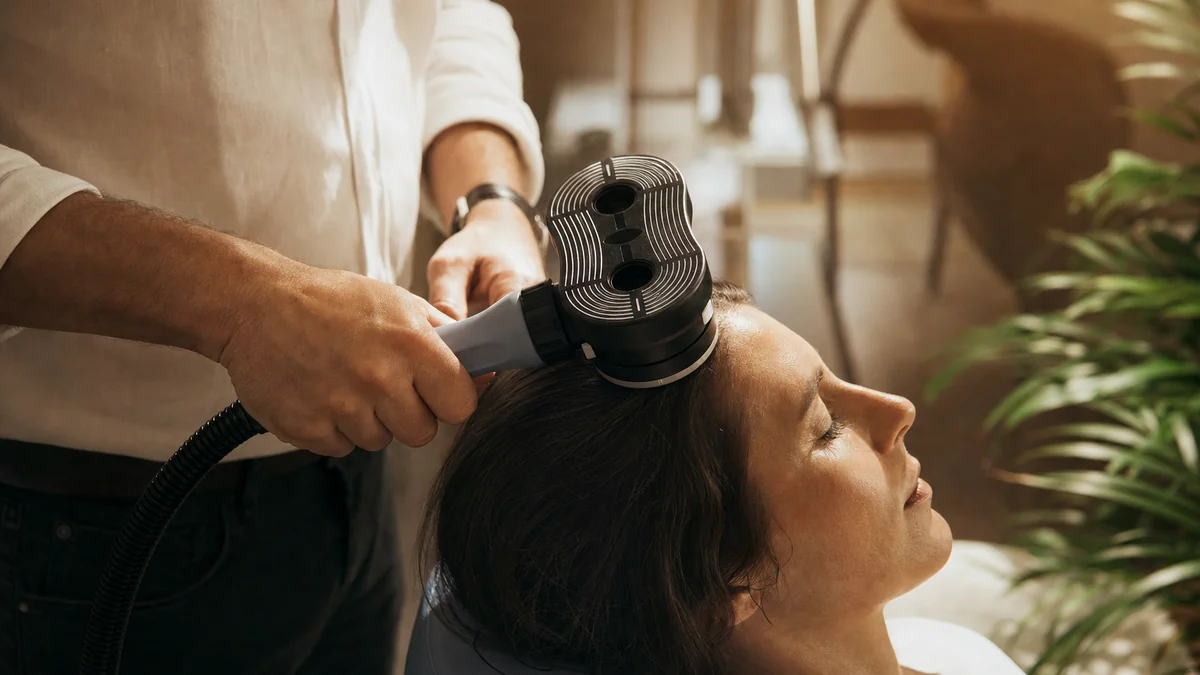
Transcranial PBM uses helmet or cap-based devices to deliver light across multiple scalp positions simultaneously. At 1064 nm (a wavelength used in devices like the Vielight Neuro Gamma and similar systems), tissue penetration is deeper than at 810 nm because water absorption is lower. Transcranial delivery targets prefrontal and parietal cortex most effectively.
Intranasal PBM inserts a low-power NIR LED into the nasal cavity, targeting the olfactory bulb and its direct projections to the limbic system, as well as nasal blood vessels. Near-infrared light absorbed by circulating blood irradiates erythrocytes, lymphocytes, and platelets systemically. The combined transcranial-plus-intranasal protocol exploits both direct tissue penetration and this systemic photobiomodulation effect.
In the Saltmarche 2017 case series (see below), the protocol combined weekly clinic-based transcranial plus intranasal PBM with daily at-home intranasal-only treatment — a pragmatic approach that maximises both dose and systemic reach within a feasible patient burden. The intranasal route also directly irradiates the nasal mucosa’s rich vascular supply, which drains through the cavernous sinus and into the brain’s venous circulation, allowing photobiomodulated blood products (released NO, anti-inflammatory cytokines) to circulate to deep brain structures.
What the Clinical Evidence Actually Shows
The human evidence base for PBM in Alzheimer’s disease is small but consistently positive in its direction. It does not yet meet the threshold for a standard-of-care recommendation, but the signal-to-noise ratio is better than critics sometimes suggest.
Saltmarche et al. 2017 — The Index Case Series
The most cited human study remains the Saltmarche et al. case series published in Photomedicine and Laser Surgery (PMID 28186867). Ten patients with mild to moderately severe dementia (MMSE baseline scores 10–24) received 12 weeks of combined transcranial and intranasal PBM using a Vielight device (810 nm, 10 Hz pulse frequency). After 12 weeks, mean MMSE scores improved significantly; caregivers reported improved sleep, reduced wandering, reduced anger outbursts, and improved cooperation with activities of daily living. A 4-week no-treatment washout period was followed by cognitive decline toward baseline, and re-treatment produced a second improvement cycle — a within-subject replication that strengthens causal inference despite the absence of a randomised sham arm.
This is a case series, not a randomised controlled trial. Selection bias, placebo effects in caregivers, and regression to the mean cannot be excluded. But the washout-retreatment cycle provides a form of internal control that makes chance alone an unsatisfying explanation.
Berman et al. 2017 — Pilot RCT
A pilot randomised, placebo-controlled trial by Berman and colleagues (PMID 28593105) used a near-infrared light-emitting helmet in patients with dementia over 28 days. The small sample and short duration limited the ability to detect statistically significant cognitive changes on the ADAS-cog primary endpoint, but no safety signals emerged and secondary caregiver-rated outcomes were numerically in favour of active treatment. The study established the safety of transcranial NIR delivery in a cognitively impaired population.
Ongoing Trials
The TRAP-AD trial, launched in 2021, is the largest ongoing study: 125 patients with mild cognitive impairment or mild Alzheimer’s dementia randomised to active versus sham transcranial PBM, with tau-PET and MRS imaging endpoints alongside cognitive outcomes. Results are expected to clarify whether PBM produces measurable changes in Alzheimer’s biomarkers, not just symptom scales. A 2024 Japanese sham-controlled protocol by Yokoi et al. (PMC11258032) adds a second large trial with ADAS-cog as the primary endpoint. Combined, these trials will determine whether the mechanistic promise translates into detectable, sustained clinical benefit.
Where PBM Fits in an Integrative Approach to Cognitive Decline
My clinical approach to Alzheimer’s disease and cognitive decline does not start with a device. It starts with a question: what is driving this patient’s specific pattern of neurodegeneration?
A complete diagnostic workup for new-onset or progressive cognitive impairment should include:
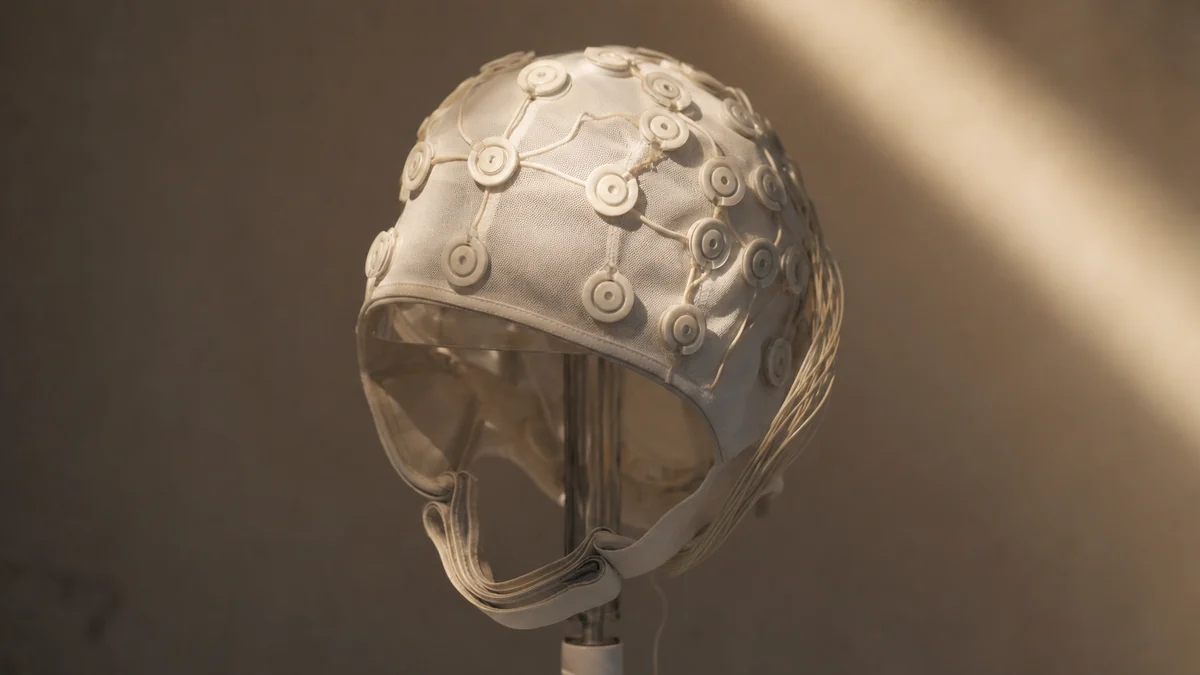
- qEEG and neuroimaging to identify network-level dysfunction (slow wave excess, coherence abnormalities, hypoperfusion patterns) and guide targeted neuromodulation placement
- Inflammatory markers — high-sensitivity CRP, IL-6, TNF-α, complement C3/C4a — to quantify the neuroinflammatory burden
- Infectious workup — Borrelia serology with CD57 lymphocyte subset, Bartonella, HHV-6, EBV viral load, Mycoplasma pneumoniae — because tick-borne infections and reactivated herpesviruses drive neuroinflammation that is clinically indistinguishable from idiopathic Alzheimer’s pathology in imaging and CSF markers
- Metabolic panel — fasting insulin, homocysteine, methylmalonic acid, B12, thyroid panel, sex hormones — because metabolic dysfunction accelerates the same mitochondrial and vascular pathways that PBM attempts to rescue
- Mould and mycotoxin exposure history, with CIRS markers (TGF-β1, MMP-9) where indicated
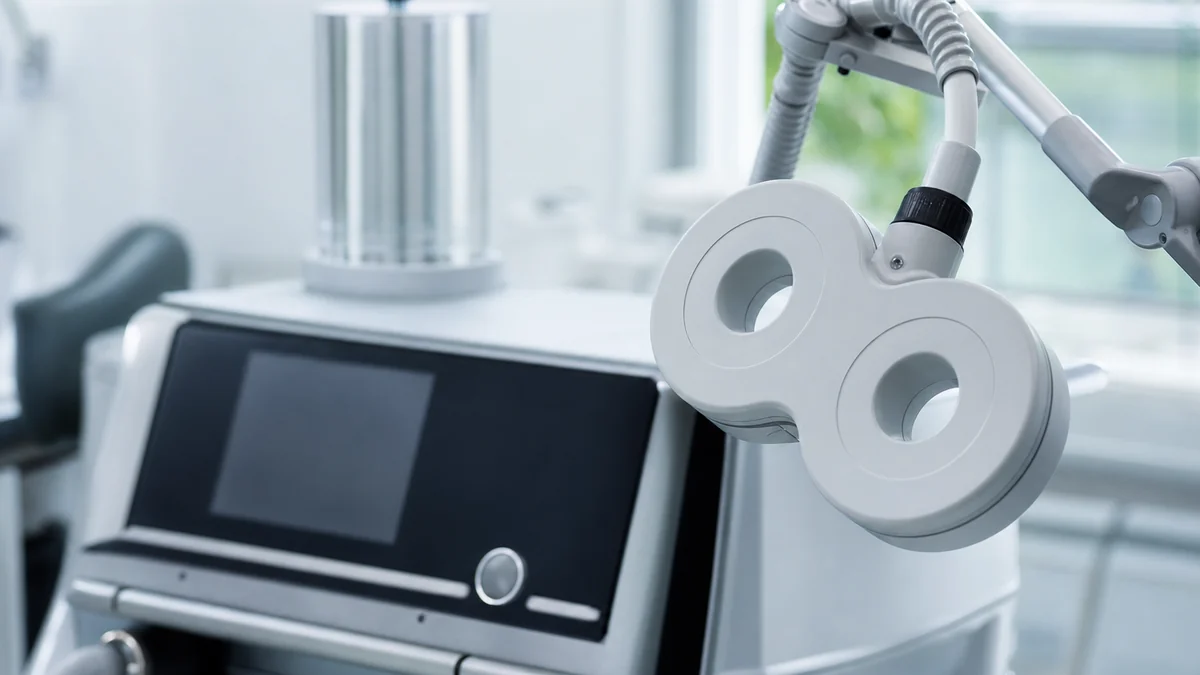
Photobiomodulation is then one tool among several. It addresses the mitochondrial and neuroinflammatory dimensions that the workup identifies. TMS — specifically theta-burst stimulation over left dorsolateral prefrontal cortex or precuneus — addresses the network-level hypoconnectivity documented on qEEG and functional imaging. Targeted supplementation (NAD+ precursors to restore mitochondrial cofactors, omega-3 at anti-inflammatory doses, plasmalogens for membrane integrity) supports the same pathways from a nutritional direction.
The patient who benefits most from transcranial PBM for Alzheimer’s is one with:
- Documented hippocampal and cortical hypoperfusion (SPECT or ASL-MRI)
- Elevated inflammatory markers without a treatable infectious cause, or as adjuvant during anti-infectious treatment
- Mild-to-moderate disease where enough functional neurons remain to respond to mitochondrial activation
- Family support for a consistent daily home-treatment protocol
Patients with severe disease and widespread cortical atrophy have less residual tissue to rehabilitate, and expectations should be calibrated accordingly.
Safety Profile and Practical Considerations
Across all published human studies, transcranial and intranasal near-infrared PBM has produced no serious adverse events. Reported side effects are limited to mild, transient headache in a small minority of participants — likely a vasodilatory effect from nitric oxide release. There is no ionising radiation, no tissue heating at the low irradiances used (typically 10–25 mW/cm²), and no cumulative tissue damage with repeated use.
Contraindications are theoretical rather than evidence-based but prudent:
- Active intracranial malignancy (theoretical concern about stimulating tumour vasculature)
- Photosensitising medications (porphyrin derivatives, certain antibiotics) if the dosing protocol involves direct skin exposure
- Recent intracranial surgery or open skull defect
- Severe photosensitivity disorders
The practical limiting factors are cost (quality devices run €500–2,000 for home units; clinic-based protocols are additional), treatment burden (20–25 minutes daily for a home protocol requires consistent caregiver engagement), and the absence of an established dose-response protocol. Parameters that work in a healthy younger brain may need adjustment for an atrophic, hypoperfused Alzheimer’s brain — pulse frequency, irradiance, and treatment duration likely require individualisation.
A realistic framing for patients and families: PBM is not expected to reverse established Alzheimer’s pathology. The question it may answer is whether slowing progression and maintaining functional independence for longer than expected is achievable with a safe, non-pharmacological neuromodulation tool. That is a meaningful question even if the answer turns out to be a modest effect size.
Related Articles
- Transcranial Photobiomodulation: Light Through the Skull — mechanisms, wavelengths, and clinical trial data for the broader tPBM field
- Photobiomodulation for Depression: What the Clinical Evidence Actually Shows — overlapping neuroinflammatory mechanisms, with the strongest human evidence base in the PBM literature
- qEEG Brain Mapping: What It Measures and Why It Guides Treatment — the diagnostic step that should precede any neuromodulation intervention for cognitive decline
- Neuroinflammation and Brain Fog: When the Immune System Attacks Cognition — the clinical syndrome that connects Alzheimer’s neuroinflammation to treatable upstream drivers
- Inflammaging: The Chronic Low-Grade Inflammation That Accelerates Every Aspect of Aging — the systemic context in which Alzheimer’s neuroinflammation develops
References
-
Saltmarche AE, Naeser MA, Ho KF, Hamblin MR, Lim L. Significant improvement in cognition in mild to moderately severe dementia cases treated with transcranial plus intranasal photobiomodulation: case series report. Photomed Laser Surg. 2017;35(8):432-441. PMID: 28186867
-
Berman MH, Halper JP, Nichols TW, Jarrett H, Lundy A, Huang JH. Photobiomodulation with near infrared light helmet in a pilot, placebo controlled clinical trial in dementia patients testing memory and cognition. J Neurol Neurosci. 2017;8(1):176. PMID: 28593105
-
Huang N, Hamblin MR, Zhang Q. Photobiomodulation in experimental models of Alzheimer’s disease: state-of-the-art and translational perspectives. Alzheimers Res Ther. 2024;16(1):114. PMID: 38773642
-
Su Y, Li H, Qu S, et al. The mechanism of neurodegeneration and intervention strategies in Alzheimer’s disease by targeting mitochondria. Int J Mol Sci. 2023;24(11):9486. PMID: 37298224
-
Lim L. Near-infrared light treatment of Alzheimer’s disease: mechanisms and clinical application. Front Neurol. 2024;15:1407785. PMID: 39246604
-
Yokoi K, Kinoshita A, Otsuka S, et al. Efficacy of photobiomodulation therapy combined with transcranial and intranasal near-infrared light in patients with mild cognitive impairment or mild Alzheimer’s dementia: a randomized, double-blind, sham-controlled study protocol. Front Neurol. 2024;15:1371284. PMCID: PMC11258032