
At a Glance
| Stressor | Mechanism | Key Benefit | Optimal Dose Window |
|---|---|---|---|
| Cold exposure | Norepinephrine, cold-shock proteins | Metabolic resilience, mood | 11–15 min/week in ≤15°C water |
| Heat (sauna) | Heat-shock proteins (HSP70), nitric oxide | Cardiovascular protection, longevity | 4×/week, 20 min, ≥80°C |
| Exercise | ROS signaling, mitochondrial biogenesis | VO₂max, insulin sensitivity | Zone 2 + periodic high-intensity |
| Caloric restriction / fasting | AMPK, mTOR inhibition, autophagy | Metabolic flexibility, cellular cleanup | 12–16 h daily or 5:2 protocol |
| Phytonutrients (e.g. sulforaphane, quercetin) | Nrf2, sirtuin activation | Anti-inflammatory, senolytic | Dietary or targeted supplementation |
| Hypoxia / IHHT | HIF-1α, mitochondrial adaptation | Aerobic capacity, vascular health | Supervised altitude cycling |
What if the very things that damage cells in high doses are responsible for cellular repair in low doses? This is not a paradox — it is hormesis, one of the most clinically important yet under-appreciated principles in longevity medicine. Understanding hormesis reframes how we think about exercise fatigue, dietary stress, thermal exposure, and even certain pharmacological agents. It explains why Paracelsus was right five centuries ago when he wrote that “the dose makes the poison,” and it gives us a mechanistic framework for designing interventions that genuinely extend healthspan.
In my practice, hormesis is not an abstract concept — it is the underlying rationale behind protocols ranging from whole-body hyperthermia to intermittent fasting to structured cold exposure. The evidence base has matured significantly over the past decade, and it now warrants a systematic clinical overview.
What Hormesis Is (and Is Not)
Hormesis describes a biphasic dose–response relationship in which a stressor produces stimulatory or beneficial effects at low doses and inhibitory or toxic effects at high doses. The dose–response curve is characteristically J-shaped or inverted-U-shaped, depending on the endpoint measured.
The concept was first described rigorously in the 1940s by Southam and Ehrlich studying fungicide effects on tree-ring growth. It was subsequently validated across thousands of biological systems — from cell cultures to model organisms to human clinical trials. A landmark 2003 analysis by Calabrese and Baldwin reviewed over 5,000 hormetic dose–response relationships across toxicology, pharmacology, and nutrition.
Several key adaptive pathways mediate hormetic responses:
- Nrf2 (Nuclear factor erythroid 2-related factor 2): The master regulator of antioxidant and detoxification gene expression. Activated by mild oxidative stress, exercise, and plant-derived electrophiles like sulforaphane.
- AMPK (AMP-activated protein kinase): The cellular energy sensor activated when ATP is depleted — during exercise, fasting, or cold. AMPK inhibits mTOR and stimulates fatty acid oxidation, autophagy, and mitochondrial biogenesis.
- Sirtuins (SIRT1–7): NAD⁺-dependent deacetylases that regulate metabolism, inflammation, DNA repair, and aging. Activated by caloric restriction, exercise, and compounds like resveratrol and NMN.
- Heat-shock proteins (HSPs): Molecular chaperones upregulated by thermal stress, protecting protein integrity and enabling cellular repair.
- Autophagy: The cellular recycling system that clears damaged organelles and protein aggregates. A critical longevity mechanism, triggered by fasting, exercise, heat, and rapamycin.
The distinction between hormesis and harm lies in dose, duration, and recovery time. Chronic or excessive stress depletes adaptive reserves — leading to allostatic overload, mitochondrial dysfunction, and accelerated aging. The clinical art is calibrating the stressor so the adaptive signal dominates without inducing cumulative damage.
Cold Exposure: Shivering Your Way to Resilience
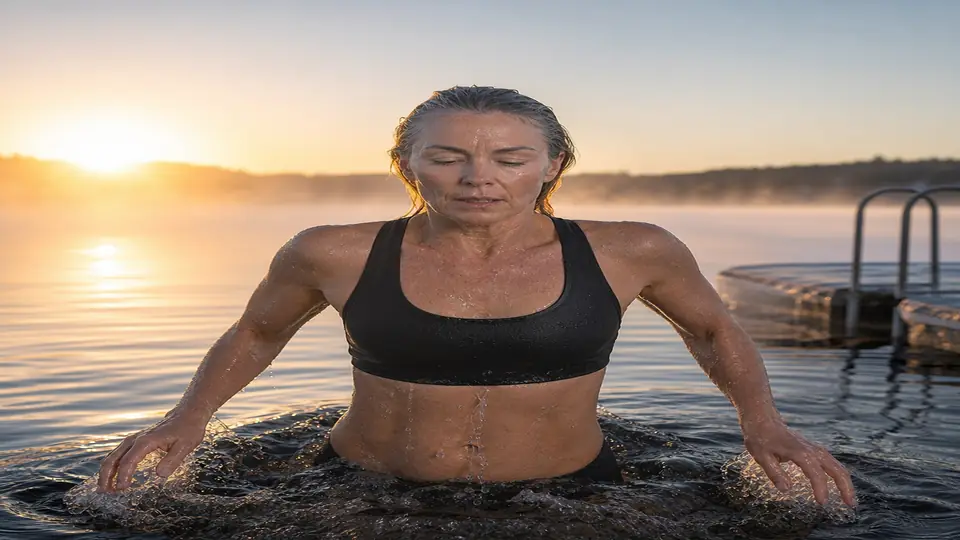
Cold water immersion and cryotherapy are among the best-studied hormetic stressors in humans. A 2022 study by Søberg et al. in Cell Reports Medicine demonstrated that 11 minutes per week of cold water immersion (split across 2–4 sessions) significantly increased norepinephrine, dopamine, and brown adipose tissue (BAT) activation in healthy adults — with effects persisting hours after exposure.
Molecular Mechanisms
Cold activates the sympathetic nervous system, releasing norepinephrine peripherally and centrally. This drives:
- BAT thermogenesis: Brown fat burns glucose and fatty acids to generate heat, improving metabolic flexibility and insulin sensitivity.
- Cold-shock proteins (RBM3, CIRBP): Upregulated within minutes of cold exposure, these RNA-binding proteins protect neurons from apoptosis and have been linked to synapse repair in animal models.
- Mitochondrial uncoupling: Cold increases uncoupling protein 1 (UCP1) expression, generating heat instead of ATP — a thermogenic process that also reduces reactive oxygen species (ROS) production at the mitochondrial level.
Clinical Dosing
For longevity and metabolic benefit, the data support 11–15 minutes per week in water at or below 15°C (59°F), achieved in multiple shorter sessions rather than one prolonged exposure. Full immersion (at least to the neck) recruits more surface area and BAT. Timing matters: morning cold exposure maximizes the dopaminergic response; post-exercise cold should be avoided within 4 hours of strength training, as it blunts the hypertrophic signaling from exercise-induced ROS.
Thermal Hormesis: The Sauna Longevity Data
Heat stress is the mirror-image hormetic stressor to cold, and the epidemiological data from Finland are difficult to ignore. The KIHD study (Laukkanen et al., 2018, JAMA Internal Medicine) followed 2,315 middle-aged Finnish men for 20 years and found that those using saunas 4–7 times per week had a 40% lower all-cause mortality rate compared with once-weekly users, along with 50% reductions in cardiovascular mortality and 65% lower risk of Alzheimer’s disease.
Heat-Shock Proteins and Longevity
The primary hormetic mechanism of sauna is heat-shock protein induction. HSP70 and HSP90 are dramatically upregulated within minutes of exposure to temperatures above 38–39°C at the core. These chaperones:
- Prevent protein misfolding and aggregation (relevant to neurodegeneration)
- Repair already-damaged proteins
- Regulate inflammatory signaling via NF-κB inhibition
For a full breakdown of the HSP superfamily, HSF1 signaling, and structured activation protocols, see Heat Shock Proteins: How Sauna, Exercise, and Hormesis Activate Cellular Repair.
Growth hormone (GH) rises dramatically with sauna exposure — two 20-minute sessions at 80°C produced a 16-fold increase in GH in a classic 1988 Finnish study. This is likely a key mediator of sauna’s muscle-preserving and metabolic benefits.
Protocol
For longevity purposes, 4 sessions per week at 80–100°C for 20 minutes each represents the dose associated with maximum benefit in the epidemiological data. Hot water immersion (at 40°C) achieves similar heat-shock protein induction when sauna is not accessible.
Exercise as the Oldest Hormetic Medicine
Exercise is the most widely prescribed hormetic intervention, though it is rarely framed in those terms. Skeletal muscle contraction generates ROS, depletes ATP, creates mechanical strain on connective tissue, and induces transient hypoxia — all stressors that, at appropriate doses, drive profound adaptive responses.
Key Adaptive Pathways
Mitochondrial biogenesis: PGC-1α, activated by AMPK and ROS during exercise, drives the creation of new mitochondria. This is the primary mechanism underlying improvements in VO₂max and metabolic efficiency with training.
Myokines: Exercising muscle secretes interleukin-6, irisin, BDNF, and dozens of other signaling molecules that act systemically — improving insulin sensitivity, stimulating neurogenesis, and reducing visceral fat.
Autophagy induction: A 2012 Nature study (He et al.) demonstrated that exercise-induced autophagy — dependent on Beclin-1 and regulated by AMPK — is required for the metabolic benefits of exercise in mice. Blocking autophagy prevented exercise from improving glucose homeostasis.
The Zone 2 and High-Intensity Balance
Zone 2 training (60–70% VO₂max, conversational pace) maximizes mitochondrial adaptations per unit of stress, making it the most efficient longevity exercise modality. High-intensity interval training (HIIT) provides a larger hormetic spike and is particularly effective at upregulating autophagy, heat-shock proteins, and anti-aging sirtuins — but requires longer recovery windows and carries greater injury risk.
The clinical recommendation for longevity: 150–200 minutes per week of Zone 2 cardio plus 2 sessions of resistance training, with 1–2 HIIT sessions added for those who tolerate it. The resistance training component is non-negotiable for sarcopenia prevention — an increasingly recognized determinant of longevity and functional independence.
Dietary Hormesis: Fasting and Xenohormesis
Caloric Restriction and Fasting
Caloric restriction (CR) is the most reproducible lifespan-extending intervention across model organisms, from yeast to primates. The mechanisms are hormetic: reduced nutrient availability activates AMPK, inhibits mTOR, increases NAD⁺ availability (activating sirtuins), and induces autophagy.
In humans, the landmark CALERIE trial demonstrated that 25% caloric restriction over 2 years reduced cardiometabolic risk factors and inflammatory markers, with recent reanalysis suggesting favorable epigenetic aging effects. Fasting mimetics — particularly time-restricted eating (12–16 hours daily) and 5:2 protocols — appear to capture many of these benefits without requiring chronic energy restriction.
The key molecular insight: mTOR inhibition during fasting is the primary driver of autophagy induction. mTOR is exquisitely sensitive to amino acid availability, explaining why even brief protein restriction during a fast can meaningfully enhance cellular cleanup.
Xenohormesis: Stress Signals from Plants
Plants under environmental stress (drought, UV, pathogen attack) produce phytochemicals that, when consumed by animals, activate adaptive pathways in the consumer. This phenomenon — xenohormesis — was proposed by Hooper and Bhakdi in 2009 and provides a coherent evolutionary explanation for why plant-derived compounds have such potent effects on mammalian longevity pathways.
Key xenohormetic compounds and their targets:
- Sulforaphane (broccoli sprouts): Nrf2 activation, phase II enzyme induction, NF-κB suppression
- Quercetin (onions, capers): Sirtuin activation, senolytic activity at higher doses
- Resveratrol (grape skins): SIRT1 activation, AMPK activation, mitochondrial biogenesis
- Curcumin (turmeric): Nrf2, NF-κB, autophagy induction
- EGCG (green tea): AMPK, autophagy, telomerase activation
The clinical challenge with xenohormetic compounds is bioavailability — most are poorly absorbed in standard forms. Liposomal delivery, piperine co-administration (for curcumin), or higher-concentration extracts may be necessary to achieve tissue concentrations sufficient for hormetic signaling.
Pharmacological Hormesis: Rapamycin and Metformin
Two longevity pharmacologicals operate through hormetic-adjacent mechanisms and warrant brief mention in this context.
Rapamycin is a direct mTOR inhibitor, pharmacologically replicating the metabolic state of fasting-induced mTOR suppression. Intermittent dosing (3–6 mg once weekly) appears to capture longevity benefits while minimizing immunosuppressive side effects. In animal models, rapamycin extends lifespan even when started in middle age — an important finding given that most hormetic interventions are most effective when initiated early.
Metformin activates AMPK (the same pathway as exercise and fasting), inhibits complex I of the mitochondrial electron transport chain, and reduces hepatic glucose output. The TAME trial (Targeting Aging with Metformin) is currently evaluating whether metformin reduces multi-morbidity in older adults — the first clinical trial explicitly targeting aging as its primary endpoint.
Importantly, combining pharmacological AMPK/mTOR modulation with exercise-based hormesis may produce additive rather than synergistic effects, since they partly converge on the same pathways. Timing matters: metformin taken immediately before or after exercise may blunt the exercise-induced AMPK signal.
Clinical Application: Designing a Hormetic Protocol
The clinical utility of hormesis is greatest when we move from individual stressors to integrated protocols. The goal is sufficient aggregate stress to drive robust adaptive signaling, without pushing any single system into overtraining, immune suppression, or allostatic overload.
A practical hormetic longevity protocol for a healthy 40–60-year-old patient:
- Exercise: 4–5 days Zone 2 (30–45 min), 2 days resistance training, 1 day HIIT (optional)
- Thermal: 3–4 sauna sessions per week (20 min, 80–100°C), 2–3 cold exposure sessions (3–5 min each)
- Fasting: 14:10 or 16:8 time-restricted eating most days; quarterly 3–5 day prolonged fast or fasting-mimicking diet
- Phytonutrients: Daily sulforaphane, quercetin, and curcumin at evidence-based doses
- Sleep: 7–9 hours — the non-negotiable recovery window where adaptive responses consolidate
Red flags that indicate excessive hormetic load: persistent fatigue, elevated resting heart rate, disrupted sleep, reduced performance, elevated inflammatory markers (hs-CRP, ferritin), or deteriorating HRV. These signal that recovery capacity has been exceeded and load must be reduced.
Related Articles
- Cold Plunge Science: What the Research Actually Shows — A detailed look at the Søberg protocol and cold water immersion data.
- Sauna Frequency: How Often Is Optimal for Longevity? — The KIHD study and practical heat exposure recommendations.
- Autophagy: How to Activate Your Body’s Cellular Recycling System — The molecular biology of autophagy and how to induce it clinically.
- Intermittent Fasting: Mechanisms and Clinical Evidence — The metabolic and longevity effects of time-restricted eating.
- Rapamycin for Longevity: What We Know in 2025 — Dosing, evidence, and clinical considerations for mTOR inhibition.
References
- Calabrese EJ, Baldwin LA. Hormesis: the dose-response revolution. Annu Rev Pharmacol Toxicol. 2003;43:175–197. doi:10.1146/annurev.pharmtox.43.100901.140223
- Søberg S, Löfgren J, Philipsen FE, et al. Altered brown fat thermoregulation and enhanced cold-induced thermogenesis in young, healthy, winter-swimming men. Cell Rep Med. 2021;2(10):100408. doi:10.1016/j.xcrm.2021.100408
- Laukkanen T, Laukkanen JA, Kunutsor SK. Sauna bathing and systemic inflammation. Eur J Epidemiol. 2018;33(3):351–353. doi:10.1007/s10654-017-0335-y
- He C, Bassik MC, Moresi V, et al. Exercise-induced BCL2-regulated autophagy is required for muscle glucose homeostasis. Nature. 2012;481(7382):511–515. doi:10.1038/nature10758
- Hooper PL, Bhakdi S. Xenohormesis: health benefits from an eon of plant stress response evolution. Cell Stress Chaperones. 2009;14(1):1–10. doi:10.1007/s12192-008-0066-9
- Ravussin E, Redman LM, Rochon J, et al. A 2-year randomized controlled trial of human caloric restriction: feasibility and effects on predictors of health span and longevity. J Gerontol A Biol Sci Med Sci. 2015;70(9):1097–1104. doi:10.1093/gerona/glv057
- Calabrese V, Cornelius C, Cuzzocrea S, et al. Hormesis, cellular stress response and vitagenes as critical determinants in aging and longevity. Mol Aspects Med. 2011;32(4–6):279–304. doi:10.1016/j.mam.2011.10.007
- Mattson MP. Hormesis defined. Ageing Res Rev. 2008;7(1):1–7. doi:10.1016/j.arr.2007.08.007