At a Glance
| Property | Value |
|---|---|
| Total Treatment Journey | 7-10 days per session (including pre-assessment and recovery) |
| Treatment Day Duration | 6-8 hours (sedation, heating, plateau, cooling, recovery) |
| Hospital Stay | 4-6 nights minimum |
| Sessions Typically Required | 2 (spaced 7-14 days apart) |
| Monitoring | Continuous ECG, pulse oximetry, blood pressure, core temperature |
| Anesthesia | Deep sedation (not general anesthesia) with anesthesiology team present |
You Are Not Alone in This
If you are reading this, you have likely spent months or years dealing with a condition that has not responded to standard treatment. Perhaps chronic Lyme disease, perhaps Long COVID, perhaps another persistent infection. You have done your research. You have found our hospital. And now you want to know, in practical terms, what the experience actually looks like.
I understand that anxiety. Many of our patients have traveled from the other side of the world for this treatment. They arrive with hope, but also with questions. This article walks you through the entire journey — day by day, step by step — so that when you arrive at Klinik St. Georg, nothing comes as a surprise.
Before You Arrive: The Pre-Assessment Phase
Your journey begins weeks before you set foot in Germany. After your initial consultation — either in person or via telemedicine — we request a set of baseline laboratory tests and medical records. This is not bureaucratic formality. It is how we determine whether hyperthermia is appropriate for you and how to optimize the protocol.
What we need before your arrival:
- Complete blood count with differential
- Comprehensive metabolic panel (liver function, kidney function, electrolytes)
- Coagulation panel (PT, INR, aPTT, fibrinogen)
- Inflammatory markers (CRP, ESR)
- Thyroid panel (TSH, free T3, free T4)
- Cardiac assessment (recent ECG; echocardiogram if you have cardiac history)
- Your current medication and supplement list — this is critical, as some medications must be adjusted before treatment
- Prior Lyme testing results (ELISA, Western Blot, ELISpot, or equivalent)
- Any imaging studies relevant to your condition
If your labs reveal anything that needs attention before treatment, we will communicate this to you in advance. We have declined patients or postponed treatment when safety parameters were not met. This is a feature, not a limitation — it means we take your safety seriously.
Day 1: Admission and Baseline Assessment
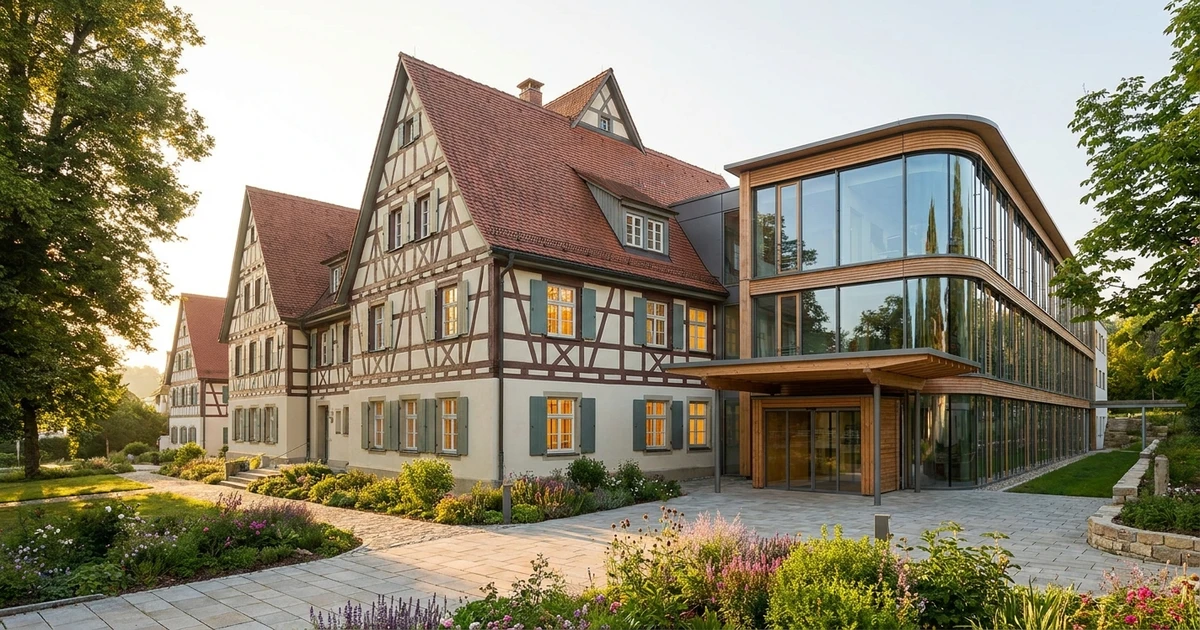
You arrive at Klinik St. Georg and are admitted to the infectiology ward. The hospital is located in Bad Aibling, a small Bavarian town about 60 kilometers southeast of Munich. Many patients are surprised by how quiet and peaceful the setting is — it does not feel like the large urban hospitals most people associate with specialized treatment.
What happens on Day 1:
- Check-in and orientation. Our international patient coordinator will walk you through the schedule for the coming days. If you do not speak German, all medical consultations are conducted in English. We also have staff who speak Spanish, French, and Russian.
- Physical examination. A thorough examination by the treating physician, including neurological assessment and review of your symptom history.
- Baseline laboratory panel. Even if you sent labs in advance, we draw fresh baseline bloods. We need current values for coagulation, inflammation, organ function, and infection markers.
- Cardiac assessment. 12-lead ECG on admission. If there is any question about cardiac fitness, we arrange echocardiography.
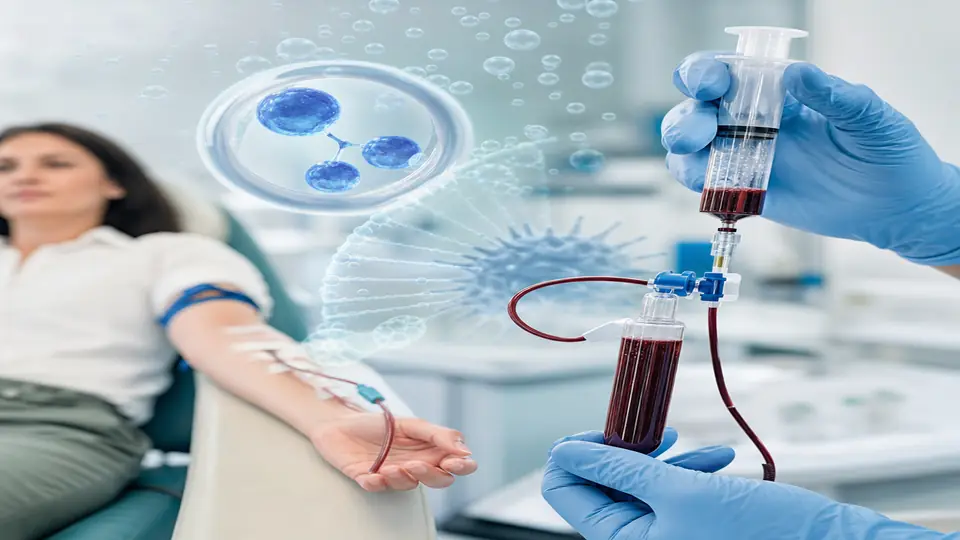
- IV access. A peripheral venous catheter is placed. We begin gentle IV hydration to optimize your fluid status before treatment.
- Medication review. The treating physician reviews every medication and supplement you are taking. Some will be continued, some paused, some adjusted. Anticoagulants, antihypertensives, and certain psychiatric medications require particular attention.
Most patients spend the afternoon settling into their room, reviewing the informed consent documents, and resting. The rooms are single-occupancy with ensuite bathrooms, and the food is prepared fresh in the hospital kitchen.
Day 2: Preparation Day
This day is about fine-tuning your body for the treatment ahead.
What happens on Day 2:
- Hydration intensification. You receive IV fluids throughout the day. Adequate hydration is one of the most important safety factors for WBH. The sustained high temperature will cause significant fluid loss through sweating, and starting from an optimally hydrated state reduces the risk of complications.
- Dietary adjustment. We advise a light, easily digestible diet. The evening meal before treatment should be light — broth, steamed vegetables, lean protein. You will fast from midnight before the treatment day.
- Pre-treatment consultation. I or one of my colleagues will sit with you and walk through the procedure in detail. This is your opportunity to ask every question you have. We will discuss what you will feel (very little during the procedure itself, as you will be sedated), what to expect in the hours and days after, and what constitutes a normal recovery versus something that needs attention.
- Informed consent. If you have not already signed, the informed consent document is reviewed and signed. This is a conversation, not a formality. We want you to understand the procedure, the expected effects, the risks, and the alternatives.
- Supplement protocol. We begin a pre-treatment supplement protocol that typically includes IV glutathione, IV vitamin C, and oral binders. These support the body’s detoxification pathways, which will be significantly stressed during and after WBH.
- Mental preparation. I encourage patients to rest, read, watch something enjoyable. Anxiety before the procedure is completely normal and expected. If anxiety is significant, we can provide mild anxiolytic support.
Practical tip: Bring comfortable, loose-fitting clothing for recovery days. You will want nothing tight or restrictive against your skin. Bring entertainment — books, a tablet, headphones — for the recovery days when you will be resting but alert.
Day 3: Treatment Day
This is the day. Here is exactly what happens, hour by hour.
Morning (07:00-08:00): Final Preparation
- Final vital signs check
- Confirmation that fasting has been maintained (8-12 hours)
- IV fluid bolus
- Transport to the treatment suite
- Final discussion with the anesthesiology team
The Procedure (08:00-16:00)
08:00 — Sedation induction. The anesthesiologist administers deep sedation through your IV line. You will drift off within minutes. You will not be awake for any part of the heating or plateau phase, and you will have no memory of it.
08:30-10:00 — Heating phase. Using the Heckel HT-3000 water-filtered infrared-A hyperthermia device, your core temperature is raised gradually over approximately 60-90 minutes. The rate of heating is carefully controlled. The anesthesiology and nursing team monitor your vitals continuously — ECG, blood pressure, oxygen saturation, core temperature (measured via esophageal or rectal probe).
10:00-11:00 — Plateau phase. Your core temperature reaches the target range of 41.6-41.8 degrees C and is held there for approximately 60 minutes. This is the therapeutic window — the temperature at which Borrelia and other thermosensitive pathogens lose viability. For moderate WBH (used in post-COVID and immune activation protocols), the target is approximately 40 degrees C, maintained for a longer period.
11:00-12:30 — Controlled cooling. Your body is cooled gradually over 60-90 minutes. This is managed with the same precision as the heating phase. Rapid cooling would cause shivering and unnecessary cardiovascular stress.
12:30-14:00 — Sedation taper and recovery. As your temperature normalizes, sedation is tapered. You will begin to wake gradually. Most patients are oriented within 30-60 minutes of sedation discontinuation, though significant drowsiness is normal for several hours afterward.
14:00-16:00 — Post-procedure monitoring. You are transferred back to the ward and monitored closely. Vital signs are checked at frequent intervals. IV fluids continue. You will feel drowsy and tired. Most patients sleep through the afternoon.
Evening of Treatment Day
By evening, most patients are awake, oriented, and able to drink fluids and eat light food if they wish. Fatigue is profound — this is entirely normal. Your body has just undergone the equivalent of an intense, sustained fever under controlled conditions. I encourage patients to sleep as much as their body wants.
Days 4-5: Hospital Recovery
These are the days when your body begins processing the treatment. Here is what to expect:
Day 4:
- Fatigue remains significant — this is the most common experience
- Mild flu-like symptoms are expected: muscle aches, headache, mild joint discomfort
- Low-grade fever (37.5-38.5 degrees C) may be present — this is normal and does not require treatment unless it exceeds 39 degrees C or persists beyond 48 hours
- Appetite is usually reduced — eat lightly, focus on hydration
- Laboratory panel drawn to check organ function, inflammatory markers, and coagulation
- IV fluids and supportive supplements continue
- The medical team rounds on you at least twice daily
Day 5:
- For most patients, the worst of the initial fatigue begins to lift
- Herxheimer reactions may begin — a temporary worsening of your underlying symptoms caused by the release of endotoxins from killed pathogens. This is an expected response, not a complication. We discuss this in detail in our article on Herxheimer reactions
- You may begin gentle walking in the hospital or grounds when you feel able
- Follow-up consultation with your treating physician to discuss your response and the plan for the coming days
Practical tips for recovery days:
- Drink at least 3 liters of water daily, supplemented with electrolytes
- Eat when you can, but do not force it — broth, soups, and light foods are ideal
- Rest whenever your body tells you to rest — do not try to be productive
- Gentle movement (short walks) helps lymphatic drainage and generally improves how patients feel
- Communicate any symptoms that concern you to the nursing staff immediately
Days 6-7: Discharge Assessment
Most patients are assessed for discharge between days 5 and 7. We do not rush this process.
Before discharge, we ensure:
- Vital signs are stable and within normal limits
- Laboratory values are trending appropriately
- You are eating, drinking, and mobilizing independently
- Herxheimer reactions, if present, are within expected parameters
- You have a clear written plan for the period between discharge and your next session (or the journey home)
- Contact details for reaching our team 24/7 in case of questions or concerns
If your treatment plan includes a second WBH session (which it typically does for Lyme patients — here is why we recommend two sessions), this is usually scheduled 7-14 days after the first. Many international patients remain in the Bad Aibling area between sessions. We can recommend accommodation near the hospital.
The Weeks After: What Happens at Home
Once you return home, the recovery and healing process continues:
Weeks 1-2: Progressive improvement in energy. Herxheimer reactions typically peak during the first week post-treatment and resolve by the end of week two. Some patients experience symptom fluctuation — good days and bad days — which is normal.
Weeks 2-4: Most patients report a noticeable shift. Energy improves. Cognitive clarity begins to return. Pain levels often decrease. This is when many patients first say, “I think the treatment is working.”
Weeks 4-8: The most significant clinical improvements typically become apparent in this window. We request follow-up laboratory testing at the 6-8 week mark to track objective improvement.
Months 2-6: Continued gains are common, particularly in patients who received the full integrated protocol (WBH, antimicrobial therapy, apheresis, and immune support).
We maintain communication with all patients throughout this period. You will have a follow-up telemedicine consultation at 4-6 weeks and 3 months post-treatment, with additional check-ins as needed.
Clinical Perspective — Julian Douwes M.D. I understand the weight of the decision to travel to Germany for a treatment you may have only read about online. What I want you to know is this: the procedure itself is the smallest part of the journey. It is the preparation, the monitoring, and the integration of WBH into a comprehensive treatment plan that determines the outcome. Our hospital has been performing whole-body hyperthermia for over thirty years — my father pioneered this work — and has treated patients from more than 90 countries. You will not be the first person to walk through our doors feeling uncertain. And you will not be the first to leave feeling that the journey was worth it.
Key Takeaways
- The total treatment journey spans 7-10 days per session, including pre-assessment, treatment, and supervised recovery
- You will be under deep sedation during the procedure and will not experience or remember the heating phase
- Fatigue and flu-like symptoms in the first 3-5 days are normal expected responses, not complications
- Herxheimer reactions (temporary symptom worsening) indicate the treatment is working against your infection
- Most patients require two WBH sessions spaced 7-14 days apart
- Meaningful clinical improvement typically becomes apparent 4-8 weeks after treatment
- Our team maintains contact with you throughout the recovery period, regardless of where you live
References
- Reisinger EC, Fritzsche C, Krause R, Krejs GJ. Diarrhea caused by primarily non-gastrointestinal infections. Nat Clin Pract Gastroenterol Hepatol. 2005;2(5):216-222. PMID: 16265183.
- Hildebrandt B, Wust P, Ahlers O, et al. The cellular and molecular basis of hyperthermia. Crit Rev Oncol Hematol. 2002;43(1):33-56. PMID: 12098606.
- Butler T. The Jarisch-Herxheimer reaction after antibiotic treatment of spirochetal infections: A review of recent cases and our understanding of pathogenesis. Am J Trop Med Hyg. 2017;96(1):46-52. PMID: 28077740.