TB-500 is frequently mentioned alongside BPC-157 peptide therapy as a tissue repair peptide, and the two are often combined in clinical protocols. But TB-500 operates through a fundamentally different mechanism, and understanding that difference is essential for using either peptide appropriately. This article provides an honest assessment of what TB-500 is, what the evidence supports, and where our knowledge remains incomplete.
At a Glance
| Property | Detail |
|---|---|
| Type | Synthetic fragment of an endogenous peptide |
| Amino acid count | 43 in full thymosin beta-4; FDA lists TB-500 as the 7-amino-acid fragment LKKTETQ, which contains the actin-binding region |
| Primary mechanism | Actin sequestration, cell migration, anti-inflammatory, angiogenic |
| Evidence level | Limited: animal studies; human trials exist only for full-length thymosin beta-4 (eye drops, IV safety studies, one trial after heart attack) |
| Human evidence for injury use | None: no controlled human trial of TB-500 for tendon, muscle or post-surgical repair |
| Typical dose in practice | Loading 2-2.5 mg SC twice weekly for 4-6 weeks (community compilations up to 4-8 mg per week), then 2 mg every 1-2 weeks |
| Regulatory status | Not approved by FDA, EMA or BfArM; on FDA’s list of compounding substances that may present significant safety risks; prohibited at all times in sport (WADA S2.3) |
| Route of administration | SC injection |
What Is TB-500?
TB-500 is a synthetic version of the active region of thymosin beta-4 (Tb4), a 43-amino-acid peptide found in virtually all human cells. Thymosin beta-4 is one of the most abundant intracellular peptides in the body. Its primary biological function is the regulation of actin — a structural protein that forms the cytoskeleton and is essential for cell movement, division, and shape.
Allan Goldstein’s group described “thymosin”, a thymus extract, in 1966. Thymosin beta-4 is one of the peptides in that extract; Low, Hu and Goldstein purified and sequenced it in 1981. It was later found in nearly every cell type, so the name reflects where it was first isolated, not a thymus-specific function.
The distinction between thymosin beta-4 and TB-500 is important. Thymosin beta-4 is the full 43-amino-acid peptide. TB-500 refers to a commercially available synthetic fragment of it; FDA’s compounding list names it “Thymosin beta-4, fragment (LKKTETQ)”, the stretch that carries the actin-binding motif. In practice, the terms are often used interchangeably, though they are not identical molecules, and every human trial cited below used the full-length protein.
Mechanism of Action
Primary Pathways
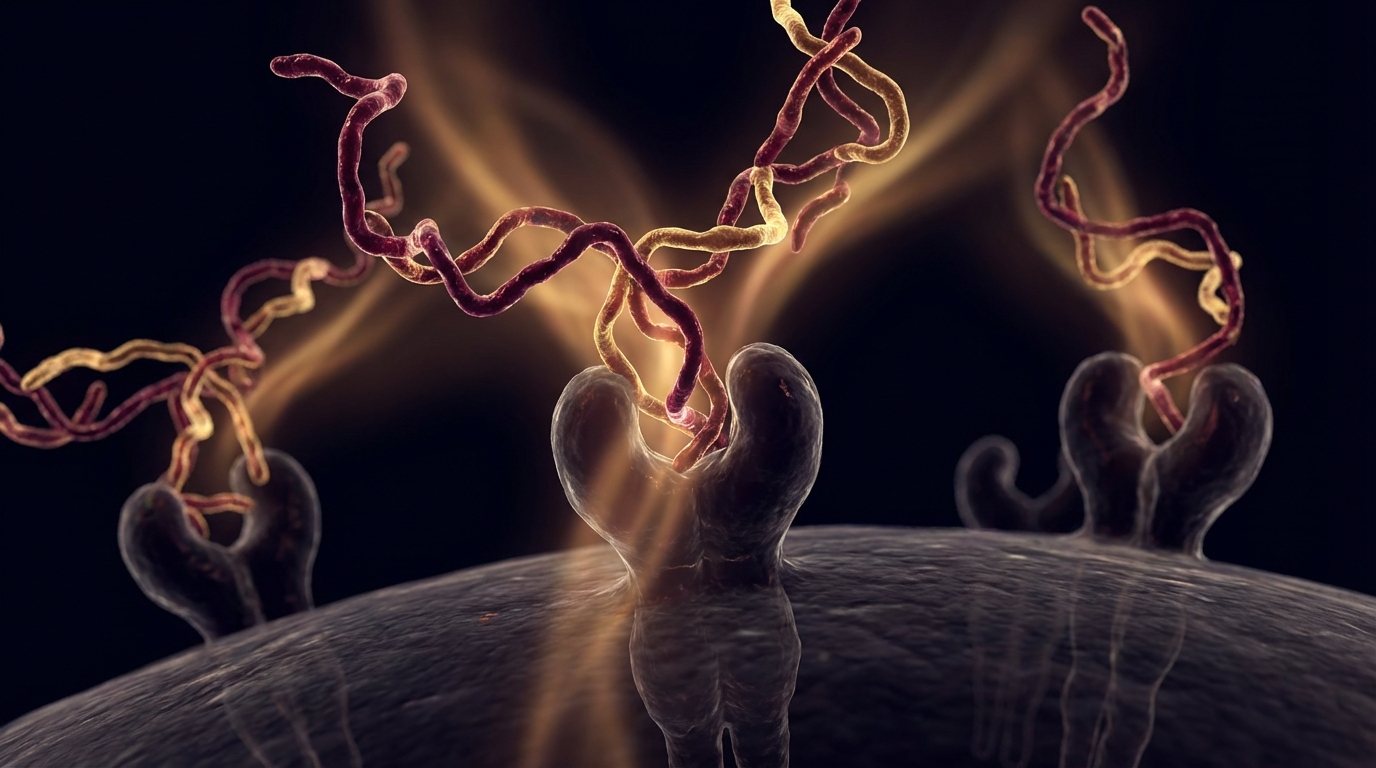
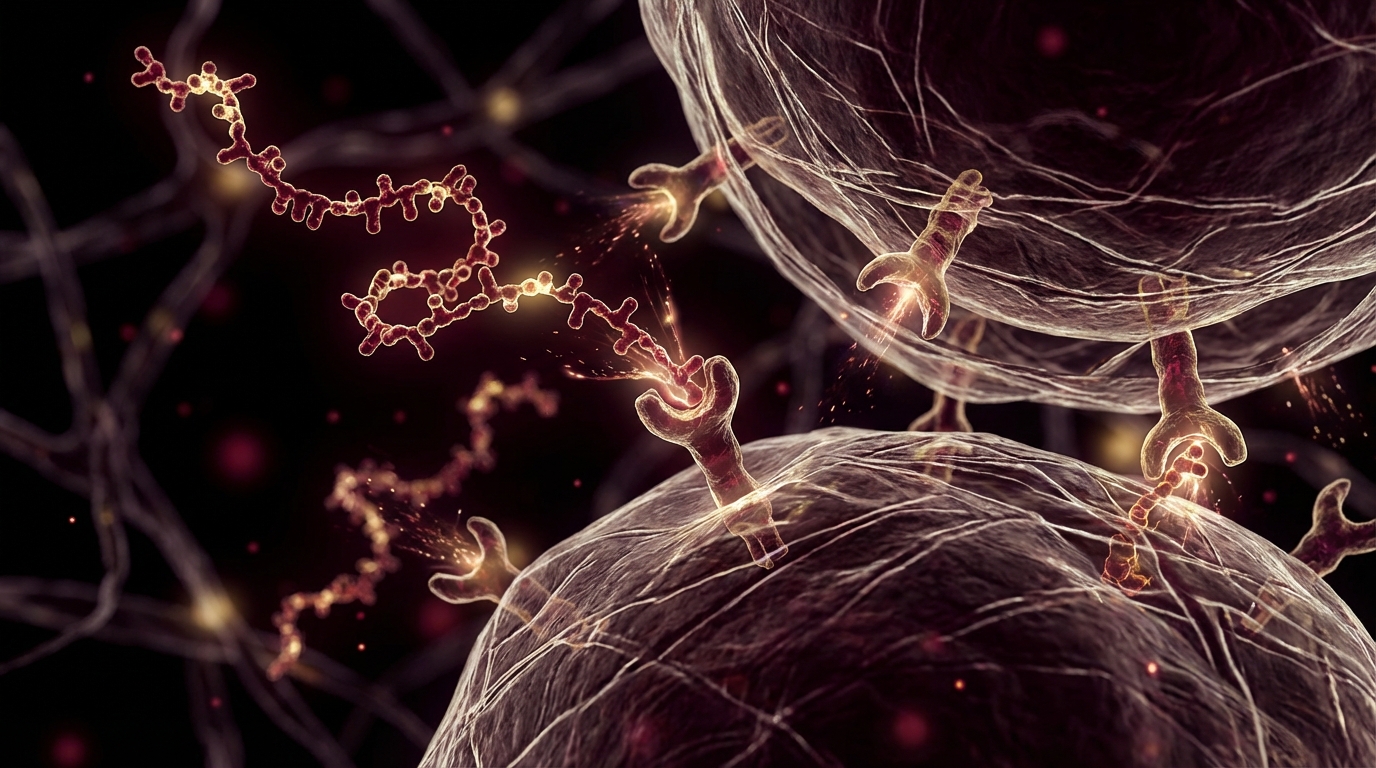
- Actin Sequestration and Cell Migration: The most well-characterized function of thymosin beta-4 is its role as a G-actin sequestering peptide. By binding to monomeric actin (G-actin), it regulates the polymerization of actin filaments (F-actin). This has direct implications for cell migration, because cells must continuously remodel their actin cytoskeleton to move. In the context of wound healing, enhanced cell migration means that fibroblasts, endothelial cells, and keratinocytes can reach injury sites more rapidly.
- Anti-inflammatory Signaling: Thymosin beta-4 has demonstrated anti-inflammatory effects through multiple mechanisms, including downregulation of NF-kB signaling, reduction of pro-inflammatory cytokines (IL-1beta, IL-6, TNF-alpha), and modulation of macrophage polarization from the pro-inflammatory M1 phenotype toward the tissue-repair-promoting M2 phenotype.
- Angiogenesis: Like BPC-157, thymosin beta-4 promotes the formation of new blood vessels. However, the mechanism differs. While BPC-157 appears to primarily upregulate VEGF expression, thymosin beta-4 promotes angiogenesis largely through its effects on endothelial cell migration and by upregulating VEGF through a distinct signaling pathway involving the Akt/mTOR pathway and longevity cascade.
- Anti-fibrotic Effects: In cardiac and hepatic injury models, thymosin beta-4 has demonstrated the ability to reduce pathological fibrosis — the excessive scar tissue formation that impairs organ function after injury. This anti-fibrotic effect appears to be mediated through modulation of TGF-beta signaling.
Research Assessment
What the Evidence Shows
| Claimed effect | Evidence level | Key studies | Assessment |
|---|---|---|---|
| Cardiac repair post-infarction | Animal studies; phase 1 IV safety study in healthy volunteers; one randomised trial after STEMI (full-length Tβ4) | Bock-Marquette 2004, Smart 2010, Ruff 2010, Zhang 2025 | Promising, not confirmed |
| Corneal healing / dry eye | Small phase 2 trials of Tβ4 eye drops (RGN-259) | Sosne 2015; review Sosne 2016 | Moderate, for topical eye use only |
| Anti-inflammatory effects | Animal studies | Badamchian 2003 | Promising |
| Hair regrowth | Animal studies | Philp 2004 | Preliminary |
| Neurological repair | Animal studies | Xiong 2012 | Preliminary |
The evidence base for thymosin beta-4 has a significant advantage over many other therapeutic peptides: the parent molecule has been studied in human clinical trials, particularly for ophthalmic applications. RegeneRx Biopharmaceuticals conducted clinical trials of RGN-259 (a thymosin beta-4 formulation) for dry eye syndrome and neurotrophic keratopathy, with published results showing safety and preliminary efficacy.
For cardiac applications, Bock-Marquette and colleagues demonstrated in 2004 that thymosin beta-4 could promote cardiac cell migration and survival in mouse models of myocardial infarction. In people, intravenous Tβ4 was well tolerated in a phase 1 study of 40 healthy volunteers (Ruff 2010). A randomised, placebo-controlled trial of recombinant Tβ4 in 96 patients after STEMI found smaller infarcts at 90 days in the 43 patients who got their first dose within 8 hours of PCI, but no significant difference across the whole group (Zhang 2025). See the dedicated review of TB-500 for cardiac muscle repair and post-MI recovery for the full evidence breakdown.
What the Evidence Does Not Show
The systemic administration of TB-500 for musculoskeletal repair in humans has not been studied in controlled clinical trials. The wound healing and cardiac repair data, while encouraging, comes primarily from animal models or from topical ophthalmic applications that may not translate directly to systemic use.
The relationship between the commercially available TB-500 fragment and the full thymosin beta-4 molecule studied in clinical trials is not fully characterized. It is reasonable to assume that the active region retains the parent molecule’s biological activity, but this assumption has not been rigorously validated for all applications.
Dosing
For informational purposes only — this summarises doses used in research and practice; it is not a prescription or individual medical advice.
| Goal | Dose | Route | Frequency / timing | Cycle length | Basis |
|---|---|---|---|---|---|
| Injury recovery, loading | 2-2.5 mg | SC, abdomen or near the injury | Twice weekly | 4-6 weeks, then maintenance | Practice protocol |
| Loading, upper end of common practice | 4-8 mg per week, split into 2-3 injections | SC | 2-3 times weekly | 4-6 weeks | Practice protocol |
| Serious injury or after surgery | 3-5 mg per injection (some report 5-10 mg) | SC, near the site | 3 times weekly | 4-8 weeks | Anecdotal |
| Maintenance | 2 mg (up to 4 mg) | SC | Once every 1-2 weeks | 4-6 weeks or ongoing | Practice protocol |
| Combined with BPC-157 (“Wolverine” stack) | TB-500 2-2.5 mg twice weekly + BPC-157 250-500 mcg daily | SC | As listed | 4-8 weeks | Practice protocol |
| Safety of full-length thymosin beta-4 (not TB-500) | 42, 140, 420 or 1,260 mg | IV | Once daily | 14 days | Trial (phase 1, healthy volunteers, safety only; Ruff 2010) |
Note: These dosing ranges come from clinical practice and allometric scaling. They are not based on human dose-finding studies for systemic musculoskeletal applications. The loading phase (higher frequency for the first 4-6 weeks, followed by maintenance every 1-2 weeks) is a practice convention, not something a controlled trial has tested. The sources behind each row, the cycling schedules and the reconstitution maths are in TB-500 Dosage: Loading, Maintenance, and Cycling.
What People Report: What Works and What Doesn’t
Sources: the aggregated community data set (Peptide Protocol Wiki, 120 reports), the protocol and side-effect lists on Peptide DB, and the human trials of full-length thymosin beta-4 described above. No published case series of the TB-500 fragment exists, so everything here is self-report.
Reported to work
- Slow-healing tendon and ligament problems, especially chronic tendinopathy, are the most frequent reason people use it and the most frequent success story.
- Less joint stiffness and a better range of motion.
- Faster recovery after orthopaedic surgery, in some reports.
- Timeline: people usually describe first changes after 2-3 weeks and the bulk of the improvement by weeks 4-6, a little slower than what BPC-157 users describe.
Mixed or unclear
- Thicker hair, mentioned as a side benefit. Rodent data on hair follicles exist; human data do not.
- Whether TB-500 adds anything to BPC-157. Most people run the two together, so these reports cannot separate what each one contributes.
- How much the loading dose matters. Users on 2 mg twice weekly and users on 4-8 mg per week both report success, and nobody has compared the two.
Reported not to work, or disappointing
- No noticeable change. Self-reported timelines have no comparison group, and natural healing may explain some or all of the improvement people describe.
- Temporary tiredness after injections is the side effect most often listed; prolonged redness or swelling at the injection site is the usual warning sign.
What a properly designed trial would need to show: that the TB-500 fragment, not full-length thymosin beta-4, improves pain, function and tendon imaging against placebo in a defined injury over 8-12 weeks, with tumour and angiogenesis safety monitoring and follow-up after stopping.
Safety and Side Effects
Known
Thymosin beta-4 has demonstrated a favorable safety profile in the clinical trials that have been conducted. The ophthalmic trials reported no serious adverse events. For systemic TB-500 use there are only anecdotal reports, mostly of injection site irritation, transient headache, and flu-like symptoms; these are not a substitute for systematic safety data.
Theoretical Concerns
As with BPC-157, the angiogenic properties of TB-500 raise theoretical concerns in the context of active malignancy. Additionally, because thymosin beta-4 is involved in actin dynamics, there is a theoretical question about whether exogenous administration could influence cell motility in undesirable ways — for instance, in the context of metastatic cancer cells. This concern is mechanistic and has not been observed clinically, but it warrants caution in oncology patients.
Contraindications
No formal contraindications established. Active malignancy (theoretical concern), pregnancy and lactation (no data), and children (no pediatric data) warrant caution. Given its effects on cell migration and tissue remodeling, its effects are a particular unknown in patients with active autoimmune conditions.
Drug and Supplement Interactions
No drug interactions have been formally studied. This represents a gap in the evidence, not evidence of safety. Given the immunomodulatory properties of thymosin beta-4, theoretical interactions with immunosuppressive medications are possible.
Legal and Regulatory Status
- United States. Not FDA-approved. FDA’s page on bulk drug substances that may present significant safety risks lists the TB-500 fragment among substances formerly in category 2 whose compounding nominations were withdrawn, and FDA states that it has identified no human exposure data for it. It is not on the 503A bulks list and not in category 1.
- EU and Germany. Not authorised by the EMA or by BfArM. A “research use only” label means the product is neither approved nor tested for use in people.
- Sport. WADA prohibits thymosin beta-4 and its derivatives, TB-500 included, at all times (S2.3 of the 2026 list).
The safety record of the parent molecule comes from eye drops and short intravenous studies of full-length thymosin beta-4. It does not carry over automatically to an injected fragment from an unregulated source.
Clinical Perspective
TB-500 is most often promoted together with BPC-157 for complex tendon injuries, post-surgical recovery, and chronic tendinopathies that have resisted conventional approaches.
The rationale offered for combining BPC-157 and TB-500 is mechanistic: BPC-157 primarily promotes angiogenesis and growth factor signaling, while TB-500 primarily enhances cell migration and reduces fibrosis. Whether this combination is genuinely synergistic in humans remains an open question, but the complementary mechanisms provide a reasonable rationale (see Peptide Stacking).
The parent molecule, thymosin beta-4, has a more robust evidence base than many peptides because it has been through human clinical trials for specific indications such as dry eye. That offers some reassurance about the full molecule in those settings, but it does not confirm safety or efficacy for the injected TB-500 fragment sold for musculoskeletal use.
Mechanistically, the injuries where enhanced cell migration and anti-fibrotic effects would matter most are those characterized by poor tissue remodeling: chronic tendinopathies with disorganized collagen, post-surgical adhesions, and injuries where fibrosis impedes functional recovery. That is a hypothesis worth testing in trials, not an established indication.
The rationale is weakest for a simple muscle strain in a healthy young person, which rehabilitation and time handle well. It is also weak when the peptide is meant to replace progressive loading and physiotherapy rather than support them, and it does not apply to anyone with active or recently treated cancer, given the angiogenesis and cell-migration concerns above.

References
- Goldstein AL, et al. “Preparation, assay, and partial purification of a thymic lymphocytopoietic factor (thymosin).” Proc Natl Acad Sci USA. 1966. PMID 5230175
- Low TL, Hu SK, Goldstein AL. “Complete amino acid sequence of bovine thymosin beta 4: a thymic hormone that induces terminal deoxynucleotidyl transferase activity in thymocyte populations.” Proc Natl Acad Sci USA. 1981. PMID 6940133
- Sosne G, et al. “Thymosin beta 4: a potential novel therapy for neurotrophic keratopathy, dry eye, and ocular surface diseases.” Vitam Horm. 2016. PMID 27450739
- Sosne G, et al. “Thymosin β4 significantly improves signs and symptoms of severe dry eye in a phase 2 randomized trial.” Cornea. 2015. PMID 25826322
- Bock-Marquette I, et al. “Thymosin beta4 activates integrin-linked kinase and promotes cardiac cell migration, survival and cardiac repair.” Nature. 2004. PMID 15565145
- Malinda KM, et al. “Thymosin beta4 accelerates wound healing.” J Invest Dermatol. 1999. PMID 10469335
- Philp D, et al. “Thymosin beta4 promotes angiogenesis, wound healing, and hair follicle development.” Mech Ageing Dev. 2004. PMID 15037013
- Smart N, et al. “Thymosin beta4 facilitates epicardial neovascularization of the injured adult heart.” Ann N Y Acad Sci. 2010. PMID 20536455
- Ruff D, et al. “A randomized, placebo-controlled, single and multiple dose study of intravenous thymosin beta4 in healthy volunteers.” Ann N Y Acad Sci. 2010. PMID 20536472
- Zhang Y, et al. “Recombinant human thymosin beta 4 improves ischemic cardiac dysfunction in mice and patients with acute ST-segment elevation myocardial infarction after reperfusion.” Cardiovasc Res. 2025. PMID 41229390
- Xiong Y, et al. “Neuroprotective and neurorestorative effects of thymosin β4 treatment initiated 6 hours after traumatic brain injury in rats.” J Neurosurg. 2012. PMID 22324420
- Badamchian M, et al. “Thymosin beta(4) reduces lethality and down-regulates inflammatory mediators in endotoxin-induced septic shock.” Int Immunopharmacol. 2003. PMID 12860178
- U.S. Food and Drug Administration. Certain Bulk Drug Substances for Use in Compounding that May Present Significant Safety Risks. fda.gov
- World Anti-Doping Agency. The 2026 Prohibited List. wada-ama.org
Disclaimer: This peptide profile is intended for educational purposes. TB-500 (thymosin beta-4) is not FDA-approved for systemic musculoskeletal use. Consult a qualified physician before pursuing any peptide therapy.