
At a Glance
| Feature | Detail |
|---|---|
| Full name | Tauroursodeoxycholic acid |
| Classification | Hydrophilic secondary bile acid |
| Primary targets | Liver, mitochondria, ER, neurons, retina |
| Typical dose | 250–1,000 mg/day (split dosing) |
| Key mechanisms | ER stress reduction, mitochondrial membrane stabilization, anti-apoptotic, anti-inflammatory |
| Clinical data | Liver disease (NASH, cholestasis), ALS trials, Parkinson’s models, retinal degeneration |
| Safety profile | Well tolerated; loose stools at high doses; generally safe in hepatic dysfunction |
| Availability | Prescription (EU, some contexts) and supplement form |
Bile acids are not just digestive molecules. Over the last two decades, research has repositioned them as systemic signalling compounds with profound effects on cellular stress responses, mitochondrial physiology, and neurological function. Among all bile acids studied, tauroursodeoxycholic acid — TUDCA — has emerged as the most clinically promising, sitting at the intersection of hepatology, mitochondrial medicine, and neuroprotection. For patients navigating chronic illness, metabolic dysfunction, or longevity optimisation, TUDCA deserves a place in the clinical conversation.
What Is TUDCA, and How Does It Differ from UDCA?
TUDCA is the taurine conjugate of ursodeoxycholic acid (UDCA). UDCA itself — derived originally from bear bile — has been a licensed hepatic medication for decades, used in primary biliary cholangitis and gallstone dissolution. The conjugation with taurine confers two critical advantages: significantly increased water solubility and enhanced resistance to bacterial deconjugation in the gut, meaning more intact molecule reaches systemic circulation.
This structural difference is not trivial. While UDCA can precipitate in bile at higher concentrations, TUDCA remains soluble across the full physiological pH range. It also crosses the blood-brain barrier more readily than its unconjugated precursor, which largely explains why TUDCA — not UDCA — has been the focus of neuroprotection research.
Human physiology produces small amounts of TUDCA endogenously via gut microbiome activity, but concentrations achieved through supplementation far exceed what the body generates de novo. The result is a dose-dependent amplification of mechanisms that are otherwise operating at physiological, not therapeutic, levels.
Hepatoprotection — The Core Clinical Use Case
Bile Acid Toxicity and the Hepatocyte Stress Loop
In cholestatic liver disease — whether from gallstones, primary biliary cholangitis, non-alcoholic steatohepatitis (NASH), or drug-induced injury — hydrophobic bile acids accumulate in the liver and trigger hepatocyte apoptosis. This process is mediated by the Fas receptor pathway and direct mitochondrial membrane disruption.
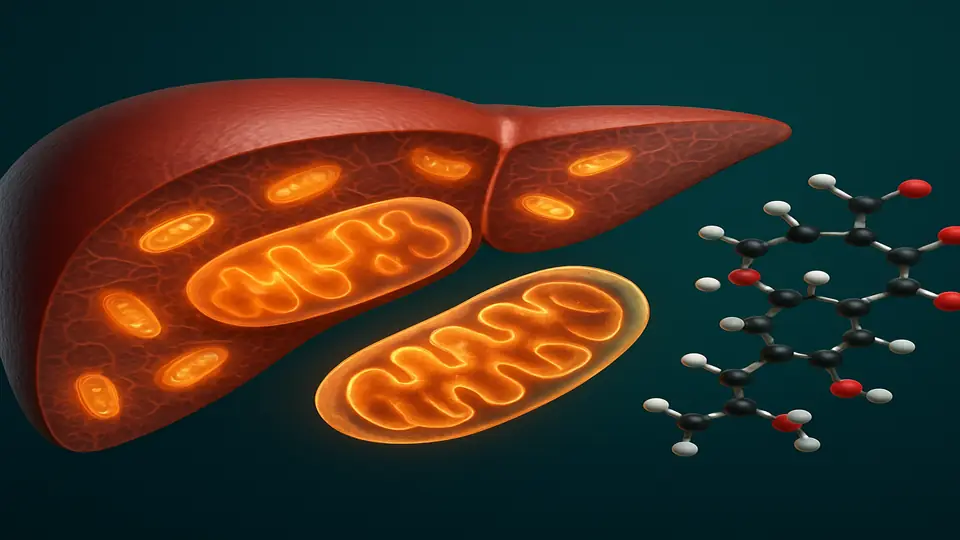
TUDCA interrupts this cycle at multiple points simultaneously. It displaces toxic hydrophobic bile acids from the bile acid pool, competing for enterohepatic recirculation. More importantly, it stabilises the outer mitochondrial membrane and reduces cytochrome C release, blocking the intrinsic apoptotic pathway before it can execute. In hepatocytes under oxidative stress, this anti-apoptotic effect translates directly into reduced transaminase elevation and improved histological scores.
Clinical Evidence in Liver Disease
The human data on TUDCA in liver pathology is substantive. A randomised controlled trial in NASH patients demonstrated significant reductions in ALT, AST, and GGT after 12 months of TUDCA at 1,750 mg/day, alongside improvement in histological scores including steatosis and inflammation. A systematic review published in Alimentary Pharmacology & Therapeutics confirmed the hepatoprotective signal across cholestatic conditions, noting that TUDCA outperformed UDCA in some endpoints likely due to the taurine conjugation.
In the clinical setting, I use TUDCA in patients with:
- Elevated liver enzymes of metabolic or drug origin
- Cholestatic patterns during antibiotic-heavy Lyme protocols
- Fatty liver disease alongside metabolic syndrome
- Post-COVID hepatic involvement
- Heavy metal detoxification phases where hepatic load increases
At doses of 500–1,000 mg/day in divided doses, it is well tolerated and can be monitored via standard transaminase panels. For patients with fatty liver specifically, I often pair TUDCA with phosphatidylcholine, which directly restores VLDL secretion capacity and biliary PC concentrations — complementary hepatoprotective mechanisms that address different aspects of hepatocyte dysfunction.
Mitochondrial Stabilisation — The Mechanism That Extends TUDCA’s Reach
The hepatoprotective story of TUDCA largely rests on mitochondrial biology — and this same biology is relevant far beyond the liver.
TUDCA stabilises the mitochondrial transition pore (mPTP), reducing the likelihood of pathological opening under stress conditions. Uncontrolled mPTP opening is a final common pathway in many forms of cell death, from ischaemia-reperfusion injury to neurodegeneration. By keeping the pore regulated, TUDCA preserves the electrochemical gradient across the inner mitochondrial membrane, maintains ATP synthesis efficiency, and reduces reactive oxygen species (ROS) spillover into the cytoplasm.
In patients with mitochondrial dysfunction — a pattern I see frequently in chronic Lyme disease, post-viral fatigue, and complex inflammatory illness — this stabilising effect has clinical relevance beyond what any standard energy supplement can provide. Mitochondria that retain their membrane integrity can respond better to co-factors like CoQ10, NAD⁺ precursors, and carnitine. TUDCA acts as a structural prerequisite, not just an add-on.
Endoplasmic Reticulum Stress Reduction
Perhaps TUDCA’s most studied mechanism in recent literature is its action on endoplasmic reticulum (ER) stress and the unfolded protein response (UPR). The ER is responsible for folding, quality-checking, and trafficking proteins. When it is overwhelmed — by metabolic excess, viral infection, toxic burden, or inflammatory cytokines — misfolded proteins accumulate and trigger UPR activation.
Chronic UPR activation shifts from an adaptive to a pathological mode: it promotes insulin resistance, inflammatory cytokine production (particularly IL-6 and TNF-α), and cell death via the CHOP/DDIT3 transcription factor pathway.
TUDCA is one of very few molecules that demonstrably attenuates all three arms of the UPR — IRE1α, PERK, and ATF6 — through a mechanism that involves the TUDCA molecule acting as a chemical chaperone, assisting in protein folding directly. Published work in Diabetes showed that TUDCA reversed hepatic and muscle insulin resistance in obese humans, a finding attributed largely to ER stress resolution rather than any direct metabolic action.
This makes TUDCA unusually relevant for:
- Type 2 diabetes and metabolic syndrome
- Autoimmune conditions with high inflammatory cytokine burden
- Chronic infections driving persistent ER stress
- Neurodegenerative conditions where protein misfolding is central (ALS, Parkinson’s, Alzheimer’s)
Neuroprotection — The Frontier Application
ALS and Motor Neuron Disease
The neuroprotection data for TUDCA is most mature in amyotrophic lateral sclerosis (ALS). A phase II clinical trial published in Neurology (Elia et al.) randomised ALS patients to TUDCA 1 g twice daily versus placebo. The TUDCA group demonstrated significantly slower decline on the ALS Functional Rating Scale-Revised (ALSFRS-R), with a 67% reduction in decline rate over the 18-month follow-up. These are clinically meaningful numbers in a disease with historically minimal pharmacological response.
The mechanism is likely multifactorial: mitochondrial protection in motor neurons, ER stress reduction in cells accumulating misfolded SOD1 or TDP-43 protein, and direct anti-apoptotic activity. Post-trial analyses confirmed the safety profile was equivalent to placebo.
Parkinson’s Disease and Dopaminergic Neuroprotection
In rodent models of Parkinson’s disease using MPTP to selectively destroy dopaminergic neurons, pre-treatment with TUDCA markedly reduced substantia nigra cell loss. Crucially, this was not simply antioxidant protection — the neuroprotection was maintained even when antioxidant pathways were separately blocked, confirming the mitochondrial membrane stabilisation and anti-apoptotic mechanisms as the active drivers.
Human data in Parkinson’s remains at the observational and case level, but the mechanistic plausibility is high given the central role of mitochondrial dysfunction and Lewy body (alpha-synuclein) protein misfolding in disease pathology.
Retinal Degeneration
One underappreciated clinical application is retinal neuroprotection. Multiple animal studies demonstrate TUDCA’s ability to slow photoreceptor degeneration in models of retinitis pigmentosa and light-induced retinal damage. The retina is embryologically neural tissue with high mitochondrial density, making it sensitive to the same mechanisms TUDCA addresses systemically. For patients on hydroxychloroquine, long-term antibiotic regimens, or those with a family history of macular degeneration, this is a rationale worth considering.
Practical Dosing and Clinical Considerations
Standard dosing:
- Liver-focused use: 250–500 mg twice daily with meals
- Neuroprotective / ER stress: 500 mg twice daily (based on ALS trial protocol)
- Maximum studied: 1,750 mg/day in NASH trials (divided doses)
Timing: With meals to optimise bile acid enterohepatic cycling and reduce GI discomfort.
Tolerability: Loose stools are the most commonly reported adverse effect at higher doses, typically self-limiting and manageable by dose reduction or splitting. No hepatotoxicity signal has been identified — a reassuring finding given the patient populations in whom it is used.
Interactions: TUDCA may theoretically affect oral drug absorption due to its bile acid surfactant properties; a 1-hour separation from other oral medications at high doses is reasonable. No clinically significant drug-drug interactions have been established.
Forms available: Capsule (supplement grade, 250–500 mg per capsule) or pharmaceutical-grade UDCA/TUDCA preparations in some European markets. Supplement-grade TUDCA is widely available and generally well standardised from reputable manufacturers.
Who I consider TUDCA for:
- Patients with elevated liver enzymes or metabolic liver disease
- Anyone on hepatically loaded antibiotic or antifungal protocols
- Patients with neurodegenerative concerns, particularly those with mitochondrial involvement
- Post-COVID patients with cognitive or hepatic sequelae
- Metabolic syndrome with insulin resistance component
- Longevity stacks where mitochondrial and ER stress management is a priority
Related Articles
- CoQ10 and Heart Health: What the Evidence Really Shows — CoQ10 and TUDCA share mitochondrial targets; understanding both clarifies where each adds distinct value.
- NAD+ Supplement Guide: Forms, Dosing, and Clinical Evidence — NAD⁺ precursors work upstream of the electron transport chain; TUDCA’s mPTP stabilisation makes the two mechanistically complementary.
- Mitochondria and Longevity: Why Cellular Energy Is the Root of Aging — The foundational article on mitochondrial biology that contextualises TUDCA’s core mechanism.
- Berberine for Blood Sugar: Clinical Evidence and Dosing — Another metabolic supplement with ER stress activity; understanding the comparison helps build rational stacks.
- Functional Medicine Labs: Which Tests Actually Change Management — Monitoring liver enzymes, metabolic markers, and mitochondrial function markers while using TUDCA.
References
- Rifai K et al. Tauroursodeoxycholic acid reduces liver fibrosis in patients with PSC. Hepatology. 2003;38(4):887–894. PMID: 14512877
- Parodi A et al. TUDCA exerts cytoprotection in non-alcoholic fatty liver disease. Aliment Pharmacol Ther. 2014;40(8):978–986. PMID: 25142931
- Ozcan U et al. Chemical chaperones reduce ER stress and restore glucose homeostasis in a mouse model of type 2 diabetes. Science. 2006;313(5790):1137–1140. PMID: 16931765
- Kars M et al. Tauroursodeoxycholic acid may improve liver and muscle but not adipose tissue insulin sensitivity in obese men and women. Diabetes. 2010;59(8):1899–1905. PMID: 20522594
- Elia AE et al. Tauroursodeoxycholic acid in the treatment of patients with amyotrophic lateral sclerosis. Eur J Neurol. 2016;23(1):45–52. PMID: 26111419
- Keene CD et al. Tauroursodeoxycholic acid, a bile acid, is neuroprotective in a transgenic animal model of Huntington’s disease. Proc Natl Acad Sci USA. 2002;99(16):10671–10676. PMID: 12136130
- Drack AV et al. TUDCA protects photoreceptors and RPE cells from ER stress-induced apoptosis in murine models of retinal degeneration. Invest Ophthalmol Vis Sci. 2012;53(4):2182–2194. PMID: 22410563