
At a Glance
| Feature | Detail |
|---|---|
| Supplement type | Iron-binding glycoprotein (whey fraction) |
| Primary sources | Bovine colostrum, breast milk, tears, saliva, mucosal secretions |
| Standard form | Bovine lactoferrin (bLf) 80–90% purity powder or capsule |
| Typical dose | 100–300 mg/day; up to 600 mg for therapeutic indications |
| Mechanism | Iron sequestration, toll-like receptor modulation, direct antimicrobial activity |
| Key clinical uses | Iron-deficiency anemia, gut barrier support, immune modulation, biofilm disruption |
| Safety | Well-tolerated; generally regarded as safe (GRAS) at standard doses |
| Drug interactions | May reduce absorption of iron supplements if taken simultaneously |
Lactoferrin sits in an unusual position among nutraceuticals: it has substantial mechanistic plausibility, a growing body of human trial data, and yet remains largely unknown outside of specialty integrative and immunology practices. In clinical settings focused on chronic infections, gut dysfunction, and immune dysregulation, it has earned a consistent place in our protocols—not as a standalone cure, but as a tool that addresses several interlocking problems at once.
This article reviews the clinical evidence for lactoferrin, explains the pharmacology in accessible terms, and offers practical dosing guidance for practitioners and informed patients.
What Is Lactoferrin?
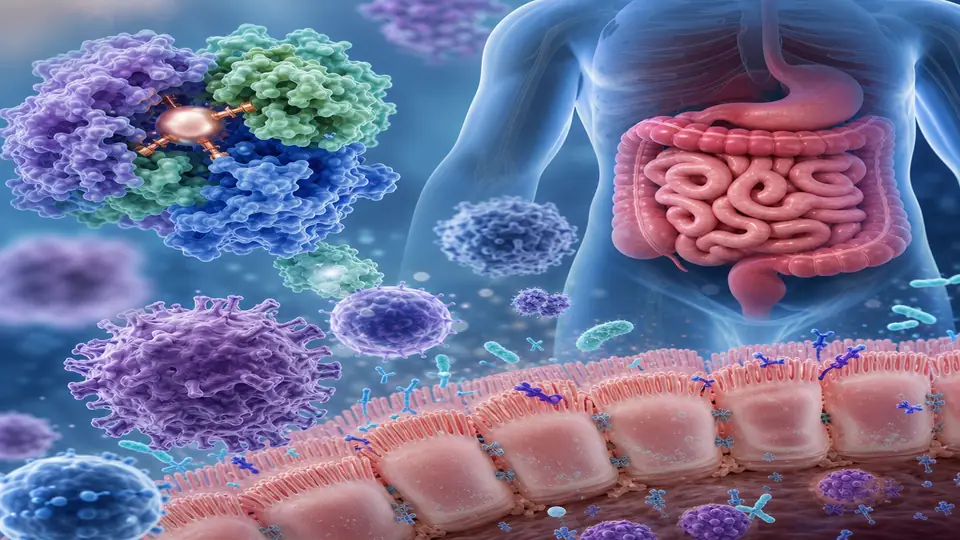
Lactoferrin is an 80 kDa iron-binding glycoprotein that was first isolated from bovine milk in 1960. It is a member of the transferrin family and is produced by mucosal epithelial cells and secreted by neutrophils as part of the innate immune response. High concentrations are found in colostrum (the first milk produced after birth), human breast milk, tears, saliva, nasal secretions, bile, and pancreatic juice.
The protein’s defining property is its extraordinary affinity for iron: lactoferrin binds two ferric iron (Fe³⁺) ions per molecule with an affinity approximately 300 times greater than that of transferrin. This iron-binding capacity is the basis for many of its biological effects.
How It Works: Three Overlapping Mechanisms
Iron sequestration: By binding free iron in the gut lumen and at mucosal surfaces, lactoferrin deprives bacteria and fungi of iron—an essential nutrient for microbial replication. Pathogens like E. coli, Staphylococcus aureus, Candida albicans, and even Borrelia burgdorferi require free iron to thrive. Lactoferrin’s iron-withdrawal strategy is particularly effective against bacteria that rely on siderophores (iron-scavenging molecules) for growth.
Pattern recognition receptor modulation: Lactoferrin directly binds bacterial lipopolysaccharide (LPS) and blocks activation of Toll-like receptor 4 (TLR-4), one of the primary drivers of the innate inflammatory cascade. This mechanism helps explain its documented anti-inflammatory effects in conditions characterized by endotoxin-driven inflammation—including SIBO, dysbiosis, and post-infectious states.
Direct membrane disruption: The N-terminal region of lactoferrin, and its proteolytic fragment lactoferricin, interact with negatively charged bacterial membranes, disrupting integrity and killing organisms directly. This activity extends to some viral envelopes, where lactoferrin appears to interfere with viral attachment.
Clinical Evidence: What the Research Actually Shows
Iron-Deficiency Anemia
The most consistently replicated clinical finding is lactoferrin’s utility in iron-deficiency anemia. A 2010 randomized trial by Paesano et al. in the International Journal of Immunopathology and Pharmacology found that oral bovine lactoferrin (100 mg twice daily) was as effective as ferrous sulfate in correcting iron-deficiency anemia in pregnant women—with significantly fewer gastrointestinal side effects and, notably, a better hematological response in terms of hemoglobin, ferritin, and serum iron at 30 days.
The mechanism differs from conventional iron supplementation: rather than simply flooding the gut with ionic iron (which is poorly absorbed and can feed pathogenic bacteria), lactoferrin delivers iron directly to enterocytes via lactoferrin receptors in the duodenum, bypassing the hepcidin-regulated pathway that restricts iron absorption during inflammation. This makes lactoferrin particularly useful in the context of anemia of chronic disease—where hepcidin is elevated and standard iron supplementation is often ineffective.
Gut Barrier Integrity
Preclinical and early clinical data support lactoferrin’s role in maintaining intestinal barrier function. In neonatal populations, lactoferrin supplementation reduces the incidence of necrotizing enterocolitis (NEC) and sepsis. The mechanism appears to involve upregulation of tight junction proteins (occludin, ZO-1) and suppression of intestinal epithelial apoptosis driven by inflammatory cytokines.
In adult populations with conditions like inflammatory bowel disease, SIBO, or post-infectious gut dysfunction, these mechanisms translate into a plausible rationale for lactoferrin supplementation—though large-scale adult trials are still limited. Fecal lactoferrin has also been validated as a non-invasive biomarker of gut inflammation, and elevated fecal lactoferrin levels correlate with mucosal healing requirements in IBD.
Antimicrobial and Antiviral Activity
Multiple in vitro and some clinical studies document lactoferrin’s antimicrobial breadth. Beyond iron withdrawal, lactoferricin fragments show direct bactericidal activity against H. pylori, Pseudomonas aeruginosa, and Candida species. A randomized trial in pediatric patients with H. pylori infection found that adding lactoferrin to standard triple therapy significantly improved eradication rates.
For viral infections, a 2021 Italian trial examined lactoferrin in mild-to-moderate COVID-19 patients and reported shorter symptom duration and lower rates of hospitalization in the lactoferrin group compared to placebo. While this was a relatively small study, it aligned with earlier observations in influenza and common upper respiratory infections.
Immune Modulation: The Bidirectional Effect
One of lactoferrin’s clinically useful properties is what researchers call immunomodulation rather than immunostimulation. In states of immune underactivation (as in patients with chronic infections or post-viral fatigue), lactoferrin appears to upregulate natural killer cell activity, dendritic cell maturation, and Th1 cytokine production. In states of immune overactivation (as in autoimmunity and excessive inflammation), it downregulates NF-κB signaling and reduces IL-6 and TNF-alpha output.
This bidirectional calibration is uncommon among supplements and makes lactoferrin theoretically suitable for patients with complex immunological profiles—those simultaneously battling chronic infection and managing inflammatory burden.
Who May Benefit in Clinical Practice
From a functional and integrative medicine standpoint, several patient populations deserve consideration for lactoferrin:
Patients with iron-deficiency anemia and poor iron tolerance: Particularly useful when standard ferrous sulfate causes intolerable GI symptoms or when anemia is complicated by chronic inflammation (elevated CRP or ferritin alongside low hemoglobin).
Chronic infection patients: Individuals with chronic Lyme disease, Bartonella, SIBO, or post-viral illness often present with a combination of gut dysbiosis, immune dysregulation, and elevated inflammatory markers. Lactoferrin addresses several of these simultaneously.
Post-COVID presentations: Given its antiviral properties, anti-inflammatory effects, and documented activity against intestinal dysbiosis common in long COVID, lactoferrin has entered empirical post-COVID protocols at several integrative centers.
Patients on proton pump inhibitors or with H. pylori: Lactoferrin’s activity against H. pylori and its role in adjunctive therapy makes it relevant in these settings.
Pediatric and pregnancy use: The neonatal literature is more robust than adult data, and bovine lactoferrin has a strong safety profile in pregnant women and infants.
Dosing and Practical Considerations
The majority of clinical trials have used 100–300 mg/day of bovine lactoferrin (bLf), typically divided into two doses taken before meals. Higher doses up to 600 mg/day have been used in infection-focused protocols without significant adverse effects.
Key practical points:
- Take separately from iron supplements. Because lactoferrin competes for iron binding, taking it simultaneously with ionic iron (ferrous sulfate) may reduce the absorption of both. A 2-hour separation is generally sufficient.
- Apolactoferrin vs. lactoferrin: Apolactoferrin (iron-free form) retains antimicrobial activity and may exert stronger iron-scavenging effects, while hololactoferrin (iron-saturated) has less antimicrobial activity. Most commercial products are a mixture, but some therapeutic formulations specify the apo form.
- Enteric-coated preparations: Lactoferrin is partially degraded by stomach acid, but bovine lactoferrin has demonstrated significant bioactivity even in non-enteric forms. Enteric coating may improve delivery to the lower gut for dysbiosis-focused indications.
- Milk protein allergy: Bovine lactoferrin is a whey-fraction protein. Patients with true milk protein allergy (distinct from lactose intolerance) should use caution; however, lactoferrin itself is generally tolerated even by many lactose-intolerant individuals.
- Duration: Most published trials ran 30–90 days. For chronic conditions, ongoing assessment every 3 months is appropriate.
What Lactoferrin Is Not
It is worth being explicit about limitations. Lactoferrin is not a replacement for appropriate antibiotic therapy in acute bacterial infections, nor is it a standalone treatment for conditions like IBD or systemic iron-deficiency requiring higher-dose or IV iron supplementation. The antiviral data, while promising, is preliminary and should not substitute for standard antiviral protocols.
The absence of large-scale adult RCTs for several indications (gut permeability, long COVID) means that clinical use in these areas remains evidence-informed rather than evidence-confirmed. Practitioners should frame it accordingly with patients—a supplement with a plausible mechanism, a favorable safety profile, and supportive preliminary data, not a proven intervention.
Related Articles
- NAC vs Glutathione: Which One Should You Take?
- Gut Brain Axis: How Your Microbiome Shapes Cognition and Mood
- Biofilm Disruption: Why Chronic Infections Are Hard to Treat
- LL-37: The Antimicrobial Peptide and Its Role in Immune Defense
- Probiotics: How to Choose the Right Strains
References
-
Paesano R, Pietropaoli M, Gessani S, Pacifici R, Berlutti F, Valenti P. The influence of lactoferrin, orally administered, on systemic iron homeostasis in pregnant women suffering of iron deficiency and iron deficiency anaemia. Biochimie. 2009;91(1):44-51. PMID: 18817843
-
Ochoa TJ, Pezo A, Cruz K, et al. Clinical studies of lactoferrin in children. Biochemistry and Cell Biology. 2012;90(3):457-67. PMID: 22300625
-
Miethke M, Marahiel MA. Siderophore-based iron acquisition and pathogen control. Microbiology and Molecular Biology Reviews. 2007;71(3):413-451. PMID: 17804667
-
Valenti P, Antonini G. Lactoferrin: an important host defence against microbial and viral attack. Cellular and Molecular Life Sciences. 2005;62(22):2576-87. PMID: 16261260
-
Campione E, Lanna C, Cosio T, et al. Lactoferrin against SARS-CoV-2: in vitro and in vivo register of a treatment protocol (Pre-COVID-19 Italian Hospital Experience). Frontiers in Pharmacology. 2021;12:666528. PMID: 34177581
-
Legrand D. Overview of Lactoferrin as a Natural Immune Modulator. Journal of Pediatrics. 2016;173 Suppl:S10-15. PMID: 27234405
-
Rosa L, Cutone A, Lepanto MS, Paesano R, Valenti P. Lactoferrin: A Natural Glycoprotein Involved in Iron and Inflammatory Homeostasis. International Journal of Molecular Sciences. 2017;18(9):1985. PMID: 28914813