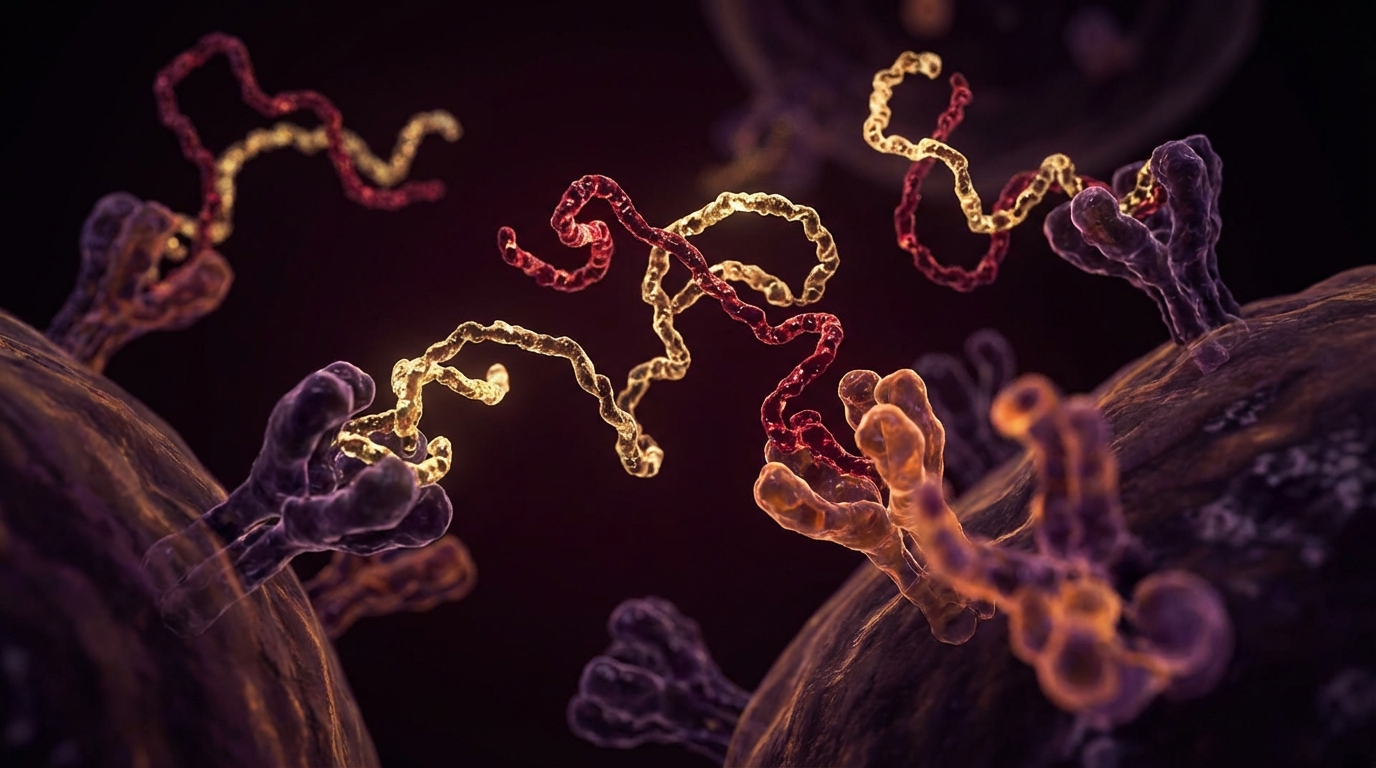
In a field where much of the evidence base consists of animal studies and clinical observation, thymosin alpha-1 stands apart. It is licensed as a medicine in some countries outside the US and EU (Goldstein 2009, PMID 19392576); it is not FDA- or EMA-approved. It has been the subject of numerous randomized controlled trials. It has a well-characterized safety profile built on decades of clinical use. When patients ask me which peptide has the strongest evidence behind it, thymosin alpha-1 is my answer. Patients interested in broader thymic support sometimes ask about Russian peptide bioregulators like Thymalin — the natural thymus extract used in the Khavinson longevity protocols — which works through a different, epigenetic mechanism and is covered in detail in the peptide bioregulators guide.
At a Glance
| Property | Detail |
|---|---|
| Type | Synthetic analog of endogenous thymic peptide |
| Amino acid count | 28 |
| Primary mechanism | Dendritic cell maturation, T-cell differentiation, Th1/Th2 balance |
| Evidence level | Multiple RCTs and meta-analyses with mixed results; TESTS sepsis RCT null |
| Regulatory status | Licensed as Zadaxin in some countries outside the US and EU (hepatitis B/C, immune adjuvant); not FDA- or EMA-approved |
| Route of administration | SC injection |
| Anti-doping (WADA 2026) | Not named on the Prohibited List. Thymalfasin is licensed in some countries, so the rule for non-approved substances does not clearly apply. Thymosin beta-4 and its derivatives such as TB-500 are different peptides and are prohibited (S2.3). Athletes should check with their anti-doping organisation |
What Is Thymosin Alpha-1?
Thymosin alpha-1 (Ta1) is a 28-amino-acid peptide originally isolated from thymic tissue — specifically from thymosin fraction 5, a partially purified extract of calf thymus. It was first characterized by Allan Goldstein and colleagues at George Washington University in 1977.

The thymus gland is the organ primarily responsible for T-cell maturation during development. It is well established that thymic function declines with age — a process called thymic involution — and that this decline contributes to the immune senescence observed in elderly populations. Ta1 is one of several thymic peptides that play a role in T-cell education and immune regulation. For how the evidence compares across immunomodulatory peptides in autoimmune disease, see our guide to peptides for autoimmune disease; combining unapproved peptides has not been tested and multiplies the unknowns.
The synthetic version of Ta1, marketed under the brand name Zadaxin (developed by SciClone Pharmaceuticals, now Immunomedics), has been approved as a prescription medication in a number of countries, mainly in Asia and South America. It is not authorised by the EMA or FDA, and compounded thymosin alpha 1 is on the FDA’s list of substances that may present significant safety risks. Its approved indications include chronic hepatitis B, chronic hepatitis C (as an adjunct to interferon), and as an immune adjuvant in immunocompromised patients.
Mechanism of Action
Primary Pathways
- Dendritic Cell Maturation: Ta1 promotes the maturation and functional activation of dendritic cells — the antigen-presenting cells that serve as the bridge between innate and adaptive immunity. Mature dendritic cells are more effective at processing and presenting antigens to T-cells, initiating targeted immune responses.
- T-Cell Differentiation: Ta1 stimulates the differentiation of immature T-cell precursors (thymocytes) into mature, functional T-cells. This includes promotion of CD4+ helper T-cell and CD8+ cytotoxic T-cell maturation. In immunocompromised patients, this effect can help restore depleted T-cell populations.
- Th1/Th2 Balance: Ta1 appears to modulate the balance between Th1 (cell-mediated) and Th2 (humoral) immune responses, favoring Th1 immunity. This is clinically relevant because many chronic infections and cancers are associated with an inappropriate shift toward Th2-dominant responses. Restoring Th1 function can enhance the immune system’s ability to clear intracellular pathogens and recognize tumor cells.
- Natural Killer Cell Activation: Ta1 enhances NK cell activity, which is relevant for both antiviral and antitumor immunity. NK cells are the innate immune system’s primary defense against virus-infected and malignant cells.
- Toll-Like Receptor Modulation: Ta1 acts through TLR-2, TLR-5, TLR-8, and TLR-9, amplifying the innate immune response to pathogen-associated molecular patterns. This positions Ta1 as a bridge between innate and adaptive immunity.
Research Assessment
What the Evidence Shows
| Claimed Effect | Evidence Level | Key Studies | Assessment |
|---|---|---|---|
| Hepatitis B | RCTs, Cochrane review | You 2006; Naing 2026 | Licensed use, but very low-certainty evidence |
| Hepatitis C adjunct therapy | RCTs | Moscarella 1998, Sherman 1998, Andreone 2004 | Strong |
| Vaccine adjuvant (elderly) | RCTs | Gravenstein 1989; trial summaries in Ershler 2007 | Strong |
| Cancer immunoadjuvant | Controlled studies | Garaci 2000, Maio 2010 | Promising |
| Sepsis survival | RCTs (earlier trial, then phase 3) | Wu 2013 (ETASS); TESTS (Wu 2025) | Null in phase 3 (28-day mortality 23.4 % vs 24.1 %) |
| COVID-19 support | Retrospective observational study | Liu 2020 | Preliminary |
| Chronic Lyme disease treatment immune support | Clinical observation | None | Preliminary |
Hepatitis B is the licensed use, but the trial evidence is weaker than that status suggests. In a randomised trial of 62 patients, You and colleagues (2006) gave Ta1 1.6 mg twice weekly or interferon-alpha for six months; complete response rates did not differ significantly between the two groups (31% vs 45% at the end of treatment, 48% vs 27% six months later). The 2026 Cochrane review found that Ta1 may lower all-cause mortality but rated the certainty of the evidence as very low for nearly every outcome (Naing 2026).
As a vaccine adjuvant in elderly and immunocompromised patients, Ta1 has demonstrated the ability to enhance antibody responses to influenza and hepatitis B vaccines — a clinically meaningful finding given the well-documented decline in vaccine efficacy with age.
In oncology, Ta1 has been studied as an immunoadjuvant alongside chemotherapy and other treatments. Clinical studies have shown improvements in immune parameters and, in some studies, improvements in survival. The evidence is not yet at the level of large Phase III trials for most cancer types, but the mechanistic rationale is strong and the existing clinical data is encouraging.
What the Evidence Does Not Show
Ta1 is not a direct antiviral or antitumor agent. It works by modulating immune function, which means its efficacy depends on the patient’s underlying immune capacity and the specific pathology being treated. In patients with profoundly compromised immune systems (such as late-stage AIDS or post-transplant immunosuppression), the immune substrate that Ta1 acts upon may be insufficient for a meaningful response.
The evidence for Ta1 in chronic Lyme disease and post-COVID syndrome, while mechanistically rational, is based on clinical observation and case series rather than controlled trials.
Dosing
For informational purposes only — this summarises doses used in research and practice; it is not a prescription or individual medical advice.
| Use | Dose | Frequency | Duration | Basis |
|---|---|---|---|---|
| Chronic hepatitis B (licensed use) | 1.6 mg SC | Twice weekly | 6 months | Label |
| Sepsis | 1.6 mg SC | Every 12 hours | 7 days | Trial (no mortality benefit) |
| General immune support, off-label | 1.5-1.6 mg SC | Twice weekly | 8-12 weeks (one compilation lists 6 months) | Practice protocol |
| Acute infection, front-loaded | 1.6 mg SC | Daily for 3-5 days or twice daily for 5 days, then twice weekly | 2-4 weeks | Practice protocol |
| Daily low dose | 300-500 mcg SC | Once daily | 4-8 weeks | Anecdotal |
Note: The 1.6 mg twice-weekly dose is the approved pharmaceutical dose in the countries where thymalfasin is licensed. This dosing is based on human clinical trial data, which places Ta1 on firmer ground than most therapeutic peptides. For off-label uses such as Lyme or post-COVID illness there are no dose-finding trials. More detail in Thymosin Alpha-1 Dosage and Protocol.
What People Report: What Works and What Doesn’t
Sources: the aggregated community data set (Peptide Protocol Wiki, 80 reports), the protocol lists on Peptide DB, and the controlled trials cited in this article. Thymosin alpha-1 is unusual among the peptides on this site: its human safety record comes from licensed use and large trials, while the off-label benefits people describe come from self-report. Doses and their sources are in the protocol table.
Reported to work
- Fewer colds and shorter upper respiratory infections, at 1.5-1.6 mg twice weekly over 8-12 weeks. This is the most common reason for use and the most common positive report.
- Feeling less drained while fighting an infection, usually with the front-loaded schedule started at the onset of illness.
- Tolerability. Users describe it as very well tolerated, which fits the trial record: no specific toxicity, mild injection-site reactions at most.
Mixed or unclear
- Chronic Lyme disease and mould-related illness (CIRS). People report better symptom control, but almost always alongside antibiotics, binders or other peptides, so the share due to thymosin alpha-1 is unknown.
- Daily low doses (300-500 mcg) versus the licensed 1.6 mg twice weekly. Both have followers; nobody has compared them.
- Long-term “immune maintenance” in healthy people. Plausible from the mechanism, untested in any trial.
Reported not to work, or disappointing
- Severe infection. The largest trial, 1,106 adults with sepsis given 1.6 mg every 12 hours for a week, found no difference in 28-day mortality (Wu 2025).
- Chronic hepatitis B, the licensed use, rests on very low-certainty evidence in the Cochrane review (Naing 2026).
- Side effects people mention: redness at the injection site and transient tiredness, which some attribute to immune activation.
What a properly designed trial would need to show: in adults with frequent respiratory infections, a placebo-controlled trial of 1.6 mg twice weekly over a winter season, counting laboratory-confirmed infections and days of illness, with T-cell markers measured before and after.
Safety and Side Effects
Known
Ta1 has an exceptionally well-documented safety profile. Across clinical trials involving thousands of patients, the adverse event rate has been remarkably low. The most commonly reported side effects are mild injection site reactions. No serious drug-related adverse events have been consistently reported. In the hepatitis trials, Ta1 was noted for its favorable side effect profile compared to interferon-alpha.
Theoretical Concerns
Because Ta1 enhances immune function, there is a theoretical concern about exacerbating autoimmune mechanismse conditions. In patients with active autoimmune disease, immune stimulation could potentially worsen symptoms. This concern is mechanistic rather than observed — Ta1’s immunomodulatory (as opposed to purely immunostimulatory) mechanism may actually mitigate this risk, but caution is warranted.
Contraindications
Active autoimmune disease (relative contraindication — requires careful risk-benefit assessment). Post-transplant immunosuppression (immune enhancement could theoretically antagonize immunosuppressive therapy). Pregnancy and lactation (insufficient data).
Drug and Supplement Interactions
Ta1 has been studied in combination with interferon-alpha, nucleoside analogs, and various chemotherapy regimens with no significant adverse interactions identified. Its combination with interferon-alpha for hepatitis treatment is well-documented and appears to be synergistic. Theoretical caution is warranted with immunosuppressive medications, where Ta1’s immune-enhancing effects could antagonize the intended immunosuppression.
Clinical Perspective
Thymosin alpha-1 is the peptide I have the most confidence in, and the reason is straightforward: it has real clinical data behind it. When I discuss Ta1 with patients, I am not extrapolating from rat studies or relying solely on clinical observation. I am drawing on decades of human clinical trial data and post-market surveillance from millions of administered doses worldwide — a distinction explored further in our physician’s overview of peptide therapy benefits, which covers the full range of domains from tissue repair to neuroprotection.
When I coach patients through the decision, Ta1 is most relevant in three clinical contexts:
First, chronic infections with documented immune exhaustion. Patients with chronic Lyme disease, reactivated EBV, or chronic viral hepatitis often present with depleted or dysfunctional T-cell populations. Ta1 provides a targeted intervention to restore immune competence; outside hepatitis, the case rests on mechanism. Lymphocyte subsets (CD4, CD8, NK cell counts and function) are typically checked before and during treatment to assess response.
Second, post-COVID immune dysregulation. Many patients presenting with persistent post-COVID symptoms show evidence of immune dysregulation — often a combination of T-cell exhaustion and residual inflammation. Ta1’s ability to promote T-cell maturation and restore Th1/Th2 balance makes it mechanistically appropriate for this population. The specific immune defects driving this — CD8+ exhaustion, NK cell dysfunction, and Th2 skewing — and the evidence gaps are detailed in the dedicated thymosin alpha-1 for long COVID guide. The microglial neuroinflammation component, a pathway Ta1 does not directly target, is the rationale for low-dose naltrexone (LDN), though the combination has not been tested in trials.
Third, oncological immune support. Ta1 has been used as an immunoadjuvant in select cancer patients, in coordination with their oncology team, particularly those undergoing chemotherapy who show evidence of treatment-related immunosuppression.
What I tell the patients I coach is this: Ta1 is not going to cure their infection or their cancer. It is a tool for restoring and optimizing the immune system’s ability to do its job. That distinction matters.

References
- Goldstein AL, et al. “Thymosin alpha1: isolation and sequence analysis of an immunologically active thymic polypeptide.” Proc Natl Acad Sci USA. 1977;74(2):725-729. PMID 265536
- Garaci E, et al. “Thymosin alpha 1 in the treatment of cancer: from basic research to clinical application.” Int J Immunopharmacol. 2000;22(12):1067-1076. PMID 11137613
- You J, et al. “Efficacy of thymosin alpha-1 and interferon alpha in treatment of chronic viral hepatitis B: a randomized controlled study.” World J Gastroenterol. 2006;12(41):6715-6721. PMID 17075991
- Andreone P, et al. “Thymosin-alpha 1 plus interferon-alpha for naive patients with chronic hepatitis C: results of a randomized controlled pilot trial.” J Viral Hepat. 2004. PMID 14738560
- Moscarella S, et al. “Interferon and thymosin combination therapy in naive patients with chronic hepatitis C: preliminary results.” Liver. 1998. PMID 9831367
- Sherman KE, et al. “Combination therapy with thymosin alpha1 and interferon for the treatment of chronic hepatitis C infection: a randomized, placebo-controlled double-blind trial.” Hepatology. 1998. PMID 9537454
- Gravenstein S, et al. “Augmentation of influenza antibody response in elderly men by thymosin alpha one. A double-blind placebo-controlled clinical study.” J Am Geriatr Soc. 1989. PMID 2642497
- Ershler WB, et al. “Thymosin alpha 1 as an adjunct to influenza vaccination in the elderly: rationale and trial summaries.” Ann N Y Acad Sci. 2007. PMID 17600281
- Wu J, et al. “The efficacy of thymosin alpha 1 for severe sepsis (ETASS): a multicenter, single-blind, randomized and controlled trial.” Crit Care. 2013;17(1):R8. PMID 23327199
- Wu J, et al. “The efficacy and safety of thymosin α1 for sepsis (TESTS): multicentre, double blinded, randomised, placebo controlled, phase 3 trial.” BMJ. 2025. PMID: 39814420
- Goldstein AL, et al. “From lab to bedside: emerging clinical applications of thymosin alpha 1.” Expert Opin Biol Ther. 2009. PMID: 19392576
- Liu Y, et al. “Thymosin Alpha 1 Reduces the Mortality of Severe Coronavirus Disease 2019 by Restoration of Lymphocytopenia and Reversion of Exhausted T Cells.” Clin Infect Dis. 2020. PMID 32442287
- Maio M, et al. “Large randomized study of thymosin alpha 1, interferon alfa, or both in combination with dacarbazine in patients with metastatic melanoma.” J Clin Oncol. 2010. PMID 20194853
- Naing C, et al. “Thymosin-ɑ1 for people with chronic hepatitis B.” Cochrane Database Syst Rev. 2026. PMID 42713852
Disclaimer: This peptide profile is intended for educational purposes. Thymosin alpha-1 (Zadaxin) is licensed in some countries outside the US and EU; it is not FDA- or EMA-approved. Consult a qualified physician before pursuing any peptide therapy.
For patients exploring low-dose immunomodulation alongside thymosin alpha-1, Low Dose Naltrexone (LDN) as a Cancer Adjunct covers another immunomodulatory option that works through a distinct mechanism (OGF/OGFr blockade and NK cell enhancement) and is sometimes combined in integrative oncology protocols.
Related Reading
- All Thymosin Alpha 1 Articles
- Explore All Peptides Topics
- Thymosin Alpha-1 for Cancer: Immunotherapy Support
- Thymosin Alpha-1 Dosage and Protocol
- BPC-157 Dosage Guide: Subcutaneous, Oral, and Injection Protocols
- Thymulin: Zinc-Dependent Thymus Hormone, Thin Human Data
- Thymogen (Glu-Trp): Russian Drug, Failed Western Trial