At a Glance
| Feature | Detail |
|---|---|
| What it is | Porcine brain-derived preparation of free amino acids and low-molecular-weight peptides (215.2 mg peptide fraction/mL) |
| Origin | EVER Neuro Pharma, Austria; Austrian licence 1-21380 since 1996 |
| Proposed mechanism | Neurotrophic-like activity (including CNTF-like effects on neurogenesis), neuroprotection, neuroplasticity |
| Licensed uses (Austria) | Supportive treatment of cerebrovascular disorders: Alzheimer-type and vascular dementia, post-stroke deficits, head injury |
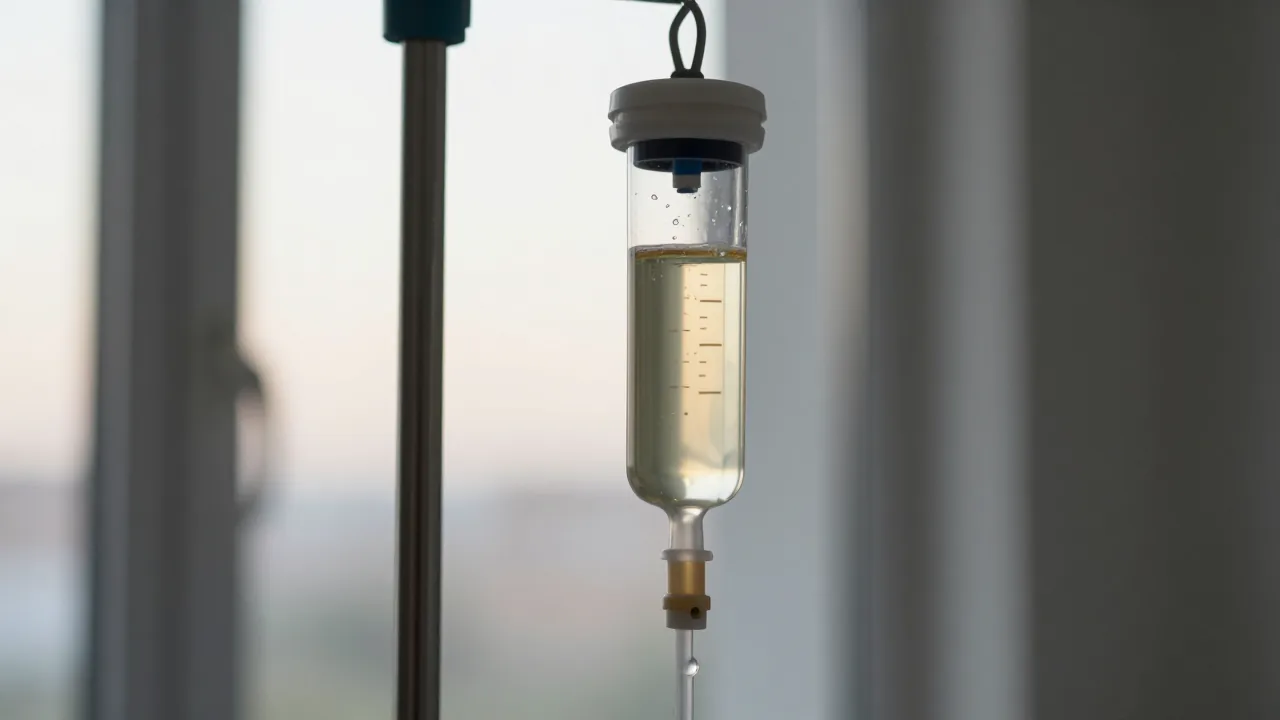
| Route | IV infusion or slow IV injection; IM up to 5 mL |
| Typical dose range | Label: 10–50 mL/day IV for 1–4 weeks. Community: 5 mL IM, 5 days/week, 4 weeks |
| Evidence level | Moderate: many RCTs and Cochrane reviews, but the largest stroke trial was negative, dementia effects are small and low-certainty, and much of the positive data is manufacturer-supported |
| Regulatory status | Prescription drug in Austria, Romania, South Korea, Russia and other countries; not FDA-approved; no German marketing authorisation found (individual import only); not on the WADA list |
Cerebrolysin is the oldest and best-studied compound in this part of the peptide library, and the one most often misunderstood in both directions. Its supporters point to dozens of trials and national licences. Its critics point to Cochrane. Both are reading real data.
Unlike the grey-market nootropic peptides, it is a licensed medicine with a controlled manufacturing process. It is also a biological mixture rather than a single molecule: thousands of peptide fragments from pig brain protein, with no single active ingredient that anyone has pinned down.
My verdict: Cerebrolysin is a real drug with a real but modest and contested evidence base. The fair summary is “probably no effect on survival after stroke, possibly better recovery in some patients, small cognitive effects in dementia”, and the independent reviews keep finding the same picture.
How It Works
The rationale is that brain-derived peptide fragments mimic endogenous neurotrophic factors. In animal work Cerebrolysin increases neurogenesis, and part of that activity resembles ciliary neurotrophic factor; a 2011 mouse study compared its neurogenic effects directly with synthetic CNTF-derived peptides, the lineage that led to P021 [1].
Proposed effects include:
- Neurotrophic signalling: support for neuron survival and synapse formation.
- Neuroprotection after ischaemia: reduced excitotoxic and inflammatory damage in animal stroke models.
- Neuroplasticity during rehabilitation: the reason later trials paired it with structured rehab rather than giving it alone.
None of these has been traced to a specific peptide in the mixture, which is part of why regulators in the US and Western Europe have never licensed it.
What the Evidence Shows
Acute ischaemic stroke
- CASTA (Heiss 2012, n = 1,070). 30 mL/day IV for 10 days, started within 12 hours, on top of aspirin. The primary endpoint showed no significant difference. A post hoc analysis of severe strokes (NIHSS above 12) showed a trend in favour of Cerebrolysin and lower 90-day mortality in that subgroup, 10.5% versus 20.2% [2]. Post hoc subgroup findings generate hypotheses; they do not confirm them.
- CARS (Muresanu 2016). 30 mL/day for 21 days starting 24–72 hours after stroke, combined with a standardised rehabilitation programme. Upper-limb function on the Action Research Arm Test at day 90 was clearly better with Cerebrolysin (Mann-Whitney effect size 0.71), and safety matched placebo. The authors called the study exploratory and asked for a large confirmatory trial [3].
- Pooled analyses by trial investigators. A meta-analysis of nine RCTs (n = 1,879; 30–50 mL/day for 10–21 days) reported improvement on the NIHSS at day 30 (Mann-Whitney 0.60) [4]. A safety meta-analysis of twelve RCTs (n = 2,202) found no significant difference from placebo in adverse events [5].
- Cochrane (Ziganshina 2023). Seven RCTs, 1,773 participants. Cerebrolysin probably makes little or no difference to all-cause death (RR 0.96, 95% CI 0.65–1.41). It probably does not change the total number of people with serious adverse events, but non-fatal serious adverse events were higher (RR 2.39, 95% CI 1.10–5.23), more so with 30 mL for 10 days. The manufacturer supported three of the multicentre studies [6].
The two sets of reviews differ mainly in which outcomes they prioritise (death and serious harm versus multidimensional recovery scales) and which trials they include.
Dementia
- Vascular dementia, Cochrane (Cui 2019). Six RCTs, 597 participants, with high risk of bias. Cognition improved slightly (SMD 0.36, 95% CI 0.13–0.58; very low-quality evidence). The authors concluded that if there are benefits, they may be too small to be clinically meaningful, and that the evidence base is weak [7].
- Alzheimer’s disease (Gauthier 2015). A meta-analysis of six placebo-controlled RCTs in mild-to-moderate Alzheimer’s reported better global clinical change at 4 weeks (OR 3.32) and 6 months (OR 4.98), cognitive benefit at 4 weeks that was no longer significant at 6 months, and placebo-like safety [8].
- Combination with donepezil (Alvarez 2011). A randomised trial of 197 patients compared Cerebrolysin 10 mL, donepezil 10 mg and the combination in mild-to-moderate Alzheimer’s [9].
Traumatic brain injury
- CAPTAIN II (Muresanu 2020, 139 patients analysed). A combined measure of 13 outcome scales showed a small-to-medium effect at day 90 (Mann-Whitney 0.59) with comparable safety [10]. A prospective meta-analysis of the CAPTAIN trials (n = 185) found an effect of the same size at days 30 and 90 [11].
What is missing
Independent, large, confirmatory trials with patient-centred primary endpoints. There are no trials in healthy people, in “brain fog”, in long COVID or in cognitive enhancement, which is how most self-experimenters use it.
Dosing
For informational purposes only — this summarises doses used in research and practice; it is not a prescription or individual medical advice.
| Goal | Dose | Route | Frequency / timing | Cycle length | Basis |
|---|---|---|---|---|---|
| Dementia (Alzheimer-type, vascular) | 10–30 mL | IV infusion | Once daily | 4 weeks; repeat after 2 months; from the second course 2–3×/week possible | Label (Austrian SmPC [12]) |
| Alzheimer’s disease, trial dose | 10 mL | IV | Daily infusion courses | As per trial protocol | Trial [9] |
| Acute ischaemic stroke | 20–50 mL (trials used 30 mL) | IV infusion | Once daily | 10–21 days | Label [12]; Trial [2][3] |
| Post-stroke rehabilitation | 30 mL | IV infusion | Once daily, alongside rehab | 21 days, starting 24–72 h after stroke | Trial [3] |
| Head injury | 20–50 mL | IV infusion | Once daily | 7–30 days | Label [12] |
| Cognitive self-experiment, standard | 5 mL | IM (gluteal or deltoid) | Once daily, 5 days on / 2 off | 4 weeks, then 1–2 months off; 2–3 courses a year | Practice protocol (Peptide Protocol Wiki; Outliyr) and r/Cerebrolysin reports |
| Higher-dose self-experiment | 10 mL | Slow IV injection, or 2 × 5 mL IM | Once daily | 10–20 days | Anecdotal (Peptide Protocol Wiki) |
| Maintenance | 2–5 mL | IM | 3× per week | Ongoing with breaks, or until a cumulative total of about 150 mL | Anecdotal (r/Cerebrolysin) |
| Stack | Cerebrolysin 5 mL IM + Semax 300–600 mcg/day intranasal | IM + intranasal | Daily | 4 weeks | Anecdotal (Peptide Protocol Wiki) |
Administration points from the label and practice:
- Intramuscular injections are limited to 5 mL; undiluted intravenous injection to about 10 mL given slowly. Larger doses are diluted in saline and infused.
- Rapid injection can cause warmth, dizziness or palpitations; slow administration avoids most of it.
- Do not mix in the same syringe or line with lipid-containing solutions or solutions that shift pH [12].
- For IM technique, see the peptide injection guide.
Timing in self-experimenter protocols: many users move injections to the morning or early afternoon after noticing sedation or fog after evening doses; others prefer evenings for the same reason. There is no data either way.
What People Report: What Works and What Doesn’t
Community reports come mainly from r/Cerebrolysin, long-COVID forums and protocol aggregators. Many users combine it with other compounds, and all are self-selected.
Reported to work
- Clearer thinking and less brain fog, often building over 10–15 days of a 5 mL IM course and sometimes persisting for weeks after it (Peptide Protocol Wiki).
- Long-COVID users describing a repeatable improvement in morning alertness, running a course every 6–12 months while other symptoms persist (r/covidlonghaulers).
- People recovering from long-term substance use describing better memory, focus and emotional range after two 4-week courses of 5 mL, 5 days on and 2 off (r/Cerebrolysin).
Mixed or unclear
- Loading versus slow dosing: one user loading 6–8 mL daily became noticeably mellow and less productive, then switched to 5 mL three times a week (r/Cerebrolysin).
- Post-concussion syndrome: a detailed log at 2 mL IM every third day for 8 weeks records early agitation and fog alongside gradual gains, with graded exercise running in parallel, so the contribution of each is unclear (r/Cerebrolysin).
Reported not to work, or disappointing
- A meaningful share of users report feeling nothing, according to protocol aggregators (Outliyr).
- The most common complaint is a transient fog, dullness or agitation in the first days of a course (r/Cerebrolysin). Others describe injection-site pain from 5 mL IM volumes, headache and dizziness.
What a proper trial would need to show: in a defined non-stroke population, for example long-COVID cognitive impairment, a blinded comparison with saline injections on objective cognitive testing, with serious adverse events tracked as carefully as in the Cochrane stroke analysis.
Safety and Side Effects
- From trials: dizziness or vertigo, headache, agitation, insomnia, sweating, injection-site reactions; warmth and palpitations with fast injection. Overall adverse-event rates were similar to placebo in most pooled analyses [5][6].
- Serious adverse events: Cochrane’s 2023 analysis found more non-fatal serious adverse events with Cerebrolysin after stroke (RR 2.39) [6]. That signal deserves weight precisely because it comes from the independent review.
- Label contraindications: hypersensitivity, epilepsy (seizure frequency may increase), severe kidney impairment [12].
- Cautions: allergy-prone patients, since it is a porcine biological product; people on antidepressants or MAO inhibitors, where additive effects are possible.
- Product risk: the licensed product is made to pharmaceutical standards. Grey-market “Cerebrolysin” and compounded copies are not equivalent, and a biological mixture cannot be verified by a simple purity test.
Legal and Regulatory Status
- Austria and elsewhere: Prescription medicine in Austria since 1996 (licence 1-21380) [12], and available in Romania, South Korea, Russia and other post-Soviet states, among others.
- US: Not FDA-approved. As a biological mixture without a USP monograph it is not a 503A-eligible bulk substance.
- Germany: No German marketing authorisation could be found. A pharmacy can import it for an individual patient on a physician’s prescription under section 73(3) AMG when no comparable product is available in Germany.
- Sport: Not named on the WADA 2026 Prohibited List and not an S0 substance, since it holds national licences. IV infusions above 100 mL per 12 hours are prohibited under M2.2 outside hospital treatment, surgery or clinical investigation, which applies to diluted infusions.
How Cerebrolysin Fits
| Cerebrolysin | P021 | Semax | |
|---|---|---|---|
| What it is | Porcine peptide mixture | Single synthetic peptidomimetic | Single synthetic heptapeptide |
| Human RCTs | Many (stroke, dementia, TBI) | None | Russian trials |
| Independent systematic review | Cochrane: no mortality benefit after stroke; small, uncertain dementia effect | None | None |
| Route | IV / IM, large volumes | SC / intranasal | Intranasal |
| Licensed | Austria and others | Nowhere | Russia |
For brain recovery after stroke or injury, the best-supported tools sit outside the peptide world: structured rehabilitation, and for depression and some other indications, neuromodulation such as TMS. Cerebrolysin is best understood as an add-on that some health systems license and others reject on the same data.
Related Articles
- P021: The CNTF-Derived Peptide With Only Mouse Data
- Semax: The Nootropic Peptide That Amplifies BDNF and Protects the Brain
- Nootropic Peptides: A Physician’s Guide to Cognitive Enhancement
- Post-COVID Brain Fog: A Functional Medicine Approach
- TMS for Depression
- How to Inject Peptides: A Step-by-Step Patient Guide
Frequently asked questions
What is Cerebrolysin?
Cerebrolysin is a parenteral drug made by enzymatic breakdown of purified pig brain protein into free amino acids and low-molecular-weight peptides (215.2 mg peptide fraction per mL). It is made by EVER Neuro Pharma in Austria and licensed there for dementia, post-stroke deficits and head injury.
Does Cerebrolysin work for stroke?
The evidence is mixed. The 2023 Cochrane review found no effect on death after acute ischaemic stroke and a possible increase in non-fatal serious adverse events. The largest trial, CASTA with 1,070 patients, missed its primary endpoint. Smaller manufacturer-supported trials in early rehabilitation, such as CARS, reported better motor recovery.
Does Cerebrolysin help with dementia?
Cochrane found a small improvement in cognition in vascular dementia from very low-certainty evidence and judged the effect may be too small to matter clinically. A manufacturer-linked meta-analysis in mild-to-moderate Alzheimer's disease reported better global clinical change. No major dementia guideline recommends it.
What dose of Cerebrolysin is used?
The Austrian label gives 10 to 30 mL per day for dementia over 4 weeks and 20 to 50 mL per day for stroke or head injury, given intravenously. Intramuscular injections are limited to 5 mL. Self-experimenters most often use 5 mL intramuscularly, 5 days on and 2 off, for 4 weeks.
Is Cerebrolysin legal in Germany and the US?
It is not FDA-approved. In Germany no marketing authorisation could be found, so the lawful route is individual pharmacy import on a physician's prescription under section 73(3) AMG. It is a licensed prescription drug in Austria.
Is Cerebrolysin banned in sport?
It is not named on the WADA Prohibited List and is not a non-approved substance, because it holds national licences. Intravenous infusions above 100 mL per 12 hours are prohibited under M2.2 outside hospital treatment or clinical investigation, which matters for diluted infusions.
References
- Rockenstein E, Ubhi K, Doppler E, et al. Regional comparison of the neurogenic effects of CNTF-derived peptides and cerebrolysin in AβPP transgenic mice. J Alzheimers Dis. 2011;27(4):743-752. https://pubmed.ncbi.nlm.nih.gov/21860085/
- Heiss WD, Brainin M, Bornstein NM, et al. Cerebrolysin in patients with acute ischemic stroke in Asia: results of a double-blind, placebo-controlled randomized trial. Stroke. 2012;43(3):630-636. https://pubmed.ncbi.nlm.nih.gov/22282884/
- Muresanu DF, Heiss WD, Hoemberg V, et al. Cerebrolysin and Recovery After Stroke (CARS): a randomized, placebo-controlled, double-blind, multicenter trial. Stroke. 2016;47(1):151-159. https://pubmed.ncbi.nlm.nih.gov/26564102/
- Bornstein NM, Guekht A, Vester J, et al. Safety and efficacy of Cerebrolysin in early post-stroke recovery: a meta-analysis of nine randomized clinical trials. Neurol Sci. 2018;39(4):629-640. https://pubmed.ncbi.nlm.nih.gov/29248999/
- Strilciuc S, Vécsei L, Boering D, et al. Safety of Cerebrolysin for neurorecovery after acute ischemic stroke: a systematic review and meta-analysis of twelve randomized-controlled trials. Pharmaceuticals (Basel). 2021;14(12). https://pubmed.ncbi.nlm.nih.gov/34959697/
- Ziganshina LE, Abakumova T, Nurkhametova D, et al. Cerebrolysin for acute ischaemic stroke. Cochrane Database Syst Rev. 2023;10(10):CD007026. https://pubmed.ncbi.nlm.nih.gov/37818733/
- Cui S, Chen N, Yang M, et al. Cerebrolysin for vascular dementia. Cochrane Database Syst Rev. 2019;2019(11). https://pubmed.ncbi.nlm.nih.gov/31710397/
- Gauthier S, Proaño JV, Jia J, et al. Cerebrolysin in mild-to-moderate Alzheimer’s disease: a meta-analysis of randomized controlled clinical trials. Dement Geriatr Cogn Disord. 2015;39(5-6):332-347. https://pubmed.ncbi.nlm.nih.gov/25832905/
- Alvarez XA, Cacabelos R, Sampedro C, et al. Combination treatment in Alzheimer’s disease: results of a randomized, controlled trial with cerebrolysin and donepezil. Curr Alzheimer Res. 2011;8(5):583-591. https://pubmed.ncbi.nlm.nih.gov/21679156/
- Muresanu DF, Florian S, Hömberg V, et al. Efficacy and safety of cerebrolysin in neurorecovery after moderate-severe traumatic brain injury: results from the CAPTAIN II trial. Neurol Sci. 2020;41(5):1171-1181. https://pubmed.ncbi.nlm.nih.gov/31897941/
- Vester JC, Buzoianu AD, Florian SI, et al. Cerebrolysin after moderate to severe traumatic brain injury: prospective meta-analysis of the CAPTAIN trial series. Neurol Sci. 2021;42(11):4531-4541. https://pubmed.ncbi.nlm.nih.gov/33620612/
- EVER Neuro Pharma GmbH. Cerebrolysin parenterale Lösung: Fachinformation (Zusammenfassung der Merkmale des Arzneimittels), Zulassungsnummer 1-21380. Stand März 2021. https://medikamente.basg.gv.at/documents/1-21380__DOTC_FACH_INFO.pdf