At a Glance
| Question | Short answer | Evidence |
|---|---|---|
| Does treating risk factors protect the brain? | Yes, at population level | Established |
| Do lifestyle programmes help cognition? | Modestly, in at-risk older adults | Established (RCTs, modest effects) |
| Does zoster vaccination lower dementia risk? | Possibly; natural experiments, debated | Emerging |
| Does neuromodulation slow Alzheimer’s? | Early, mixed trial data in diagnosed patients | Emerging |
| Does neuromodulation prevent brain aging in healthy people? | Not studied adequately | Hypothesis |
| Do 40 Hz “gamma” devices clear amyloid in people? | Shown in mice; human data are pilots | Preclinical → early human |
The question behind the question
When people ask me how to keep their brain young, they are usually asking two things. What should I do now? And are the new technologies, the stimulation devices and pulse treatments, something I should be using already?
The first question has better answers than most people think. The second has a more cautious answer than most marketing suggests.
Brain reserve and cognitive reserve
Brains change with age: some volume loss, vascular changes, and in many people the protein deposits associated with Alzheimer’s disease. Yet the same amount of change produces very different symptoms in different people. The concept of cognitive reserve explains part of that gap. People with more reserve, built through education, mentally demanding work, leisure activities and social engagement, tend to compensate for damage longer before symptoms appear (Stern 2012).
Reserve is not a lab value. It is a concept inferred from the mismatch between brain pathology and function. That is useful for prevention, because it means the brain’s resilience is partly built by how we live.
The network view helps here. Memory and attention depend on large-scale brain networks such as the default mode network, which is affected early in Alzheimer’s disease. The Douwes Brain Center has a clear explainer on brain networks Douwes Brain Center ↗.
Established: what protects the aging brain
Treat the 14 modifiable risk factors
The 2024 report of the Lancet standing Commission on dementia estimated that nearly half of dementia cases worldwide are linked to 14 modifiable risk factors across the life course (Livingston 2024):
| Life stage | Risk factors |
|---|---|
| Early life | Less education |
| Midlife | Hearing loss, high LDL cholesterol, depression, traumatic brain injury, physical inactivity, diabetes, smoking, hypertension, obesity, excessive alcohol |
| Later life | Social isolation, air pollution, untreated vision loss |
This is a population-level estimate of what could, in theory, be prevented or delayed. For an individual it translates into a practical checklist: blood pressure, LDL cholesterol, glucose, hearing (and hearing aids when needed), vision, mood, sleep, activity, alcohol, smoking, head protection and social contact.
Multidomain lifestyle programmes
- FINGER (Finland, 1,260 at-risk adults aged 60 to 77): two years of diet, exercise, cognitive training and vascular risk monitoring improved or maintained cognitive function compared with general health advice (Ngandu 2015).
- US POINTER (2,111 at-risk adults aged 60 to 79): a structured, higher-intensity programme produced a statistically significant, modest additional benefit on global cognition over two years compared with a self-guided programme (Baker 2025).
The effects are modest. They are also among the best-replicated positive results in dementia prevention, with almost no downside.
Physical activity
More daily movement and less sedentary time track with lower all-cause mortality in a dose-dependent way (Ekelund 2019). For the brain specifically, activity appears in the Commission’s risk list and in every multidomain programme above.
Emerging: promising but not settled
Infection prevention and dementia
A natural experiment in Wales used a birth-date cutoff for shingles (zoster) vaccine eligibility. People just eligible had about a 20% relative reduction in new dementia diagnoses over seven years (Eyting 2025). Canadian natural experiments found a similar pattern (Pomirchy 2026), and an electronic-health-record study linked the recombinant vaccine to lower dementia risk than the older live vaccine (Taquet 2024).
A 2026 critical appraisal argues that the implied vaccine effects are internally inconsistent and that population dementia trends did not fall as expected (Kivimäki 2026). The fair summary: shingles vaccination is worthwhile for its own sake in older adults, and a brain benefit is possible but unproven. Treating latent viruses with antivirals is a different matter: in the VALAD trial, valacyclovir did not help people with early Alzheimer’s disease and was associated with greater cognitive worsening (Devanand 2026). The infection and immune side of aging is covered on the longevity hub.
Neuromodulation in people who already have Alzheimer’s disease
| Modality | Key human evidence | What it shows |
|---|---|---|
| rTMS over the precuneus | Sham-controlled RCT, n=50, 24 weeks (Koch 2022) | Slower cognitive and functional decline vs sham; single-centre phase 2 |
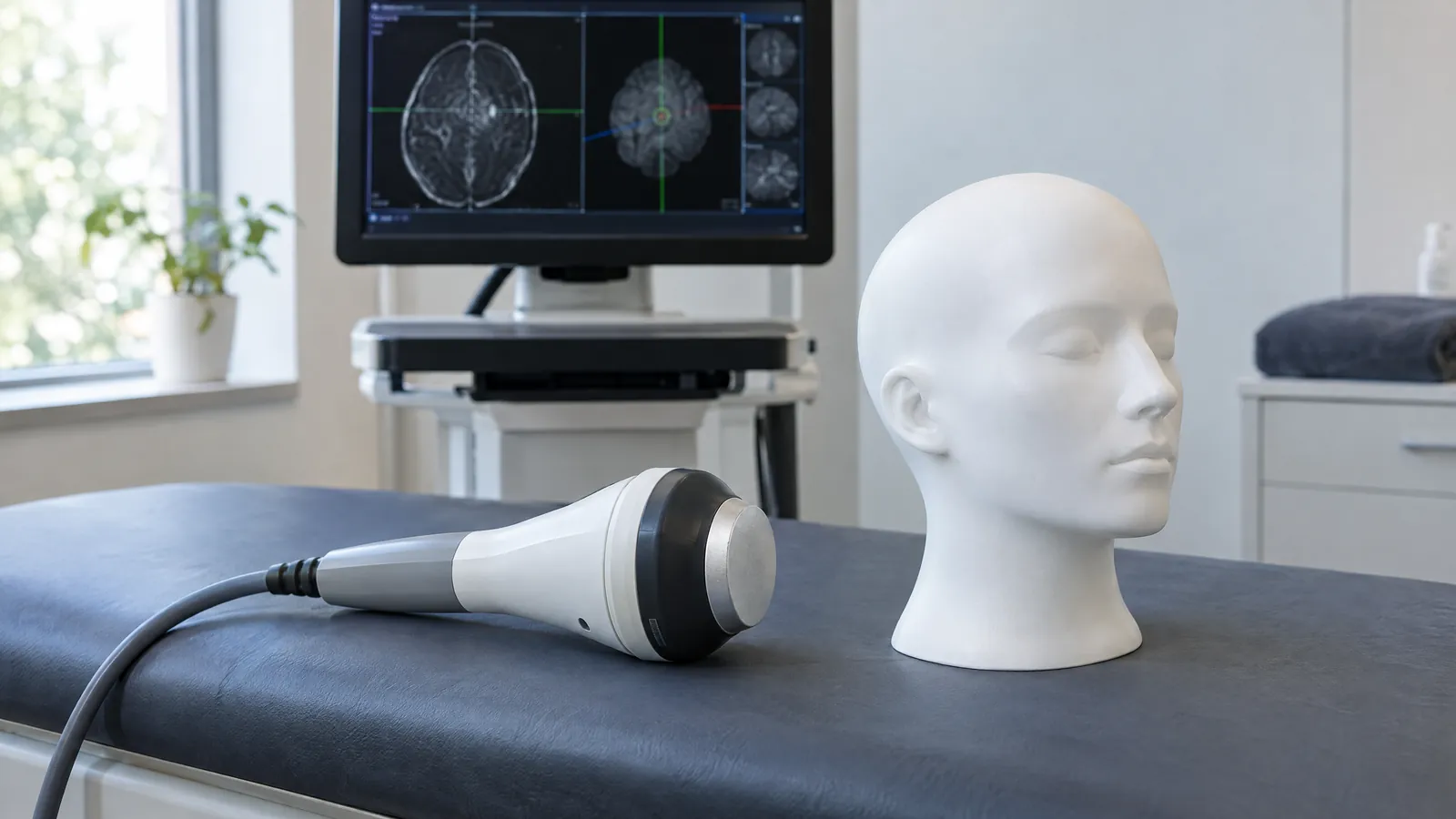
| TPS | Uncontrolled pilot (Beisteiner 2020); sham-controlled RCT, n=60 (Matt 2025) | RCT primary endpoint not met; possible benefit at age ≤70. See the TPS evidence review |
| Gamma (40 Hz) tACS | Single-session sham-controlled crossover (Benussi 2021); open-label multisession, n=15 (Sprugnoli 2021) | Memory scores and hippocampal perfusion changes in pilots |
| 40 Hz light and sound | Mice (Iaccarino 2016); human feasibility and pilot (Chan 2022) | Amyloid reduction in mice; less atrophy and better associative memory in a small human pilot |
| Comparison of modalities | Network meta-analysis (Liu 2026) | Domain-specific benefits, no single winner; small trials, heterogeneous protocols |
Two points matter for a longevity reader. First, all of these trials enrolled people with diagnosed Alzheimer’s disease or a closely related condition. Second, none is large enough to change standard care on its own. Neuromodulation is a symptomatic and functional tool under study. It is not an anti-aging intervention.
Hypothesis: neuromodulation for healthy brain aging
The idea that regular brain stimulation in healthy people could build reserve or delay decline is plausible from network science. It has not been tested in adequately sized, long-term trials with clinical endpoints. I would not recommend paying for it on that basis.
Where neuromodulation fits in a longevity approach
A sensible order of priorities for brain longevity:
- Foundations: activity, sleep, blood pressure, LDL cholesterol, glucose, hearing, vision, mood, social contact, no smoking.
- Assessment when something changes: if memory or thinking declines, a proper work-up (history, cognitive testing, blood tests, imaging where indicated) comes before any device. Douwes Brain Center describes a prevention-oriented approach on its brain health and prevention page Douwes Brain Center ↗.
- Diagnosis-specific treatment: approved therapies first; neuromodulation such as rTMS or TPS as an add-on, with the evidence explained and outcomes measured.
Who neuromodulation is not for
- Healthy people looking for prevention or enhancement: there is no trial evidence of benefit.
- Anyone without a work-up for new cognitive symptoms: reversible causes (thyroid, B12, medication effects, sleep apnoea, depression) must be found first.
- People with modality-specific contraindications, for example certain metal implants for TMS or skull defects for TPS. The treating centre should screen for these in writing.
Limitations of this review
- Most neuromodulation trials in Alzheimer’s are small, single-centre and short.
- The Lancet Commission’s “nearly half” figure is a modelled estimate of potential, not an observed effect.
- Natural experiments on vaccination can be biased by unmeasured differences between groups.
Related reading
- Transcranial pulse stimulation: the evidence
- TMS: a physician’s guide
- GLP-1 drugs and aging
- Tesamorelin and the aging brain
Frequently asked questions
What is cognitive reserve?
It describes why two people with similar brain changes can function very differently. Life experiences such as education, demanding work and leisure activity are associated with greater reserve, which allows the brain to compensate for damage for longer.
How much dementia is preventable?
The 2024 Lancet Commission estimated that nearly half of dementia cases are linked to 14 modifiable risk factors. That is a population estimate of potential prevention, not a guarantee for any individual.
Can brain stimulation prevent dementia?
No trial has shown that. rTMS, TPS and gamma stimulation have small trials in people who already have Alzheimer's disease, with mixed results. They are treatments under study, not prevention for healthy people.
References
- Stern Y. Cognitive reserve in ageing and Alzheimer’s disease. Lancet Neurol. 2012. PMID: 23079557
- Livingston G, et al. Dementia prevention, intervention, and care: 2024 report of the Lancet standing Commission. Lancet. 2024. PMID: 39096926
- Ngandu T, et al. A 2 year multidomain intervention of diet, exercise, cognitive training, and vascular risk monitoring versus control to prevent cognitive decline in at-risk elderly people (FINGER): a randomised controlled trial. Lancet. 2015. PMID: 25771249
- Baker LD, et al. Structured vs self-guided multidomain lifestyle interventions for global cognitive function: the US POINTER randomized clinical trial. JAMA. 2025. PMID: 40720610
- Ekelund U, et al. Dose-response associations between accelerometry measured physical activity and sedentary time and all cause mortality: systematic review and harmonised meta-analysis. BMJ. 2019. PMID: 31434697
- Eyting M, et al. A natural experiment on the effect of herpes zoster vaccination on dementia. Nature. 2025. PMID: 40175543
- Pomirchy M, et al. Herpes zoster vaccination and incident dementia in Canada: an analysis of natural experiments. Lancet Neurol. 2026. PMID: 41579903
- Taquet M, et al. The recombinant shingles vaccine is associated with lower risk of dementia. Nat Med. 2024. PMID: 39053634
- Kivimäki M, et al. Natural experiments of herpes zoster vaccination: quantifying the implied vaccine effectiveness against dementia. Brain Behav Immun. 2026. PMID: 42754179
- Devanand DP, et al. Valacyclovir treatment of early symptomatic Alzheimer disease: the VALAD randomized clinical trial. JAMA. 2026. PMID: 41405855
- Koch G, et al. Precuneus magnetic stimulation for Alzheimer’s disease: a randomized, sham-controlled trial. Brain. 2022. PMID: 36281767
- Beisteiner R, et al. Transcranial pulse stimulation with ultrasound in Alzheimer’s disease: a new navigated focal brain therapy. Adv Sci (Weinh). 2020. PMID: 32042569
- Matt E, et al. Ultrasound neuromodulation with transcranial pulse stimulation in Alzheimer disease: a randomized clinical trial. JAMA Netw Open. 2025. PMID: 40009384
- Benussi A, et al. Exposure to gamma tACS in Alzheimer’s disease: a randomized, double-blind, sham-controlled, crossover, pilot study. Brain Stimul. 2021. PMID: 33762220
- Sprugnoli G, et al. Impact of multisession 40Hz tACS on hippocampal perfusion in patients with Alzheimer’s disease. Alzheimers Res Ther. 2021. PMID: 34930421
- Iaccarino HF, et al. Gamma frequency entrainment attenuates amyloid load and modifies microglia. Nature. 2016. PMID: 27929004
- Chan D, et al. Gamma frequency sensory stimulation in mild probable Alzheimer’s dementia patients: results of feasibility and pilot studies. PLoS One. 2022. PMID: 36454969
- Liu Y, et al. Comparative efficacy of neuromodulation techniques for Alzheimer’s disease: a systematic review and network meta-analysis of randomized controlled trials. Front Neurosci. 2026. PMID: 42798437