
At a Glance
| Side Effect | Frequency | Severity | Management |
|---|---|---|---|
| Nausea / queasiness | Very common (>50%) | Mild–moderate | Slow infusion rate |
| Chest tightness | Common (20–40%) | Mild; alarming but benign | Slow rate, position change |
| Flushing / skin warmth | Common (30–50%) | Mild | Slow rate |
| Headache | Common (15–30%) | Mild | Hydration, slow rate |
| Muscle cramps or twitching | Occasional (10–20%) | Mild | Magnesium co-infusion |
| Dizziness or lightheadedness | Occasional (10–20%) | Mild | Slow rate, recline |
| Fatigue post-infusion | Occasional (10–20%) | Mild | Rest, avoid exertion |
| Hypoglycaemia | Rare | Moderate | Eat before treatment |
| Serious cardiac arrhythmia | Rare (contraindicated patients) | Serious | Pre-screen, avoid in unstable disease |
NAD+ IV therapy has grown substantially in integrative and longevity medicine over the past decade. Patients arrive with high expectations — and, increasingly, questions about what the experience actually involves. The benefits are covered elsewhere on this site. This article addresses the side effects directly, because informed patients tolerate treatment better and make better decisions about whether IV therapy is appropriate for their situation.
For a detailed walkthrough of what to expect during a session — including preparation tips and the timeline of sensations — see NAD IV: What to Expect During Your First Infusion.
The short version: most NAD+ IV side effects are predictable, rate-dependent, and manageable. They are not signs of toxicity. Understanding why they happen makes them far less alarming when they occur.
Why NAD+ IV Causes Side Effects at All
The mechanism behind NAD+ IV side effects is not mysterious, though it is underappreciated in most patient-facing literature.
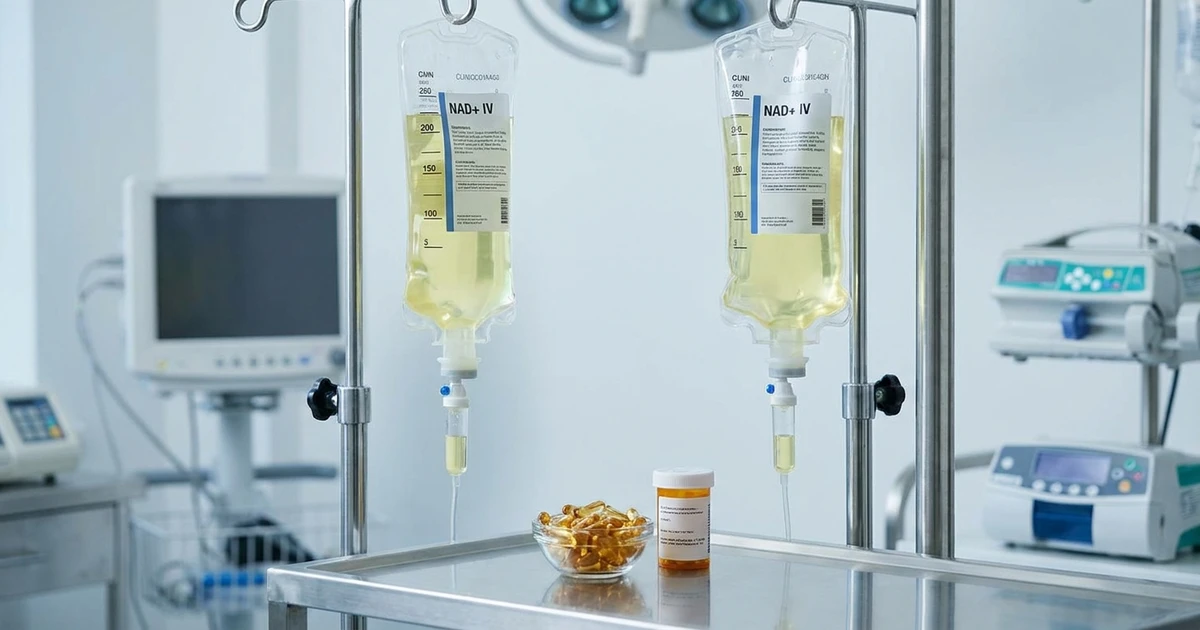
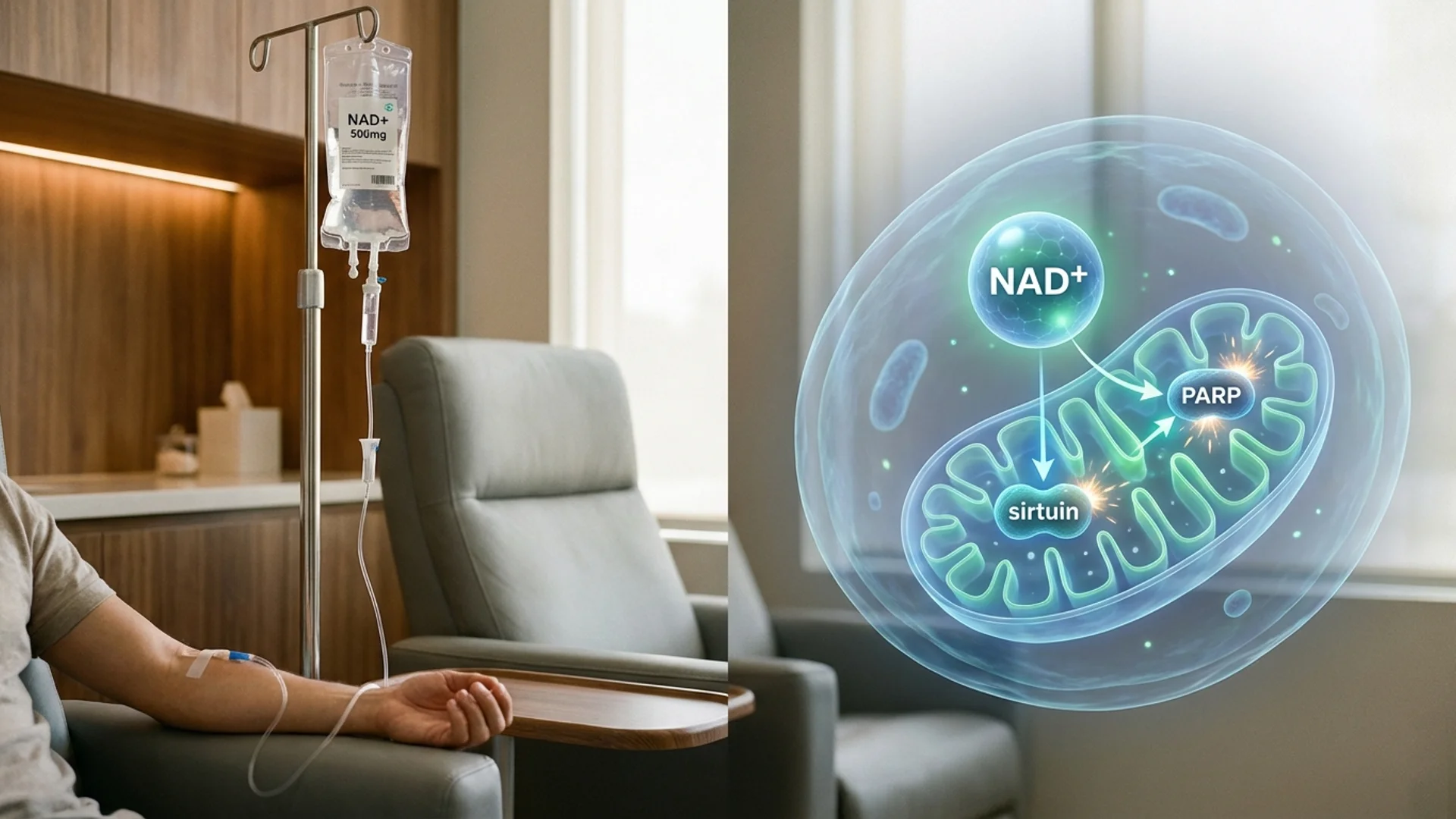
When NAD+ is infused intravenously at the concentrations used therapeutically (typically 250–500 mg in 250 mL saline over two to four hours), blood NAD+ levels rise sharply above the normal physiological range. This high-concentration bolus triggers several biological cascades simultaneously:
Purinergic signaling. NAD+ is a purine derivative that activates P2 purinoreceptors on vascular smooth muscle, cardiac conduction tissue, and enteric neurons. Stimulation of these receptors produces vasodilation, altered gut motility, and transient cardiac conduction changes — the substrate for flushing, chest tightness, and nausea.
Prostaglandin release. NAD+ metabolism generates nicotinamide, which can activate prostaglandin E2 release similar to the mechanism behind niacin flushing — a well-characterised pharmacological phenomenon. The cutaneous flushing and warmth that patients report during NAD+ IV infusions share the same upstream mechanism as nicotinic acid-induced flushing.
Rapid cellular uptake kinetics. Organs with high energy demand — heart, liver, skeletal muscle, gut — aggressively take up circulating NAD+ during infusion. This differential uptake creates transient regional metabolic shifts that manifest as organ-specific symptoms: the gut experiences cramping, the heart experiences conduction sensitivity, and skeletal muscle may twitch.
Understanding these mechanisms leads directly to the most important management principle: all of these effects are rate-dependent. A slower infusion reduces the peak concentration gradient, attenuates purinergic signaling, and significantly reduces symptom burden.
Common Side Effects: What Patients Report
Nausea and Gastrointestinal Discomfort
This is the most frequently encountered side effect, reported by more than half of first-time recipients in clinical settings. It typically begins within the first 30–60 minutes of infusion and reflects enteric neuron stimulation via purinergic pathways. Patients describe it as a mild-to-moderate background queasiness rather than acute nausea with vomiting. Vomiting is uncommon.
Management is straightforward: reduce the infusion rate by 20–30%. Symptoms usually resolve within 10–15 minutes of slowing the drip. Eating a light meal one to two hours before infusion reduces baseline GI sensitivity. Pre-administration of a mild antiemetic (e.g., ondansetron 4 mg oral) can be used in patients with a history of pronounced nausea, though this is rarely necessary.
Patients should not fast before NAD+ IV treatment. Hypoglycaemia compounds nausea and dizziness, and NAD+ participates in glycolytic regulation — tissue glucose handling shifts during high-dose infusion.
Chest Tightness and Pressure
This side effect concerns patients more than any other, understandably so. A sensation of chest tightness, pressure, or difficulty breathing during a medical infusion provokes alarm. Patients and clinicians who understand the mechanism are better equipped to distinguish it from a genuinely serious cardiac event.
NAD+-induced chest tightness is a vasomotor and purinergic phenomenon, not an ischaemic event. It occurs because P2 purinoreceptors on coronary vascular smooth muscle and atrial conduction tissue respond to elevated circulating NAD+ concentrations. The sensation is real but the pathology is absent: ECG monitoring during infusions (which I recommend for first-time recipients) shows no ST changes, no arrhythmia, and normal oxygen saturation in these episodes.
The sensation typically resolves within five minutes of slowing or pausing the infusion. Changing the patient’s position from sitting to semi-reclined reduces venous return and attenuates the effect. Patients with pre-existing cardiac conditions — particularly unstable angina, recent myocardial infarction, or significant dysrhythmia — should not receive NAD+ IV without cardiac clearance. For these patients, any chest symptom warrants standard cardiac evaluation protocol, not assumption of the rate-dependent benign effect described above.
Flushing and Skin Warmth
Peripheral vasodilation during NAD+ infusion causes flushing — a sensation of warmth, redness, or tingling across the face, chest, or limbs. This is the prostaglandin-mediated effect, mechanistically identical to niacin flushing. It is harmless, usually brief, and resolves with rate reduction. Patients who have experienced niacin supplementation will recognise it immediately.
Pre-treatment with aspirin (325 mg one hour prior) can attenuate prostaglandin-mediated flushing, borrowing from the niacin literature. This is an off-label application but carries no meaningful risk in most patients. I discuss this option with patients who find flushing particularly distressing.
Headache
Headache during or after NAD+ IV infusions is common, occurring in approximately 15–30% of patients. The mechanism likely involves cerebral vasodilation — NAD+ and its metabolites influence nitric oxide signalling in cerebrovascular endothelium. The headache is typically bilateral, dull, and begins during the infusion rather than afterward.
Adequate hydration before treatment is the primary prevention measure. NAD+ IV is commonly administered in 250 mL saline, but adding an additional 500 mL normal saline before infusion begins — a practice I use routinely — substantially reduces headache incidence. Magnesium supplementation (either oral the night before or co-infused as 1–2 g magnesium sulphate) also appears helpful, reflecting magnesium’s role in cerebrovascular tone.
Post-infusion headache that persists beyond four to six hours or is associated with visual disturbance or neurological symptoms warrants evaluation rather than attribution to NAD+ therapy.
Muscle Cramps and Twitching
A subset of patients report muscle cramps or fasciculations during infusion, particularly in the calves and feet. This reflects the electrolyte shifts that accompany rapid intracellular NAD+ uptake and the associated changes in mitochondrial membrane potential. Magnesium is the most effective intervention: a co-infusion of 1 g magnesium sulphate significantly reduces cramping in clinical practice. Patients with a history of muscle cramps during the infusion should receive magnesium co-infusion as standard.
Post-Infusion Fatigue
Some patients experience fatigue in the hours following treatment, particularly after high-dose sessions (≥500 mg). This is distinct from the energised state that most patients report in the days following treatment. Acute post-infusion fatigue likely reflects the metabolic cost of processing a large NAD+ bolus and the transient redistribution of cellular energy resources.
Advising patients to avoid intense physical activity on infusion days, rest adequately afterward, and stay well-hydrated largely eliminates this as a clinical problem. It is worth framing for patients: fatigue immediately after the infusion does not predict the treatment’s efficacy — the mitochondrial and sirtuin-mediated benefits emerge over hours to days after the session, not during or immediately after it.
Who Should Not Receive NAD+ IV Therapy
Side effect management matters less than appropriate patient selection. NAD+ IV is contraindicated or requires significant caution in the following groups (for a detailed clinical breakdown by mechanism, see NAD+ IV Therapy Contraindications: Who Should Avoid It and Why):
Unstable cardiovascular disease. Patients with unstable angina, recent acute coronary syndrome (within three months), significant untreated dysrhythmia, or decompensated heart failure are not candidates for NAD+ IV without specialist cardiac input. The purinergic and vasomotor effects of high-dose IV NAD+ create meaningful risk in already-compromised cardiac tissue.
Active malignancy without oncology input. NAD+ is a critical cofactor in DNA repair — the same mechanism that makes it attractive for longevity purposes also potentially supports cellular proliferation. The preclinical evidence on NAD+ and tumour cell behaviour is nuanced and evolving. I do not administer NAD+ IV to patients with active cancer outside of a context where their oncologist is informed and engaged.
Severe hepatic impairment. The liver is the primary site of NAD+ metabolism. Significant hepatic dysfunction impairs clearance kinetics and may prolong exposure to high concentrations, increasing side effect burden.
Pregnancy. Insufficient safety data exist for NAD+ IV administration during pregnancy. The therapy is deferred until after delivery and breastfeeding cessation.
History of hypersensitivity to nicotinamide or niacin. Rare but relevant; patients with documented reactions to nicotinamide-derived compounds should be discussed individually rather than infused routinely.
Practical Guidance for Minimising Side Effects
These measures reduce symptom burden across all side effect categories:
- Start slow. Begin infusion at 25–30 drops per minute (approximately 1–1.5 mL/min) and increase gradually. Most patients tolerate full rate within 30–45 minutes. Never push NAD+ IV rapidly.
- Eat beforehand. A light meal containing protein and complex carbohydrate one to two hours prior stabilises blood glucose and reduces GI sensitivity.
- Hydrate. Pre-infusion bolus of 250–500 mL normal saline significantly reduces headache and dizziness.
- Co-infuse magnesium. 1–2 g magnesium sulphate added to the infusion bag reduces cramping and may attenuate cardiovascular sensitivity.
- Semi-reclined position. More comfortable than fully upright for managing chest pressure and dizziness.
- Monitor first-time recipients. Pulse oximetry and ECG monitoring for the first session allows confident clinical assessment of any cardiac symptoms and provides reassurance to the patient.
- Communicate proactively. Patients who are warned that nausea or chest tightness may occur and that it resolves with rate reduction tolerate it substantially better than those who encounter it unexpectedly.
The long-term safety profile of NAD+ IV therapy, based on precursor supplementation trials and clinical observation in the growing longevity medicine literature, is reassuring. Published human studies with oral NAD+ precursors up to 3,000 mg/day have demonstrated acceptable safety profiles over six to twelve week periods. IV administration creates a different pharmacokinetic exposure, but the clinical safety record accumulated across thousands of infusions in integrative medicine settings is similarly encouraging in appropriately screened patients.
Related Articles
- NAD+ IV Therapy: Cellular Energy and Aging
- NAD+ Injections vs Oral Supplements: Which Delivery Method Works?
- NAD+ IV vs NMN vs NR: Which NAD Precursor Is Best?
- Mitochondrial Function and Longevity: The Science
- Patient Journey: What to Expect at Your First Consultation
References
- Martens CR, Denman BA, Mazzo MR, et al. Chronic nicotinamide riboside supplementation is well-tolerated and elevates NAD+ in healthy middle-aged and older adults. Nat Commun. 2018;9(1):1286. PMID: 29599478
- Conze DB, Crespo-Barreto J, Ives DH. Safety assessment of nicotinamide riboside, a form of vitamin B3. Hum Exp Toxicol. 2016;35(11):1149–1160. PMID: 26791540
- Braidy N, Liu Y. NAD+ therapy in age-related degenerative disorders: a benefit/risk analysis. Exp Gerontol. 2020;132:110831. PMID: 31917983
- Pirinen E, Auranen M, Khan NA, et al. Niacin cures systemic NAD+ deficiency and improves muscle performance in adult-onset mitochondrial myopathy. Cell Metab. 2020;31(6):1078–1090. PMID: 32386566
- Elhassan YS, Kluckova K, Fletcher RS, et al. Nicotinamide riboside augments the aged human skeletal muscle NAD+ metabolome and induces transcriptomic and anti-inflammatory signatures. Cell Rep. 2019;28(7):1717–1728. PMID: 31412240
- Remie CME, Roumans KHM, Moonen MPB, et al. Nicotinamide riboside supplementation alters body composition and skeletal muscle acetylcarnitine concentrations in healthy obese humans. Am J Clin Nutr. 2020;112(2):413–426. PMID: 32359177
- Dollerup OL, Christensen B, Svart M, et al. A randomized placebo-controlled clinical trial of nicotinamide riboside in obese men: safety, insulin-sensitivity, and lipid-mobilizing effects. Am J Clin Nutr. 2018;108(2):343–353. PMID: 29992272