At a Glance
| Property | NAD+ IV Injection | Sublingual NAD+ | Oral NMN | Oral NR |
|---|---|---|---|---|
| Bioavailability | ~100% (direct systemic) | Estimated 20-40% (bypasses GI) | Variable (30-50% estimated) | ~30-50% (hepatic first-pass) |
| Peak NAD+ Level | Supraphysiological | Moderate | Moderate | Moderate |
| Onset | Minutes to hours | 30-60 minutes | Hours to days | Hours to days |
| Duration of Effect | Hours (acute); repeated sessions needed | Hours | Sustained with daily dosing | Sustained with daily dosing |
| Cost | 250-800 EUR per session | 80-200 EUR/month | 50-150 EUR/month | 40-120 EUR/month |
| Convenience | Requires clinical setting, 2-4 hours per session | At home, daily | At home, daily | At home, daily |
| Evidence Level | Moderate (clinical observation, limited RCTs) | Limited (emerging data) | Moderate (growing human trials) | Moderate (most published human data) |
| Best For | Acute restoration, intensive protocols, neurological support | Those wanting better absorption without injections | Daily maintenance, research-oriented users | Daily maintenance, conservative approach |
The NAD+ supplementation market has become crowded with options, and patients are understandably confused about which delivery method actually works. Some longevity clinics market NAD+ IV infusions as the only effective approach, charging premium prices per session. Supplement companies claim their oral products raise NAD+ just as effectively at a fraction of the cost. Social media is full of anecdotal reports supporting every possible position.
Here is what the pharmacology and clinical evidence actually tell us — and how I approach this decision with patients in my practice.
Why Delivery Method Matters for NAD+
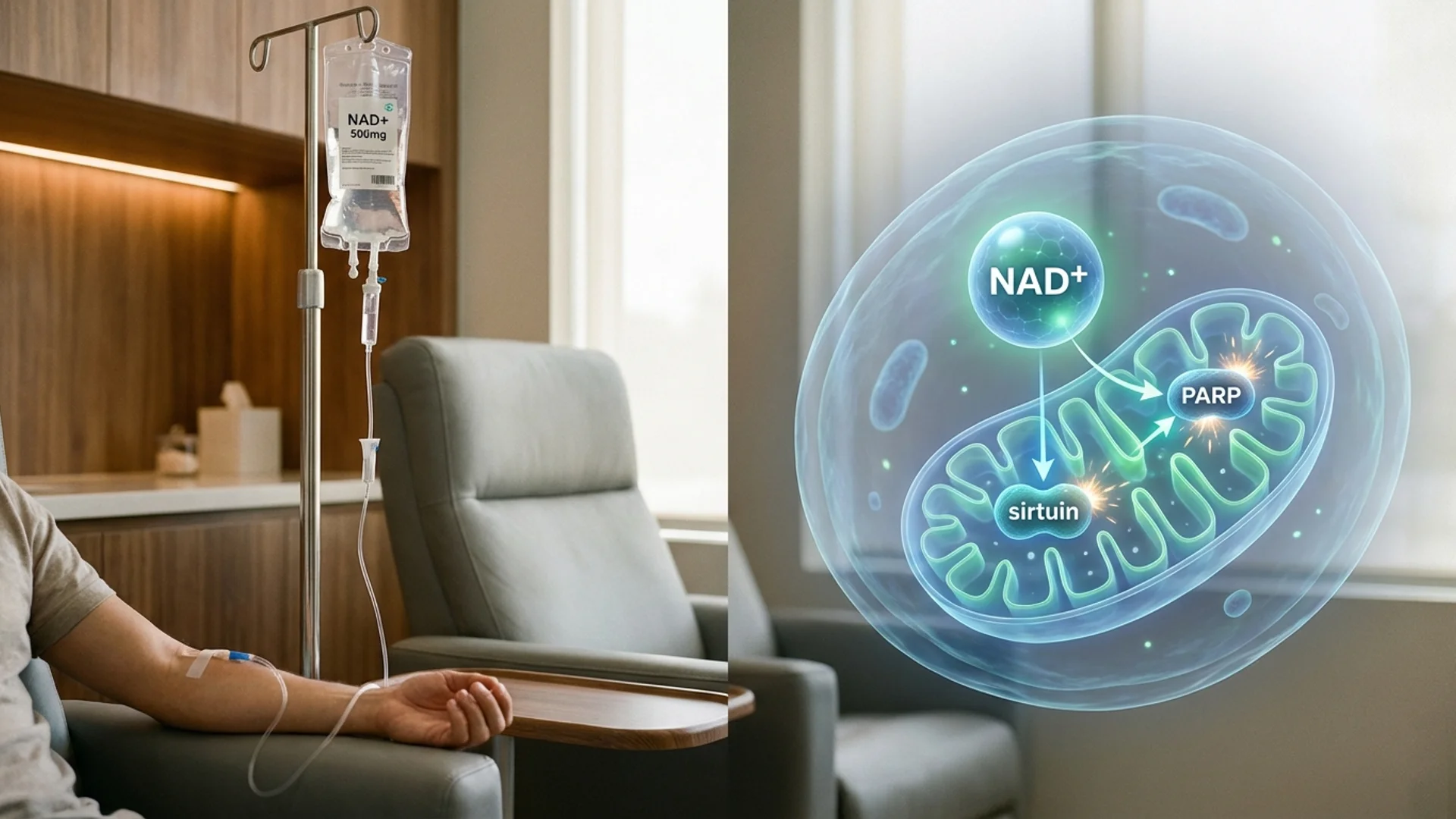
NAD+ (nicotinamide adenine dinucleotide) is a coenzyme required for over 500 enzymatic reactions. It is central to mitochondrial energy production, sirtuin-mediated DNA repair, PARP-dependent genomic maintenance, and circadian clock regulation. Intracellular NAD+ levels decline with age — approximately 50 percent by age 50 — and this decline is implicated in multiple aspects of aging and age-related disease [1].
The fundamental challenge with NAD+ supplementation is getting it where it needs to be: inside your cells. This is not straightforward, because NAD+ is a large, charged molecule (663 Da) that does not readily cross cell membranes and is rapidly degraded in the gastrointestinal tract.
This is why delivery method matters so much. You can have the best NAD+ product in the world, but if it does not reach your cells in sufficient quantity, it accomplishes nothing.
NAD+ IV Infusion: The Direct Route
How It Works
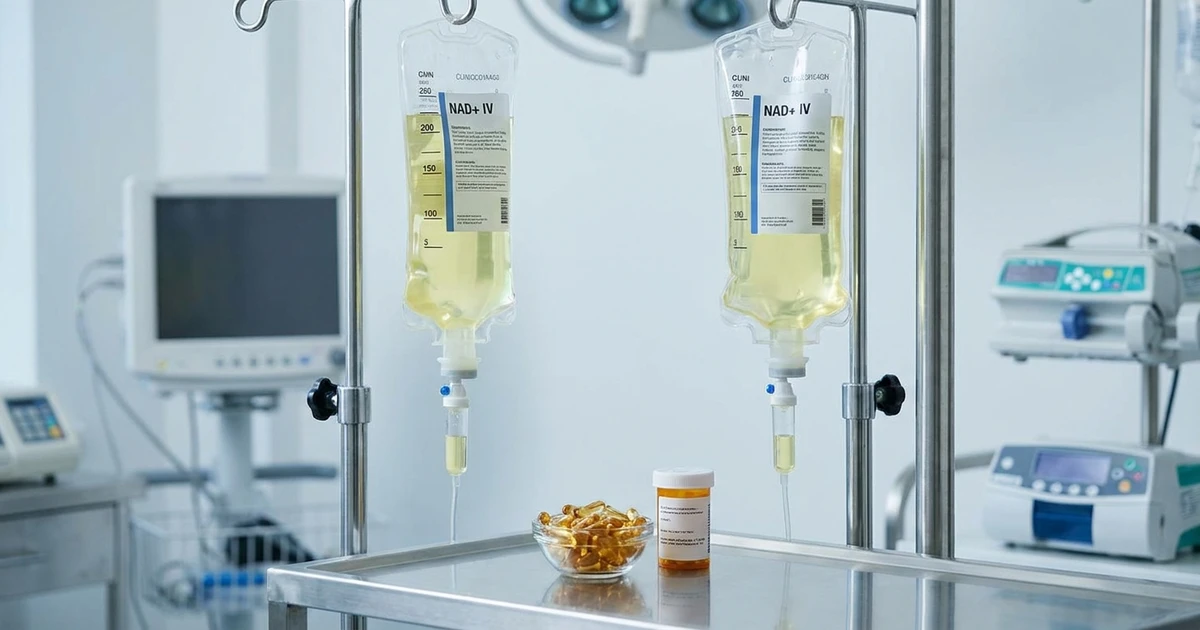
Intravenous NAD+ bypasses the gastrointestinal tract entirely. Pure NAD+ dissolved in sterile saline is infused directly into the bloodstream over 2 to 4 hours (sometimes longer, depending on the dose and patient tolerance).
The Pharmacology
Bioavailability: approximately 100 percent. What enters the IV line reaches the bloodstream — there is no GI degradation, no hepatic first-pass metabolism. Blood NAD+ levels rise to supraphysiological concentrations within the infusion period.
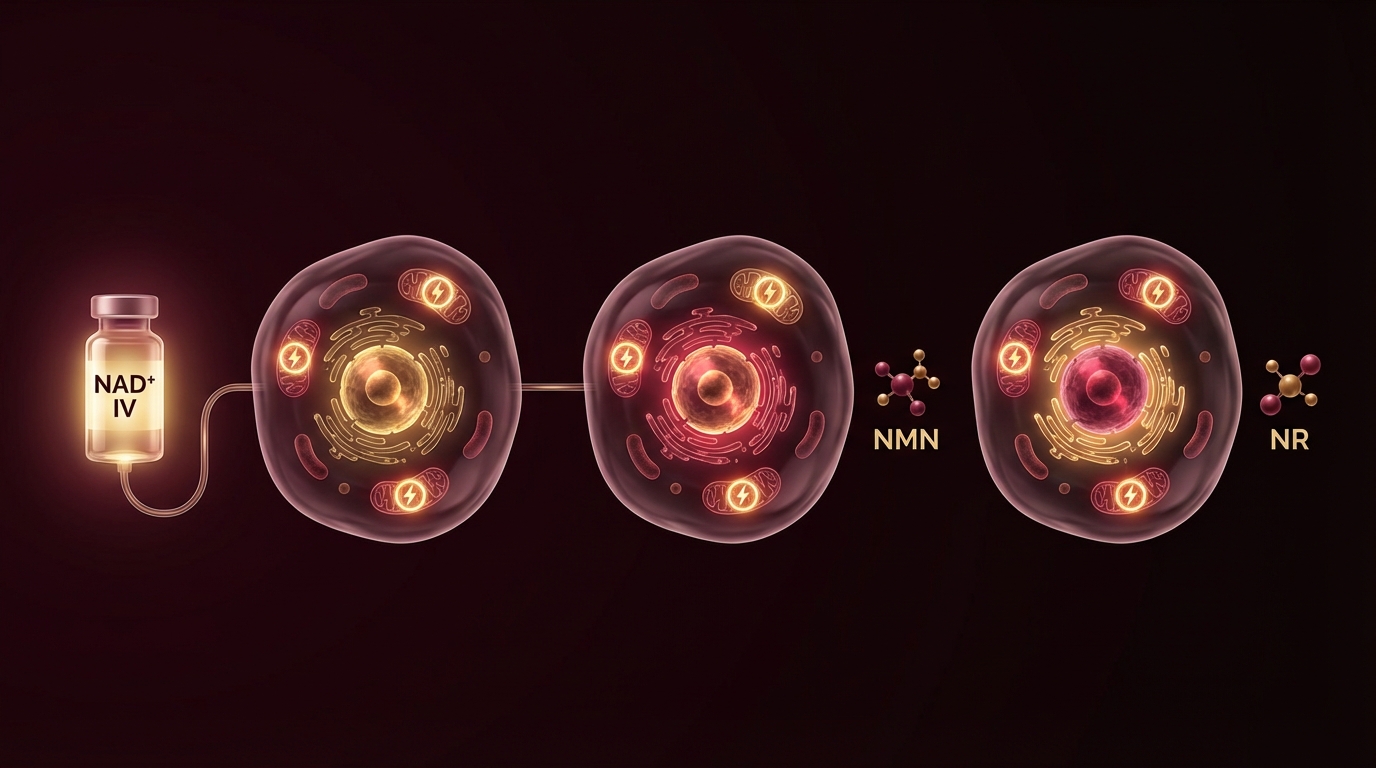
The cell entry question. Here is where the pharmacology gets nuanced. Even with supraphysiological blood levels, intact NAD+ molecules do not easily cross cell membranes. The current understanding is that extracellular NAD+ is partially degraded by ectoenzymes (CD38, CD157) into precursors like NMN and nicotinamide riboside, which then enter cells and are resynthesized into intracellular NAD+ [2].
This means that NAD+ IV works partly as a high-dose precursor delivery system — the body breaks down the NAD+ and rebuilds it intracellularly. The advantage over oral precursors is the sheer quantity delivered and the bypassing of GI limitations.
What I Observe Clinically
In my practice, NAD+ IV produces consistent results that patients notice:
Acute effects (during and immediately after infusion):
- Improved mental clarity — many patients describe a “fog lifting” sensation
- Increased energy and alertness
- Mild to moderate nausea during infusion (common, dose-rate dependent)
- Chest tightness or flushing (occasional, resolved by slowing the infusion rate)
- Abdominal cramping (uncommon)
Short-term effects (days to weeks with repeated sessions):
- Sustained energy improvement
- Better exercise recovery
- Improved sleep quality
- Mood stabilization
Important caveat: These are clinical observations, not controlled trial data. The placebo contribution to these subjective improvements is unknown but cannot be discounted.
Side Effects of NAD+ IV
| Side Effect | Frequency | Mechanism | Management |
|---|---|---|---|
| Nausea | Common (30-50%) | Likely direct vagal stimulation | Slow the infusion rate |
| Chest tightness | Uncommon | Unclear; may relate to vasomotor effects | Slow or pause infusion |
| Flushing/warmth | Uncommon | Vasodilation | Self-limiting |
| Abdominal cramping | Uncommon | GI smooth muscle effects | Slow infusion rate |
| Headache | Uncommon | Unknown | Hydration, slow rate |
| Injection site irritation | Occasional | Local venous irritation | Adjust IV placement |
No serious adverse events have been reported in the published literature or in my clinical experience. The most common reason patients discontinue NAD+ IV is the time commitment and cost, not side effects. A full clinical breakdown of side effect mechanisms, frequency data, contraindications, and mitigation protocols is covered in NAD+ IV Side Effects: What to Expect and How to Manage Them.
Cost and Logistics
- Per session: 250-800 EUR (varies by dose and clinic)
- Typical protocol: 3-5 sessions for acute restoration, then monthly maintenance
- Time per session: 2-4 hours in a clinical setting
- Annual cost for maintenance: 3,000-10,000 EUR
NAD+ IV is the most expensive and least convenient option. The question is whether the pharmacokinetic advantages justify the cost.
Oral NAD+ Precursors: NMN and NR
Because intact NAD+ is poorly absorbed orally, the supplement approach uses NAD+ precursors — molecules that cells can convert into NAD+ through established biosynthetic pathways.
NMN (Nicotinamide Mononucleotide)
NMN is a direct precursor to NAD+ in the salvage pathway. Cells convert NMN to NAD+ in a single enzymatic step via nicotinamide mononucleotide adenylyltransferase (NMNAT).
Human trial data (growing):
- Irie et al. (2020): Oral NMN at 250 mg/day for 10 weeks was safe and well-tolerated in healthy men. Significant increases in NAD+ metabolites in blood [3].
- Yi et al. (2023): 12-week NMN supplementation in middle-aged adults showed dose-dependent NAD+ elevation and improvements in physical performance metrics.
- Yoshino et al. (2021): NMN improved muscle insulin sensitivity in prediabetic postmenopausal women — one of the first demonstrations of a clinically meaningful endpoint.
Practical considerations:
- Typical dose: 250-1,000 mg daily
- Cost: 50-150 EUR/month
- Oral bioavailability: variable, estimated at 30-50 percent. NMN is partially degraded in the GI tract but appears to reach the bloodstream in sufficient quantities to elevate NAD+ levels.
- The Slc12a8 NMN-specific transporter identified in murine studies may facilitate direct NMN absorption, though human relevance is still being established.
NR (Nicotinamide Riboside)
NR enters the NAD+ biosynthetic pathway via nicotinamide riboside kinase (NRK1/NRK2), which phosphorylates NR to NMN, which is then converted to NAD+. Two enzymatic steps from NR to NAD+, compared to one from NMN.
Human trial data (the most extensive of any oral precursor):
- Martens et al. (2018): Oral NR (1,000 mg/day, NIAGEN brand) increased NAD+ levels by approximately 60 percent in healthy middle-aged and older adults. Well-tolerated over 6 weeks [4].
- Elhassan et al. (2019): NR supplementation in aged human subjects increased NAD+ in skeletal muscle and reduced circulating inflammatory cytokines.
- Dollerup et al. (2018): NR in obese insulin-resistant men showed significant NAD+ elevation but no improvement in insulin sensitivity at the tested dose — demonstrating that NAD+ elevation does not automatically translate to clinical benefit.
Practical considerations:
- Typical dose: 300-1,000 mg daily
- Cost: 40-120 EUR/month
- The most published human data of any NAD+ precursor
- Available as NIAGEN (patented form) with quality assurance
- Hepatic first-pass metabolism reduces bioavailability
NMN vs NR: The Ongoing Debate
| Factor | NMN | NR |
|---|---|---|
| Steps to NAD+ | 1 (NMN -> NAD+) | 2 (NR -> NMN -> NAD+) |
| Published human trials | Growing rapidly | More extensive |
| Patented forms | Multiple | NIAGEN (ChromaDex) |
| Theoretical advantage | One fewer enzymatic step | More published safety data |
| Practical difference | Likely minimal at equivalent doses | Likely minimal at equivalent doses |
Here is what I tell patients: the NMN vs NR debate generates more heat than light. Both raise intracellular NAD+ levels. Both have human trial data showing safety and NAD+ elevation. The practical difference in clinical outcomes is likely small. I have a slight preference for NMN based on the one-fewer-step logic and the growing human trial data, but I would not discourage a patient who prefers NR based on its longer track record.
For a detailed three-way comparison, see our NAD+ IV vs NMN vs NR article.
Sublingual NAD+: The Middle Ground
Sublingual NAD+ — lozenges or drops placed under the tongue — represents a middle-ground approach that is gaining attention.
The Rationale
The sublingual mucosa has a rich vascular supply and does not subject compounds to hepatic first-pass metabolism. Drugs absorbed sublingually enter the systemic circulation directly, similar in principle to IV delivery (though at lower volumes and rates).
What We Know
Evidence level: Limited. Sublingual NAD+ is newer, and the published data is sparse compared to IV and oral precursors. The theoretical pharmacology is sound — sublingual absorption of similar-sized molecules is well-established in pharmacology. But specific bioavailability data for sublingual NAD+ in humans is limited.
Clinical observations:
- Patients report faster onset than oral NMN/NR (consistent with sublingual absorption kinetics)
- Effects are subjectively less intense than NAD+ IV (consistent with lower total dose)
- Cost falls between oral and IV: 80-200 EUR/month
- Convenience is comparable to oral — no clinical setting required
Limitations
- The size of the NAD+ molecule (663 Da) is near the upper limit for efficient sublingual absorption
- Actual absorption fraction is poorly characterized for NAD+ specifically
- Products vary in formulation quality and NAD+ stability
- Some degree of oral (GI) swallowing is inevitable, reducing the sublingual advantage
My Clinical Approach: Matching Method to Goal
I do not prescribe the same NAD+ approach for every patient. The delivery method should match the clinical goal, budget, and practical constraints.
When I Recommend NAD+ IV
- Acute neurological support: Patients with significant brain fog, post-COVID neurological symptoms, or recovering from neuroactive infections. The supraphysiological levels achievable with IV appear to matter for neurological applications.
- Intensive treatment protocols: When NAD+ restoration is part of a comprehensive treatment course at our clinic (e.g., alongside hyperthermia, apheresis, or IV laser therapy).
- Rapid restoration: Patients with suspected severe NAD+ depletion — those over 60, chronic illness patients, those with extensive medication burdens that deplete NAD+ (notably chemotherapy survivors).
- Patients who can commit to the time and cost: A maintenance schedule of monthly IV sessions is a meaningful commitment.
When I Recommend Oral Precursors
- Daily maintenance after IV restoration: After an initial IV loading course, many patients transition to oral NMN or NR for ongoing maintenance. This provides the cost-efficient, convenient long-term strategy.
- Preventive longevity protocols: For healthy patients in their 40s-60s who want to offset age-related NAD+ decline. The evidence supports modest but consistent NAD+ elevation with daily oral supplementation.
- Budget-conscious patients: At 50-150 EUR/month, oral precursors provide meaningful NAD+ support at a fraction of IV cost.
- Patients who will not commit to IV: Compliance matters. A patient who takes NMN daily for a year will likely achieve better outcomes than one who comes for two IV sessions and then stops.
When Sublingual Makes Sense
- Patients who want better absorption than oral capsules but cannot access or afford IV
- Those who experience GI discomfort with oral NMN/NR
- Maintenance between IV sessions
Cost-Benefit Analysis
| Strategy | Annual Cost | Evidence Level | Convenience | Expected NAD+ Elevation |
|---|---|---|---|---|
| Monthly NAD+ IV | 3,000-10,000 EUR | Moderate | Low (clinical visits) | Highest (supraphysiological peaks) |
| Daily oral NMN (500 mg) | 600-1,800 EUR | Moderate | High | Moderate (sustained) |
| Daily oral NR (500 mg) | 480-1,440 EUR | Moderate | High | Moderate (sustained) |
| Sublingual NAD+ | 960-2,400 EUR | Limited | Moderate | Unknown (limited data) |
| IV loading + oral maintenance | 1,500-4,000 EUR | Moderate (combined) | Moderate | Highest initial, sustained maintenance |
The combined approach — IV loading followed by oral maintenance — is my most commonly recommended strategy for patients serious about NAD+ optimization. It provides the rapid restoration of IV with the sustained, cost-effective maintenance of oral precursors.
Quality Considerations
Regardless of delivery method, product quality matters.
For NAD+ IV: Use pharmaceutical-grade NAD+ from accredited compounding pharmacies or direct pharmaceutical suppliers. The solution should be sterile, properly concentrated, and administered in a clinical setting with appropriate monitoring.
For oral NMN: Look for third-party testing (certificate of analysis), verified purity above 98 percent, and proper stability data. Some NMN products degrade rapidly if not stored properly. Uthever and similar branded forms provide additional quality assurance.
For oral NR: NIAGEN by ChromaDex is the most extensively tested NR form in human trials. Third-party verification remains important.
For sublingual NAD+: Product formulation matters considerably. The NAD+ must be stabilized against degradation in the lozenge or liquid matrix, and the formulation should be designed for optimal sublingual absorption (not just a capsule contents placed under the tongue).
The Bottom Line
NAD+ IV delivers the highest peak levels, the fastest onset, and is the best option for acute restoration — but it is expensive, inconvenient, and the evidence base, while encouraging, lacks large randomized trials. Oral NMN and NR are cost-effective, convenient, and supported by a growing body of human trial data — they are the practical choice for daily maintenance. Sublingual NAD+ occupies a middle ground with theoretical pharmacokinetic advantages but limited published data.
The delivery method matters, but it matters less than consistency. A patient who takes oral NMN daily for years will likely maintain better NAD+ levels than one who gets an IV infusion twice and stops. The best approach is the one you will actually follow.
References
- Covarrubias AJ, et al. NAD+ metabolism and its roles in cellular processes during ageing. Nature Reviews Molecular Cell Biology. 2021;22(2):119-141. doi:10.1038/s41580-020-00313-x.
- Yoshino J, et al. NAD+ intermediates: the biology and therapeutic potential of NMN and NR. Cell Metabolism. 2018;27(3):513-528. doi:10.1016/j.cmet.2017.11.002.
- Irie J, et al. Effect of oral administration of nicotinamide mononucleotide on clinical parameters and nicotinamide metabolite levels in healthy Japanese men. Endocrine Journal. 2020;67(2):153-160. doi:10.1507/endocrj.EJ19-0313.
- Martens CR, et al. Chronic nicotinamide riboside supplementation is well-tolerated and elevates NAD+ in healthy middle-aged and older adults. Nature Communications. 2018;9(1):1286. doi:10.1038/s41467-018-03421-7.
- Elhassan YS, et al. Nicotinamide riboside augments the aged human skeletal muscle NAD+ metabolome and induces transcriptomic and anti-inflammatory signatures. Cell Reports. 2019;28(7):1717-1728. doi:10.1016/j.celrep.2019.07.043.
- Rajman L, et al. Therapeutic potential of NAD-boosting molecules: the in vivo evidence. Cell Metabolism. 2018;27(3):529-547. doi:10.1016/j.cmet.2018.02.011.
This content is educational and does not constitute medical advice. NAD+ supplementation should be discussed with a qualified healthcare provider, particularly if you have existing medical conditions or are taking medications.