
At a Glance
| Parameter | Details |
|---|---|
| Intervention | Finnish dry sauna / infrared sauna |
| Temperature | 80–100°C (traditional); 45–60°C (infrared) |
| Session length | 15–30 minutes |
| Frequency | 2–7 sessions/week for meaningful CVD benefit |
| Key benefit | 40–63% reduction in fatal cardiovascular events (4–7×/week) |
| Onset of benefit | Functional changes within weeks; epidemiological benefit over years |
| Ideal candidates | Healthy adults, hypertension, stable heart disease, metabolic syndrome |
| Contraindications | Recent MI (<6 weeks), unstable angina, severe aortic stenosis, decompensated heart failure |
Sauna bathing is one of the few health practices where robust epidemiological evidence, mechanistic data, and clinical trial results align. Unlike many longevity interventions tested only in animals or small pilot studies, the Finnish population offers a natural experiment: decades of sauna exposure in hundreds of thousands of people, now systematically studied. The findings are striking.
A landmark 2015 JAMA Internal Medicine study following 2,315 Finnish men for over 20 years found that those who used the sauna 4–7 times per week had a 63% lower risk of sudden cardiac death, a 48% lower risk of fatal coronary heart disease, and a 40% lower risk of all-cause cardiovascular mortality compared with once-weekly users — after full adjustment for confounders including fitness level, alcohol use, and baseline cardiovascular risk.
These are not trivial numbers. They rival the risk reduction seen with major pharmacological interventions, and they arise from a passive thermal exposure accessible to almost anyone.
Why Heat Exposure Trains the Cardiovascular System
The cardiovascular adaptations to sauna exposure share significant overlap with moderate aerobic exercise — which is part of why researchers now call sauna a “passive cardiovascular conditioning” tool.
Hemodynamic response. During a 20-minute sauna session at 80°C, heart rate increases to 100–150 bpm and cardiac output doubles. Skin vessels dilate dramatically, redistributing blood volume toward the periphery. Stroke volume initially drops, triggering a compensatory tachycardia — a pattern that meaningfully stresses and conditions the cardiovascular system without joint loading or high exertion.
Endothelial function. Repeated heat exposure increases the production and availability of nitric oxide (NO) in vascular endothelium. NO is the central regulator of vasodilation; its upregulation improves flow-mediated dilation (FMD), a validated marker of endothelial health and independent predictor of cardiovascular events. A 2019 randomized trial demonstrated significant improvements in FMD after 8 weeks of regular sauna use in patients with coronary artery disease.
Arterial stiffness. Pulse wave velocity (PWV) — the gold-standard measure of arterial stiffness — decreases with habitual sauna exposure. Stiff arteries force the heart to work against higher resistance and transmit damaging pressure waves to organs including the kidneys and brain. Lower PWV translates directly into reduced cardiac afterload and better organ perfusion.
Blood pressure. Acute sauna sessions transiently reduce blood pressure by 5–10 mmHg, lasting hours after the session. Longitudinal studies find that regular sauna users maintain lower resting blood pressure. A 2018 Finnish cohort study reported that 4–7 sauna sessions per week was associated with a 46% lower risk of hypertension over 22 years of follow-up, independent of baseline cardiovascular fitness.
Heat shock proteins (HSPs). Thermal stress induces a family of cytoprotective proteins, particularly HSP70 and HSP90, which stabilize proteins against misfolding, protect mitochondria from stress-induced dysfunction, and suppress inflammatory signaling through NF-κB inhibition. Chronically elevated circulating HSP70 from regular heat exposure is associated with lower markers of systemic inflammation and improved cardiac protection against ischemic injury.
Sauna for Specific Cardiovascular Conditions
Hypertension
Multiple prospective cohort studies confirm that habitual sauna bathing is independently associated with lower systolic and diastolic blood pressure. The mechanism involves both acute vasodilation and longer-term improvements in endothelial function and autonomic nervous system tone. For patients with stage 1–2 hypertension on stable medications, sauna can serve as an adjunct to pharmacological and lifestyle management. It should not replace antihypertensives but can contribute meaningfully to overall blood pressure control.
Heart Failure (Stable)
This is where sauna evidence is particularly compelling. Japanese researchers have studied Waon therapy — a gentler sauna protocol (60°C for 15 minutes) — in patients with stable chronic heart failure. Multiple controlled trials demonstrate improvements in NYHA functional class, 6-minute walk distance, brain natriuretic peptide (BNP), left ventricular ejection fraction, and quality of life. A meta-analysis of 6 randomized trials found Waon therapy significantly improved exercise tolerance and reduced BNP without adverse cardiac events.
The mechanism includes afterload reduction via peripheral vasodilation, improved autonomic tone (decreased sympathetic and increased parasympathetic activity), and direct anti-inflammatory effects that reduce cardiac remodeling.
Clinical caveat: Only patients with stable, compensated heart failure are candidates. Decompensated heart failure with fluid overload is a contraindication.
Atherosclerosis and Post-MI Management
Animal models demonstrate that repeated heat conditioning reduces atherosclerotic plaque formation and improves post-ischemic cardiac function. In humans, the JAMA study data suggest that even patients with established cardiovascular disease benefit from habitual sauna use — the risk reduction was present across strata of cardiovascular risk factors. However, the post-MI window requires caution: cardiologists typically recommend waiting at least 6 weeks after myocardial infarction before resuming sauna, and the first post-MI sessions should be shorter and at lower temperature.
Metabolic Syndrome
Sauna reliably improves components of metabolic syndrome — fasting glucose, triglycerides, waist circumference (via sweat-induced fluid shifts and appetite modulation), and blood pressure. In insulin-resistant patients, heat exposure acutely improves insulin sensitivity via glucose transporter (GLUT4) upregulation and AMP-kinase activation pathways similar to exercise.
Optimal Protocol for Cardiovascular Benefit
The dose-response data from Finnish cohort studies show clear gradients:
| Frequency | Fatal CVD risk reduction |
|---|---|
| 1×/week | Reference (no reduction) |
| 2–3×/week | ~24% reduction |
| 4–7×/week | ~40–63% reduction |
These data reflect traditional Finnish sauna (80–100°C, low humidity). Infrared sauna operates at lower temperatures (45–60°C) but achieves similar core temperature elevations over longer sessions; limited but encouraging data suggest similar cardiovascular benefits.
Practical protocol:
- Temperature: 80–100°C traditional; 50–60°C infrared
- Session duration: 15–25 minutes per round
- Rounds: 1–3 rounds per session with cool-down between
- Frequency: 3–5× per week as a minimum for meaningful cardiovascular effect; 4–7× for maximal observed benefit
- Hydration: 500–750 mL water pre-session; replace fluid losses post-session (typically 0.5–1 L per session)
- Cool-down: Brief cold shower or ambient air cooling between rounds; avoid immediate submersion in ice water if cardiac history present
Combining Sauna with Other Longevity Protocols
Zone 2 cardio + sauna. The physiological adaptations are complementary — aerobic training primarily drives mitochondrial biogenesis and VO2max; sauna primarily drives vascular and endothelial adaptations. Research suggests combining both produces additive cardiovascular benefit. A common approach is a brief (10–15 minute) sauna session following Zone 2 training.
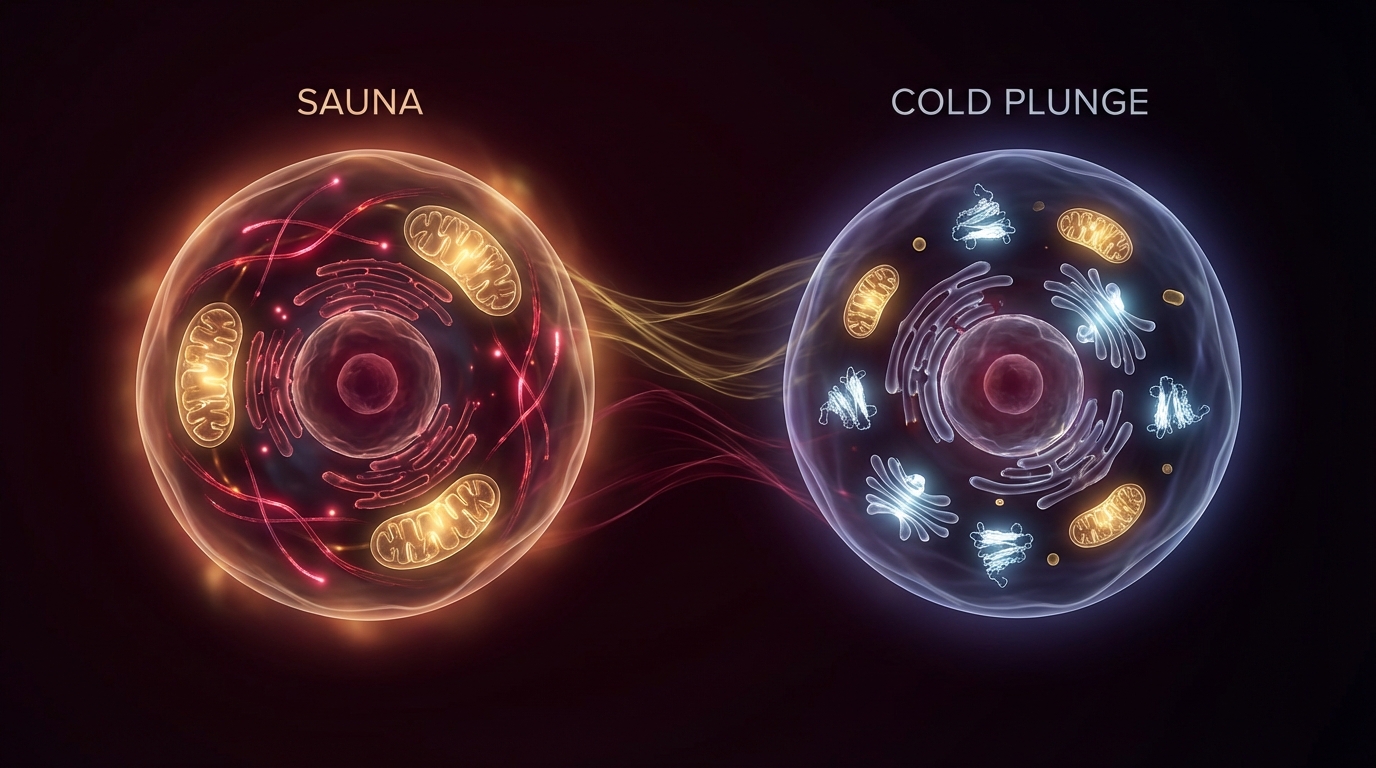
Cold-hot contrast therapy. Alternating sauna with cold plunge or cold shower potentiates cardiovascular conditioning further by cyclically driving vasodilation and vasoconstriction (“vascular gymnastics”). For most patients, this is safe and beneficial, though aggressive cold immersion following sauna is best introduced gradually in cardiac patients.
NAD+ and sauna. Heat shock protein induction and the NAD+-SIRT1 axis interact synergistically: both activate sirtuins, which regulate cellular stress responses, mitochondrial biogenesis, and inflammation. Some longevity clinics combine IV NAD+ protocols with regular sauna sessions to amplify these shared pathway effects.
Magnesium replenishment. Sweating depletes magnesium, which is frequently deficient in modern populations. Sauna users should supplement with magnesium glycinate or magnesium malate (300–400 mg elemental magnesium daily) to support cardiovascular and neuromuscular function.
Contraindications and Precautions
Sauna is safe for the vast majority of adults including those with stable cardiovascular disease, but specific contraindications apply:
Absolute contraindications:
- Recent myocardial infarction (within 4–6 weeks)
- Unstable angina or crescendo angina
- Severe aortic stenosis
- Decompensated heart failure with active fluid overload
- Severe hypertension (systolic >180 mmHg resting)
- Acute febrile illness or infection
Relative contraindications (proceed with caution, lower temperature, shorter sessions):
- Controlled atrial fibrillation (risk of rate acceleration with dehydration)
- Orthostatic hypotension
- Pregnancy (particularly first trimester, given core temperature elevation)
- Recent stroke (<3 months)
- POTS or severe dysautonomia
- Active use of antihypertensives combined with diuretics (electrolyte monitoring needed)
Drug interactions to monitor: ACE inhibitors, ARBs, and diuretics combined with sauna-related fluid and electrolyte losses can precipitate hypotension. Beta-blockers blunt the compensatory tachycardia and may impair thermoregulation. Monitoring blood pressure in the first few sauna sessions on these medications is prudent.
Related Articles
- Infrared vs Traditional Sauna: Which Delivers More?
- Sauna Frequency Guide: How Often for Maximum Benefit?
- Heat Shock Proteins: The Biology of Hormetic Heat Stress
- Contrast Therapy: Combining Heat and Cold for Recovery
- Cold Plunge Science: Evidence-Based Cold Exposure
References
- Laukkanen JA, Laukkanen T, Kunutsor SK. Cardiovascular and Other Health Benefits of Sauna Bathing: A Review of the Evidence. Mayo Clin Proc. 2018;93(8):1111–1121. PMID: 30077204
- Laukkanen T, Khan H, Zaccardi F, Laukkanen JA. Association Between Sauna Bathing and Fatal Cardiovascular and All-Cause Mortality Events. JAMA Intern Med. 2015;175(4):542–548. PMID: 25705824
- Kunutsor SK, Laukkanen T, Laukkanen JA. Sauna bathing reduces the risk of respiratory diseases: a long-term prospective cohort study. Eur J Epidemiol. 2017;32(12):1107–1111. PMID: 29209938
- Imamura M, Biro S, Kihara T, et al. Repeated thermal therapy improves impaired vascular endothelial function in patients with coronary risk factors. J Am Coll Cardiol. 2001;38(4):1083–1088. PMID: 11583886
- Tei C, Imamura T, Kinugawa K, et al. Waon Therapy for Managing Chronic Heart Failure – Results From a Multicenter Prospective Randomized WAON-CHF Study. Circ J. 2016;80(4):827–834. PMID: 27001189
- Laukkanen T, Laukkanen JA, Kunutsor SK. Sauna bathing and risk of psychotic disorders: A prospective cohort study. Med Princ Pract. 2018;27(6):562–569. PMID: 30173212
- Zaccardi F, Laukkanen T, Willeit P, Kunutsor SK, Kauhanen J, Laukkanen JA. Sauna Bathing and Incident Hypertension: A Prospective Cohort Study. Am J Hypertens. 2017;30(11):1120–1125. PMID: 28633297