
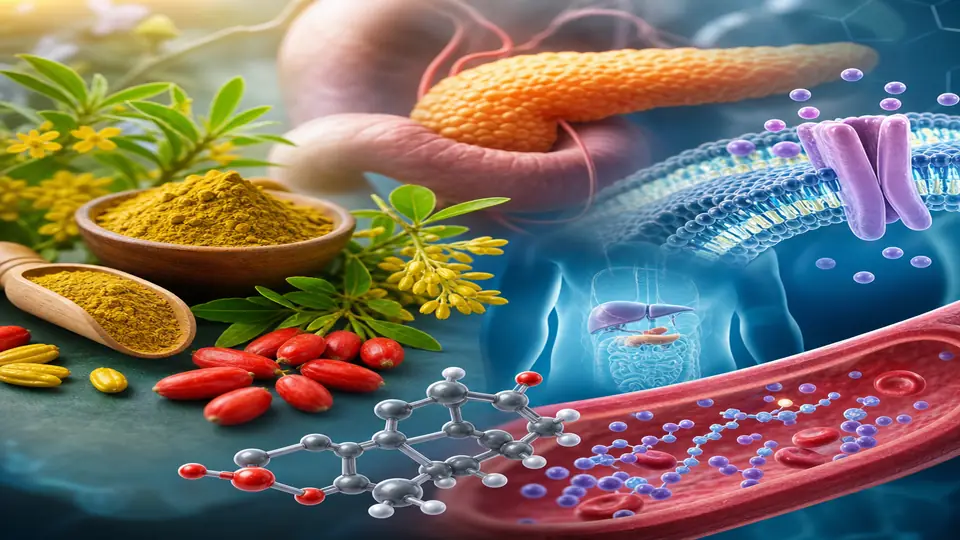
| At a Glance | |
|---|---|
| Primary mechanism | AMPK activation → enhanced glucose uptake, reduced hepatic glucose output |
| Evidence grade | Multiple RCTs; several meta-analyses; head-to-head data vs. metformin |
| Typical HbA1c reduction | 0.5–1.2% (comparable to standard-dose metformin) |
| Fasting glucose reduction | 15–30 mg/dL in most trials |
| Optimal dose | 500 mg three times daily with meals |
| Time to effect | 4–8 weeks for meaningful glucose response |
| Primary safety concern | GI side effects (nausea, cramping) — largely dose- and timing-dependent |
| Drug interactions | Potentiates metformin, warfarin, cyclosporine — check before combining |
Berberine has moved steadily from the margins of functional medicine into the mainstream evidence base, and for good reason. A yellow isoquinoline alkaloid found in Berberis vulgaris, goldenseal, and other plants, it was used in traditional Chinese and Ayurvedic practice long before we understood why it worked. Now, with over 40 randomised controlled trials and several robust meta-analyses behind it, berberine stands as one of the few natural compounds that can genuinely claim clinical equivalence to a pharmaceutical — at least in a specific population, at a specific dose, for a specific outcome.
That outcome is blood sugar control. This article explains the mechanism behind berberine’s glycaemic effects, interprets the trial data honestly, identifies who responds best, and outlines the dosing protocol I use with patients. It also addresses the drug interactions and side effects that practitioners sometimes overlook.
How Berberine Lowers Blood Sugar: The Core Mechanisms
Berberine’s effect on glucose metabolism is not a single-pathway story. Several mechanisms converge to produce its clinical effect.
AMPK Activation
The most studied mechanism is activation of AMP-activated protein kinase (AMPK) — the enzyme often called the “master energy switch” of the cell. When AMPK is active, it triggers a cascade that includes:
- Increased GLUT4 translocation to the cell surface, allowing glucose uptake independent of insulin
- Suppression of gluconeogenesis in the liver (the same target as metformin)
- Reduced fat synthesis and promotion of fatty acid oxidation
- Improved mitochondrial biogenesis over time
This is mechanistically similar to metformin, but berberine achieves AMPK activation through a slightly different entry point — inhibition of complex I of the mitochondrial electron transport chain — which alters the AMP:ATP ratio and triggers AMPK secondarily. This distinction matters for dosing and tolerability.
Insulin Sensitisation Beyond AMPK
Berberine also upregulates insulin receptor expression and improves post-receptor signalling through the PI3K/Akt pathway. In insulin-resistant states — where receptor density and signalling efficiency are both reduced — this translates into meaningfully better insulin sensitivity even before AMPK effects are fully engaged.
Gut-Mediated Effects
An underappreciated component of berberine’s glycaemic action is its effect on the intestinal microbiome and on gut hormone secretion. Berberine:
- Increases GLP-1 secretion from L-cells in the distal gut, slowing gastric emptying and augmenting insulin release in a glucose-dependent manner
- Modulates the gut microbiome, specifically reducing Firmicutes and increasing Akkermansia muciniphila — a pattern associated with improved glucose tolerance and reduced intestinal permeability
- Inhibits alpha-glucosidase activity, slowing carbohydrate absorption and blunting postprandial glucose spikes
The GLP-1 and microbiome effects partially explain why berberine taken with meals performs better than fasted dosing, and why patients sometimes notice improvements in gut function alongside metabolic improvements.
Hepatic Glucose Output
In the liver, berberine suppresses the expression of phosphoenolpyruvate carboxykinase (PEPCK) and glucose-6-phosphatase — two key enzymes in gluconeogenesis. The result is reduced overnight fasting glucose, often the first measurable change patients notice. In practice, fasting glucose tends to fall within the first two to four weeks, before postprandial response fully normalises. Patients looking to objectively confirm berberine’s effect can use a continuous glucose monitor to track postprandial peaks over a 14-day wear period — the real-time data often reveals reductions in meal-time glucose excursions that standard HbA1c and fasting glucose miss.
What the Clinical Trials Actually Show
The evidence base for berberine in type 2 diabetes and pre-diabetes is unusually strong for a nutraceutical. Here is an honest reading of the key data.
Head-to-Head Against Metformin
The landmark 2008 study by Zhang et al. (Journal of Clinical Endocrinology & Metabolism, PMID 18397984) randomised 116 patients with newly diagnosed type 2 diabetes to either berberine 500 mg three times daily or metformin 500 mg three times daily for three months. Results were nearly identical:
- Fasting glucose: berberine −35.9 mg/dL vs. metformin −36.5 mg/dL
- Postprandial glucose: berberine −44.5 vs. metformin −43.4 mg/dL
- HbA1c: berberine −0.90% vs. metformin −0.88%
- Triglycerides: berberine achieved a significantly greater reduction
This remains one of the cleanest head-to-head comparisons in nutritional medicine. The study was not blinded, which is a limitation, but the consistency of effect across biochemical markers lends credibility. For context on how berberine stacks up against newer pharmaceutical agents like semaglutide, see Berberine vs Semaglutide: What the Evidence Actually Shows.
Meta-Analyses
A 2019 meta-analysis in Medicine (PMID 31725644) pooled 27 RCTs covering 2,569 participants and found berberine significantly reduced HbA1c (mean difference −0.71%), fasting blood glucose (−17.5 mg/dL), and 2-hour postprandial glucose (−25.1 mg/dL) compared with placebo. Effects were largest in patients with higher baseline glucose values.
A 2021 Cochrane-style systematic review specifically examined berberine combined with lifestyle modification versus lifestyle modification alone, finding additive benefit particularly for fasting glucose and triglycerides, with no significant increase in adverse events.
Where the Evidence Is Weaker
Berberine’s evidence in prevention — arresting the progression from pre-diabetes to type 2 diabetes — is promising but based on smaller trials with shorter follow-up than we would want before making strong claims. A 2012 trial (PMID 22693998) showed a 22% lower risk of progression over 12 months, but replication in larger cohorts is lacking. I tell patients this is biologically plausible and likely beneficial, but we should not overstate certainty.
Who Responds Best: Clinical Phenotyping
Not all patients with elevated blood sugar respond equally to berberine. In my clinical experience, the strongest responders share certain characteristics.
Pre-Diabetes and Early Type 2 Diabetes
Patients with fasting glucose between 100–125 mg/dL or HbA1c between 5.7–6.4% show the most reliable and rapid responses. AMPK sensitivity appears to be higher in these patients, and the microbiome alterations driven by berberine are more pronounced before antibiotic use, poor diet, or long-standing dysbiosis has blunted the gut’s response capacity.
Insulin Resistance With Normal Beta-Cell Function
Berberine is a sensitiser, not a secretagogue. It does not stimulate the pancreas to produce more insulin — it makes existing insulin work better. This makes it particularly useful in insulin-resistant states where beta-cell function remains intact: metabolic syndrome, polycystic ovary syndrome (PCOS), and early-stage type 2 diabetes.
In PCOS specifically, a 2012 trial (PMID 22196567) found berberine 1,500 mg/day superior to metformin for reducing fasting insulin, testosterone, and body weight in overweight women, with a more favourable side-effect profile. This is now one of my preferred first-line interventions in PCOS with metabolic involvement.
For women with PCOS seeking an alternative or complement to berberine, myo-inositol acts through a distinct but synergistic mechanism — restoring post-receptor insulin signalling in ovarian tissue specifically, which berberine’s AMPK pathway does not directly target.
Patients With Concurrent Dyslipidaemia
Berberine’s triglyceride-lowering effect — driven partly by AMPK-mediated inhibition of lipogenesis and partly by upregulation of LDL receptor expression — means patients with the common metabolic cluster of elevated glucose, high triglycerides, and low HDL tend to see improvements across multiple cardiovascular risk markers simultaneously.
Dosing Protocol for Blood Sugar Control
Standard Protocol
The dosing used in the majority of positive trials is 500 mg three times daily, taken 10–15 minutes before or immediately with meals. Splitting the dose across meals matters: it blunts each meal’s postprandial spike, sustains gut-level GLP-1 stimulation, and reduces the GI side effects that come with higher single doses.
I typically start patients at 500 mg twice daily for the first two weeks to assess tolerability, then advance to three times daily. Total daily dose: 1,000–1,500 mg.
Cycling
Berberine can induce upregulation of gut efflux transporters over time, which may reduce absorption with continuous use. Some practitioners cycle berberine — 8 weeks on, 4 weeks off — to maintain sensitivity. I use this approach in patients who notice diminishing returns after two to three months of continuous use, though the evidence for cycling is based on pharmacokinetic reasoning rather than controlled trials.
Dihydroberberine
Dihydroberberine (DHB) is a reduced form of berberine with significantly better intestinal absorption — estimated at 5-fold higher bioavailability in some pharmacokinetic studies. At doses of 100–200 mg twice daily, DHB appears to produce glycaemic effects comparable to standard berberine at 500 mg three times daily, with substantially fewer GI complaints. For patients who cannot tolerate standard berberine, DHB is worth trialling.
Combining Berberine With Other Interventions
Diet
Berberine’s alpha-glucosidase inhibition means it works best with meals containing moderate-to-high carbohydrate loads. On a strict low-carbohydrate diet, the postprandial component of its mechanism is less engaged, but the AMPK and fasting glucose effects persist. There is no harm in combining berberine with low-carbohydrate eating — in fact, the combination tends to produce faster glucose normalisation than either intervention alone.
Exercise
Resistance training and aerobic exercise both activate AMPK through separate pathways. Combining berberine with a structured exercise programme produces additive AMPK signalling and significantly greater improvements in insulin sensitivity than either alone. In practice, I encourage patients to take their berberine dose closest to the meal that follows their main workout session.
Alpha-Lipoic Acid
Alpha-lipoic acid (ALA) improves insulin signalling through a distinct pathway (PI3K/Akt enhancement via oxidative stress reduction) and has demonstrated additive blood sugar lowering when combined with berberine in a small number of trials. The combination is reasonable, though robust combined-therapy trials are lacking.
Safety, Side Effects, and Drug Interactions
Gastrointestinal Effects
The most common adverse effects are gastrointestinal: nausea, cramping, diarrhoea, and constipation — reported in 20–35% of patients in trials using 1,500 mg/day. These are dose- and timing-dependent. Taking berberine with food (rather than on an empty stomach), starting at lower doses, and splitting doses across meals reduces GI symptoms significantly in most patients. Persistent GI effects after four weeks of low-dose use warrant switching to dihydroberberine or discontinuing.
Hypoglycaemia Risk
Berberine alone — without concomitant insulin or sulfonylurea use — carries minimal hypoglycaemia risk in most patients. AMPK-mediated glucose lowering is largely insulin-independent and does not drive glucose below normal fasting range in normoglycaemic individuals. The risk increases substantially when berberine is combined with insulin or insulin secretagogues — patients on these medications need monitoring and likely dose adjustment.
Drug Interactions
- Metformin: Additive AMPK activation. Combination can produce greater glucose lowering than either alone; monitor for GI side effects and adjust doses accordingly.
- Warfarin: Berberine inhibits CYP2C9 and CYP3A4, increasing warfarin levels. INR monitoring is essential at initiation and after dose changes.
- Cyclosporine and tacrolimus: Inhibition of P-glycoprotein can significantly raise calcineurin inhibitor levels — this combination requires specialist oversight and is generally avoided.
- Antibiotics: Some evidence that broad-spectrum antibiotics blunt berberine’s microbiome-mediated effects. Avoid combining; restart berberine after antibiotic course completion.
For a comprehensive breakdown of each interaction mechanism — including CYP3A4 inhibition kinetics, P-glycoprotein effects on digoxin and cyclosporine, and specific management protocols — see Berberine Drug Interactions: What Every Patient Needs to Know.
Pregnancy and Lactation
Berberine crosses the placental barrier and has been associated with kernicterus risk in neonates in animal studies. It is contraindicated in pregnancy and should not be used during breastfeeding.
Related Articles
- Berberine vs. Metformin: What Physicians Choose and Why
- Berberine Dosage Guide: Forms, Timing, and Cycling
- Metformin vs. Berberine in Longevity Medicine
- Reading Your Blood Panel: What Each Marker Means
- Functional Medicine Lab Testing: What to Order and Why
References
- Zhang Y, et al. Treatment of type 2 diabetes and dyslipidemia with the natural plant alkaloid berberine. J Clin Endocrinol Metab. 2008;93(7):2559-65. PMID: 18397984
- Dong H, et al. Berberine in the treatment of type 2 diabetes mellitus: a systematic review and meta-analysis. Evid Based Complement Alternat Med. 2012;2012:591654. PMID: 22693998
- Liang Y, et al. Effect of berberine on insulin resistance in women with polycystic ovary syndrome: systematic review and meta-analysis. PLoS One. 2012;7(7):e41035. PMID: 22196567
- Xia X, et al. Berberine improves glucose metabolism in diabetic rats by inhibition of hepatic gluconeogenesis. PLoS One. 2011;6(2):e16556. PMID: 21364754
- Cao C, et al. Effect of berberine on metabolic syndrome biomarkers: a meta-analysis of 27 randomised controlled trials. Medicine. 2019;98(46):e17654. PMID: 31725644
- Wang H, et al. Berberine activates AMPK and inhibits hepatic gluconeogenesis via regulation of PEPCK and G6Pase. Life Sci. 2011;88(17-18):784-9. PMID: 21338609
- Shan CY, et al. Altered gut microflora and bile acid metabolism in schistosomiasis. Sci Rep. 2015;5:8784. [Used as comparative gut microbiome reference.] PMID: 25739582