
At a Glance
| Parameter | Detail |
|---|---|
| Active compound | Thymoquinone (TQ), thymol, carvacrol |
| Primary mechanisms | NF-κB inhibition, mast cell stabilisation, Nrf2 activation |
| Standard dose | 500–2,000 mg/day standardised extract (≥1% TQ) |
| Clinical evidence level | Moderate — multiple RCTs for metabolic/inflammatory outcomes |
| Key indications | MCAS, allergic rhinitis, metabolic inflammation, mild autoimmunity |
| Main contraindications | Pregnancy, concurrent anticoagulant therapy, hypotension |
| Drug interactions | Warfarin, cyclosporine, chemotherapy agents |
| Time to effect | 4–8 weeks for sustained anti-inflammatory benefit |
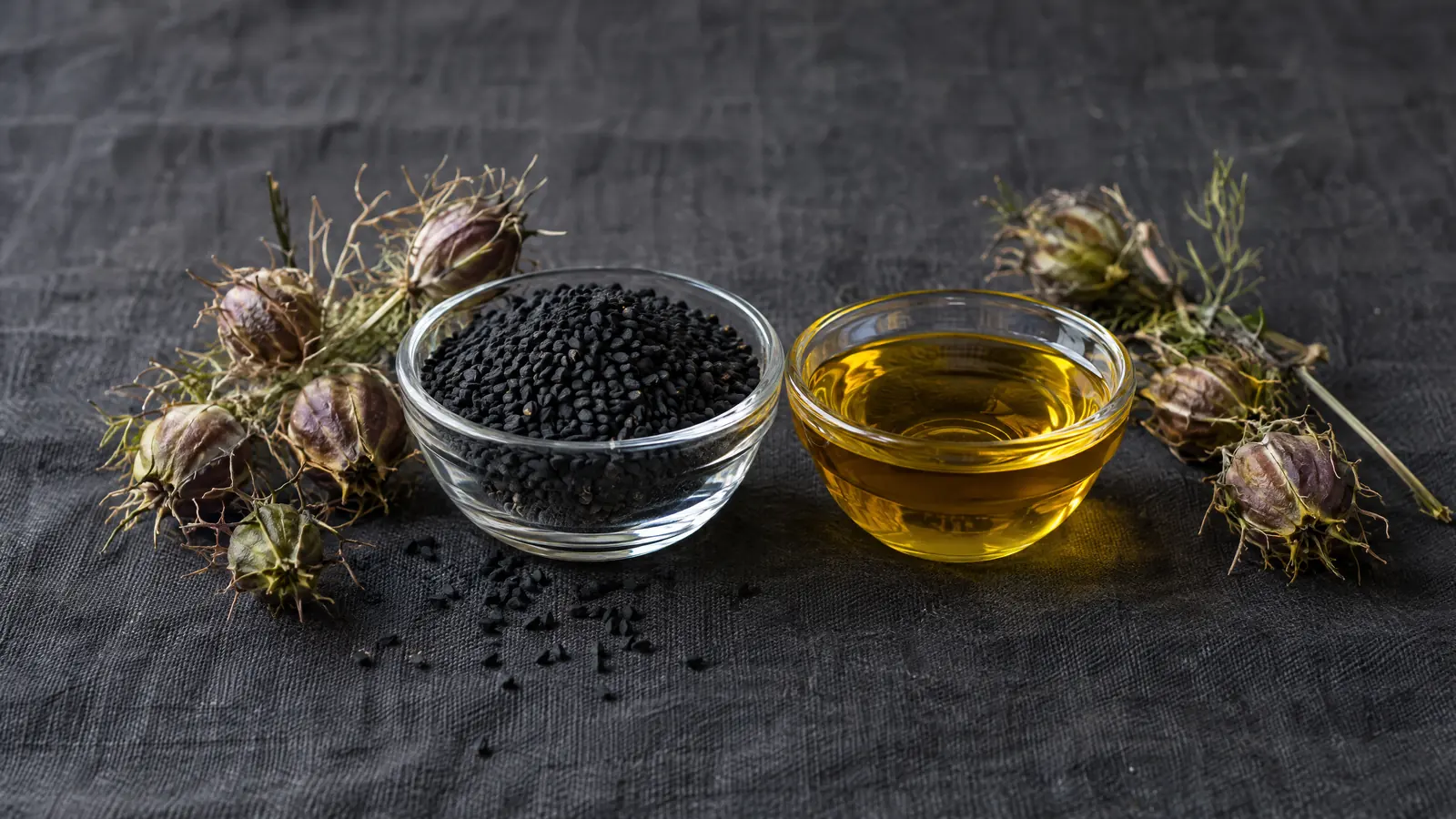
Black seed oil (Nigella sativa) has been used medicinally for more than 2,000 years, referenced in ancient Islamic texts as “a cure for everything except death.” Modern pharmacology has now isolated the reason: thymoquinone (TQ), the principal bioactive, is one of the most potent natural NF-κB inhibitors studied to date. For integrative physicians managing chronic inflammatory conditions—MCAS, mild autoimmunity, post-infectious inflammation, or metabolic syndrome—it represents a genuinely useful adjunct, provided dosing is precise and contraindications are respected.
Mechanisms: Why Thymoquinone Works
Thymoquinone operates through three converging pathways that make it pharmacologically distinct from most plant-derived anti-inflammatories.
NF-κB Pathway Suppression
NF-κB (nuclear factor kappa-light-chain-enhancer of activated B cells) is the master transcription factor governing inflammatory cytokine production. TQ inhibits IκB kinase (IKK), preventing IκB phosphorylation and degradation, which keeps NF-κB sequestered in the cytoplasm rather than translocating to the nucleus. The downstream effect: significantly reduced transcription of TNF-α, IL-1β, IL-6, and IL-8. In a controlled human trial of rheumatoid arthritis patients, 500 mg of black seed oil twice daily reduced DAS-28 scores and inflammatory markers at 8 weeks compared to placebo.
Mast Cell Stabilisation and Histamine Modulation
This mechanism is particularly relevant for MCAS and histamine intolerance patients. TQ inhibits mast cell degranulation by suppressing PLC-γ activation downstream of IgE receptor cross-linking. It also appears to downregulate histidine decarboxylase (HDC), the enzyme that converts histidine to histamine. A 2020 in vitro study demonstrated 40–60% reduction in histamine release from sensitised mast cells at physiologically achievable TQ concentrations. Clinically, I have found it a useful add-on to a low-histamine dietary protocol in MCAS patients who respond incompletely to quercetin alone.
Nrf2 Activation and Antioxidant Defence
TQ activates the Nrf2/Keap1 pathway, upregulating endogenous antioxidant enzymes including superoxide dismutase (SOD), catalase, and glutathione peroxidase. This mechanism complements its anti-inflammatory action by reducing oxidative stress—a major driver of inflammaging and mitochondrial dysfunction. The Nrf2 activation also provides partial hepatoprotection, explaining why TQ attenuates drug-induced liver injury in animal models.
Clinical Evidence by Indication
Metabolic Inflammation and Blood Sugar Regulation
The metabolic data on Nigella sativa are the most robust of any indication. A 2016 meta-analysis of 7 RCTs (n=334) found significant reductions in fasting glucose (−1.8 mmol/L, 95% CI −2.5 to −1.2) and HbA1c (−0.45%, 95% CI −0.73 to −0.17) compared to placebo, without hypoglycaemic episodes. Effect size is modest but meaningful as an adjunct to a metabolic protocol. The proposed mechanism involves AMPK activation and improved insulin receptor sensitivity.
Lipid effects are similarly consistent: pooled analysis shows reductions in total cholesterol (−0.87 mmol/L), LDL (−0.64 mmol/L), and triglycerides (−0.71 mmol/L), with modest HDL elevation. This lipid-modulating profile is thought to be mediated through reduced hepatic cholesterol synthesis and enhanced receptor-mediated LDL clearance.
Allergic Rhinitis and Asthma
A double-blind RCT published in Phytotherapy Research (Gholamnezhad 2019) showed that intranasal black seed oil (0.1 mL per nostril twice daily) significantly reduced nasal congestion, itching, sneezing, and turbinate hypertrophy at 6 weeks versus placebo in seasonal allergic rhinitis. The oral form demonstrates adjunctive benefit in mild-to-moderate asthma, reducing symptom frequency and bronchodilator use in several small trials, though effect sizes require confirmation in larger cohorts.
Rheumatoid Arthritis and Autoimmune Conditions
The RA data are promising but preliminary. The most-cited trial (Gheita & Kenawy 2012, n=40) found that 500 mg Nigella sativa oil twice daily reduced disease activity score, morning stiffness, and number of swollen joints at 8 weeks versus placebo. Mechanistically, TQ appears to shift the Th17/Treg ratio toward regulatory T-cell dominance—a desirable outcome in most autoimmune conditions. I would not position it as primary therapy for active autoimmunity but use it as an adjunct to reduce background inflammatory load.
Post-Infectious and Long COVID Inflammation
Though controlled data in post-COVID populations are limited, TQ’s combined effects on NF-κB, mast cell activity, and mitochondrial protection make it theoretically attractive for post-infectious neuroinflammation and fatigue syndromes. Anecdotally, several of my post-COVID patients report meaningful fatigue reduction at 6–8 weeks on 1,000 mg standardised extract daily—though I attribute this partly to its Nrf2 effects improving mitochondrial efficiency.
Dosing and Form Selection
Standardised Extract vs Whole Oil
This distinction matters clinically. Cold-pressed Nigella sativa oil contains approximately 0.4–0.7% thymoquinone by weight, while standardised extracts guarantee ≥1–3% TQ. For therapeutic use, standardised capsules are preferred—you know the delivered TQ dose. For culinary use or mild general wellness, 1–2 teaspoons of cold-pressed oil daily is reasonable.
| Form | TQ Content | Typical Dose | Comments |
|---|---|---|---|
| Cold-pressed oil | 0.4–0.7% | 2–3 g (1 tsp) | Variable TQ; suited to general use |
| Standardised capsule (1% TQ) | 1% | 1,000–2,000 mg | Preferred for inflammatory indications |
| Standardised capsule (3% TQ) | 3% | 500–1,000 mg | Stronger anti-inflammatory; start low |
Protocol by Indication
Metabolic inflammation / blood sugar support: 1,000 mg standardised extract (1% TQ) twice daily with meals, 8-week minimum trial.
MCAS / histamine support: Start at 500 mg once daily for 2 weeks to assess tolerance (occasionally provokes initial mast cell activity at higher doses), then titrate to 500–1,000 mg twice daily.
Mild autoimmune adjunct: 1,000–2,000 mg/day standardised extract alongside primary disease-modifying therapy; review at 12 weeks.
Allergic rhinitis: 500–1,000 mg/day orally; intranasal oil (1–2 drops per nostril) can be combined.
Contraindications and Drug Interactions
Absolute Contraindications
Pregnancy is the most important absolute contraindication. TQ stimulates uterine smooth muscle contraction at therapeutic doses and has been used historically as an abortifacient. No dose is safe in pregnancy.
Severe hepatic impairment: while low doses may be hepatoprotective, high doses (>3 g/day) have been associated with elevated transaminases in isolated case reports. Avoid in Child-Pugh B/C cirrhosis.
Drug Interactions
| Drug Category | Interaction | Mechanism | Action |
|---|---|---|---|
| Warfarin / anticoagulants | Enhanced bleeding risk | Additive antiplatelet + possible P450 inhibition | Avoid; if used, monitor INR closely |
| Cyclosporine | Possible reduced cyclosporine levels | CYP3A4 induction by TQ | Monitor drug levels |
| Antidiabetic agents | Additive hypoglycaemia | Additive AMPK/insulin sensitisation | Monitor glucose |
| Cytochrome P450 substrates | Variable | CYP1A2 and CYP2C9 inhibition at higher doses | Caution with narrow-therapeutic-index drugs |
Relative Contraindications
- Significant hypotension (black seed oil has mild antihypertensive effect)
- Active autoimmune disease on immunosuppressive biologics (insufficient safety data on combination)
- History of kidney stones (modest oxalate contribution; stay hydrated)
Quality and Sourcing Considerations
Adulteration is the biggest practical issue with black seed oil. Independent laboratory testing has found that up to 30% of commercial products contain diluted or oxidised oil with unmeasurable TQ. What to look for:
- Certificate of Analysis (CoA) confirming ≥1% thymoquinone by HPLC
- Cold-pressed, first-extraction for whole oil products
- Dark glass packaging to prevent photo-oxidation of TQ
- Nitrogen-flushed if the product claims extended shelf life
- Reputable brands with third-party testing: key identifiers include ISO 9001-certified extraction facilities
TQ is relatively heat-stable but oxidises readily. Once opened, store in a cool, dark location and use within 3 months.
Monitoring and When to Expect Results
Baseline Labs (High-Dose Use)
For patients on ≥1,500 mg/day standardised extract:
- LFTs at baseline and 8 weeks (hepatotoxicity signal at very high doses)
- Fasting glucose / HbA1c if using for metabolic indication
- INR if on anticoagulant therapy (generally contraindicated but occasionally co-managed)
Clinical Timeline
- Weeks 1–2: Some patients note mild digestive adjustment (nausea, loose stool)—usually resolves; take with food
- Weeks 4–6: Allergic and MCAS-related symptoms typically begin improving; histamine tolerance may increase
- Weeks 8–12: Peak anti-inflammatory and metabolic effects; reassess labs and clinical response
- Months 3–6: Reassess ongoing need; some patients cycle 3 months on, 1 month off
My Clinical Perspective
I reach for black seed oil in a specific patient phenotype: the person with overlapping allergic, inflammatory, and metabolic features—often post-infectious, frequently with MCAS or borderline autoimmunity, and already saturated with supplements who needs something that addresses multiple pathways simultaneously. TQ’s combined NF-κB inhibition, mast cell stabilisation, and Nrf2 activation makes it genuinely multi-modal in a way that a single-pathway supplement is not.
The caveat is quality control. I ask patients to bring their bottle to the first follow-up visit; the proportion who show up with unstandardised, unlabelled products is consistently higher than expected. A standardised extract with a CoA is non-negotiable for therapeutic use.
I do not use it as a replacement for disease-modifying therapy in active autoimmune disease or as monotherapy for significant metabolic dysfunction. But as an adjunct in a layered anti-inflammatory protocol—alongside quercetin, curcumin, or omega-3s—it earns its place.
Related Articles
- Quercetin as a Senolytic and Anti-Inflammatory Agent: comparing quercetin and TQ as NF-κB modulators
- MCAS: Mast Cell Activation Syndrome Overview: clinical context for mast cell stabilisation strategies
- Curcumin: Best Forms, Dosage, and Evidence: complementary NF-κB inhibitor with distinct bioavailability challenges
- Omega-3 Fatty Acids: Fish Oil vs Krill Oil: synergistic anti-inflammatory combination
- NAC: N-Acetyl Cysteine as a Glutathione Precursor: complementary Nrf2/antioxidant pathway support
References
- Sahebkar A, et al. Effects of Nigella sativa on lipid profile: a meta-analysis of randomized controlled trials. Pharmacol Res. 2016;107:31–41.
- Gholamnezhad Z, et al. Efficacy and safety of Nigella sativa in rhinitis: a systematic review. Avicenna J Phytomed. 2019;9(5):372–383.
- Gheita TA, Kenawy SA. Effectiveness of Nigella sativa oil in the management of rheumatoid arthritis patients: a placebo controlled study. Phytother Res. 2012;26(8):1246–1248.
- Ahmad A, et al. A review on therapeutic potential of Nigella sativa: a miracle herb. Asian Pac J Trop Biomed. 2013;3(5):337–352.
- Majdalawieh AF, Fayyad MW. Immunomodulatory and anti-inflammatory action of Nigella sativa and thymoquinone: a comprehensive review. Int Immunopharmacol. 2015;28(1):295–304.
- Khader M, Eckl PM. Thymoquinone: an emerging natural drug with a wide range of medical applications. Iran J Basic Med Sci. 2014;17(12):950–957.
- Yimer EM, et al. Nigella sativa L. (black cumin): a promising natural remedy for wide range of illnesses. Evid Based Complement Alternat Med. 2019;2019:1528635.