At a Glance
| Property | Value |
|---|---|
| Evidence Level | Emerging (strong preclinical; early human trials promising but small) |
| Primary Use | Selective clearance of senescent cells to reduce inflammation and age-related dysfunction |
| Key Mechanism | Quercetin inhibits pro-survival pathways (PI3K, BCL-2 family) in senescent cells, tipping them toward apoptosis. Quercetin also enhances the bioavailability of resveratrol by competing for the same glucuronidation enzymes, making the two polyphenols a particularly synergistic pair in longevity protocols |
Quercetin as a Senolytic: The Science of Clearing Zombie Cells
senolytic therapy for agings may be the most important category of longevity intervention to emerge in the last decade. The concept is elegantly simple: identify and selectively destroy senescent cells — cells that have permanently stopped dividing but refuse to die — to rejuvenate tissues and reduce age-related inflammation. Understanding the relationship between senescent cells and inflammaging helps clarify why quercetin is so relevant to biological aging — read our full inflammaging explainer for the complete picture.
Quercetin, a flavonoid found in onions, apples, and berries, is one of the few compounds that has been shown to have senolytic activity in human studies. But the nuance matters. Quercetin alone is a weak senolytic. Its power comes from combination — specifically with dasatinib (a prescription cancer drug) or potentially with fisetin (another flavonoid).
This is investigational medicine. I want to be precise about what we know, what we suspect, and what remains speculation.
For patients building a broad cellular defense stack alongside quercetin, sulforaphane provides complementary protection through the NRF2/KEAP1 pathway — upregulating the phase II detoxification enzymes and HO-1 that reduce the chronic oxidative burden which accelerates senescence. Our clinical review of sulforaphane and NRF2 activation covers bioavailability, dosing, and which patient profiles benefit most.
What Are Senescent Cells?
Cellular senescence is a permanent cell cycle arrest triggered by:
- DNA damage (telomere shortening, radiation, oxidative stress)
- Oncogene activation (a tumor-suppression mechanism)
- mitochondrial dysfunction and cellular energy
- Inflammatory signaling
When a cell becomes senescent, it stops dividing — which is protective against cancer. But instead of undergoing apoptosis (programmed cell death), it persists and adopts a secretory phenotype called the SASP (Senescence-Associated Secretory Phenotype).
The SASP Problem
Senescent cells secrete a cocktail of inflammatory cytokines (IL-6, IL-8, TNF-alpha), matrix metalloproteinases (MMPs), growth factors, and chemokines that:
- Drive chronic inflammation pathways (“inflammaging”)
- Damage surrounding healthy cells (paracrine senescence — spreading senescence to neighbors)
- Degrade tissue architecture (MMPs break down extracellular matrix)
- Impair stem cell function (reducing regenerative capacity)
- Promote fibrosis (abnormal tissue scarring)
Senescent cells accumulate exponentially with age. By 80, they may constitute 10-15% of cells in some tissues. The chronic inflammatory burden they create is implicated in virtually every age-related disease: cardiovascular disease, neurodegeneration, osteoarthritis, diabetes, pulmonary fibrosis, and cancer.
The Senolytic Strategy
Kirkland and colleagues at the Mayo Clinic pioneered the senolytic approach: rather than suppressing the SASP (which requires continuous treatment), selectively kill the senescent cells themselves. This is the “hit and run” strategy — a brief, intermittent treatment that destroys senescent cells, followed by weeks or months of no treatment while the body repairs the cleared tissue.
The key insight: senescent cells depend on specific anti-apoptotic (pro-survival) pathways to resist cell death. These include BCL-2/BCL-xL, PI3K/AKT, p53/p21, and SCAPs (senescent cell anti-apoptotic pathways). Blocking these pathways tips senescent cells toward apoptosis while sparing healthy cells, which do not depend on them for survival.
Quercetin + Dasatinib: The Most Studied Protocol
The Science
Zhu et al. at Mayo Clinic identified the quercetin + dasatinib combination through systematic screening of senolytic candidates:
Dasatinib — a tyrosine kinase inhibitor approved for chronic myeloid leukemia. It targets multiple SCAPs, particularly in senescent adipocyte precursor cells and endothelial cells.
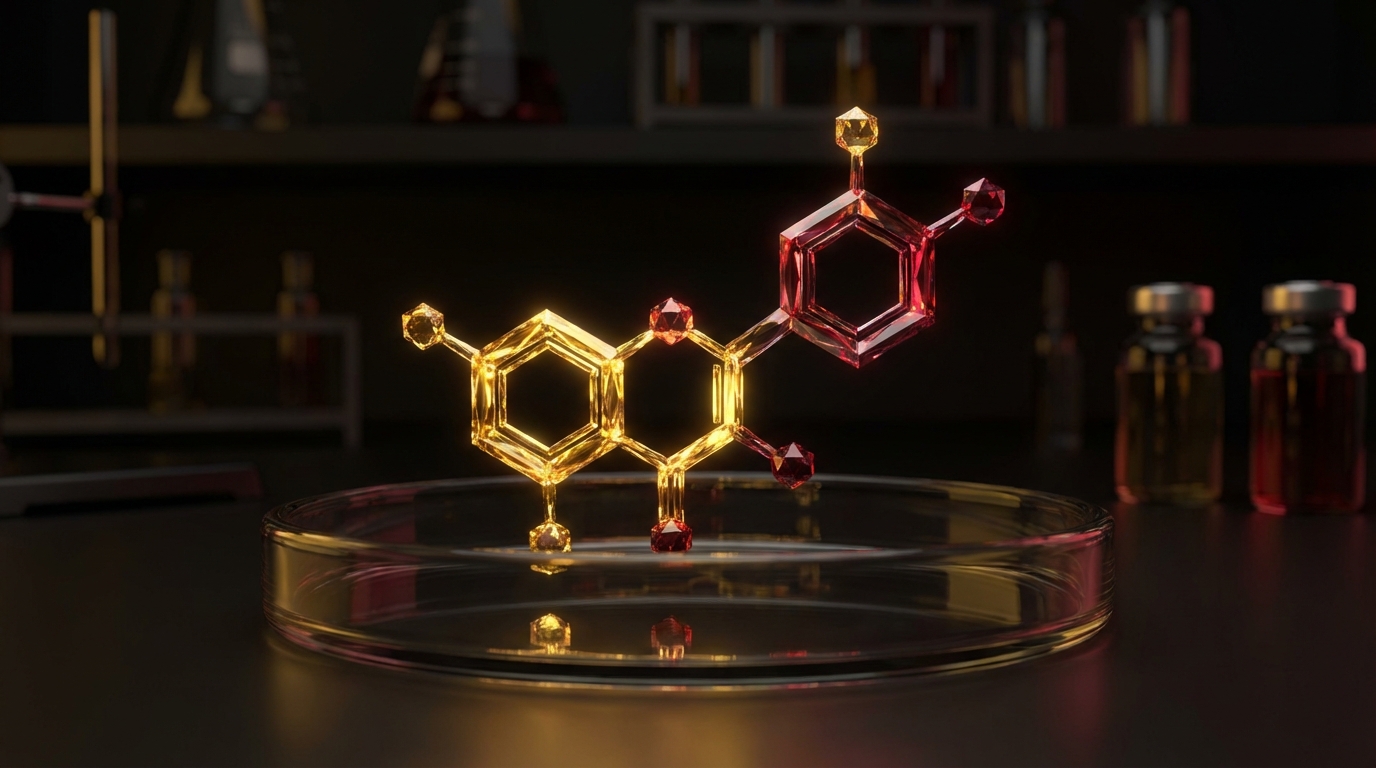
Quercetin — a naturally occurring flavonoid that inhibits PI3K, BCL-2 family members, and serpine1/PAI-1 pathways. It is more effective against senescent bone marrow stem cells and human umbilical vein endothelial cells.
The combination is synergistic because quercetin and dasatinib target different cell types and different survival pathways. Together, they clear a broader range of senescent cells than either compound alone (1).
The Human Evidence
Hickson et al. (2019): The first human senolytic trial. 9 patients with diabetic kidney disease received 3 days of dasatinib (100 mg) + quercetin (1,000 mg). Results: significant reduction of senescent cell markers in adipose tissue (p16INK4a, SA-beta-gal) and circulating SASP factors, with effects persisting for at least 11 days after the 3-day treatment (2).
Justice et al. (2019): 14 patients with idiopathic pulmonary fibrosis received intermittent D+Q (3 days on, 4 weeks off) for 3 weeks. Results: improved physical function (6-minute walk distance increased by 21.5 meters), improved chair-stand test, and stable pulmonary function (3).
These are small, open-label, early-phase studies. They are not definitive. But they demonstrate proof-of-concept in humans — senescent cells can be cleared with pharmacological intervention, and the clearance produces measurable functional improvements.
The Standard Protocol
| Parameter | Detail |
|---|---|
| Dasatinib | 100 mg/day |
| Quercetin | 1,000 mg/day (500 mg twice daily) |
| Duration | 3 consecutive days |
| Frequency | Once per month (some protocols use once every 2-3 months) |
| Timing | Both taken with a fat-containing meal (quercetin is fat-soluble) |
Important: Dasatinib is a prescription medication with significant side effects (edema, pleural effusions, myelosuppression, QT prolongation). This protocol should only be undertaken under physician supervision with appropriate monitoring. For a comprehensive clinical guide covering patient selection, ECG requirements, drug interactions, cycling intervals, and lab monitoring, see our dedicated dasatinib + quercetin protocol article.
Quercetin Without Dasatinib: OTC Options
For those who do not have access to dasatinib (or whose physician is unwilling to prescribe it off-label), the question becomes: can quercetin-based senolytic protocols work without the prescription component?
Quercetin Alone
Quercetin alone has modest senolytic activity — it clears senescent cells in some cell types (endothelial cells, bone marrow stem cells) but not others (adipose progenitors, fibroblasts). As a standalone senolytic, it is insufficient for comprehensive senescent cell clearance.
However, quercetin does have independent benefits:
- Anti-inflammatory (NF-kB inhibition)
- Antioxidant
- Immune-modulating (mast cell stabilization — useful for allergies and histamine intolerance)
- Potential anti-viral activity (zinc ionophore — enhances intracellular zinc levels)
For patients requiring broader mast cell stabilisation alongside quercetin, black seed oil (thymoquinone) provides complementary NF-κB inhibition and direct suppression of IgE-mediated degranulation, making the two supplements synergistic in high-histamine phenotypes.
Quercetin + Fisetin
Fisetin is a flavonoid (found in strawberries) with its own senolytic properties. Yousefzadeh et al. demonstrated that fisetin reduced senescent cell burden and extended median and maximum lifespan in aged mice — with one of the largest lifespan extension effects observed for any senolytic (4).
The combination of quercetin + fisetin is used by some longevity practitioners as an OTC senolytic protocol:
Proposed protocol:
- Quercetin: 500 mg twice daily (1,000 mg total)
- Fisetin: 500 mg twice daily (1,000 mg total)
- Duration: 2-3 consecutive days per month
- Take with fat-containing meals
Evidence level: This is theoretical. There are no published human trials of the quercetin + fisetin combination for senolytic purposes. The rationale is mechanistically sound (both target different anti-apoptotic pathways), and both compounds individually have senolytic evidence in preclinical models, but the combination has not been validated in humans.
Fisetin Alone
Fisetin is being evaluated as a standalone senolytic in the AFFIRM trial (led by Mayo Clinic). Until those results are published, fisetin’s senolytic efficacy in humans remains unconfirmed. Preliminary data is encouraging based on the dramatic preclinical results, but I emphasize: the mouse data has not yet been confirmed in humans.
Dosing Quercetin for Senolytic Use
Bioavailability Considerations
Like curcumin, quercetin has poor oral bioavailability (~2%). Enhanced formulations exist:
- Quercetin phytosome (Quercefit): Phospholipid complex with 20x improved absorption
- Quercetin with bromelain: Bromelain may modestly improve absorption
- Quercetin dihydrate: Standard form, well-studied but poorly absorbed
For senolytic purposes, higher doses compensate for poor absorption. The 1,000 mg dose used in the D+Q trials achieves adequate tissue levels despite the low bioavailability.
Non-Senolytic Quercetin Benefits
Even outside of senolytic protocols, quercetin at 500-1,000 mg/day has evidence for:
- Reducing blood pressure (meta-analysis: -3.4 mmHg systolic)
- Anti-allergy effects (mast cell stabilization)
- Exercise performance (modest VO2 max improvement in some studies)
- Upper respiratory infection reduction (combined with vitamin C)
For patients requiring stronger mast cell stabilization — particularly in MCAS or post-infectious inflammatory phenotypes — quercetin pairs well with palmitoylethanolamide (PEA), an endogenous lipid mediator that reduces mast cell degranulation via PPAR-α activation, a mechanism complementary to quercetin’s NF-κB inhibition.
Safety and Monitoring
Quercetin Safety
Quercetin is generally well-tolerated at doses up to 1,000 mg/day:
- Mild GI effects in some users
- Headache (rare)
- Drug interactions: quercetin inhibits CYP3A4 and CYP2C8, potentially increasing levels of certain medications (similar to grapefruit juice)
- May interact with fluoroquinolone antibiotics (competitive binding)
Dasatinib Safety (Prescription)
Dasatinib carries meaningful risks even at the 3-day senolytic dosing schedule:
- Pleural and pericardial effusions
- Edema
- Myelosuppression (reduced blood cell counts)
- QT prolongation
- GI effects (nausea, diarrhea)
Monitoring for D+Q protocol:
- CBC before and 1 week after each 3-day course
- ECG at baseline (QTc assessment)
- Chest X-ray if new shortness of breath develops
- Liver function tests at baseline and 1 month
The Current State of the Evidence
Let me be honest about where we stand:
What is established:
- Senescent cells accumulate with age and drive age-related pathology
- The D+Q combination clears senescent cells in humans (small trials)
- Senescent cell clearance produces measurable functional improvements
What is promising but unproven:
- Whether intermittent senolytic treatment extends human lifespan
- Whether OTC combinations (quercetin + fisetin) achieve meaningful senolytic effects in humans
- The optimal frequency and duration of senolytic courses
- Long-term safety of repeated senolytic interventions
What is speculative:
- Whether senolytics can prevent age-related disease, not just treat it
- Optimal age to begin senolytic protocols
- Whether senolytics interact positively or negatively with other longevity interventions
This is early-stage science with extraordinary potential. The research direction is among the most exciting in longevity medicine. But it is not yet established clinical practice, and anyone claiming otherwise is getting ahead of the data.
The Bottom Line
Quercetin’s senolytic potential is real but context-dependent. The quercetin + dasatinib combination has human proof-of-concept data showing senescent cell clearance and functional improvement. The quercetin + fisetin combination is a promising OTC alternative with strong preclinical support but no human validation. Quercetin alone is an insufficient senolytic. The field is early — I follow it closely because it may represent one of the most important longevity interventions of the coming decade. But today, I classify it as promising investigational medicine, not standard of care. In my clinical experience, the patients best suited for this approach are those who understand the evidence limitations and are willing to participate in what is essentially self-directed translational research under physician guidance.
References
-
Zhu Y, Tchkonia T, Pirtskhalava T, et al. The Achilles’ heel of senescent cells: from transcriptome to senolytic drugs. Aging Cell. 2015;14(4):644-658. doi:10.1111/acel.12344
-
Hickson LJ, Langhi Prata LGP, Boez SA, et al. Senolytics decrease senescent cells in humans: preliminary report from a clinical trial of dasatinib plus quercetin in individuals with diabetic kidney disease. EBioMedicine. 2019;47:446-456. doi:10.1016/j.ebiom.2019.08.069
-
Justice JN, Nambiar AM, Tchkonia T, et al. Senolytics in idiopathic pulmonary fibrosis: results from a first-in-human, open-label, pilot study. EBioMedicine. 2019;40:554-563. doi:10.1016/j.ebiom.2019.01.051
-
Yousefzadeh MJ, Zhu Y, McGowan SJ, et al. Fisetin is a senotherapeutic that extends health and lifespan. EBioMedicine. 2018;36:18-28. doi:10.1016/j.ebiom.2018.09.015