Vilon is the smallest of the Khavinson bioregulators: a dipeptide, Lys-Glu (KE). The group describes it as a synthetic immunomodulator [1] and later identified KE, together with Glu-Trp (Thymogen), as an active substance of the thymus extract Thymalin [2]. People use it for immune aging, longevity stacks and, in some long-COVID communities, as a nasal spray.
My verdict: Vilon has a reasonable body of rodent data, including lifespan and tumour studies, and almost nothing in people. The animal results are interesting enough to deserve a proper trial; they are not enough to justify confident claims.
For the whole class, read the peptide bioregulators overview.
At a Glance
| Property | Detail |
|---|---|
| Sequence | Lys-Glu (KE), synthetic dipeptide |
| Origin | Khavinson group, St. Petersburg; identified as an active component of Thymalin |
| Proposed mechanism | T-cell and thymocyte activation, IL-2 expression, chromatin decondensation, SIRT1 up-regulation (cell data) |
| Marketed for | Immune aging, longevity, post-viral recovery |
| Route | SC injection (research vials); nasal spray (community use); the oral thymus product in the family is the extract Vladonix (Cytomax) |
| Typical dose range | 1–2 mg SC daily for 10–20 days (practice); about 250 µg intranasal twice daily (anecdotal) |
| Evidence level | Limited: rodent and cell studies; one small uncontrolled human study |
| Regulatory status | Not FDA- or EMA-approved; research chemical; not named by WADA, falls under S0 |
How it works
In mouse thymocytes, Vilon had the strongest co-mitogenic effect of three peptides tested and stimulated sphingomyelinase signalling [3]. It switched on interleukin-2 mRNA in mouse spleen cells without any other stimulus [4]. In lymphocytes from old people it unrolled condensed heterochromatin and reactivated ribosomal genes in vitro [5]. In human mesenchymal stem cells it raised SIRT1 gene expression about sixfold and protein about eightfold, and lowered PARP1 during aging [6]; in aging skin fibroblasts it reduced IL-1, NF-κB and TGF-β and raised SIRT6 [7].
The pattern is consistent with an immune-modulating peptide. It is all cell work, from one network.
What the evidence shows
Human studies
| Study | Design | n | Finding | Certainty |
|---|---|---|---|---|
| Kuznik et al. 2007 [8] | Vilon added to standard therapy in older patients with type 1 diabetes | Not stated in abstract | More antithrombin III and protein C, more fibrinolysis | Very low: control group, randomisation and size not described |
The Khavinson group’s review of clinical results lists Vilon among the bioregulators used in people [9], without trial data I could verify.
Animal studies
| Study | Model | Finding |
|---|---|---|
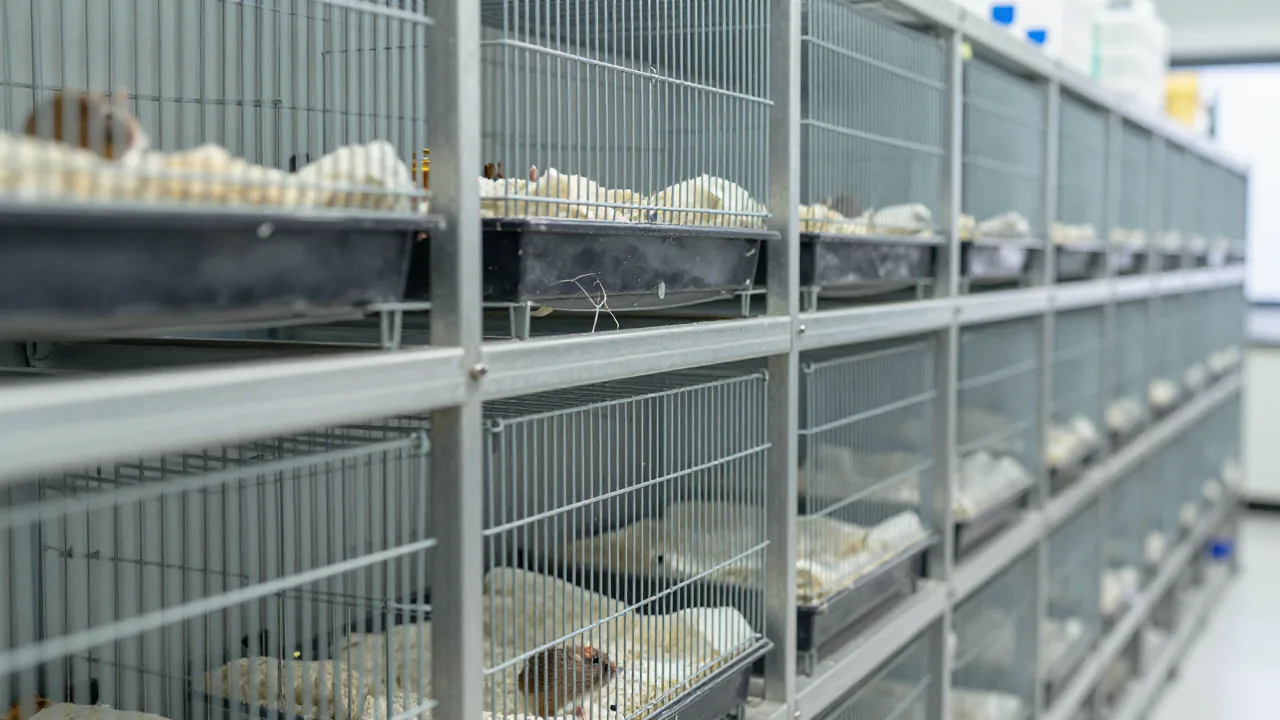
| Khavinson et al. 2000 [10] | Female CBA mice, SC from 6 months of age | Longer lifespan, more endurance, fewer spontaneous tumours; no adverse effects seen |
| Khavinson and Anisimov 2000 [11] | Mice | Inhibited spontaneous tumour growth and increased lifespan (no abstract available) |
| Pliss et al. 2001 [12] | Rats given a bladder carcinogen | Tumours in 56% of Vilon-treated rats vs 75.5% of controls |
Dosing
For informational purposes only — this summarises doses used in research and practice; it is not a prescription or individual medical advice.
| Goal | Dose | Route | Frequency / timing | Cycle length | Basis |
|---|---|---|---|---|---|
| Immune / longevity course | 1–2 mg | SC injection | Once daily | 10–20 days (one 20 mg vial), 1–3 courses a year | Practice protocol for the class (r/peptidebioregulators, ZyraTrack forum) |
| Class high-dose protocol | 5–10 mg | SC injection | Once daily | 10–20 days, 1–2 times a year | Practice protocol, vendor site (Pepdex); no trial basis |
| Long-COVID / ME-CFS stack | Vilon about 250 µg + VIP about 50 µg | Intranasal | Twice daily | Weeks; duration not standardised | Anecdotal (r/covidlonghaulers) |
| Oral thymus alternative (Vladonix, Cytomax) | 1–2 capsules | Oral | 1–2 times daily | 30 days, once or twice a year | Label (supplement directions; PeptideDeck summary) |
VIP nasal spray has its own evidence and risks; see VIP for CIRS. Injection technique: peptide injection guide.
What people report: what works and what doesn’t
Reported to work
- A long-COVID / ME-CFS thread reports a rapid, sustained improvement with nasal Vilon plus VIP, which another person with a similar illness reportedly repeated (r/covidlonghaulers). Two people on a combination cannot tell us what Vilon does.
- Thymus-peptide users more broadly describe fewer colds and milder allergy seasons, mostly with the extract Vladonix (r/Biohackers).
Mixed or unclear
- The same poster cautions about unknown side effects and says Vilon was tried only after many other treatments had failed.
Reported not to work / disappointing
- Many users of organ-bioregulator rotations report no noticeable effect (Steroidsgrabber forum).
A real trial would randomise older adults to Vilon or placebo and measure infection rates, vaccine responses or T-cell markers over a season.
Safety and side effects
- No adequate human safety data. Long-term mouse dosing showed no harm [10].
- Autoimmune disease: an immune activator could worsen it; untested.
- Post-viral illness needs a proper work-up; anecdotes from combination nasal sprays are not evidence.
- Product quality: unregulated vials and home-made nasal sprays carry contamination risk.
Legal and regulatory status
- US: not FDA-approved; “research use only” products are not approved for human use.
- EU / Germany: not authorised as a medicine by the EMA or BfArM.
- Sport: not named on the WADA 2026 list; falls under S0.
How it fits
Vilon and Thymogen are the two thymus dipeptides; Crystagen is the immune Cytogen capsule. Internationally, Thymosin Alpha-1 has far more clinical data. See also thymic involution and immune aging.
Related Articles
- Peptide Bioregulators: The Khavinson Protocol and What the Evidence Shows
- Thymosin Alpha-1: The Immune Modulator with Real Data
- Thymic Involution and Immune Aging: Can Peptides Help?
- VIP Peptide for CIRS
- Post-COVID Brain Fog
Frequently asked questions
What is Vilon?
Vilon is the synthetic dipeptide Lys-Glu (KE) from the Khavinson bioregulator programme, described as an immunomodulator and identified as one of the active substances of the thymus extract Thymalin.
Does Vilon extend lifespan?
In female CBA mice, long-term Vilon injections prolonged lifespan and reduced spontaneous tumours. There are no human lifespan or aging-outcome data.
What is the difference between Vilon and Thymogen?
Both are thymus dipeptides from Thymalin. Vilon is Lys-Glu; Thymogen is Glu-Trp and is a licensed drug in Russia. Thymogen has more human data, including a negative US phase III trial.
What dose of Vilon is used?
There is no human dose-finding study. Community protocols use 1–2 mg SC once daily for 10–20 days, and some long-COVID users report a nasal spray of about 250 µg twice daily.
Is Vilon safe?
Mouse studies reported no harmful effects with long-term use, but there are no adequate human safety data.
References
- Morozov VG, Khavinson VK. Natural and synthetic thymic peptides as therapeutics for immune dysfunction. Int J Immunopharmacol. 1997. https://pubmed.ncbi.nlm.nih.gov/9637345/
- Linkova N, Khavinson V, Diatlova A, et al. The Influence of KE and EW Dipeptides in the Composition of the Thymalin Drug on Gene Expression and Protein Synthesis Involved in the Pathogenesis of COVID-19. Int J Mol Sci. 2023. https://pubmed.ncbi.nlm.nih.gov/37686182/
- Khavinson VKh, Rybakina EG, Malinin VV, et al. Effects of short peptides on thymocyte blast transformation and signal transduction along the sphingomyelin pathway. Bull Exp Biol Med. 2002. https://pubmed.ncbi.nlm.nih.gov/12420072/
- Kazakova TB, Barabanova SV, Khavinson VKh, et al. In vitro effect of short peptides on expression of interleukin-2 gene in splenocytes. Bull Exp Biol Med. 2002. https://pubmed.ncbi.nlm.nih.gov/12447482/
- Lezhava T, Khavinson V, Monaselidze J, et al. Bioregulator Vilon-induced reactivation of chromatin in cultured lymphocytes from old people. Biogerontology. 2004. https://pubmed.ncbi.nlm.nih.gov/15105581/
- Khavinson VK, Linkova NS, Ashapkin VV, et al. KE peptide regulates SIRT1, PARP1, PARP2 gene expression and protein synthesis in human mesenchymal stem cells aging (in Russian). Adv Gerontol. 2023. https://pubmed.ncbi.nlm.nih.gov/37782636/
- Fridman NV, Linkova NS, Kozhevnikova EO, et al. Comparison of the Effects of KE and AED Peptides on Functional Activity of Human Skin Fibroblasts during Their Replicative Aging. Bull Exp Biol Med. 2020. https://pubmed.ncbi.nlm.nih.gov/33231794/
- Kuznik BI, Isakova NV, Kliuchereva NN, et al. Effect of vilon on the immunity status and coagulation hemostasis in patients of different age with diabetes mellitus (in Russian). Adv Gerontol. 2007. https://pubmed.ncbi.nlm.nih.gov/18306698/
- Khavinson VKh, Kuznik BI, Ryzhak GA. Peptide bioregulators: the new class of geroprotectors. Message 2. Clinical studies results (in Russian). Adv Gerontol. 2013. https://pubmed.ncbi.nlm.nih.gov/24003726/
- Khavinson VK, Anisimov VN, Zavarzina NY, et al. Effect of vilon on biological age and lifespan in mice. Bull Exp Biol Med. 2000. https://pubmed.ncbi.nlm.nih.gov/11140587/
- Khavinson VKh, Anisimov VN. A synthetic dipeptide vilon (L-Lys-L-Glu) inhibits growth of spontaneous tumors and increases life span of mice. Dokl Biol Sci. 2000. https://pubmed.ncbi.nlm.nih.gov/10944717/
- Pliss GB, Mel’nikov AS, Malinin VV, et al. Inhibitory effect of peptide vilon on the development of induced rat urinary bladder tumors in rats. Bull Exp Biol Med. 2001. https://pubmed.ncbi.nlm.nih.gov/11586406/
Disclaimer: This article is for informational and educational purposes only and is not a prescription or individual medical advice. Vilon is not approved by the FDA or the EMA.