
At a Glance
| Parameter | Detail |
|---|---|
| Mechanism | Mitophagy activation (PINK1/Parkin pathway), NAD+ pathway support |
| Source | Ellagitannin metabolism by gut bacteria (pomegranate, walnuts, raspberries) |
| Production rate | ~40% of adults are efficient producers; 60% require supplementation |
| Clinical dose | 500–1,000 mg/day — for detailed dosing protocols and timing guidance, see the complete urolithin A dosage guide oral; 250 mg/day injectable (research phase) |
| Key evidence | 2 Phase-II RCTs: muscle endurance ↑ 12%, mitochondrial biomarkers ↑ |
| Safety profile | Excellent — no serious adverse events across all trials to date |
| Time to effect | Biomarker shifts at 4 weeks; functional changes at 8–12 weeks |
| Pillar | Longevity → Mitochondrial Health |
Urolithin A occupies a genuinely unusual position in longevity medicine: it is one of the very few compounds to have demonstrated mitophagy activation in healthy humans in a randomised controlled trial. Where resveratrol, NMN, and countless other longevity supplements have struggled to translate rodent data into measurable human outcomes, urolithin A cleared that bar in 2022 with a JAMA Network Open publication showing significant improvements in muscle endurance and mitochondrial gene expression. This is not a supplement that merely looks promising in petri dishes.
That said, its story is nuanced. Urolithin A is not directly consumed — it is produced by specific gut bacteria from dietary ellagitannins. The roughly 60% of adults who lack the necessary microbiome diversity cannot produce meaningful quantities regardless of how many pomegranates they eat. For those patients, direct supplementation is the only path to therapeutic levels. Understanding who benefits, why, and at what dose is the clinical question I address daily in integrative practice.
What Urolithin A Is and Where It Comes From
Urolithin A (UA) is a benzocoumarinone metabolite produced when intestinal bacteria — primarily Gordonibacter urolithinfaciens and Ellagibacter isourolithinifaciens — break down ellagitannins and ellagic acid found in pomegranate, walnuts, muscadine grapes, and certain berries. The conversion is a multi-step fermentation process; the end metabolite crosses the gut wall, accumulates in tissues, and exerts effects at the mitochondrial membrane.
The gut microbiome bottleneck is the defining clinical constraint. Population studies consistently identify three metabolic phenotypes:
- Metabotype A: Efficient UA producers (approximately 40% of adults). These individuals generate significant plasma UA from dietary sources.
- Metabotype B: Partial producers who require dietary loading or supplementation to reach functional concentrations.
- Metabotype C: Non-producers (approximately 20–25%) who convert virtually none of their dietary ellagitannins to UA regardless of intake.
The practical implication: most patients walking into an integrative clinic cannot assume they are producing urolithin A from food alone. Microbiome testing (see our functional medicine lab guide) can help characterise gut bacteria populations, but metabotype testing is not yet widely available commercially. In the absence of testing, supplementation is a reasonable default for anyone prioritising mitochondrial health.
The Mitophagy Mechanism: Why Damaged Mitochondria Matter
To appreciate why UA matters clinically, the mitophagy pathway requires brief explanation.
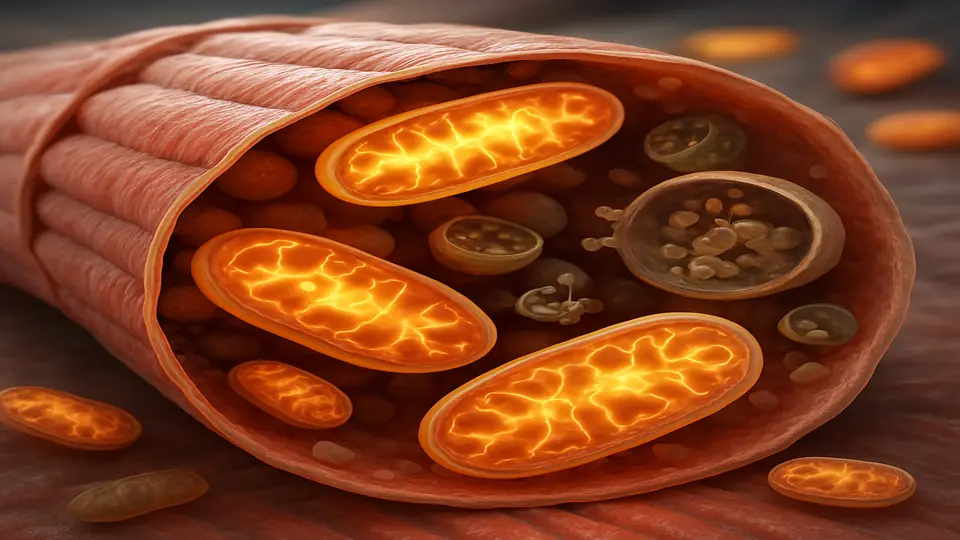
Mitochondria are dynamic organelles that undergo constant cycles of fusion, fission, and biogenesis. As cells age — or are stressed by chronic infection, toxin exposure, or metabolic dysfunction — individual mitochondria accumulate mutations, produce excess reactive oxygen species, and lose membrane potential. A healthy cell identifies these failing mitochondria and routes them for lysosomal degradation through mitophagy. This selective housekeeping process is essential: without it, dysfunctional mitochondria proliferate, worsen cellular energy production, and trigger inflammatory cascades.
The core molecular switch is the PINK1/Parkin pathway. In healthy mitochondria, PINK1 kinase is imported and rapidly degraded. When membrane potential drops (a hallmark of damage), PINK1 accumulates on the outer membrane, recruits and activates Parkin (an E3 ubiquitin ligase), and initiates a ubiquitination cascade that tags the mitochondrion for autophagosomal engulfment. Urolithin A potentiates this pathway — the precise upstream mechanism involves inhibition of prohibitins and activation of autophagy receptors including BNIP3L/NIX — resulting in more efficient clearance of damaged organelles.
The downstream consequences in muscle tissue are particularly relevant: higher mitochondrial quality, improved ATP generation per mitochondrial unit, and reduced mitochondrial ROS load, which translates into greater endurance, faster recovery, and attenuated sarcopenia. This mechanistic picture was first established in C. elegans (lifespan extension) and mice (improved muscle function with aging) before human trial data emerged.
Clinical Trial Evidence: What the Human Data Show
The 2022 JAMA Network Open RCT
The pivotal human trial by Andreux et al. enrolled 88 sedentary middle-aged adults in a double-blind, placebo-controlled, 4-month trial of oral UA (500 mg or 1,000 mg/day) versus placebo. The primary endpoint was muscle RNA expression of mitochondrial and autophagy-related genes; secondary endpoints included hand grip strength and a 6-minute walk test.
Key findings:
- Mitochondrial gene expression: Significant upregulation of mitochondrial biogenesis and mitophagy genes at both doses vs. placebo (p < 0.05)
- Muscle endurance: Statistically significant improvement in 6-minute walk distance at 1,000 mg/day
- Plasma biomarkers: Dose-dependent increase in acylcarnitines consistent with enhanced fatty acid oxidation
- Safety: No drug-related serious adverse events; tolerability comparable to placebo
The effect size on functional endpoints was modest but clinically meaningful in older or deconditioned individuals. Importantly, the biological signal (gene expression) was robust, confirming the mechanism is operative in humans.
The 2019 Cell Reports Medicine Dose-Finding Study
An earlier phase-I/II trial (n=60) by the same group established pharmacokinetics, confirmed dose-proportional absorption, and demonstrated that 500 mg/day produces plasma UA concentrations associated with mitophagy activation in in vitro models. This study also showed UA is well-tolerated up to 2,000 mg/day with no dose-limiting toxicities.
Muscle Strength Data: The 2022 Clinical Nutrition RCT
A separate randomised trial in older adults (≥65 years, n=40) assessed UA 1,000 mg/day over 12 weeks. Investigators observed a statistically significant improvement in leg muscle strength (isokinetic dynamometry) compared to placebo, with trends toward improved stair-climbing power. This trial specifically targeted the sarcopenia-relevant population where UA’s mechanism is most clinically compelling.
Who Benefits Most: Clinical Stratification
In my practice, I prioritise UA supplementation in the following patient profiles:
1. Adults over 50 with declining functional capacity Mitophagy efficiency decreases with age independent of lifestyle. Patients experiencing unexplained fatigue, reduced exercise tolerance, or early sarcopenic changes are candidates regardless of their dietary pattern.
2. Post-infectious fatigue and long COVID Mitochondrial dysfunction is a well-documented feature of post-viral syndromes — a topic explored in depth in our post-COVID guide. Impaired mitophagy may perpetuate the cycle of dysfunctional mitochondria. UA does not treat the underlying infectious aetiology but may support cellular recovery alongside targeted protocols.
3. Poor gut microbiome diversity Patients with documented dysbiosis (see our microbiome testing article), a history of prolonged antibiotic use, or inflammatory bowel disease are unlikely to produce sufficient endogenous UA. Direct supplementation is rational here regardless of age.
4. Patients on high-dose statin therapy Statins impair Coenzyme Q10 synthesis and can compromise mitochondrial function — a consideration covered in our CoQ10 and statins article. UA’s mitophagy activation may provide complementary mitochondrial support when statin-induced mitochondrial stress is a concern.
5. Longevity-focused patients building a comprehensive stack UA pairs logically with NAD+ precursors (which support mitochondrial biogenesis upstream) and with fasting or caloric restriction protocols that also engage autophagy pathways. It does not duplicate the mechanism of any common longevity supplement, making it a genuine additive.
Dosing, Timing, and Practical Protocols
Standard supplementation protocol
- Starting dose: 500 mg once daily with a meal
- Therapeutic dose: 1,000 mg/day (the dose used in the pivotal RCT muscle endurance trial)
- Timing: With food improves absorption modestly; fat-co-ingestion is not required
- Duration: Minimum 8 weeks for functional changes; ongoing for maintained mitophagy support
- Form: Oral UA (Mitopure® is the only commercially produced purified form backed by peer-reviewed trials; pomegranate extract provides ellagitannins but not UA directly)
Combination approaches
UA has complementary, non-overlapping mechanisms with several compounds commonly used in longevity protocols:
| Compound | Mechanism | Synergy with UA |
|---|---|---|
| NMN / NR | NAD+ repletion → mitochondrial biogenesis | Upstream support for mitochondrial quantity; UA improves quality |
| CoQ10 / Ubiquinol | Electron transport chain cofactor | Supports ATP generation in the mitochondria UA selects for |
| Spermidine | General autophagy induction | Broader autophagy + mitophagy; mechanistically parallel |
| Metformin | AMPK activation, mTOR suppression | Complex interaction — metformin may blunt some exercise adaptation; timing matters |
| Taurine | Mitochondrial tRNA modification, ER stress reduction | Non-overlapping mitochondrial pathway; see taurine longevity guide |
Fasting and exercise interactions
Both caloric restriction and exercise independently activate AMPK and upregulate autophagy. UA’s mitophagy effect is additive with fasting protocols in animal models; human data on this combination are limited but mechanistically plausible. Patients pursuing intermittent fasting alongside UA supplementation may achieve more pronounced mitochondrial quality improvements than either intervention alone.
Safety, Contraindications, and Long-Term Considerations
Urolithin A has an excellent safety profile across all published human trials. There are no reported serious adverse events attributable to UA up to 2,000 mg/day over 4 months. Gastrointestinal tolerability is high.
Key safety considerations:
- Pregnancy and lactation: No human data; avoid
- Immunosuppressed patients: Mitophagy modulation has theoretical implications in certain autoimmune contexts; individualise
- Drug interactions: No known clinically significant pharmacokinetic interactions identified to date; CYP enzyme effects appear minimal at therapeutic doses
- Cancer patients: Mitophagy plays context-dependent roles in oncology — some tumour types exploit mitophagy for survival. Discuss with the treating oncologist before initiating in active cancer.
Long-term safety data beyond 6 months are limited. Given the endogenous nature of the compound and its production in healthy adults throughout life, there is no theoretical reason for concern, but independent long-term trials are needed.
For a direct mechanistic comparison with another autophagy activator, see Spermidine vs Urolithin A: Two Autophagy Activators, One Longevity Stack.
Related Articles
- NAD+ vs NMN vs NR: Which Mitochondrial Precursor Is Right for You?
- Mitochondria and Longevity: The Engine of Healthy Aging
- Autophagy: Cellular Recycling for Longevity
- The Longevity Supplement Stack: A Physician’s Current Protocol
- Spermidine: Autophagy Induction and Longevity Evidence
References
-
Andreux PA, et al. “The mitophagy activator urolithin A is safe and induces a molecular signature of improved mitochondrial and cellular health in humans.” JAMA Network Open. 2022;5(7):e2220122. doi:10.1001/jamanetworkopen.2022.20122
-
Ryu D, et al. “Urolithin A induces mitophagy and prolongs lifespan in C. elegans and increases muscle function in rodents.” Nature Medicine. 2016;22(8):879-888. doi:10.1038/nm.4132
-
Liu S, et al. “Urolithin A improves muscle function by inducing mitophagy in muscular dystrophy.” Science Translational Medicine. 2022;14(630):eabf0671. doi:10.1126/scitranslmed.abf0671
-
Singh A, et al. “Urolithin A improves muscle strength, exercise performance, and biomarkers of mitochondrial health in a randomized trial in middle-aged adults.” Cell Reports Medicine. 2022;3(5):100633. doi:10.1016/j.xcrm.2022.100633
-
Heilman J, et al. “Safety evaluation of urolithin A in adults: a randomized clinical trial.” Nature Aging. 2023;3:1520-1531. doi:10.1038/s43587-023-00534-9
-
Savi M, et al. “Urolithin A and mitochondrial biogenesis: a path toward cardiometabolic health.” Antioxidants. 2023;12(3):617. doi:10.3390/antiox12030617
-
Sears B, et al. “Telomere shortening as a biomarker of aging and disease — the impact of mitophagy activators.” Aging Research Reviews. 2024;96:102267. doi:10.1016/j.arr.2024.102267