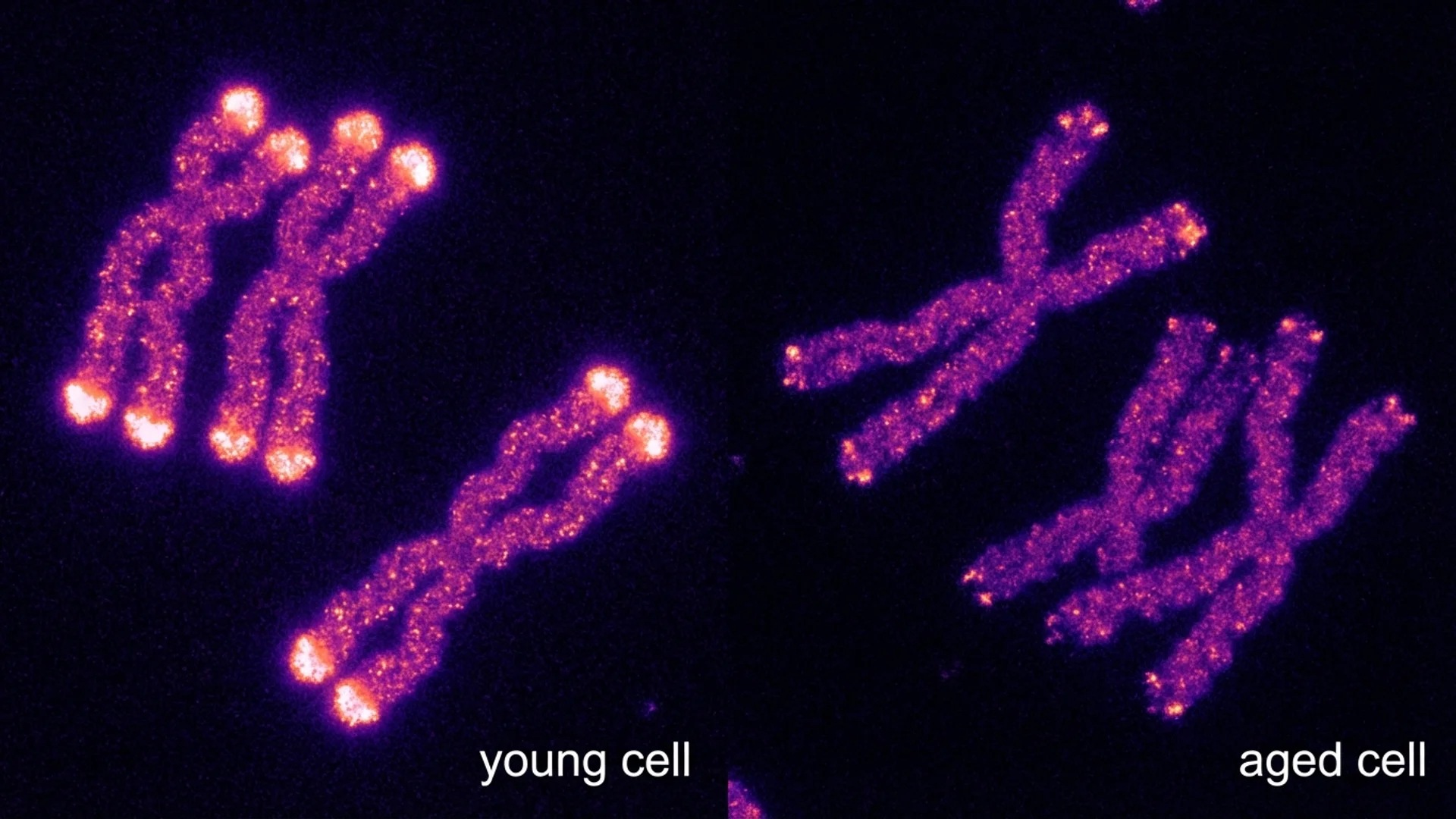
Telomeres — the repetitive DNA sequences that cap the ends of chromosomes — became one of the first publicly visible biomarkers of aging after Elizabeth Blackburn’s Nobel Prize-winning work. The concept is intuitive: telomeres shorten with each cell division, and when they become critically short, cells enter senescence or die. Shorter telomeres, more aging. Longer telomeres, less aging.
The reality, as is often the case in biology, is more complicated than the concept.
What Telomere Length Tells Us
Telomere length does correlate with biological age at the population level. People with shorter telomeres for their age have increased risk of cardiovascular disease, certain cancers, and all-cause mortality [1]. The association is real and statistically significant.

However, telomere length as an individual biomarker has significant limitations:
High variability. Telomere length varies considerably between individuals of the same age. The range is so broad that a single measurement tells you relatively little about an individual’s health trajectory. Two measurements from the same person can vary by 5-15% depending on the testing methodology and the blood sample.
Tissue specificity. Commercially available tests measure telomere length in blood leukocytes. These may not reflect telomere dynamics in other tissues — the heart, brain, or liver — that are more clinically relevant for specific disease risks.
Weaker predictor than epigenetic clocks. Head-to-head comparisons consistently show that epigenetic clocks (GrimAge, PhenoAge, DunedinPACE) outperform telomere length in predicting mortality and disease onset [2]. If you are choosing one biological age test, epigenetic clocks provide more actionable information.
Telomerase: The Double-Edged Enzyme
Telomerase is the enzyme that replenishes telomeres, counteracting the shortening that occurs with cell division. It is active in stem cells, germ cells, and — importantly — most cancer cells. This last point is critical to understanding the complexity of telomere biology.
The longevity appeal of telomerase activation is obvious: maintain telomere length, prevent cellular senescence, slow aging. The concern is equally obvious: most cancers rely on telomerase to sustain unlimited replication. Activating telomerase systemically could, in theory, support existing or emerging tumors.
The evidence here is nuanced. Animal studies in which telomerase was activated in adult mice showed lifespan extension without increased cancer incidence, potentially because the same mice also had enhanced tumor suppression pathways [3]. But extrapolating from genetically modified mice to human pharmacology requires caution.
Epithalon
Epithalon (also spelled Epitalon) is a synthetic tetrapeptide (Ala-Glu-Asp-Gly) based on the naturally occurring pineal peptide epithalamin. It has been studied primarily by Russian researcher Vladimir Khavinson, who has published extensively on its effects on telomerase activity, pineal function, and aging.
Here is what I want to be transparent about:
The mechanistic rationale exists. Epithalon has been shown to activate telomerase in human cell cultures [4]. It also appears to influence melatonin production via the pineal gland, which has implications for circadian rhythm and immune function.
The clinical evidence is limited. Most published studies on Epithalon come from a single research group, have small sample sizes, and have not been independently replicated in large Western clinical trials. Some of the reported outcomes — reduced mortality in elderly populations, improved immune markers — are impressive but require independent verification before drawing strong conclusions.
I use conservative language for a reason. Epithalon deserves continued research. It has a plausible mechanism and a favorable safety profile in published studies. But presenting it as a validated anti-aging therapy would outpace the evidence. In my practice, I discuss it with patients who specifically inquire, I outline the evidence level honestly, and I offer it only with appropriate informed consent about its investigational status.
What Actually Influences Telomere Length
The interventions with the strongest evidence for maintaining or modestly improving telomere length are, unsurprisingly, lifestyle factors:
Exercise. Regular physical activity is associated with longer telomeres in observational studies. A randomized trial showed that six months of aerobic exercise increased telomerase activity in previously sedentary adults [5].
Stress management. Chronic psychological stress is associated with shorter telomeres and reduced telomerase activity. Meditation and stress reduction programs have shown modest effects on telomerase activity in controlled trials.
Sleep quality. Short sleep duration and poor sleep quality correlate with shorter telomeres.
Nutrition. Mediterranean dietary patterns and higher intake of antioxidants, omega-3 fatty acids, and fiber are associated with longer telomeres in epidemiological studies.
Smoking cessation and alcohol moderation. Both smoking and excessive alcohol consumption are associated with accelerated telomere shortening.
These are not dramatic interventions. They are the same lifestyle factors that influence every other aging biomarker. This is the consistent pattern in longevity medicine: the foundations matter most.
Supplements Marketed for Telomere Support
Several supplements are marketed as telomerase activators or telomere-protective agents:
TA-65 (cycloastragenol): A compound derived from astragalus root. Has shown telomerase activation in cell cultures and modest effects on immune cell telomere length in a small, industry-funded study. The clinical significance of the observed changes is uncertain.
Astragaloside IV: Another astragalus derivative with similar claims and similar evidence limitations.
Resveratrol: Has shown some telomere-protective effects in cell studies, likely through sirtuin activation and antioxidant mechanisms. Human data specifically for telomere effects is minimal.
My position on these supplements: they may offer modest benefits through their general antioxidant and anti-inflammatory properties. The specific claim that they meaningfully alter telomere biology in humans at achievable doses is not yet supported by robust clinical evidence.
The Bottom Line
Telomere biology is fascinating and relevant to aging. Telomere length is a real, if imperfect, biomarker of biological age. Telomerase activation is a legitimate area of research with both promise and risk.
For patients interested in telomere health, the most evidence-supported approach is the familiar one: exercise, manage stress, sleep well, eat whole foods, and avoid tobacco and excessive alcohol. Pharmacological telomerase activators, including Epithalon, represent an area where our understanding is still developing, and they should be approached with appropriate caution and honest expectations.

References
- Haycock PC, et al. Leucocyte telomere length and risk of cardiovascular disease: systematic review and meta-analysis. BMJ. 2014;349:g4227.
- Lu AT, et al. DNA methylation GrimAge strongly predicts lifespan and healthspan. Aging. 2019;11(2):303-327.
- Bernardes de Jesus B, et al. Telomerase gene therapy in adult and old mice delays aging and increases longevity without increasing cancer. EMBO Molecular Medicine. 2012;4(8):691-704.
- Khavinson VK, et al. Peptide Epitalon activates chromatin at the old age. Neuroendocrinology Letters. 2003;24(5):329-333.
- Werner CM, et al. Differential effects of endurance, interval, and resistance training on telomerase activity and telomere length in a randomized, controlled study. European Heart Journal. 2019;40(1):34-46.
This content is educational and does not constitute medical advice. Epithalon and other telomerase-targeted interventions are investigational and should only be considered under medical supervision with appropriate informed consent.