A 42-year-old teacher arrives at our hospital. She has been told she has depression, early-onset dementia, and fibromyalgia — by three different specialists. She cannot remember her students’ names. She has word-finding difficulties that terrify her. She wakes at 3 a.m. with a sensation she describes as electrical buzzing in her skull. Her psychiatric medications have not helped.
Her Lyme serology was “equivocal” two years ago, and no one followed up.
This patient does not have depression. She does not have dementia. She has neuroborreliosis — and after three decades and more than 12,000 Lyme patients treated at our hospital, I can tell you this scenario is not unusual. It is routine.
At a Glance
| Property | Value |
|---|---|
| Evidence Level | Moderate to Strong (European guidelines, institutional data) |
| Primary Use | CNS Lyme disease: cognitive decline, neuropsychiatric symptoms, cranial neuropathies, radiculopathy |
| Key Mechanism | Borrelia CNS invasion, neuroinflammation, glial activation, direct neurotoxicity |
How Borrelia Reaches the Brain
Borrelia burgdorferi sensu lato is among the most neurotropic bacteria known to medicine. Within days to weeks of initial infection, spirochetes can cross the blood-brain barrier through multiple mechanisms [1]:
Direct penetration. Borrelia exploits the paracellular junctions of the blood-brain barrier endothelium. The spirochete’s corkscrew motility and narrow diameter allow it to penetrate gaps between endothelial cells, particularly when the barrier is compromised by the inflammatory response to infection itself.
Trojan horse mechanism. Borrelia has been demonstrated to adhere to and be carried across the BBB within monocytes and other immune cells — essentially hitchhiking into the CNS inside the very cells sent to fight it [2].
Choroid plexus entry. The choroid plexus, which produces cerebrospinal fluid, has a less restrictive barrier than cerebral capillaries. Borrelia can enter the CSF via this route and then disseminate throughout the CNS.
Once inside the central nervous system, Borrelia triggers a cascade of neuroinflammation. Activated microglia and astrocytes release inflammatory cytokines — TNF-alpha, IL-6, IL-8 — creating a hostile neurological environment that persists even after the bacterial load is reduced. This is a critical point: neurological symptoms in neuroborreliosis are driven by both the infection and the inflammatory response to it. Killing the bacteria is necessary but not sufficient.
The Neuropsychiatric Presentation
Here is what the research actually says about neuroborreliosis symptom patterns, and what I observe clinically:
Cognitive Impairment
The most common and most distressing feature. Patients describe:
- Word-finding difficulties (anomic aphasia)
- Short-term memory loss
- Processing speed reduction — “thinking through fog”
- Difficulty with multitasking and executive function
- Disorientation in familiar environments
These symptoms are measurable on neuropsychological testing. In our patient population, approximately 70% of neuroborreliosis patients show objective cognitive deficits on formal assessment, even when their presenting complaint was primarily physical [3].
Psychiatric Manifestations
Neuroborreliosis can present as virtually any psychiatric condition:
- Depression — often atypical, with prominent fatigue and cognitive features rather than primarily mood disturbance
- Anxiety and panic attacks — frequently with a somatic quality patients describe as “chemical” rather than psychological
- Irritability and rage — disproportionate to circumstances, often alarming to the patient themselves
- Depersonalization and derealization — the sense of being disconnected from one’s body or surroundings
- Psychosis — rare but documented, including paranoid ideation and hallucinations [4]
I want to be clear about the clinical implication: when a patient develops new-onset psychiatric symptoms after a tick bite, after unexplained febrile illness, or in the context of other Lyme-compatible symptoms, neuropsychiatric Lyme must be on the differential. It frequently is not. The number of our patients who were prescribed psychiatric medications for years before Borrelia was investigated is, frankly, unacceptable.
Cranial Neuropathies
Facial nerve palsy (Bell’s palsy) is the classic neuroborreliosis presentation and is reasonably well recognized. In European endemic areas, Lyme is the leading cause of bilateral facial palsy.
But other cranial nerves are also affected. I see:
- Optic neuritis (cranial nerve II)
- Oculomotor disturbances (cranial nerves III, IV, VI) — double vision, difficulty tracking
- Vestibular dysfunction (cranial nerve VIII) — vertigo, disequilibrium
- Trigeminal neuralgia (cranial nerve V) — facial pain, often misdiagnosed as dental pathology
Radiculopathy and Myelopathy
Bannwarth syndrome — meningoradiculitis with severe radicular pain, often nocturnal, accompanied by CSF pleocytosis — is a well-established neuroborreliosis presentation, particularly common in European Lyme (B. garinii). Patients describe burning, boring pain that wakes them from sleep and does not respond to conventional analgesics.
In severe cases, Borrelia myelitis can cause spinal cord inflammation with motor weakness, sensory loss, and even bladder dysfunction — a presentation frequently mistaken for multiple sclerosis.
Diagnostic Challenges
The CSF Problem
The standard diagnostic approach for neuroborreliosis is lumbar puncture with CSF analysis. The European guidelines look for:
- Lymphocytic pleocytosis (elevated white cells in CSF)
- Elevated CSF protein
- Intrathecal antibody production (CSF-to-serum antibody index)
Here is the problem: these criteria perform well in acute, early neuroborreliosis. In chronic or late-stage disease — which is what we predominantly see — CSF may be normal or show only subtle abnormalities [5]. The intrathecal antibody index can remain positive for years after successful treatment, making it unreliable as a marker of active disease. And in some patients, CSF antibodies are never detectable despite clear neurological involvement.
In our experience, a normal lumbar puncture does not exclude neuroborreliosis. It makes the diagnosis less straightforward, but if the clinical picture is compelling and other diagnoses have been excluded, a normal CSF should not be the reason a patient is denied treatment.
Serology Limitations
The two-tier serological testing approach (ELISA followed by Western blot) was designed for epidemiological surveillance, not for individual clinical diagnosis. Its sensitivity in early disease is poor (30-40% in the first weeks), and in disseminated disease, false negatives occur at rates that should concern every clinician [6].
I have treated patients with unambiguous neuroborreliosis — PCR-positive CSF, response to antimicrobial therapy — whose initial two-tier serology was negative. The test is useful when positive. A negative result does not exclude the diagnosis.
Advanced Diagnostics
At our hospital, we use a multimodal diagnostic approach:
- ELISPOT/LTT (lymphocyte transformation test): Measures T-cell reactivity to Borrelia antigens. More sensitive than antibody-based tests for detecting active infection, particularly in late-stage disease.
- CD57+ NK cell count: Chronically low counts correlate with persistent Borrelia infection in our clinical observations and published literature.
- SPECT or PET neuroimaging: Can demonstrate cerebral hypoperfusion patterns characteristic of neuroinflammation. Not specific to Lyme but supports the diagnosis in the appropriate clinical context.
- Comprehensive co-infection panel: Babesia, Bartonella, Ehrlichia, Anaplasma, Mycoplasma. Co-infections are present in approximately 60% of our Lyme patients and significantly complicate the neurological picture.
Treatment: Why Antibiotics Are Necessary but Not Sufficient
Standard neuroborreliosis treatment in European guidelines is intravenous ceftriaxone for 14-21 days. This is reasonable for acute neuroborreliosis and often effective. I do not dispute this.
But for chronic neuroborreliosis — the patient who has had CNS symptoms for months or years, who has failed standard antibiotic courses, who has persistent neuroinflammation — IV ceftriaxone monotherapy is frequently inadequate. The reasons are biological:
- Borrelia persister forms. Borrelia can convert to round body and biofilm forms that are metabolically dormant and resistant to cell-wall-active antibiotics like ceftriaxone [7].
- CNS antibiotic penetration. While ceftriaxone achieves reasonable CSF levels, penetration into brain parenchyma, perivascular spaces, and intracellular compartments is limited.
- Ongoing neuroinflammation. Even when the bacteria are killed, the inflammatory cascade in the CNS can persist autonomously, driven by activated microglia and residual bacterial debris.
This is where our multimodal approach becomes essential.
Whole-Body Hyperthermia for Neuroborreliosis
Whole-body hyperthermia is, in my clinical assessment, the single most important treatment tool for neuroborreliosis. Here is why.
Borrelia burgdorferi is thermolabile. Research from the University of Graz under Prof. Reisinger demonstrated that Borrelia cannot survive temperatures above 41.3 degrees Celsius [8]. This is a fundamental biological vulnerability that does not depend on the organism’s metabolic state — persister forms, round bodies, and biofilm-embedded spirochetes are all killed by sufficient heat.
Crucially, hyperthermia crosses the blood-brain barrier. Core body temperature elevation to 41.6-41.8 degrees C uniformly raises tissue temperature throughout the body, including the brain. There is no penetration problem, no pharmacokinetic limitation, no resistant variant. The thermal energy reaches every compartment.
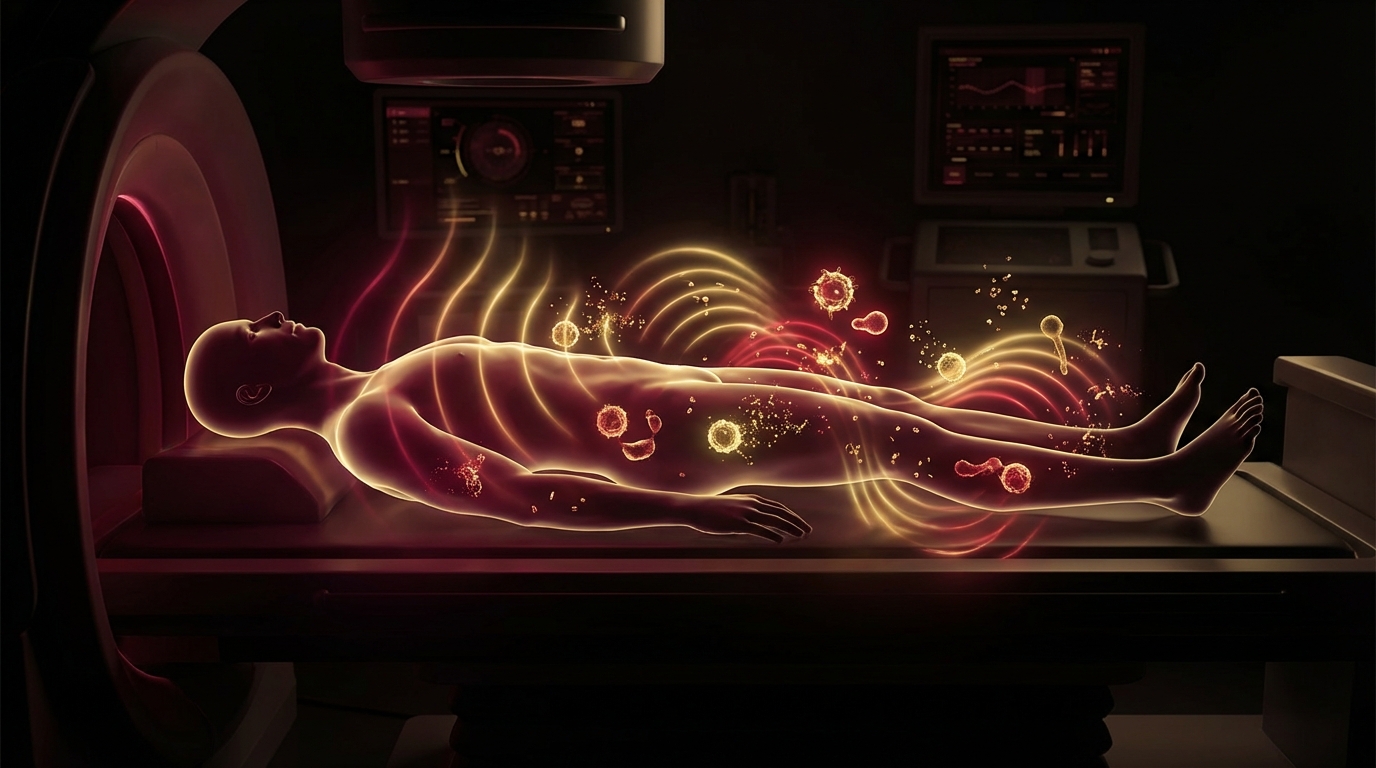
Our protocol uses a Heckel whole-body hyperthermia device. The patient is sedated and their core temperature is raised to 41.6-41.8 degrees C for a defined period, typically two sessions separated by several days. This is not a sauna or hot bath — it is medically controlled, monitored hyperthermia performed under clinical supervision with continuous vital sign monitoring.
In our experience treating thousands of Lyme patients with this protocol, approximately 85% of neuroborreliosis patients show significant neurological improvement. Cognitive testing scores improve. Neuropsychiatric symptoms diminish or resolve. The Herxheimer reaction — a transient worsening caused by massive spirochete die-off — confirms the mechanism.
I want to be transparent about the evidence level: our clinical data is extensive but institutional. We do not yet have multicenter randomized controlled trials of hyperthermia for neuroborreliosis. The mechanistic rationale is strong (thermolability is established), and the clinical observations across thousands of patients are consistent. This deserves rigorous trial validation, and I believe it will withstand that scrutiny.
Transcranial Pulse Stimulation for Neuroregeneration
Killing Borrelia in the CNS is the first step. Repairing the damage is the second. This is where Transcranial Pulse Stimulation (TPS) has become central to our neuroborreliosis protocol.
TPS delivers focused, low-energy shockwaves to targeted brain regions. The mechanism of action involves:
- Mechanotransduction: Shockwaves stimulate neuronal growth factor expression (BDNF, VEGF, NGF)
- Neuroplasticity activation: Promotes synaptogenesis and dendritic remodeling
- Anti-inflammatory effects: Modulates microglial activation from pro-inflammatory (M1) to reparative (M2) phenotype
- Improved cerebral perfusion: Restores blood flow to hypoperfused regions
For neuroborreliosis specifically, TPS addresses the neuroinflammatory and neurodegenerative damage that persists after the infection is treated. In my clinical experience, patients who receive TPS after hyperthermia show faster and more complete cognitive recovery than those treated with antimicrobials and hyperthermia alone.
A typical protocol involves six to ten TPS sessions, each targeting brain regions identified as hypoperfused or dysfunctional on neuroimaging. The treatment is non-invasive, performed in an outpatient setting, and well tolerated. I discuss TPS in greater detail in the context of all neurological conditions.
The Complete Neuroborreliosis Protocol
Based on treating over 12,000 Lyme patients, our approach to neuroborreliosis follows this sequence:
Phase 1: Diagnostics (Days 1-3)
- Comprehensive serological and cellular immune testing for Borrelia and co-infections
- Neuropsychological testing (baseline)
- SPECT or functional neuroimaging
- Inflammatory markers, oxidative stress parameters
- Complete metabolic and nutritional assessment
Phase 2: Preparation (Days 3-5)
- Begin IV antimicrobial therapy (combination approach targeting active and persister forms)
- Nutritional optimization and detoxification support
- Management of any co-infections identified
- Apheresis in selected patients with high inflammatory burden
Phase 3: Hyperthermia (Days 5-10)
- Whole-body hyperthermia session 1: 41.6-41.8 degrees C
- Recovery and Herxheimer management
- Continued antimicrobials and supportive care
- Whole-body hyperthermia session 2: three to five days after session 1
Phase 4: Neuroregeneration (Days 10-21)
- TPS sessions (typically 6-10, every one to two days)
- Continuation of antimicrobial therapy
- IV laser therapy for immune modulation and vascular support
- Repeat neuropsychological testing
Phase 5: Long-Term Support
- Oral antimicrobial continuation as clinically indicated
- Immune support protocol (thymosin alpha-1, nutritional optimization)
- Follow-up TPS sessions at three and six months if needed
- Serial monitoring of Lyme-specific immune markers
What I Observe in Practice
After three decades of treating neuroborreliosis, certain patterns are unmistakable:
Cognitive recovery is often dramatic. Patients who could not read a book or follow a conversation before treatment frequently report significant cognitive improvement within weeks of hyperthermia. This is not placebo — it is measurable on formal neuropsychological testing.
Psychiatric symptoms improve with infection treatment, not psychiatric medication. The patients who were on antidepressants for years without benefit often improve substantially once the underlying neuroborreliosis is treated. I am not anti-psychiatry — I am pro-accurate-diagnosis.
Co-infections complicate everything. Bartonella has its own neurotropic properties and can cause neuropsychiatric symptoms independently. Babesia causes cerebral hypoperfusion. Addressing Lyme without addressing co-infections yields incomplete results.
Earlier treatment produces better outcomes. The patient treated within the first year of neurological symptoms responds faster and more completely than the patient who has had untreated neuroborreliosis for five years. This is not to discourage late-stage patients — improvement is still the norm — but it underscores the cost of diagnostic delay.
The Herxheimer reaction is informative. A robust Herxheimer response after hyperthermia — transient worsening of neurological symptoms followed by improvement — essentially confirms both the diagnosis and the treatment efficacy. Patients who experience the most intense Herxheimer reactions often show the most dramatic improvement afterward.
Safety and Considerations
Whole-body hyperthermia for neuroborreliosis is a medical procedure with real risks that requires experienced clinical management:
- Cardiovascular stress: Core temperature elevation places demand on the cardiovascular system. Patients undergo cardiac screening before treatment. Active cardiac disease is a contraindication.
- Seizure risk: Theoretical concern given CNS involvement. We use appropriate sedation protocols and continuous EEG monitoring.
- Herxheimer management: Massive spirochete die-off can temporarily worsen symptoms. Supportive care, hydration, and in some cases IV steroids are used to manage severe reactions.
- Not suitable for all patients. Pregnancy, severe cardiac disease, recent stroke, and certain other conditions preclude hyperthermia. Patient selection is critical.
TPS is well tolerated with minimal side effects. Transient headache and mild fatigue are occasionally reported.
The Bottom Line
Neuroborreliosis is underdiagnosed, undertreated, and frequently mistaken for psychiatric or neurodegenerative disease. The blood-brain barrier that protects the brain from most pathogens also protects Borrelia from most antibiotics — creating a therapeutic sanctuary that conventional treatment struggles to address. Whole-body hyperthermia exploits the fundamental thermolability of Borrelia, reaches every compartment including the CNS, and in our extensive clinical experience produces meaningful neurological improvement in the majority of patients. Combined with TPS for neuroregeneration and comprehensive antimicrobial therapy, neuroborreliosis is treatable. The first step is recognizing it.
References
- Rupprecht TA, et al. The pathogenesis of Lyme neuroborreliosis: from infection to inflammation. Molecular Medicine. 2008;14(3-4):205-212. PMID: 18097481.
- Comstock LE, Thomas DD. Penetration of endothelial cell monolayers by Borrelia burgdorferi. Infection and Immunity. 1989;57(5):1626-1628. PMID: 2707860.
- Fallon BA, et al. A randomized, placebo-controlled trial of repeated IV antibiotic therapy for Lyme encephalopathy. Neurology. 2008;70(13):992-1003. PMID: 17928580.
- Fallon BA, Nields JA. Lyme disease: a neuropsychiatric illness. American Journal of Psychiatry. 1994;151(11):1571-1583. PMID: 7943444.
- Blanc F, et al. Relevance of the antibody index to diagnose Lyme neuroborreliosis among seropositive patients. Neurology. 2007;69(10):953-958. PMID: 17785665.
- Leeflang MMG, et al. The diagnostic accuracy of serological tests for Lyme borreliosis in Europe: a systematic review and meta-analysis. BMC Infectious Diseases. 2016;16:140. doi:10.1186/s12879-016-1468-4.
- Sharma B, et al. Borrelia burgdorferi, the causative agent of Lyme disease, forms drug-tolerant persister cells. Antimicrobial Agents and Chemotherapy. 2015;59(8):4616-4624. doi:10.1128/AAC.00864-15.
- Reisinger EC, et al. In vitro activity of thermotherapy on Borrelia burgdorferi. Infection. 1996;24(4):292. (Conference abstract, University of Graz).
This content is educational and does not constitute medical advice. Neuroborreliosis is a serious medical condition requiring professional diagnosis and treatment. Whole-body hyperthermia is a medical procedure that must be performed in a qualified clinical setting under physician supervision.