
At a Glance
| What it is | Dysregulation of the hypothalamic-pituitary-adrenal stress response axis |
| Common presentation | Persistent fatigue, poor stress resilience, disrupted sleep, brain fog, low mood |
| Best test | 4-point salivary cortisol + DHEA-S; DUTCH complete for metabolites |
| Mainstream recognition | ”Adrenal fatigue” rejected; HPA axis dysregulation is well-established in literature |
| Treatable | Yes — lifestyle, adaptogens, cortisol rhythm support, targeted protocols |
| Overlaps with | Burnout, Lyme disease, post-COVID syndrome, mold/CIRS, fibromyalgia |
The term “adrenal fatigue” has been dismissed by endocrinology societies for over two decades, yet patients who present with that constellation of symptoms — bone-deep fatigue, morning grogginess, afternoon crashes, salt cravings, and an inability to tolerate stress — are not making things up. The science has simply moved on. What we now understand is that the pathology rarely lies in the adrenal glands themselves. It lies upstream, in a regulatory feedback loop called the hypothalamic-pituitary-adrenal (HPA) axis. Measuring and treating this axis correctly is one of the highest-yield interventions in integrative medicine — particularly for patients with chronic illness histories.
The HPA Axis: A Brief Anatomy of the Stress System
The HPA axis is a three-node endocrine circuit that orchestrates the body’s response to physical and psychological stress. When a threat is perceived, the hypothalamus releases corticotropin-releasing hormone (CRH), which signals the pituitary to release adrenocorticotropic hormone (ACTH), which in turn instructs the adrenal cortex to produce cortisol. Cortisol then feeds back to both the hypothalamus and the pituitary, suppressing further CRH and ACTH release — a classic negative feedback loop.
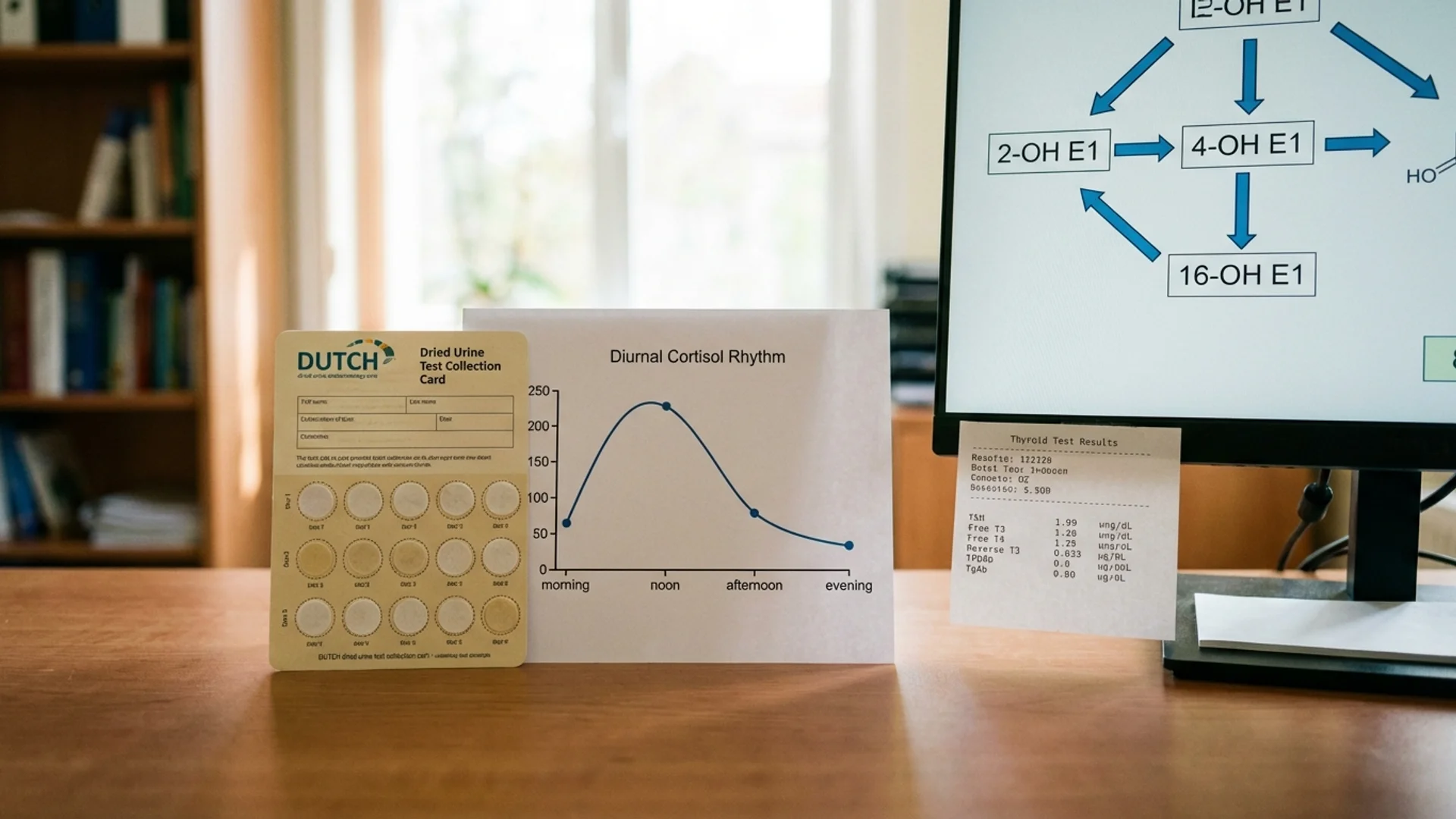
Under normal physiology, cortisol follows a diurnal rhythm: peak levels in the first 30–45 minutes after waking (the cortisol awakening response, or CAR), a gradual decline through the day, and near-nadir levels by midnight. This rhythm governs immune modulation, blood sugar stability, anti-inflammatory signaling, cognitive readiness, and sleep architecture.
Chronic activation — whether from unrelenting psychological stress, ongoing infection, systemic inflammation, or environmental toxin burden — gradually erodes this rhythm. The feedback sensitivity changes. The hypothalamus becomes either hyperresponsive or blunted. The downstream result is a cortisol pattern that no longer matches the body’s physiological needs.
Why “Adrenal Fatigue” Is Both Wrong and Right
The adrenal glands themselves are rarely the primary problem. In the vast majority of cases I see clinically, the adrenal glands retain their capacity to produce cortisol on demand — they are simply receiving dysregulated signals from above. True adrenal insufficiency (Addison’s disease) is a distinct, serious autoimmune or structural condition diagnosed by ACTH stimulation testing.
What mainstream endocrinology correctly rejects is the idea that the adrenals are exhausted or burnt out in burnout patients. What they less frequently acknowledge is that HPA axis dysregulation — as distinct from adrenal gland failure — is well-documented in the research literature across multiple conditions:
- Chronic fatigue syndrome (ME/CFS): Hypocortisolism with blunted CAR and reduced diurnal amplitude is a consistent finding across multiple cohort studies.
- Fibromyalgia: Attenuated hypothalamic and sympathoadrenal responses to hypoglycemic stress.
- Major depression and burnout: Both hyper- and hypocortisolism occur depending on chronicity and phenotype.
- Post-infectious syndromes: Post-COVID, post-Lyme, and post-viral states all demonstrate measurable HPA axis alterations in a significant subset of patients.
- CIRS/mold illness: Cytokine-driven suppression of the HPA axis is a recognized mechanism in biotoxin illness.
The clinical presentation — fatigue, orthostatic symptoms, salt craving, poor morning function, hypersensitivity to stress, immune dysregulation — reflects the downstream consequences of cortisol rhythm disruption, not a mythical adrenal collapse.
Testing the HPA Axis: What to Order and Why
Single serum cortisol measurements are nearly useless for diagnosing HPA axis dysfunction. A morning cortisol drawn at 8 AM may be in the normal lab range while the patient’s cortisol awakening response is absent and their afternoon cortisol is paradoxically elevated. The axis must be assessed across the diurnal cycle.
4-Point Salivary Cortisol
The gold standard for outpatient HPA axis assessment is a 4-point salivary cortisol test, collected at:
- Within 30 minutes of waking (captures the CAR)
- Late morning (~12:00)
- Afternoon (~4:00 PM)
- Evening (~10:00 PM)
Saliva captures free, bioavailable cortisol rather than protein-bound total cortisol. This test reveals pattern — whether the patient has a blunted morning peak, an inverted curve (high at night), a flat line throughout, or normal amplitude with isolated disruptions at specific time points. Each pattern points to different mechanisms and different interventions.
DHEA-S
DHEA-S (dehydroepiandrosterone sulfate) is the most abundant adrenal steroid and serves as a key biomarker of overall adrenal reserve and HPA axis tone. It declines with age but falls disproportionately in chronic stress and disease states. The cortisol-to-DHEA-S ratio is particularly informative: a high ratio indicates catabolic excess (chronic stress dominance), while a low ratio in the context of low cortisol suggests general adrenal suppression. DHEA-S should always accompany salivary cortisol in clinical assessment.
DUTCH Complete Test
The Dried Urine Test for Comprehensive Hormones (DUTCH Complete) extends the picture by measuring urinary cortisol metabolites, free cortisol excretion, and cortisol metabolite-to-precursor ratios. This is particularly useful for distinguishing inadequate cortisol production from accelerated cortisol clearance — two clinically different situations that can produce identical salivary results. It also assesses estrogen metabolism and melatonin, which interact with HPA axis regulation.
What Not to Order
Avoid relying on:
- Random serum cortisol: No reference range for time-of-day variation in most labs
- 24-hour urine free cortisol alone: Misses rhythm information; normal totals can mask diurnal disruption
- ACTH stimulation test: Appropriate for suspected Addison’s disease, not HPA axis dysregulation
Interpreting Results: Clinical Patterns
Four major patterns emerge from 4-point salivary testing, each with distinct clinical correlates:
Pattern 1 — Blunted CAR with normal day curve: Often seen in early burnout and post-infectious states. Morning is the worst time of day; the patient cannot mobilize energy upon waking. Intervention focuses on morning cortisol rhythm support.
Pattern 2 — Flat low curve throughout: Associated with advanced burnout, ME/CFS, and long-standing mold or Lyme illness. Reflects central HPA axis downregulation. Requires gentle upregulation strategies — aggressive supplementation can overstimulate and worsen symptoms.
Pattern 3 — Elevated evening cortisol with normal or low morning: Classic insomnia-cortisol pattern. The diurnal rhythm is inverted. Patients feel wired at night and cannot fall asleep despite fatigue. Indicates failure of evening cortisol suppression.
Pattern 4 — Elevated throughout: Acute or sub-acute chronic stress, early burnout. Cortisol is elevated relative to needs. Associated with anxiety, insomnia, and immune suppression. Adaptogens, stress load reduction, and sleep architecture interventions are primary.
Treatment: Targeting the Axis
Treatment of HPA axis dysfunction is stratified by pattern, severity, and underlying cause. In chronic illness patients, treatment of the driving condition (infectious burden, biotoxin load, inflammatory state) is always the primary intervention — no amount of cortisol support will compensate for unaddressed Borrelia infection or ongoing mold exposure.
Lifestyle and Chronobiology
- Morning light exposure within 10 minutes of waking is the most potent natural stimulus for the cortisol awakening response and circadian entrainment.
- Consistent wake time — even on weekends — prevents CAR pattern erosion.
- Sleep staging: The adrenal glands are most active in the early morning hours. Deep sleep in the first half of the night is critical for proper ACTH pulsatility.
- Exercise timing: High-intensity training in the late evening elevates cortisol into the night; morning or early afternoon is preferable in HPA-dysregulated patients.
Evidence-Based Adaptogens
Several adaptogenic plants have demonstrated measurable effects on HPA axis parameters in controlled trials:
- Ashwagandha (Withania somnifera): Reduces elevated cortisol, improves morning cortisol-to-DHEA-S ratio, and reduces perceived stress scores. KSM-66 and Sensoril are the studied extract forms. Dose: 300–600 mg/day.
- Rhodiola rosea: Primarily reduces cortisol reactivity under acute stress conditions and improves fatigue in burnout. Dose: 200–400 mg in the morning (stimulating effect makes evening use inadvisable).
- Phosphatidylserine: Blunts ACTH and cortisol response to exercise-induced stress. Useful in Pattern 4 (elevated throughout). Dose: 400–800 mg/day with food.
- Holy basil (Ocimum tenuiflorum): Modest evidence for cortisol reduction and adrenal tonic effects. Traditional use as adaptogen with emerging mechanistic data.
DHEA Supplementation
Low DHEA-S in the context of a high cortisol-to-DHEA-S ratio is a clinical indication for DHEA replacement in appropriate candidates. Standard doses range from 5–25 mg in women and 25–50 mg in men, always guided by follow-up testing. DHEA replacement reduces the catabolic dominance of unopposed cortisol excess and supports immune function, mood, and libido. It should not be prescribed without baseline and follow-up serum DHEA-S measurements.
Low-Dose Hydrocortisone
In cases of confirmed hypocortisolism (flat low pattern on salivary testing, low 24-hour urinary free cortisol, low DHEA-S), short-term physiologic-dose hydrocortisone (5–10 mg in the morning, 2.5–5 mg at noon) can be considered under specialist supervision. This is not the same as pharmacologic corticosteroid use — physiologic replacement restores feedback sensitivity rather than suppressing it. Evidence in ME/CFS shows modest but meaningful improvements in fatigue and function in patients with confirmed hypocortisolism.
Nutritional Support
The HPA axis is nutritionally dependent. Key nutrients that support adrenal steroidogenesis and rhythm:
- Vitamin C: Highest concentrations in the adrenal glands; depleted by chronic stress
- Pantothenic acid (B5): Required for cortisol synthesis
- Magnesium: Modulates NMDA receptor activity in the hypothalamus; deficiency exaggerates HPA axis reactivity
- Zinc and vitamin B6: Required for neurosteroid synthesis
HPA Axis Dysfunction in Chronic Illness
In my clinical experience, isolated HPA axis dysfunction in otherwise healthy patients is the exception, not the rule. The majority of patients presenting with this constellation have an underlying driver: active infection (Borrelia, Bartonella, EBV reactivation), biotoxin illness (mold/CIRS), post-COVID syndrome, or accumulated environmental toxic burden.
These conditions sustain elevated inflammatory cytokines — particularly IL-6, IL-1β, and TNF-α — that directly suppress hypothalamic CRH release and pituitary ACTH pulsatility. The resulting hypocortisolism then impairs immune regulation, creating a self-reinforcing loop. Treating the HPA axis in isolation without addressing the inflammatory driver will produce only partial and temporary improvement.
This is why in our practice, a complete HPA axis workup is included in the initial evaluation for any patient presenting with fatigue, post-infectious state, or chronic systemic illness. The cortisol pattern informs treatment sequencing, helps set realistic recovery expectations, and identifies patients who may benefit from gentle adrenal support during the most intensive treatment phases.
Related Articles
- Functional Medicine Labs: What to Order for Chronic Illness
- Ashwagandha and Cortisol: Clinical Evidence Review
- Post-COVID Brain Fog: Mechanisms and Treatment
- Mold Illness and CIRS: Diagnosis and Treatment
- Reading Your Blood Panels: An Integrative Guide
References
- Chrousos GP. Stress and disorders of the stress system. Nat Rev Endocrinol. 2009;5(7):374–381. PMID: 19488073
- Tomas C, Newton J, Watson S. A review of hypothalamic-pituitary-adrenal axis function in chronic fatigue syndrome. ISRN Neurosci. 2013;2013:784520. PMID: 24900767
- Fries E, Hesse J, Hellhammer J, Hellhammer DH. A new view on hypocortisolism. Psychoneuroendocrinology. 2005;30(10):1010–1016. PMID: 15964149
- Tak LM, Cleare AJ, Ormel J, et al. Meta-analysis and meta-regression of hypothalamic-pituitary-adrenal axis activity in functional somatic disorders. Biol Psychol. 2011;87(2):183–194. PMID: 21315801
- Adler GK, Kinsley BT, Hurwitz S, Mossey CJ, Goldenberg DL. Reduced hypothalamic-pituitary and sympathoadrenal responses to hypoglycemia in women with fibromyalgia syndrome. Am J Med. 1999;106(5):534–543. PMID: 10335724
- Bhattacharya SK, Bhattacharya A, Sairam K, Ghosal S. Anxiolytic-antidepressant activity of Withania somnifera glycowithanolides: an experimental study. Phytomedicine. 2000;7(6):463–469. PMID: 11194174
- Smith SM, Vale WW. The role of the hypothalamic-pituitary-adrenal axis in neuroendocrine responses to stress. Dialogues Clin Neurosci. 2006;8(4):383–395. PMID: 17290797