
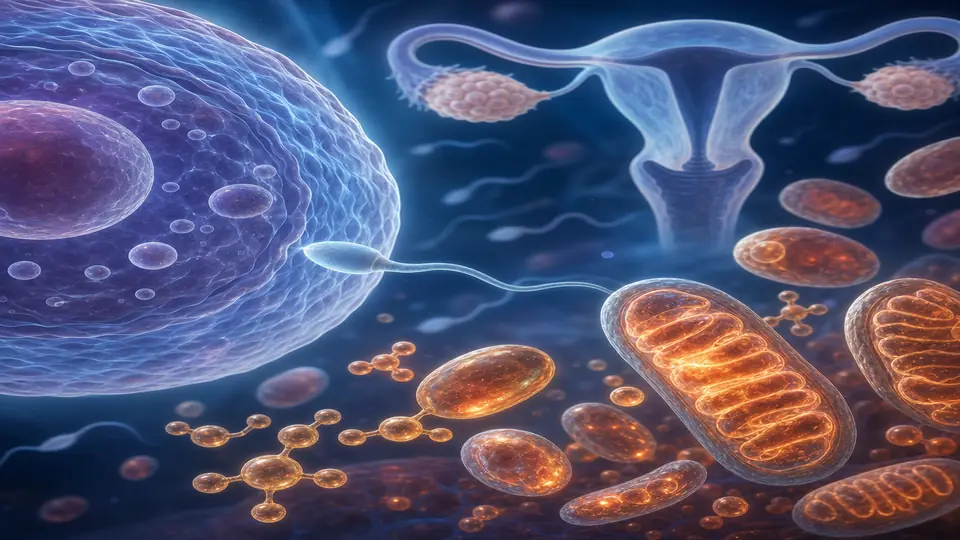
At a Glance
| Parameter | Detail |
|---|---|
| Intervention | Coenzyme Q10 (CoQ10 / ubiquinol) |
| Primary use | Improve oocyte quality, sperm motility, embryo development |
| Typical dose (women) | 200–600 mg ubiquinol daily, 60–90 days pre-treatment |
| Typical dose (men) | 200–300 mg ubiquinol daily, 90 days minimum |
| Best form | Ubiquinol (active, reduced form) |
| Evidence level | Multiple RCTs + mechanistic data for both female and male fertility |
| Best candidate | Women 35+, DOR, poor IVF responders; men with asthenozoospermia or high oxidative stress |
| Safety | Well-tolerated; no teratogenic signals in human studies |
Among the supplements that cross my desk most frequently from patients navigating infertility workups, CoQ10 sits in an unusual position: the mechanistic rationale is airtight, the clinical data is reasonably robust, and the safety profile is excellent — yet it remains underused in conventional reproductive medicine. This article reviews what we actually know from the literature, where the evidence is strong, where it thins out, and how I approach dosing in practice.
Why Mitochondria Determine Reproductive Outcome
Oocytes contain more mitochondria than virtually any other cell in the human body — estimates range from 100,000 to 600,000 mitochondria per mature egg, compared to a few hundred in a typical somatic cell. This density is not accidental. The energy demands of meiotic spindle assembly, chromosomal segregation, and early embryonic cell divisions before the embryonic genome activates are enormous and must be met entirely by maternal mitochondrial reserves.
Coenzyme Q10 occupies a central position in this system. As a cofactor of mitochondrial Complexes I, II, and III within the electron transport chain, CoQ10 is essential for ATP synthesis. It also functions as a fat-soluble antioxidant, quenching the reactive oxygen species that are an unavoidable byproduct of high-output energy metabolism.
The problem: CoQ10 synthesis declines with age. Tissue levels in the ovary drop measurably after age 35 — the same timeframe in which oocyte quality and aneuploidization rates worsen. This is not coincidence. A landmark 2015 study by Ben-Meir et al. demonstrated in aged mice that CoQ10 supplementation partially restored oocyte mitochondrial membrane potential, reduced chromosomal misalignment errors during meiosis, and improved embryo development rates (PMID: 26111777). The researchers confirmed depleted CoQ10 in aged ovarian tissue and rescued function by repleting it.
CoQ10 and Egg Quality: Clinical Evidence
Poor Ovarian Reserve and IVF Outcomes
The most clinically actionable data comes from women with diminished ovarian reserve (DOR) or poor IVF response history. A randomized controlled trial by Xu et al. assigned poor-prognosis young women to 600 mg/day CoQ10 or placebo for 60 days before an antagonist IVF cycle (PMID: 32833194). The CoQ10 group retrieved significantly more oocytes, yielded a higher proportion of mature (MII) oocytes, and produced more high-quality embryos. Critically, AFC and AMH improved in the treatment group — suggesting not just better yield from existing follicles, but a measurable signal on ovarian reserve markers.
A 2020 systematic review and meta-analysis by Florou et al. pooled data from multiple trials examining CoQ10 before IVF and found statistically significant improvements in:
- Number of retrieved oocytes
- Mature oocyte rate
- Fertilization rate
- Clinical pregnancy rate (though sample sizes remain limited)
The authors noted that effect sizes were most pronounced in older women and poor responders — the populations with the highest unmet need.
Age-Related Oocyte Decline
For women over 35 pursuing natural conception or ART, the rationale is strongest. Oocyte mitochondrial dysfunction is now understood to be a primary driver — not just a marker — of age-related fertility decline. Aneuploid embryos, which rise steeply after 38, are associated with insufficient energy for accurate chromosomal segregation during the meiotic divisions that occur just before and after fertilization.
Whether CoQ10 supplementation in this population translates to live birth rate improvements remains the key unanswered question. Existing RCTs are adequately powered for intermediate endpoints (oocyte count, fertilization rate) but underpowered for live birth. I counsel patients that the mechanistic rationale is sound and the safety profile permits a therapeutic trial, while being transparent about the limitations of current evidence.
Sperm Health and CoQ10: The Antioxidant Dimension
Male factor infertility accounts for roughly 50% of couples’ fertility challenges, and oxidative stress is implicated in 30–80% of male infertility cases. Sperm are uniquely vulnerable to ROS damage: they carry minimal cytoplasm, limiting their endogenous antioxidant capacity, yet their polyunsaturated fatty acid-rich membranes make them prime targets for lipid peroxidation.
CoQ10 accumulates in the midpiece of sperm — exactly where the mitochondria are concentrated and where oxidative challenge is highest. Several RCTs have examined CoQ10 supplementation in men with idiopathic asthenozoospermia (reduced motility without identified cause).
A randomized, double-blind, placebo-controlled trial by Balercia et al. supplemented infertile men with 300 mg CoQ10 daily for 26 weeks versus placebo (PMID: 18314130). CoQ10 and CoQ10H2 (ubiquinol) concentrations in seminal plasma rose significantly in the treatment group. Sperm motility improved. Importantly, semen plasma CoQ10 levels correlated positively with sperm motility parameters, providing mechanistic support for the supplementation effect.
A 2013 meta-analysis confirmed significant improvements in sperm density, motility, and morphology across CoQ10 trials in male infertility, with the strongest effect on forward progressive motility.
Who to Consider Testing First
Before recommending CoQ10 in male factor cases, I generally assess:
- Semen analysis with morphology (Kruger strict criteria)
- Oxidative stress markers (sperm DNA fragmentation index, reactive oxygen species in seminal plasma)
- Seminal CoQ10 levels if available
Men with high DNA fragmentation (>25% on DFI testing) and poor motility are my highest-yield targets for CoQ10 alongside broader antioxidant support.
Ubiquinol vs. Ubiquinone: The Form Matters
CoQ10 exists in two interconvertible redox states: ubiquinone (oxidized, the form in most supplements) and ubiquinol (reduced, the active antioxidant form). The human body converts ubiquinone to ubiquinol, but this conversion depends on adequate NADPH, which in turn requires healthy mitochondrial function — the very thing we’re trying to support.
In women over 35 and in patients with metabolic dysfunction, mitochondrial CoQ10 conversion efficiency declines. This makes ubiquinol the preferred supplemental form for reproductive applications:
- Bioavailability: Ubiquinol achieves ~3–4× higher plasma concentrations per milligram compared to ubiquinone in older adults
- Uptake kinetics: Faster rise in plasma CoQ10 following supplementation
- Antioxidant activity: Ubiquinol donates electrons directly; ubiquinone must first be reduced to act as an antioxidant
For younger patients (under 32) with good mitochondrial function, ubiquinone may be adequate at sufficient doses. For everyone else — and specifically in any patient I’m prescribing CoQ10 for fertility — I recommend ubiquinol as the default.
Dosage, Timing, and Duration
Preconception Protocol (Women)
| Phase | Dose | Duration |
|---|---|---|
| Pre-treatment loading | 400–600 mg ubiquinol daily | 60–90 days before ART cycle or targeted conception window |
| During IVF stimulation | Continue 400 mg daily through trigger | — |
| Early luteal/post-transfer | 200 mg daily | Through 8–10 weeks gestation (then reassess) |
The 60–90 day pretreatment window is biologically meaningful: the final stages of oocyte maturation (antral follicle development to ovulation) take approximately 90 days. Supplementing during this window gives CoQ10 the most opportunity to influence follicular mitochondrial function before the eggs that will be retrieved or ovulated have finalized their energy apparatus.
Sperm Optimization Protocol (Men)
| Parameter | Recommendation |
|---|---|
| Dose | 200–300 mg ubiquinol daily |
| Duration | Minimum 90 days (one full spermatogenesis cycle) |
| Co-supplementation | Zinc, selenium, vitamin E, folate often added based on panel results |
| Reassess | Semen analysis at 90 days; extend to 6 months if partial response |
Practical Considerations
- Take with a fat-containing meal — CoQ10 is fat-soluble and absorption drops significantly in a fasted state
- Refrigerated ubiquinol supplements maintain stability better than room-temperature storage
- No known drug interactions at fertility doses; note that CoQ10 has mild warfarin-antagonizing properties at high doses
- Safe in pregnancy based on current data, though I typically taper after the first trimester given limited third-trimester data
Who Benefits Most: Clinical Stratification
Highest Priority (Strong Rationale + Evidence)
- Women 35–43 with normal or diminished ovarian reserve preparing for IVF
- Poor IVF responders in prior cycles (≤3 eggs retrieved)
- Men with idiopathic asthenozoospermia or high DNA fragmentation
- Couples with recurrent implantation failure after PGT-normal embryos
Moderate Priority (Reasonable Rationale)
- Women under 35 with unexplained infertility
- Men with oligospermia without identified etiology
- Couples using intrauterine insemination (IUI) as their ART approach
Lower Priority / Insufficient Evidence
- Normospermia males with no oxidative stress markers
- Young women with high ovarian reserve and no prior ART failures
- Replacing evidence-based treatments (no supplement should delay appropriate evaluation or treatment)
What I Tell Patients in Practice
The conversation I have with patients starts with realistic expectations: CoQ10 is not a fertility treatment in the traditional sense — it does not stimulate ovulation, bypass blocked tubes, or correct a uterine anomaly. What it may do is optimize the mitochondrial environment of gametes during their final maturation window, potentially improving the percentage of oocytes that divide cleanly and embryos that develop properly.
For the patient in front of me — a 39-year-old with AMH of 0.8 and two prior IVF cycles with poor fertilization — the cost-benefit calculation strongly favors a trial. For the 28-year-old with unexplained infertility about to start her first IUI, the calculus is less clear, though I would not discourage it.
The 90-day pretreatment window requires advance planning, which means introducing this conversation at first consultation rather than the week before stimulation begins.
Related Articles
- CoQ10 for Heart Health: A Physician’s Review
- Ubiquinol vs. Ubiquinone: Which Form of CoQ10 Is Right for You?
- CoQ10 and Statins: Why Your Cardiologist Should Mention This
- Mitochondrial Dysfunction: How to Recognize and Address It
- Anti-Aging Supplements: A Physician’s Curated Stack
References
- Ben-Meir A, et al. Coenzyme Q10 restores oocyte mitochondrial function and fertility during reproductive aging. Aging Cell. 2015;14(5):887-895. PMID: 26111777
- Florou P, et al. Does coenzyme Q10 supplementation improve fertility outcomes in women undergoing assisted reproductive technology procedures? A systematic review and meta-analysis of randomized-controlled trials. J Assist Reprod Genet. 2020;37(10):2377-2387. PMID: 32833194
- Xu Y, et al. Pretreatment with coenzyme Q10 improves ovarian response and embryo quality in low-prognosis young women with decreased ovarian reserve: a randomized controlled trial. Front Endocrinol (Lausanne). 2018;9:425. PMID: 30072954
- Balercia G, et al. Coenzyme Q10 supplementation in infertile men with idiopathic asthenozoospermia: an open, uncontrolled pilot study. Fertil Steril. 2004;81(1):93-98. PMID: 14711548
- Bentov Y, Casper RF. The aging oocyte — can mitochondrial function be improved? Fertil Steril. 2013;99(1):18-22. PMID: 23273985
- Lafuente R, et al. Coenzyme Q10 and male infertility: a meta-analysis. J Assist Reprod Genet. 2013;30(9):1147-1156. PMID: 23912751
- Mostertz W, et al. Age- and genotype-specific effects of coenzyme Q10 in oocyte morphology and embryo development. Reprod Biomed Online. 2021;42(4):688-697.