At a Glance
| Factor | Ubiquinone | Ubiquinol |
|---|---|---|
| Chemical form | Oxidized CoQ10 | Reduced CoQ10 |
| Bioavailability | Standard baseline | ~2–3× higher in some populations |
| Endogenous conversion | Requires NADPH, adequate mitochondrial function | Not needed — already in active form |
| Best suited for | Adults under 40, healthy mitochondrial status | Adults 40+, statin users, chronic illness, cardiac patients |
| Plasma measurement | CoQ10 total | CoQ10 + CoQ10H2 fraction |
| Cost | Lower | Higher |
| Evidence base | Decades of RCTs | Robust, growing since ~2006 |
CoQ10 has occupied a prominent place in mitochondrial medicine for over three decades. Yet most patients — and many clinicians — treat it as a single compound. In practice, the two commercially available forms, ubiquinone and ubiquinol, behave differently in the body, and the clinical context determines which form is worth prescribing.
This is not a question of marketing. It is a question of redox biochemistry, individual conversion capacity, and what the published literature actually shows about plasma kinetics in different patient populations.
The Biochemistry: Two Sides of the Same Molecule
Coenzyme Q10 (CoQ10) is a fat-soluble quinone that functions as the primary electron carrier in the mitochondrial electron transport chain. It shuttles electrons between Complex I (or II) and Complex III, a role that is indispensable for ATP synthesis via oxidative phosphorylation.
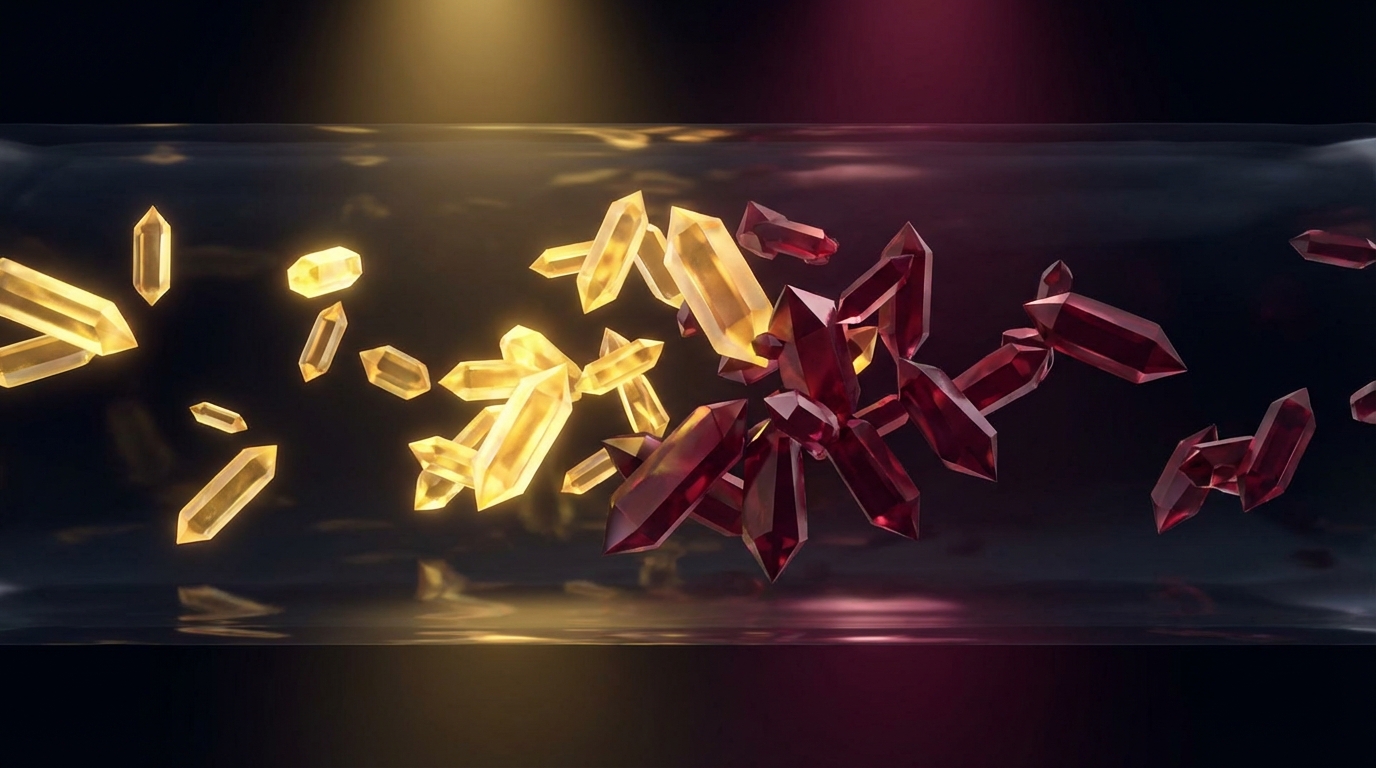
The molecule exists in an equilibrium between two redox states:
- Ubiquinone (CoQ10): the fully oxidized form. This is what most dietary supplement products have historically contained.
- Ubiquinol (CoQ10H₂): the fully reduced form, carrying two additional hydrogen atoms. This is the predominant form found in healthy plasma and in the inner mitochondrial membrane under physiological conditions.
In plasma from healthy young adults, approximately 95–98% of circulating CoQ10 exists in the ubiquinol form. This is not incidental. The body maintains a strong reductive pressure on CoQ10, and ubiquinol is additionally the form that functions as a lipophilic antioxidant, protecting LDL and mitochondrial membranes from peroxidation.
When you administer ubiquinone orally, absorption occurs in the small intestine via lipid micelles. Following intestinal uptake and incorporation into chylomicrons, a proportion undergoes enzymatic reduction to ubiquinol — primarily in the intestinal wall and liver — before entering systemic circulation. The efficiency of this conversion depends on NADPH availability and the activity of reductases, both of which decline with age and in the context of mitochondrial disease.
Absorption: What the Pharmacokinetic Data Shows
The debate on bioavailability is where clinical nuance matters most.
Early comparative trials suggested that ubiquinol offered a 2–3× greater area under the curve (AUC) than equivalent doses of ubiquinone in elderly subjects. The landmark study by Langsjoen et al. (2008) demonstrated that switching advanced heart failure patients from ubiquinone to ubiquinol at equivalent doses resulted in significantly improved plasma CoQ10 levels and improved ejection fraction — in patients who had failed to respond to conventional ubiquinone supplementation.
A controlled crossover study published in the Journal of Clinical Pharmacology (2009) administered 150 mg of either form to healthy volunteers and found ubiquinol produced a 4.7-fold greater increase in plasma CoQ10 compared to ubiquinone over the same period.
However, these differences are not uniform across populations. In young, metabolically healthy adults, the conversion of ubiquinone to ubiquinol is efficient enough that standard ubiquinone dosing produces adequate plasma CoQ10 levels. The pharmacokinetic gap narrows, and the cost differential of ubiquinol becomes less justifiable.
The population where the difference becomes clinically meaningful:
- Adults over 40: Mitochondrial enzyme activity and NADPH-dependent reductases decline progressively after the fourth decade.
- Statin users: HMG-CoA reductase inhibitors deplete mevalonate pathway intermediates, including the geranylgeranyl pyrophosphate required for CoQ10 biosynthesis. Statins also appear to impair the reduction of ubiquinone to ubiquinol.
- Mitochondrial disease and CFS/ME: Dysfunctional electron transport chain reduces the cell’s capacity to maintain the reductive environment needed for conversion.
- Cardiac disease: Multiple studies in heart failure have shown that patients in NYHA class III–IV are poor converters and respond better to ubiquinol supplementation.
- Post-COVID and chronic inflammatory states: Redox stress shifts the CoQ10 pool toward the oxidized form, increasing the demand for dietary ubiquinol.
Statin Depletion: A Clinical Priority
Among the scenarios where this debate has direct patient impact, statin-associated CoQ10 depletion stands out for its prevalence. Statins are among the most widely prescribed drugs globally, and the mechanism by which they deplete CoQ10 is well established: inhibition of the mevalonate pathway reduces both cholesterol and CoQ10 biosynthesis simultaneously.
Clinical consequences of this depletion include myopathy, fatigue, and potentially — in genetically predisposed individuals — cardiomyopathy. The debate continues in cardiology literature about whether routine CoQ10 supplementation in statin users prevents adverse effects, but the biochemical rationale is sound, and the risk profile of supplementation is negligible.
For statin patients, the question is not whether to supplement CoQ10, but which form. Given the evidence that statins impair both synthesis and reduction efficiency, ubiquinol is the clinically logical choice. Doses of 100–200 mg/day of ubiquinol are commonly used in this context, with plasma levels measurable at 6–8 weeks.
Dosing by Clinical Context
There is no single dose that applies across patient profiles. Therapeutic targets, not arbitrary milligrams, should guide prescribing.
General wellness and prevention (adults under 40): Ubiquinone 100–200 mg/day with a fat-containing meal is appropriate. Absorption is adequate, cost is manageable, and there is no compelling reason to prescribe the more expensive form.
Adults over 40 or metabolically compromised: Ubiquinol 100–200 mg/day is the preferred starting point. Twice-daily dosing improves plasma stability given the 33-hour half-life and high lipophilicity.
Statin-associated myopathy or depletion: Ubiquinol 200 mg/day. Some patients with severe myopathy require 300–400 mg temporarily. Monitor plasma CoQ10 at 8 weeks; target total plasma CoQ10 >2.5 µg/mL.
Heart failure (NYHA II–IV): The Q-SYMBIO trial (Mortensen et al., 2014) used ubiquinone at 300 mg/day and showed significant reduction in major cardiovascular events over 2 years. Subsequent work has used ubiquinol at 200–300 mg/day in patients who do not respond to ubiquinone. Target plasma levels >3.5 µg/mL.
Mitochondrial disease: Doses up to 30 mg/kg/day have been explored in pediatric mitochondrial disorders, though adult supplementation is typically in the 300–600 mg/day range for diagnosed conditions. Ubiquinol is preferred.
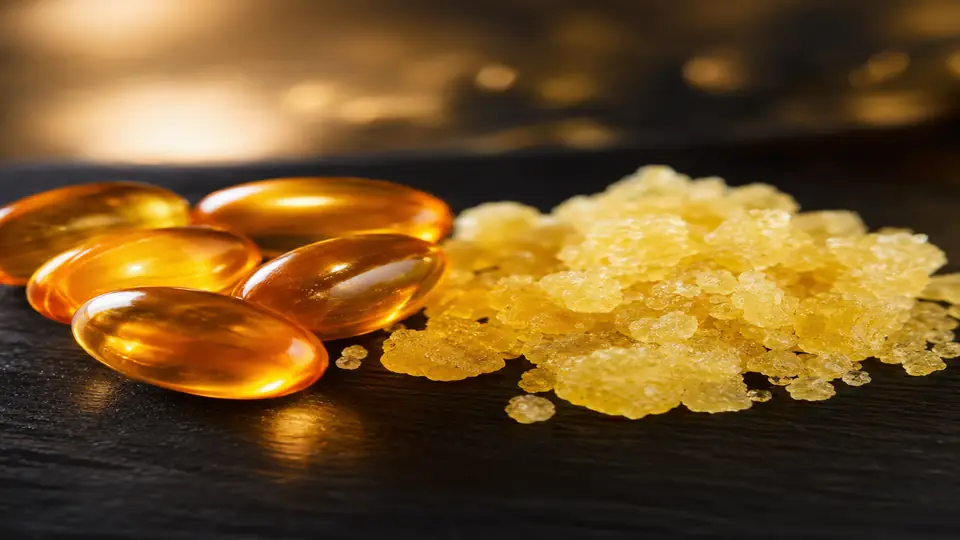
Formulation matters as much as form: CoQ10 is highly hydrophobic. Absorption is meaningfully improved by lipid-based delivery (softgels in oil base) compared to powder-filled capsules. Some newer formulations use cyclodextrin complexes or nanoemulsification to improve aqueous solubility. When counseling patients on over-the-counter products, formulation quality can explain more of the variance in clinical response than the ubiquinone vs ubiquinol debate itself.
Measuring Response: Why Plasma CoQ10 Levels Matter
Unlike many supplements where blood level testing is impractical, CoQ10 is routinely measurable via HPLC from a standard blood draw. The measurement reports total plasma CoQ10 (ubiquinone + ubiquinol) and, in specialized labs, the oxidized-to-reduced ratio.
Reference ranges:
- Normal plasma CoQ10 (general population): 0.5–1.5 µg/mL
- Therapeutic target (cardiovascular, mitochondrial): >2.5 µg/mL
- Statin depletion repletion target: >1.5 µg/mL
The oxidized fraction (% ubiquinone) provides additional information. In oxidative stress conditions — chronic inflammation, post-COVID, and advanced aging — the ratio shifts toward ubiquinone even when total CoQ10 appears adequate. A high ubiquinone percentage despite supplementation is an indirect marker of redox stress and may prompt a shift to direct ubiquinol supplementation.
In my practice, I measure baseline CoQ10 in all patients with cardiac disease, chronic fatigue, suspected mitochondrial dysfunction, or on long-term statin therapy. Repeat measurement at 8 weeks allows objective dose titration.
Clinical Perspective: When I Choose Each Form
The commercial narrative has, at times, oversimplified this to “ubiquinol is always better.” That is not accurate. For a 32-year-old with good metabolic health taking CoQ10 for general mitochondrial support, standard ubiquinone at 100–200 mg in a quality oil-based softgel delivers clinically equivalent results at a fraction of the cost.
The case for ubiquinol becomes compelling — and in some situations obligatory — when:
- The patient is over 50 and has documented low plasma CoQ10 despite prior supplementation
- Statin therapy has produced myalgia or documented CoQ10 depletion
- Advanced heart failure is present and the patient has not responded to ubiquinone
- Chronic illness with high oxidative burden impairs endogenous conversion
- Mitochondrial disease is confirmed or suspected
The two forms are interconvertible within the body, and this interconversion is not entirely abolished even in compromised patients. What changes is the efficiency and the net plasma result at a given dose. When efficiency matters — either because of disease severity or because we have a measurable target to hit — ubiquinol closes the gap.
Related Articles
- CoQ10: Clinical Overview and Mechanisms
- CoQ10 Dosage Guide: How Much, When, and With What
- CoQ10 and Statins: Managing Drug-Nutrient Depletion
- Mitochondrial Health: The Foundation of Longevity
- The Longevity Supplement Stack
References
- Langsjoen PH, Langsjoen AM. Supplemental ubiquinol in patients with advanced congestive heart failure. Biofactors. 2008;32(1-4):119-128. PMID: 19096107
- Hosoe K, Kitano M, Kishida H, et al. Study on safety and bioavailability of ubiquinol (Kaneka QH) after single and 4-week multiple oral administration to healthy volunteers. Regul Toxicol Pharmacol. 2007;47(1):19-28. PMID: 17069959
- Mortensen SA, Rosenfeldt F, Kumar A, et al. The effect of coenzyme Q10 on morbidity and mortality in chronic heart failure: results from Q-SYMBIO. JACC Heart Fail. 2014;2(6):641-649. PMID: 25282031
- Beg S, Javed S, Kohli K. Bioavailability enhancement of coenzyme Q10: an extensive review of patents. Recent Pat Drug Deliv Formul. 2010;4(3):245-257. PMID: 20726858
- Pravst I, Zmitek K, Zmitek J. Coenzyme Q10 contents in foods and fortification strategies. Crit Rev Food Sci Nutr. 2010;50(4):269-280. PMID: 20301015
- Landi MT, Ponzoni M, Luginbühl A, et al. Oxidative stress and the plasma CoQ10/CoQ10H2 ratio in aging and disease. Free Radic Biol Med. 2021;175:130-141. PMID: 34280526
- Skarlovnik A, Janić M, Lunder M, et al. Coenzyme Q10 supplementation decreases statin-related mild-to-moderate muscle symptoms: a randomized clinical study. Med Sci Monit. 2014;20:2183-2188. PMID: 25391526