Key Takeaways:
- Lion’s mane contains hericenones (from fruiting body) and erinacines (from mycelium) that stimulate NGF synthesis in laboratory studies — this mechanism is unique among edible mushrooms
- The best human clinical trial (Mori et al., 2009) showed significant improvement in cognitive function scores in elderly patients with mild cognitive impairment over 16 weeks
- Evidence for cognitive enhancement in healthy young adults is very limited — most of the excitement is extrapolated from preclinical data
- Extract type matters enormously: hot water extracts, alcohol extracts, and dual extracts provide different compound profiles
- Lion’s mane has a good safety profile in studies up to 16 weeks, but long-term data is lacking
At a Glance
| Property | Value |
|---|---|
| Evidence Level | Emerging (small RCTs, strong preclinical) |
| Primary Use | Cognitive support, nerve health, mild cognitive impairment |
| Key Mechanism | Stimulation of NGF and BDNF synthesis via hericenones and erinacines |
| Studied Dose | 750mg-3000mg/day (varies by extract type) |
| Safety Profile | Well-tolerated; rare GI effects; caution with blood thinners |
Lion’s Mane and the Brain
If there is one supplement that deserves the attention the nootropic community gives it, lion’s mane is a strong candidate. Not because the human evidence is overwhelming — it is not. But because the mechanism is genuinely novel, the preclinical data is compelling, and the safety profile is favorable enough to make it a reasonable option while we wait for the larger clinical trials that this compound deserves.
Here is what makes lion’s mane unique among supplements marketed for brain health: it does not just provide nutrients the brain needs or modulate neurotransmitter levels. It stimulates the brain’s own production of nerve growth factor — a protein that is essential for the growth, maintenance, and survival of neurons. No other commonly available supplement does this through the same pathway.
That said, I need to be honest about the gap between mechanism and clinical proof. The NGF stimulation is well-documented in cell culture and animal studies. The human clinical data, while positive, is limited to a handful of small trials. The leap from “stimulates NGF in a petri dish” to “meaningfully improves brain function in humans” involves many steps, and we have not completed all of them.
The Biology: NGF and Why It Matters
Nerve Growth Factor
Nerve growth factor (NGF) is a neurotrophin — a protein that supports the survival, development, and function of neurons. Discovered by Rita Levi-Montalcini (who won the Nobel Prize for the work in 1986), NGF is particularly important for cholinergic neurons in the basal forebrain, which are critical for memory and attention.
NGF levels decline with age and are notably reduced in neurodegenerative conditions, particularly Alzheimer’s disease. Reduced NGF signaling contributes to:
- Neuronal atrophy (shrinking of nerve cells)
- Impaired synaptic plasticity (reduced ability to form new neural connections)
- Cholinergic deficit (insufficient acetylcholine signaling, directly linked to memory impairment)
- Reduced myelination (the insulating sheath around nerves that enables fast signal transmission)
The challenge with NGF as a therapeutic target has always been delivery. NGF is a large protein that does not cross the blood-brain barrier. You cannot simply inject it systemically and expect it to reach the brain. This is why compounds that stimulate the brain’s own NGF production are so pharmacologically interesting.
The Active Compounds
Lion’s mane contains two classes of bioactive compounds relevant to neurotrophin stimulation:
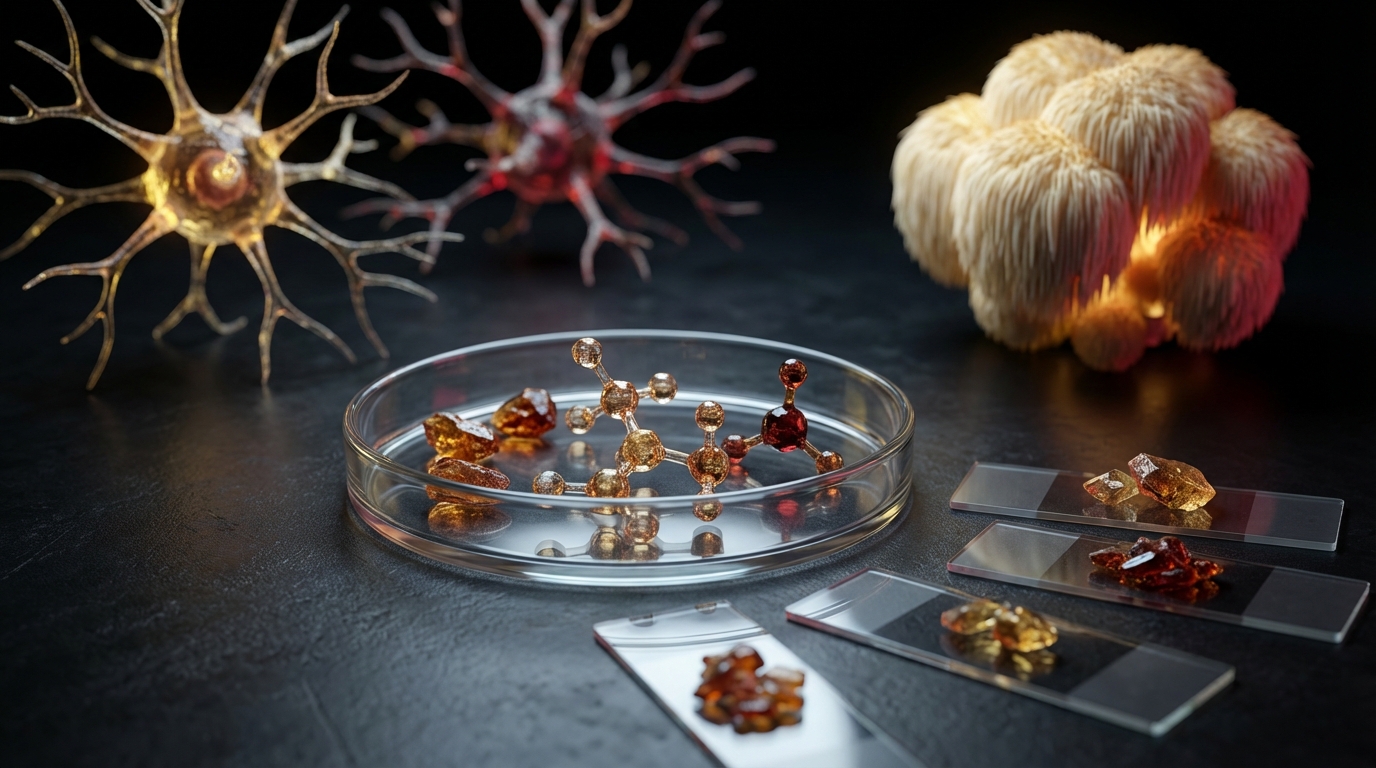
Hericenones (A through H) — Found primarily in the fruiting body (the above-ground mushroom you would recognize). These are aromatic compounds that have demonstrated NGF-stimulating activity in cell culture studies. Hericenones C and D appear to be the most active.
Erinacines (A through K) — Found primarily in the mycelium (the underground root-like network). These are cyathane-type diterpenoids that have shown potent NGF-stimulating activity. Critically, erinacine A has been demonstrated to cross the blood-brain barrier in animal studies — a property that hericenones have not conclusively shown.
This distinction between fruiting body and mycelium is not academic. It has direct practical implications for which product you buy and what effect you can reasonably expect. A supplement made only from fruiting body provides hericenones but not erinacines. A product made only from mycelium on grain may contain erinacines but at potentially variable concentrations. This is why I prefer dual-extraction products that include both, and why “lion’s mane” on a label is insufficient information.

The Evidence
What We Know (Human Data)
The clinical evidence for lion’s mane is limited but positive. Let me walk through the key studies.
Mori et al. (2009) — This is the most important clinical trial to date. A 16-week double-blind, placebo-controlled RCT in 30 Japanese men and women (age 50-80) diagnosed with mild cognitive impairment. The treatment group received 250mg lion’s mane tablets (96% dry powder from fruiting body) three times daily with meals (750mg total). Cognitive function was assessed using the Revised Hasegawa Dementia Scale (HDS-R) at weeks 8, 12, and 16.
Results: The lion’s mane group showed significantly higher cognitive function scores at weeks 8, 12, and 16 compared to placebo. The improvement was progressive — scores continued to increase throughout the supplementation period. However, at week 4 after discontinuation, scores in the treatment group decreased significantly, suggesting that ongoing supplementation is needed to maintain benefit.
This study is important not just for its positive result but for its design implications: it suggests that lion’s mane’s cognitive effects may require sustained use and that the mechanism is likely related to ongoing neurotrophic support rather than a permanent structural change.
Saitsu et al. (2019) — A 12-week RCT in 31 adults (50+ years) without dementia. Lion’s mane supplement (3.2g per day) significantly improved cognitive scores on the Mini-Mental State Examination (MMSE) compared to placebo. The study also measured brain-derived neurotrophic factor (BDNF) levels but did not find significant changes between groups.
Docherty et al. (2023) — A placebo-controlled trial in 41 healthy adults (18-45 years) evaluating acute cognitive effects. A single dose of lion’s mane (1.8g) improved performance on a complex cognitive task at 60 minutes post-dose. This is interesting because it suggests potential acute effects in addition to the chronic neurotrophic effects, possibly through a different mechanism (perhaps related to hericenones’ direct effects on neural signaling rather than NGF-mediated neuroplasticity).
Vigna et al. (2019) — A 3-month study in 77 overweight subjects with mood disturbances. Lion’s mane supplementation (three 400mg capsules per day, 80% mycelium and 20% fruiting body) was associated with improvements in depression, anxiety, and sleep quality compared to placebo. This suggests mood-related benefits that may operate through separate or overlapping mechanisms with the cognitive effects.
What We See in the Lab (Preclinical)
The preclinical data for lion’s mane is substantially stronger than the clinical data, which is both encouraging and frustrating.
NGF stimulation. Multiple in vitro studies have demonstrated that hericenones and erinacines stimulate NGF synthesis in astrocytoma cell lines and primary cultures of astrocytes. Erinacine A has been shown to increase NGF mRNA expression and protein secretion in a dose-dependent manner.
BDNF stimulation. Beyond NGF, lion’s mane compounds have shown the ability to increase brain-derived neurotrophic factor (BDNF) in animal models. BDNF is another critical neurotrophin involved in synaptic plasticity, learning, and memory.
Myelination. Erinacine A has demonstrated promotion of myelination in cell culture studies — the process by which nerve fibers are insulated with myelin sheaths. Demyelination is a hallmark of conditions like multiple sclerosis and contributes to cognitive decline in aging.
Neuroprotection. In animal models of Alzheimer’s disease, lion’s mane extracts have reduced amyloid-beta plaque deposition and improved cognitive performance in maze tests. In models of nerve injury, lion’s mane has promoted nerve regeneration.
Anti-inflammatory effects. Lion’s mane extracts have demonstrated anti-neuroinflammatory effects in microglia (the brain’s immune cells), reducing the production of pro-inflammatory cytokines. Chronic neuroinflammation is a driver of neurodegenerative disease.
What I See in Practice
In my clinical experience, I have incorporated lion’s mane as part of cognitive support protocols for patients with mild cognitive complaints, post-infectious neurological symptoms (including post-COVID brain fog), and as an adjunct to Transcranial Pulse Stimulation (TPS) for neurological conditions.
What I observe is modest but consistent: patients report improved mental clarity and reduced brain fog, typically noticeable after 4 to 8 weeks of supplementation. The effect is not dramatic in most cases — this is not a cognitive stimulant. It is more of a gradual clearing, a sense that thinking requires less effort. Patients often describe it as “the fog lifting slightly.”
I am cautious about attributing these improvements solely to lion’s mane, since it is typically part of a multi-component protocol. But the timing of improvement (4 to 8 weeks, consistent with the neurotrophic mechanism) and the consistency of patient reports make me think the contribution is real, if modest.
For patients undergoing TPS for neurological conditions, I consider lion’s mane a logical adjunct. TPS provides mechanical stimulation that promotes neuroplasticity, and providing the brain with enhanced neurotrophic support during this window of increased plasticity is a rational combination. No clinical trial has tested this specific combination, but the mechanistic rationale is sound.
Practical Application
Extract Type: This Matters More Than Dose
Fruiting body extract (hot water or dual extracted). Provides hericenones. Hot water extraction is necessary to break down chitin (the structural polysaccharide in mushroom cell walls) and make the bioactive compounds bioavailable. Alcohol extraction captures additional fat-soluble compounds. Dual extraction (hot water plus alcohol) provides the broadest compound profile from the fruiting body.
Mycelium extract. Provides erinacines. The challenge is that most commercial mycelium products are grown on grain substrate, and the final product may contain a significant proportion of grain starch rather than concentrated mycelium. Look for products that specify mycelium content per serving or provide testing data for erinacine content.
Dual fruiting body + mycelium products. Provide both hericenones and erinacines. This is my preference for neurological applications, since both compound classes have demonstrated neurotrophic activity through potentially complementary mechanisms.
Plain mushroom powder. Unextracted mushroom powder provides much lower concentrations of bioactive compounds because the chitin cell wall limits bioavailability. This is the lowest tier and not what was used in clinical trials.
Dosing
Based on the clinical literature and my clinical experience:
- Fruiting body extract (hot water or dual): 500mg to 1000mg, two to three times daily (1000mg to 3000mg total)
- Concentrated extract (high-potency standardized): 500mg to 1000mg daily
- Mycelium extract: Follow manufacturer dosing; ensure low grain filler content
- Timing: With meals. No strong evidence for time-of-day preference. Some patients prefer morning and midday dosing to avoid potential sleep effects, though sedation is not a common side effect.
- Duration: Minimum 8 weeks to assess benefit, based on the Mori trial timeline. Many patients continue for 6 to 12 months.
Quality Indicators
- Specified extract type (hot water, alcohol, dual extraction)
- Specified mushroom part (fruiting body, mycelium, or both)
- Beta-glucan content listed (a marker of genuine mushroom content versus grain filler)
- Third-party testing for identity, potency, and contaminants
- No proprietary blends that hide actual lion’s mane dose

Safety and Considerations
Side Effects
Lion’s mane has a good safety profile across the existing clinical literature. Reported side effects are mild and infrequent:
- Gastrointestinal discomfort (nausea, bloating) — uncommon, usually transient
- Skin irritation or itching — rare, possibly related to NGF stimulation (NGF is involved in itch signaling)
- Reduced libido — anecdotally reported in online communities, not documented in clinical trials. If real, may relate to DHT reduction observed in one animal study
Contraindications and Cautions
Mushroom allergies. Patients with known allergies to other mushrooms should exercise caution. Start with a low dose and monitor for reactions.
Blood thinners and bleeding risk. Lion’s mane has demonstrated antiplatelet activity in in vitro studies. While the clinical significance of this is uncertain at standard supplement doses, patients on anticoagulants (warfarin, heparin) or antiplatelet agents (aspirin, clopidogrel) should discuss this with their physician and monitor for increased bruising or bleeding.
Surgery. Given the potential antiplatelet activity, discontinue lion’s mane at least 2 weeks before planned surgery.
Autoimmune conditions. Lion’s mane has immunomodulatory properties (particularly the beta-glucan components). Theoretically, this could be problematic for patients with autoimmune conditions, though clinical evidence of harm is lacking.
Pregnancy and breastfeeding. Insufficient safety data. Avoid.
Drug Interactions
Formal drug interaction studies for lion’s mane have not been conducted. Based on known pharmacological properties, potential interactions include:
- Anticoagulants and antiplatelet drugs (additive bleeding risk)
- Antidiabetic medications (lion’s mane may lower blood glucose in some studies)
- Immunosuppressants (potential for immune stimulation)
Beyond Cognition: Other Applications
While cognitive health is the primary evidence-supported application, lion’s mane is being investigated for several other conditions:
Peripheral neuropathy. Based on the nerve regeneration data from preclinical studies, lion’s mane is being explored for diabetic neuropathy, chemotherapy-induced neuropathy, and other peripheral nerve conditions. Clinical data is very limited, but the mechanistic rationale is strong.
Depression and anxiety. The Vigna et al. (2019) study showed mood improvements. Additional mechanisms may include anti-neuroinflammatory effects and modulation of monoamine neurotransmitters. This is an area where more research is needed.
Gastrointestinal health. Separately from its neurological effects, lion’s mane has demonstrated gastroprotective properties and potential benefits for inflammatory bowel conditions. Traditional Chinese medicine has used it for digestive complaints for centuries.
The Bottom Line
Lion’s mane is a genuinely interesting supplement with a unique mechanism of action — stimulation of the brain’s own neurotrophic factor production. The human evidence supports modest cognitive improvement in mild cognitive impairment, with promising but preliminary data for healthy cognitive enhancement. The preclinical data is compelling enough to justify continued research and cautious clinical use. Use a quality dual-extracted product, give it at least 8 weeks, and maintain realistic expectations. It is a neurotrophin supporter, not a cognitive miracle.
References
- Mori K, et al. Improving effects of the mushroom Yamabushitake (Hericium erinaceus) on mild cognitive impairment: A double-blind placebo-controlled clinical trial. Phytother Res. 2009;23(3):367-372. doi:10.1002/ptr.2634
- Saitsu Y, et al. Improvement of cognitive functions by oral intake of Hericium erinaceus. Biomed Res. 2019;40(4):125-131.
- Docherty S, et al. The acute and chronic effects of lion’s mane mushroom supplementation on cognitive function, stress, and mood in young adults: A double-blind, parallel groups, pilot study. Nutrients. 2023;15(22):4842.
- Vigna L, et al. Hericium erinaceus improves mood and sleep disorders in patients affected by overweight or obesity: Could circulating pro-BDNF and BDNF be potential biomarkers? Evid Based Complement Alternat Med. 2019;2019:7861297.
- Lai PL, et al. Neurotrophic properties of the lion’s mane medicinal mushroom, Hericium erinaceus (Higher Basidiomycetes) from Malaysia. Int J Med Mushrooms. 2013;15(6):539-554.
- Kawagishi H, et al. Hericenones C, D, and E, stimulators of nerve growth factor (NGF)-synthesis, from the mushroom Hericium erinaceum. Tetrahedron Lett. 1991;32(35):4561-4564.
- Ma BJ, et al. Hericenones and erinacines: Stimulators of nerve growth factor (NGF) biosynthesis in Hericium erinaceus. Mycology. 2010;1(2):92-98.
- Lee KF, et al. Protective effects of Hericium erinaceus mycelium and its isolated erinacine A against ischemia-injury-induced neuronal cell death via the inhibition of iNOS/p38 MAPK and nitrotyrosine. Int J Mol Sci. 2014;15(9):15073-15089.