
At a Glance
| Parameter | Detail |
|---|---|
| Supplement class | Phospholipid (glycerophospholipid) |
| Primary source | Soy-derived (sunflower-derived for soy-free) |
| Clinical dose | 300–400 mg/day in divided doses |
| Onset | 4–8 weeks for memory outcomes |
| FDA status | Qualified health claim (cognitive decline, 2003) |
| Key mechanism | Neuronal membrane fluidity, acetylcholine synthesis, HPA-axis modulation |
| Best evidence for | Age-related memory loss, cortisol blunting, ADHD adjunct |
| Safety | Excellent; mild GI upset at high doses |
| Drug interactions | Additive with anticoagulants (monitor), mild cholinergic enhancement |
Phosphatidylserine sits at the intersection of nutritional biochemistry and clinical neurology in a way few supplements do. In my practice, patients with early cognitive complaints, chronic stress-driven HPA dysregulation, and performance athletes looking to manage training-induced cortisol spikes all turn up with questions about it — and the evidence consistently supports its use in these populations. Unlike many nootropic compounds that ride on preclinical rodent data, PS has accumulated a respectable body of randomised controlled trials in humans, enough that the FDA issued a qualified health claim in 2003 linking it to reduced risk of cognitive dysfunction.
This guide explains the biochemistry, the clinical evidence hierarchy, how I approach dosing, and who is most likely to benefit — while being honest about where the science remains incomplete.
What Is Phosphatidylserine and Why Does the Brain Need It?
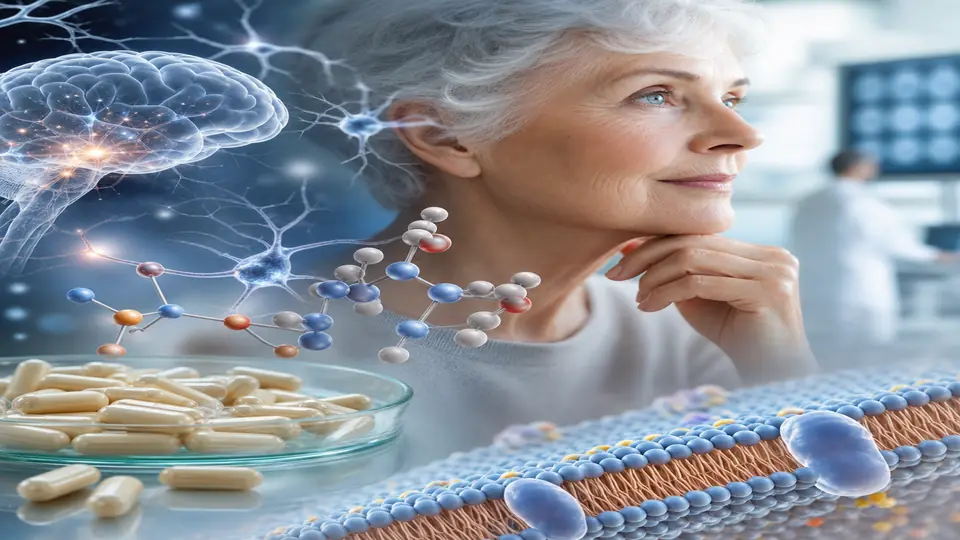
Phosphatidylserine is a phospholipid — a fat molecule with a phosphate head group — concentrated in the inner leaflet of neuronal cell membranes. It accounts for roughly 10–15% of total brain phospholipids and is particularly abundant in the hippocampus and prefrontal cortex, two regions critical to declarative memory and executive function.
Its physiological roles are multi-layered:
Membrane fluidity. PS maintains the liquid-crystalline state of neuronal membranes that allows receptor proteins, ion channels, and signalling enzymes to move laterally and interact efficiently. As neurons age, membrane phospholipid composition shifts, reducing this fluidity and impairing synaptic transmission.
Neurotransmitter metabolism. PS facilitates the activity of choline acetyltransferase — the enzyme that synthesises acetylcholine — and supports dopaminergic neurotransmission. Both systems decline with age and are central to memory encoding.
Apoptotic signalling. In healthy cells PS is confined to the inner membrane leaflet. Its externalisation to the outer leaflet signals macrophages to clear damaged cells — making it a key regulator of neuroinflammation and synaptic pruning.
Na+/K+-ATPase activity. PS activates this pump directly, supporting the membrane potential that underlies action potential generation and neuronal firing thresholds.
The Aging Decline Problem
Brain PS content declines steadily from the fourth decade onward. Post-mortem analyses in Alzheimer’s patients show cortical PS deficits of 20–30% compared to age-matched controls. Whether this deficiency is causative or consequential remains debated, but it establishes a clear biological rationale for supplementation.
Endogenous PS synthesis depends on the “PS synthase” enzyme system using serine and existing phosphatidylcholine or phosphatidylethanolamine as substrates. This pathway is metabolically expensive and becomes less efficient with age, fatty acid composition changes, and chronic inflammation — all common in patients I see with complex chronic illness.
Memory and Cognitive Function: The Clinical Evidence
Randomised Controlled Trials in Older Adults
The strongest evidence base comes from studies in cognitively intact older adults and those with early-stage memory complaints.
Crook et al. (1991) — a double-blind RCT in 149 older adults with age-associated memory impairment — found that 300 mg/day bovine-derived PS for 12 weeks significantly improved performance on neuropsychological tests of learning, name–face recall, and telephone number recall. Responders showed a reversion of cognitive performance by approximately 12 years on specific measures.
Cenacchi et al. (1993) examined 425 elderly patients with moderate cognitive decline in a multicentre, double-blind design. Those receiving 300 mg/day PS showed significant improvements in mental flexibility, recall of word lists, and global clinical ratings compared to placebo at 6 months.
Kato-Kataoka et al. (2010) used soy-derived PS (the form most commercially available today) in older adults with mild memory complaints, reporting improvements in delayed word recall and processing speed at 300 mg/day over 6 months — important because it demonstrated that plant-derived PS replicates bovine findings.
The FDA Qualified Health Claim
In 2003, the FDA evaluated the evidence and issued a qualified health claim: “Consumption of phosphatidylserine may reduce the risk of dementia in the elderly. Very limited and preliminary scientific research suggests that phosphatidylserine may reduce the risk of cognitive dysfunction in the elderly.” The qualification reflects that the evidence meets the threshold for benefit without reaching the gold standard required for a full health claim — a reasonable position given the literature’s size.
Mechanism of Memory Enhancement
The memory benefit appears to operate through multiple simultaneous mechanisms: improved acetylcholine turnover in the hippocampus, enhanced glucose uptake in cortical neurons (measured by PET), restoration of age-degraded synaptic vesicle recycling, and reduction in neuroinflammatory cytokine signalling. This multi-target profile distinguishes PS from single-mechanism nootropics.
Cortisol Modulation: The Stress-Response Connection
One of the most clinically relevant but under-discussed properties of PS is its ability to blunt the hypothalamic-pituitary-adrenal (HPA) axis response to physical and psychological stress — an effect documented across multiple study designs.
Exercise-Induced Cortisol
Fahey et al. (1998) and Starks et al. (2008) both demonstrated significant attenuation of exercise-induced ACTH and cortisol responses in healthy males receiving PS supplementation. Starks found a 20% reduction in cortisol area under the curve during an intense cycling protocol with 800 mg/day — without blunting the adaptive hormonal response to training when used at 400 mg.
Importantly, PS does not suppress cortisol to below-normal levels or impair the stress response pathologically. It appears to restore appropriate glucocorticoid feedback sensitivity — essentially making the HPA axis more responsive to its own braking signals rather than simply suppressing output.
Psychological Stress
A 2004 study by Hellhammer et al. used a modified Trier Social Stress Test and found that 400 mg/day PS for 2 weeks significantly reduced ACTH and salivary cortisol responses to induced social stress, along with subjective distress scores. The same group’s follow-up work suggested that a PS–phosphatidic acid complex at 400 mg/day produced an even more pronounced effect.
Clinical Relevance
For patients with chronic stress-driven HPA dysregulation — a pattern I see frequently in post-Lyme, post-COVID, and chronic fatigue presentations — PS supplementation offers a rational adjunct. It addresses the cortisol excess that drives hippocampal volume reduction, disrupts sleep architecture, and accelerates immunosenescence, without the dependency concerns of pharmaceutical cortisol modulators.
ADHD and Paediatric Cognition
PS has attracted interest as a non-stimulant adjunct in ADHD management. Manor et al. (2012) conducted a double-blind RCT in 200 children aged 4–14 with ADHD, using PS–omega-3 combination at 300 mg/day for 15 weeks. Participants showed significant improvements in ADHD symptom scores, particularly inattention, and in working memory tasks — with benefits most pronounced in those with emotional and behavioural difficulties.
Vaisman et al. (2008) found similar working memory and cognitive performance improvements in children with ADHD using PS–DHA combination versus placebo.
These findings raise the question of synergy with omega-3: DHA is required for effective PS incorporation into neuronal membranes, so the combination may be more efficacious than either alone. This aligns with mechanistic logic and is how I typically recommend both to patients with cognitive complaints.
Dosage, Timing, and Forms
Recommended Dosing
| Indication | Dose | Duration |
|---|---|---|
| Age-related memory support | 100–200 mg three times daily (with meals) | Minimum 12 weeks |
| Cortisol / stress management | 400–800 mg/day in divided doses | 4–8 weeks |
| ADHD adjunct | 200–300 mg/day (often with DHA) | 8–16 weeks |
| Athletic cortisol blunting | 600–800 mg on training days, 400 mg on rest days | Per cycle |
| Cognitive maintenance (healthy adults) | 100 mg/day | Ongoing |
Timing
Taking PS with meals improves tolerability and may enhance absorption by leveraging dietary fat co-ingestion. For cortisol blunting purposes, dosing 30–60 minutes before anticipated stressors (exercise sessions, high-stakes events) has biological rationale given its HPA-modulating half-life.
Forms
Soy-derived PS is the most widely studied plant-derived form and is now standard following the phase-out of bovine cortex-derived PS due to BSE concerns in the 1990s. Clinical trials since 2000 consistently show equivalent efficacy to bovine forms.
Sunflower-derived PS is preferred for patients with soy sensitivities or those avoiding phytoestrogens. The evidence base is smaller but growing.
PS–phosphatidic acid complexes (e.g., Sharp-PS Gold) appear to offer enhanced HPA-modulating effects based on Hellhammer’s work and are worth considering when cortisol regulation is the primary goal.
Liposomal PS preparations have entered the market with claims of improved bioavailability, though comparative absorption data in humans remains thin.
What to Combine With
- Omega-3 DHA (1–2 g/day): Enhances PS incorporation into neuronal membranes. Near-universal co-recommendation in my practice.
- CDP-choline or Alpha-GPC: Synergistic support for cholinergic neurotransmission when acetylcholine is the primary target.
- Magnesium L-threonate: Addresses NMDA receptor regulation alongside PS membrane effects for broader cognitive support.
- NAD+ precursors (NMN/NR): Complements PS’s membrane-level effects with mitochondrial energy restoration in neurons.
Safety, Contraindications, and Monitoring
PS carries an excellent safety profile across the trial literature. The most common adverse effect is mild gastrointestinal upset — nausea, loose stools — typically dose-dependent and resolved by taking with food or dose reduction.
Anticoagulation: PS has mild antiplatelet activity and theoretical additive effects with anticoagulants (warfarin, novel oral anticoagulants, high-dose fish oil). In clinical practice, standard doses of 300 mg/day have not produced clinically significant bleeding issues, but monitoring INR in anticoagulated patients when initiating PS is prudent.
Immune modulation: PS is a key “eat-me” signal in apoptotic clearance. There is theoretical concern that very high doses might interfere with immune surveillance in oncology patients, though no clinical evidence supports this at supplemental doses. I apply extra caution in patients on active immunotherapy protocols.
No significant interactions with cholinesterase inhibitors have been established; indeed, limited data suggests modest additive benefit — a relevant consideration for patients already on donepezil or rivastigmine.
There are no established contraindications in pregnancy beyond the general caution of limited trial data in pregnant populations.
Who Benefits Most: A Clinical Profile
In my practice, the patients who respond most consistently and meaningfully to PS supplementation share certain characteristics:
Subjective memory complaints with normal or borderline formal testing. This “worried well” group — often highly educated, high-performing individuals who notice slippage — consistently reports improved name recall, word-finding, and mental organisation at 300 mg/day by 6–8 weeks.
Chronic stress with salivary cortisol elevation or flat diurnal pattern. The HPA-modulating effect is most clinically relevant here. PS does not replace addressing root causes of chronic stress but provides biochemical support while those root causes are addressed.
Post-COVID or post-Lyme brain fog. Neuroinflammation-driven membrane phospholipid derangement is an emerging mechanistic hypothesis for post-infectious cognitive symptoms. PS addresses this at the membrane level, complementing broader anti-inflammatory and mitochondrial support strategies.
Competitive athletes. Particularly in endurance sports where chronic cortisol elevation impairs recovery, muscle preservation, and sleep quality. The evidence here is among the most robust.
Early MCI (Mild Cognitive Impairment). As an adjunct to comprehensive longevity and neuroprotective protocols, not as monotherapy.
Related Articles
- NAD+ Supplement Guide: NMN, NR, and IV NAD Compared — PS and NAD precursors address complementary aspects of neuronal aging; many patients use both.
- Magnesium Glycinate vs L-Threonate: Which Is Right for Brain Health? — Magnesium L-threonate pairs naturally with PS in cognitive support protocols.
- Ashwagandha and Cortisol: Clinical Evidence Review — Complementary HPA-axis modulator with different mechanism; often used alongside PS in stress-related presentations.
- Post-COVID Brain Fog: Neuroinflammation and Treatment Approaches — Covers the neuroinflammatory context in which PS supplementation is most compelling.
- The Longevity Supplement Stack: A Physician’s Perspective — Where PS fits within a comprehensive cognitive longevity protocol.
References
- Crook TH, et al. Effects of phosphatidylserine in age-associated memory impairment. Neurology. 1991;41(5):644-649. PMID: 2027484.
- Cenacchi T, et al. Cognitive decline in the elderly: a double-blind, placebo-controlled multicenter study on efficacy of phosphatidylserine administration. Aging (Milano). 1993;5(2):123-133. PMID: 8323999.
- Kato-Kataoka A, et al. Soybean-derived phosphatidylserine improves memory function of the elderly Japanese subjects with memory complaints. J Clin Biochem Nutr. 2010;47(3):246-255. PMID: 21120148.
- Hellhammer J, et al. Effects of soy lecithin phosphatidic acid and phosphatidylserine complex (PAS) on the endocrine and psychological responses to mental stress. Stress. 2004;7(2):119-126. PMID: 15512856.
- Manor I, et al. The effect of phosphatidylserine containing omega3 fatty-acids on attention-deficit hyperactivity disorder symptoms in children: a double-blind placebo-controlled trial, followed by an open-label extension. Eur Psychiatry. 2012;27(5):335-342. PMID: 21807480.
- Starks MA, et al. The effects of phosphatidylserine on endocrine response to moderate intensity exercise. J Int Soc Sports Nutr. 2008;5:11. PMID: 18662365.
- Kim HY, et al. Phosphatidylserine in the brain: metabolism and function. Prog Lipid Res. 2014;56:1-18. PMID: 24992464.