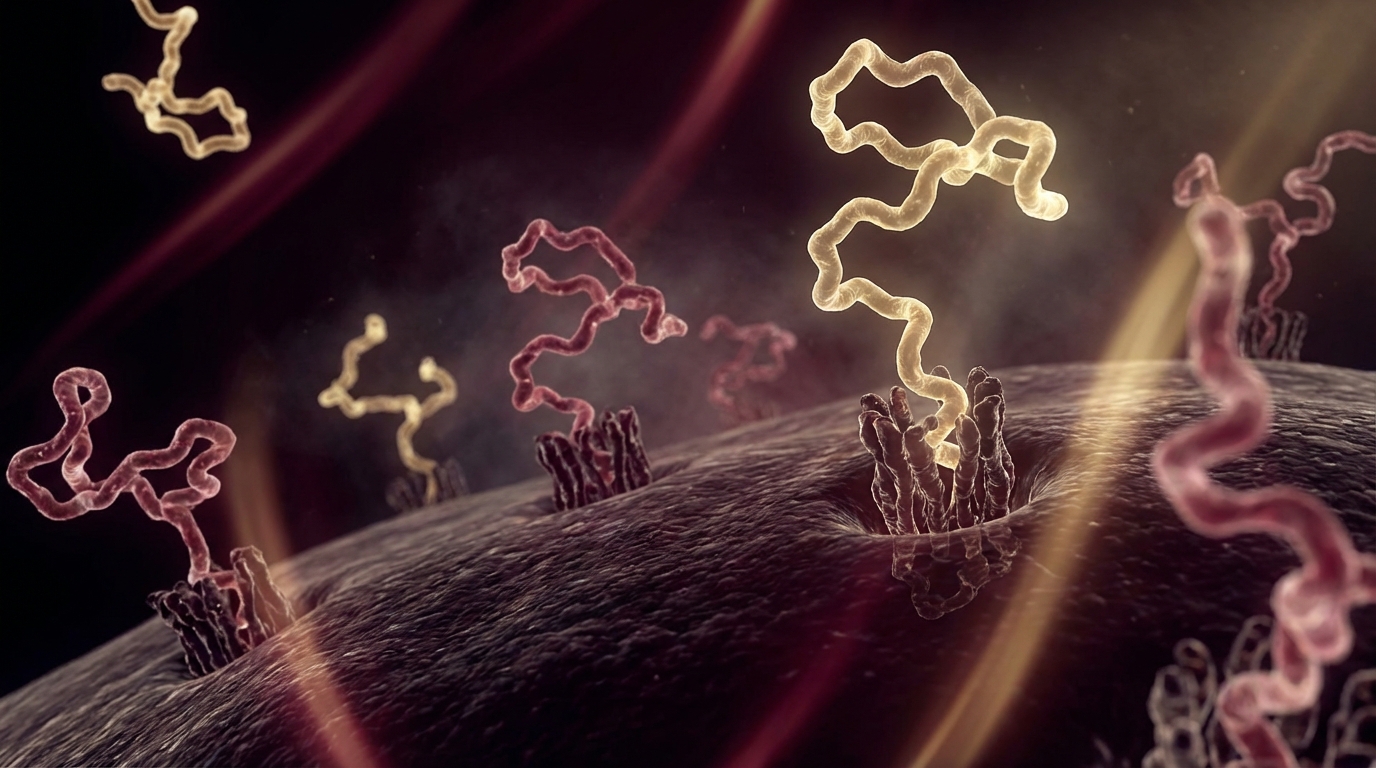
Sleep is one of the most fundamental determinants of health, and yet it is one of the most difficult to optimize pharmacologically without creating new problems. Most sleep medications — benzodiazepines, Z-drugs, antihistamines — work by suppressing brain activity, which produces unconsciousness but not necessarily restorative sleep. DSIP (delta sleep-inducing peptide) represents a fundamentally different approach: a neuromodulatory peptide that may influence sleep architecture rather than simply sedating the brain. The evidence, however, is more complicated than the name suggests.
At a Glance
Property Detail
Type Endogenous neuropeptide
Amino acid count 9 (Trp-Ala-Gly-Gly-Asp-Ala-Ser-Gly-Glu)
Primary mechanism Neuroendocrine modulation, sleep architecture influence, stress response modulation
Evidence level Animal studies, limited human studies (1980s-90s era)
Regulatory status Not approved; research compound
Route of administration IV, SC injection, intranasal
What Is DSIP?
DSIP was first identified in 1977 by Swiss researchers Schoenenberger and Monnier, who isolated it from the blood of rabbits during electrically induced delta-wave (slow-wave) sleep. The discovery prompted considerable excitement about the possibility of an endogenous sleep-promoting substance — a natural sleep peptide that could be used therapeutically.

The initial name “delta sleep-inducing peptide” turns out to be somewhat misleading. Subsequent research has shown that DSIP does not reliably induce delta sleep in all experimental conditions. Its effects on sleep are more nuanced than the name implies — it appears to modulate sleep architecture and circadian regulation rather than simply inducing sleep. The name has persisted despite this clarification, which has contributed to some confusion about what the peptide actually does.
DSIP is found in the brain, pituitary gland, and peripheral organs. Its exact physiological role remains incompletely characterized, but it appears to function as a neuromodulatory peptide involved in stress response, pain modulation, and neuroendocrine regulation, with effects on sleep being one component of a broader regulatory function.
Mechanism of Action
Primary Pathways
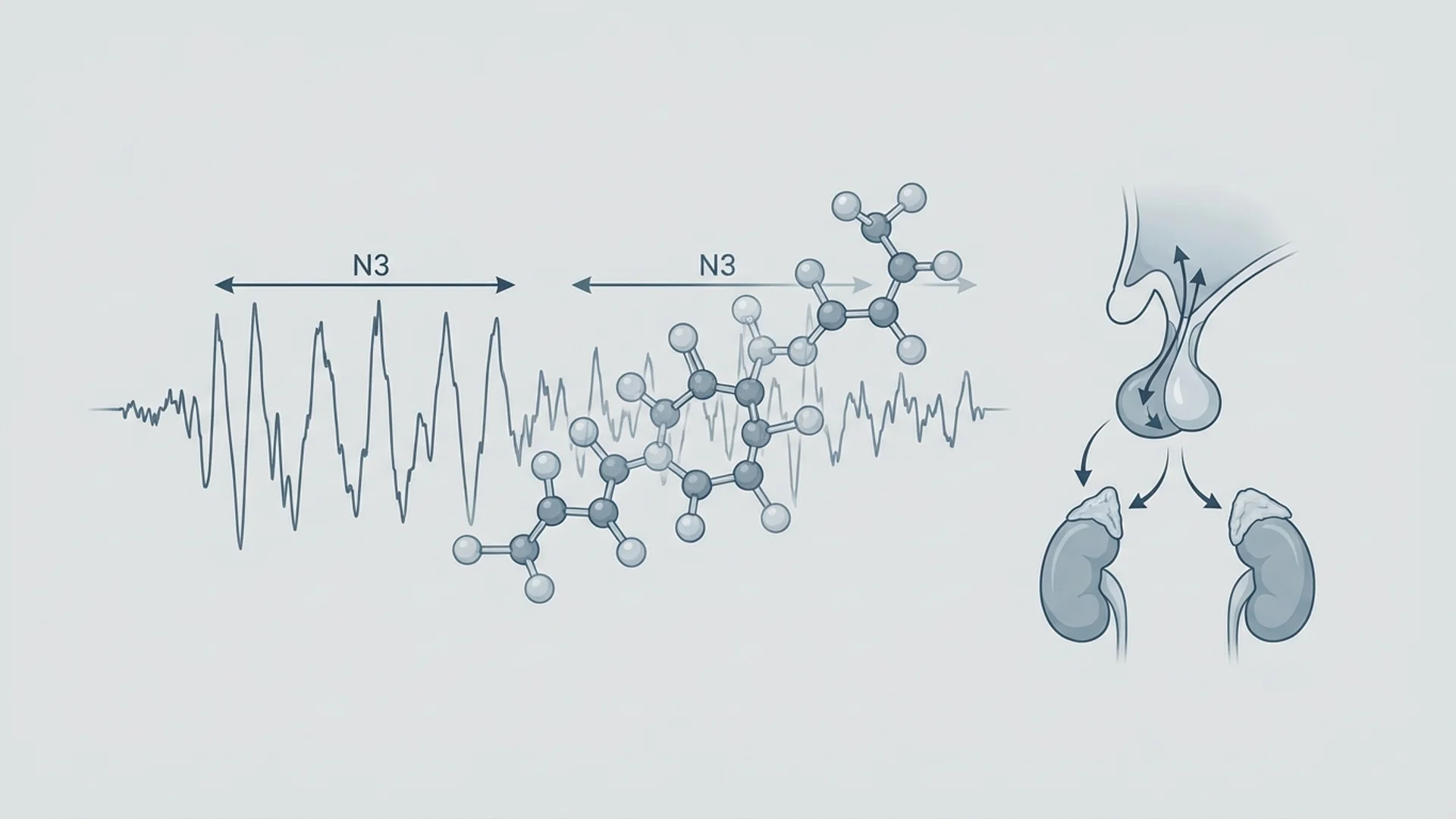
- Sleep Architecture Modulation: DSIP appears to influence the proportion and timing of sleep stages rather than inducing sleep outright. In some studies, it has been associated with increased slow-wave sleep (stages 3 and 4) and improved sleep efficiency. The mechanism likely involves modulation of sleep-regulating neurotransmitter systems rather than direct sedation.
- Neuroendocrine Regulation: DSIP has documented effects on several neuroendocrine axes. It has been shown to modulate cortisol and ACTH release, influence luteinizing hormone (LH) secretion, and interact with the somatotropic axis (growth hormone regulation). These neuroendocrine effects may underlie its influence on sleep, as sleep architecture is closely tied to hormonal rhythms.
- Stress Response Modulation: In animal models, DSIP has demonstrated stress-protective effects, including reduction of stress-induced metabolic changes and protection against stress-related tissue damage. It appears to modulate the hypothalamic-pituitary-adrenal (HPA) axis, reducing the cortisol response to stress without suppressing baseline cortisol production.
- Pain Modulation: DSIP has shown analgesic properties in some experimental models, possibly through interaction with endogenous opioid systems. It does not appear to act through direct opioid receptor agonism but may modulate opioid peptide metabolism.
- Antioxidant Effects: Limited studies have suggested that DSIP may have antioxidant properties, reducing lipid peroxidation and enhancing endogenous antioxidant defenses. The clinical significance of these effects is unclear.
Research Assessment
What the Evidence Shows
Claimed Effect Evidence Level Key Studies Assessment
Stress resilience enhancement Animal studies Sudakov 1995 Preliminary
Pain modulation Animal + limited human Nakamura 1985 Preliminary
Neuroendocrine modulation Human studies Graf 1986 Preliminary
Chronic insomnia treatment Small human trials Schneider-Helmert 1987 Mixed results
The human data for DSIP, while limited, does include actual clinical studies. Schneider-Helmert conducted several studies in the 1980s examining DSIP in patients with chronic insomnia. The results were mixed — some patients showed meaningful improvement in sleep quality and efficiency, while others showed minimal response. This inconsistency has been a persistent feature of the DSIP literature.
Luthringer and colleagues (1995) conducted a more rigorous study using polysomnography and found that DSIP administration was associated with changes in sleep architecture, but the clinical significance of these changes was modest.
The most consistently reported effect across studies is a reduction in subjective sleep latency (time to fall asleep) and an improvement in subjective sleep quality, particularly in patients whose insomnia is associated with high stress levels or HPA axis dysregulation.
What the Evidence Does Not Show
DSIP does not reliably induce sleep in healthy individuals with normal sleep. It is not a sedative. The inconsistency of results across studies suggests that DSIP’s effects may be context-dependent — more relevant in states of sleep disruption or neuroendocrine dysregulation than in normal physiology.
The research on DSIP largely dates from the 1980s and 1990s, and there has been relatively little modern investigation using contemporary methodologies and standards. This means that the existing evidence, while interesting, has not been updated with the rigorous trial designs that current standards demand.
The mechanism of action remains incompletely understood. Despite decades of research, the specific receptor or receptors through which DSIP exerts its effects have not been definitively identified, which is unusual for a peptide with documented biological activity.
Dosing
Route Dose Range Frequency Duration Source of Data
Subcutaneous 100-300 mcg Daily, typically evening 5-14 days Clinical practice
Intranasal 100-200 mcg Before bedtime Variable Clinical practice
Note: Dosing is based on historical clinical studies and clinical practice. Modern dose-finding studies have not been conducted.
Safety and Side Effects
Known
In the published studies, DSIP has demonstrated a favorable safety profile. No serious adverse events have been reported. The most common observation is that some patients experience increased dream vividness or recall. Unlike conventional sleep medications, DSIP does not appear to cause next-day sedation, cognitive impairment, or dependence.
Theoretical Concerns
The neuroendocrine effects of DSIP raise theoretical questions about long-term use. Modulation of cortisol, LH, and growth hormone axes could have downstream effects on adrenal function, reproductive function, and metabolic regulation if used chronically. These concerns are theoretical — long-term safety data does not exist.
Contraindications
No formal contraindications established. Caution in patients with adrenal disorders (given HPA axis effects), reproductive hormone-sensitive conditions, and pituitary disorders.
Drug and Supplement Interactions
Theoretical interactions with sleep medications (additive effects), corticosteroids (HPA axis overlap), and opioid analgesics (potential interaction with endogenous opioid modulation). No formal interaction studies exist.
Clinical Perspective
DSIP is a peptide that I approach with cautious interest. The concept is appealing — a neuromodulatory peptide that improves sleep architecture rather than sedating the brain is exactly what sleep medicine needs. But the evidence base is thinner than I would like, and the inconsistency of results across studies gives me pause.
In my clinical experience, DSIP appears to be most helpful for patients whose sleep disruption is linked to stress and HPA axis dysregulation — which, honestly, describes a substantial proportion of the patients I see. Patients with chronic Lyme disease, post-COVID syndrome, and chronic fatigue conditions frequently present with disrupted cortisol rhythms and poor sleep quality. In this population, I have observed that short courses of DSIP (5-14 days) are sometimes associated with improved sleep quality and a subjective sense of “resetting” the sleep pattern.
I want to be clear about the limitations of these observations. They are clinical impressions, not controlled trial results. The placebo response for sleep interventions is substantial, and I cannot exclude placebo effects in my observations.
What I tell patients is that DSIP has an interesting mechanism and a reasonable theoretical basis, but the evidence is not strong enough for me to recommend it as a first-line intervention. I address sleep hygiene, circadian rhythm optimization, and identifiable causes of sleep disruption first. DSIP is a tool I consider for patients who have addressed the fundamentals and still struggle with sleep quality, particularly when stress and neuroendocrine dysregulation appear to be contributing factors.
References
- Schoenenberger GA, Monnier M. “Characterization of a delta-electroencephalogram (-sleep)-inducing peptide.” Proc Natl Acad Sci USA. 1977;74(3):1282-1286.
- Schneider-Helmert D. “Effects of DSIP on narcolepsy-cataplexy.” Eur Neurol. 1985;24(2):130-134.
- Schneider-Helmert D, Schoenenberger GA. “The influence of DSIP on disturbed human sleep.” Experientia. 1987;43(6):727-730.
- Luthringer R, et al. “The effects of DSIP on sleep of healthy subjects.” Neuropsychobiology. 1995;31(2):64-70.
- Sudakov KV, et al. “DSIP-like peptides and emotional stress.” Regul Pept. 1995;55(3):289-300.
- Graf MV, Kastin AJ. “DSIP-like peptides in the CNS.” Neurosci Biobehav Rev. 1986;10(2):83-93.
- Nakamura A, et al. “Antinociceptive effects of DSIP.” Neuropeptides. 1985;5(4-6):525-528.
Disclaimer: This peptide profile is intended for educational purposes. DSIP is not approved by any regulatory agency for therapeutic use. Consult a qualified physician before pursuing any peptide therapy or making changes to sleep management.