At a Glance
| Property | Value |
|---|---|
| Evidence Level | Moderate (sleep, exercise, anti-inflammatory); Emerging (neuromodulation, cognitive rehabilitation) |
| Primary Use | Guiding cognitive recovery after chronic infection treatment |
| Key Mechanism | Multi-system recovery: resolution of neuroinflammation + neuroplasticity-driven rewiring + autonomic normalization + sleep architecture restoration |
The Fog Does Not Lift Overnight
You have completed treatment. Your Lyme markers are improving. Your joint pain is better. Your fatigue is lifting. But the brain fog — the word-finding difficulty, the processing speed that makes conversations feel like wading through molasses, the memory that used to be reliable — is still there.
This is the question I answer more than any other: “When will my brain fog clear?”
Here is the honest answer: brain fog recovery after chronic infection is measured in months, not days. But it is not passive waiting. There are specific, evidence-based strategies that accelerate recovery. And understanding the timeline helps you track progress that might otherwise feel invisible.
Why Brain Fog Persists After Treatment
The infection may be controlled, but the damage it caused does not reverse instantly. Neuroinflammation is a process, not an event. Even after the infectious trigger is removed, the inflammatory cascade takes time to resolve:
1. Microglial activation persists. Activated microglia can remain in their pro-inflammatory state for weeks to months after the triggering stimulus is removed. This is called microglial priming — once activated, microglia are hyperresponsive to subsequent stimuli.
2. Neurotransmitter metabolism is disrupted. The kynurenine pathway shift (tryptophan → quinolinic acid instead of serotonin) takes time to normalize after inflammatory signaling resolves.
3. Cerebral blood flow regulation needs recalibration. Autonomic dysfunction impairs cerebral autoregulation. As autonomic function recovers, blood flow to the brain improves — but this is a gradual process.
4. Neural pathways need rebuilding. Chronic neuroinflammation can damage synaptic connections and myelin integrity. Neuroplasticity — the brain’s ability to form new connections — drives recovery, but it requires time and active stimulation.
5. Sleep architecture needs restoration. Chronic illness disrupts sleep quality, and poor sleep perpetuates neuroinflammation. Breaking this cycle is essential for cognitive recovery.
The Recovery Timeline
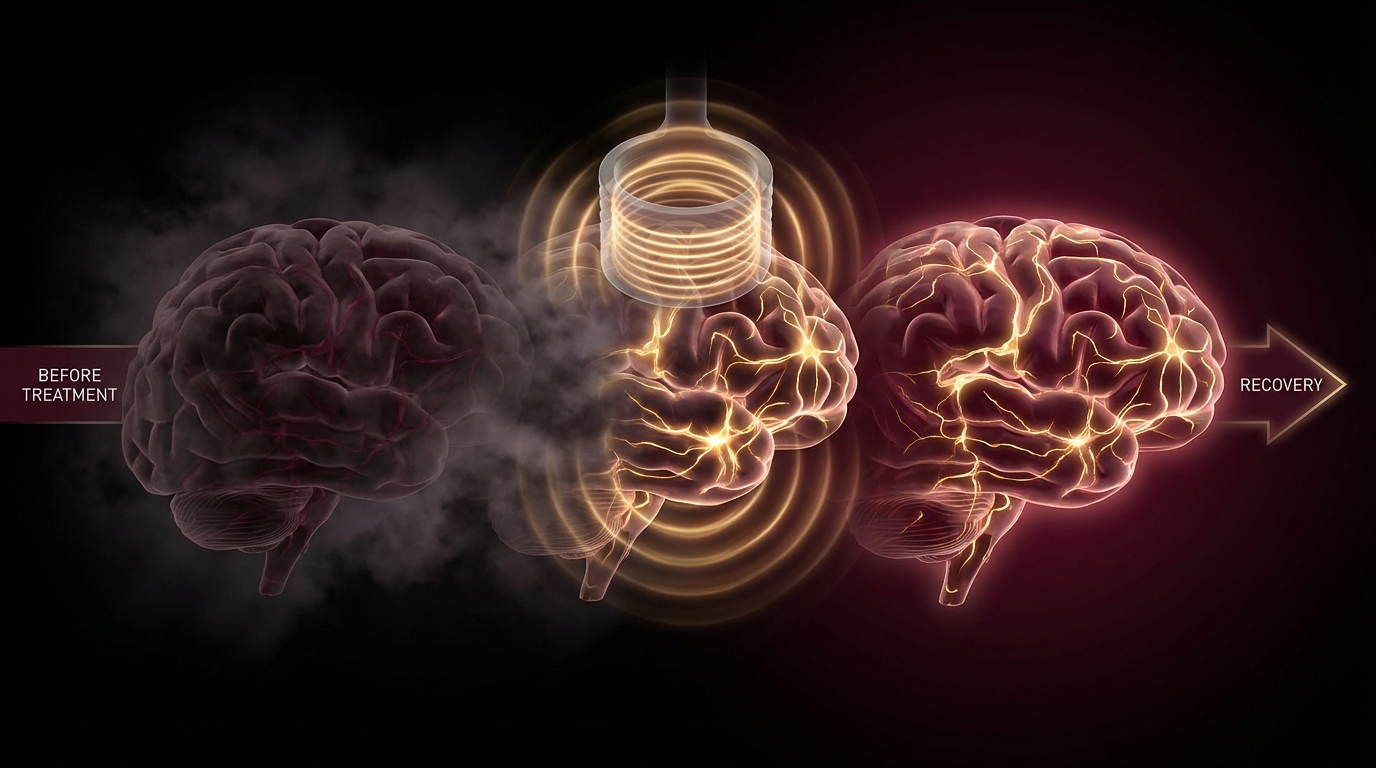
Based on our clinical experience and published data on post-treatment Lyme disease syndrome recovery, here is what a realistic timeline looks like:
Phase 1: Stabilization (Months 1-3)
What to expect:
- Brain fog is still present but may begin to fluctuate rather than being constant
- Good days and bad days emerge (previously it was all bad days)
- Sleep quality may begin improving
- Energy improvements may precede cognitive improvements
What is happening:
- Active neuroinflammation is beginning to resolve
- Microglial activation is transitioning from pro-inflammatory to reparative phenotype
- Autonomic nervous system is beginning to recalibrate
- Residual infection (if any) is being cleared
What to do:
- Focus on sleep optimization (this is the foundation — see below)
- Begin anti-neuroinflammatory support
- Start gentle movement (walking, yoga — not intense exercise)
- Do NOT attempt to push through cognitive demands that overwhelm you
Phase 2: Measurable Improvement (Months 3-6)
What to expect:
- Noticeable improvement in day-to-day cognitive function
- Word-finding difficulty begins to resolve
- Processing speed improves (conversations feel less effortful)
- Short-term memory starts to strengthen
- More good days than bad days
What is happening:
- Neuroinflammation is substantially reduced
- Neuroplasticity-driven rewiring is creating new synaptic connections
- Cerebral blood flow is improving
- Neurotransmitter metabolism is normalizing
What to do:
- Increase cognitive demands gradually (reading, puzzles, learning)
- Begin structured cognitive rehabilitation if available
- Increase exercise intensity gradually
- Track progress with a simple cognitive diary
Phase 3: Continued Recovery (Months 6-18+)
What to expect:
- Most patients report 70-90% cognitive recovery by 12 months
- Subtle deficits may persist longer (especially under stress or fatigue)
- Complete recovery is possible but may take 12-18 months for patients who were ill for years
- Some patients report cognitive function better than pre-illness baseline (neuroplasticity-driven optimization)
What is happening:
- Deep neural pathway repair and myelination
- Consolidation of new synaptic connections
- Full autonomic normalization
- Metabolic and mitochondrial recovery in neural tissue
What to do:
- Continue neuroplasticity-stimulating activities
- Maintain anti-inflammatory lifestyle
- Address any remaining factors (viral co-reactivation, hormonal optimization)
- Reassess with neuropsychological testing to document objective improvement

The Multi-System Recovery Approach
1. Sleep Optimization (The Foundation)
Sleep is when the brain’s glymphatic system clears inflammatory debris and metabolic waste. Disrupted sleep perpetuates neuroinflammation and prevents cognitive recovery. This is not optional — it is the single most important factor in brain fog recovery.
- Target: 7-9 hours of uninterrupted sleep
- Sleep hygiene: Consistent sleep/wake times, dark room, cool temperature (65-68F), no screens 1 hour before bed
- Melatonin: 0.5-3mg 30 minutes before bed (start low)
- Magnesium glycinate: 400mg before bed (muscle relaxation, sleep quality)
- Address sleep disruptors: POTS/autonomic dysfunction, pain, anxiety, sleep apnea
2. Anti-Neuroinflammatory Protocol
Continue the anti-neuroinflammatory approach from the treatment phase:
- Low-dose naltrexone (LDN): 1.5-4.5mg nightly — microglial modulation
- Omega-3 (high EPA): 3-4g daily — specialized pro-resolving mediators
- Curcumin (bioavailable): 500-1000mg daily — NF-kB inhibition, crosses BBB
- Palmitoylethanolamide (PEA): 600mg twice daily — endogenous neuroprotectant
- NAC: 600-1200mg daily — reduces oxidative stress
3. Exercise (Graduated)
Exercise is the most evidence-supported intervention for improving cerebral blood flow, promoting BDNF (brain-derived neurotrophic factor) production, and stimulating neuroplasticity [1].
The critical caveat for post-Lyme patients: Many patients have post-exertional malaise (PEM), where exercise worsens symptoms. The solution is not to avoid exercise but to find the right intensity.
- Weeks 1-4: 10-15 minutes of walking daily
- Weeks 5-8: 20-30 minutes of walking, add gentle yoga or tai chi
- Weeks 9-12: Begin zone 2 cardiovascular exercise (heart rate at 60-70% of max)
- Month 4+: Gradually increase duration and add strength training
- Stop if symptoms worsen — reduce intensity and progress more slowly
Vagus nerve exercises are an excellent starting point for patients too deconditioned for traditional exercise.
4. Cognitive Rehabilitation
The brain needs targeted stimulation to rebuild pathways disrupted by neuroinflammation. Passive recovery (waiting for the fog to lift) is slower than active rehabilitation.
Formal neuropsychological rehabilitation:
- Working memory training (dual n-back tasks)
- Processing speed exercises
- Executive function training
- Available through neuropsychology clinics and occupational therapy
Self-directed cognitive training:
- Reading (progressively complex material)
- Language learning (especially effective for neuroplasticity)
- Musical instrument practice
- Puzzles (Sudoku, crosswords) — but vary the type to challenge different domains
- Social interaction (conversation requires processing speed, memory, and executive function simultaneously)
Neuromodulation:
- Transcranial Pulse Stimulation (TPS) — our highest-confidence neurological intervention
- PEMF therapy — evidence for neuronal recovery and inflammation reduction
- Neurofeedback — retrains disrupted brainwave patterns
- Vagus nerve stimulation — activates anti-inflammatory pathways
5. Nutritional Support
The recovering brain has increased metabolic demands:
- B vitamins (methylated forms) — essential for neurotransmitter synthesis and myelin repair
- Vitamin D optimization (50-80 ng/mL) — neuroprotective, anti-inflammatory
- CoQ10 (200-400mg ubiquinol) — mitochondrial energy production in neural tissue
- Phosphatidylcholine — cell membrane and myelin precursor
- Lion’s mane mushroom — evidence for nerve growth factor stimulation [2]
- Creatine — emerging evidence for cognitive support (3-5g daily)
The Evidence
What We Know (Human Data)
The recovery timeline described above is based on published data from post-treatment Lyme disease syndrome cohorts and ME/CFS recovery studies:
- Rebman et al. at Johns Hopkins characterized the symptom course of PTLDS patients, documenting that cognitive symptoms were the most persistent and slowest to resolve [3]
- Exercise interventions in ME/CFS and post-infectious populations have demonstrated improved cognitive function in multiple trials (with the critical caveat of graded pacing to avoid PEM)
- Low-dose naltrexone trials in neuroinflammatory conditions have shown improved cognitive function and quality of life [4]
- Omega-3 supplementation meta-analyses support cognitive benefits in inflammatory and neurodegenerative conditions
What I See in Practice
In our clinical experience, the patients who recover fastest from brain fog share common characteristics:
- They prioritize sleep. Without exception, the patients who optimize sleep first recover cognition faster.
- They exercise consistently — at the right intensity. Not too much (PEM), not too little (deconditioning).
- They actively challenge their brains. Passive waiting is slower than active cognitive rehabilitation.
- They address all contributing factors. Viral co-reactivation, hormonal dysfunction, mold exposure — each unresolved factor slows cognitive recovery.
- They are patient. Recovery measured in months, not weeks.
What I tell my patients: your brain has an extraordinary capacity for recovery. Neuroplasticity does not expire. But it needs the right conditions — reduced inflammation, adequate sleep, appropriate stimulation, and time.

Safety and Considerations
- Post-exertional malaise (PEM) is a real phenomenon in post-infectious patients. Exercise must be graded carefully. If symptoms worsen 24-48 hours after exercise, the intensity was too high. Reduce and try again.
- Cognitive rehabilitation should not be exhausting. The goal is stimulation within tolerance, not cognitive overload.
- Some patients experience temporary cognitive worsening during the recovery process — “neurological storms” — as the brain recalibrates. These are typically transient and resolve within days.
- If brain fog is not improving after 6 months of comprehensive treatment, reassess for ongoing viral reactivation, hormonal dysfunction (thyroid, cortisol), sleep disorders, or mold/CIRS.
- Neuropsychological testing at baseline and at 6-month intervals provides objective documentation of recovery — valuable both clinically and for disability documentation if needed.
The Bottom Line
Brain fog recovery after Lyme treatment follows a predictable but gradual timeline. Most patients see meaningful improvement within 3-6 months and substantial recovery within 12-18 months — but this timeline depends on actively implementing a multi-system recovery strategy, not passive waiting. Sleep optimization, anti-neuroinflammatory support, graduated exercise, and cognitive rehabilitation are the four pillars. In my clinical experience, patients who implement all four recover faster and more completely than those who address only one or two. The brain’s capacity for neuroplasticity-driven recovery is remarkable — but it needs the right conditions to do its work.
References
- Erickson KI, Hillman C, Stillman CM, et al. Physical activity, cognition, and brain outcomes: a review of the 2018 Physical Activity Guidelines. Med Sci Sports Exerc. 2019;51(6):1242-1251. PMID: 31095081
- Mori K, Inatomi S, Ouchi K, Azumi Y, Tuchida T. Improving effects of the mushroom Yamabushitake (Hericium erinaceus) on mild cognitive impairment: a double-blind placebo-controlled clinical trial. Phytother Res. 2009;23(3):367-372. PMID: 18844328
- Rebman AW, Bechtold KT, Yang T, et al. The clinical, symptom, and quality-of-life characterization of a well-defined group of patients with posttreatment Lyme disease syndrome. Front Med. 2017;4:224. PMID: 29312942
- Younger J, Parkitny L, McLain D. The use of low-dose naltrexone (LDN) as a novel anti-inflammatory treatment for chronic pain. Clin Rheumatol. 2014;33(4):451-459. PMID: 24526250