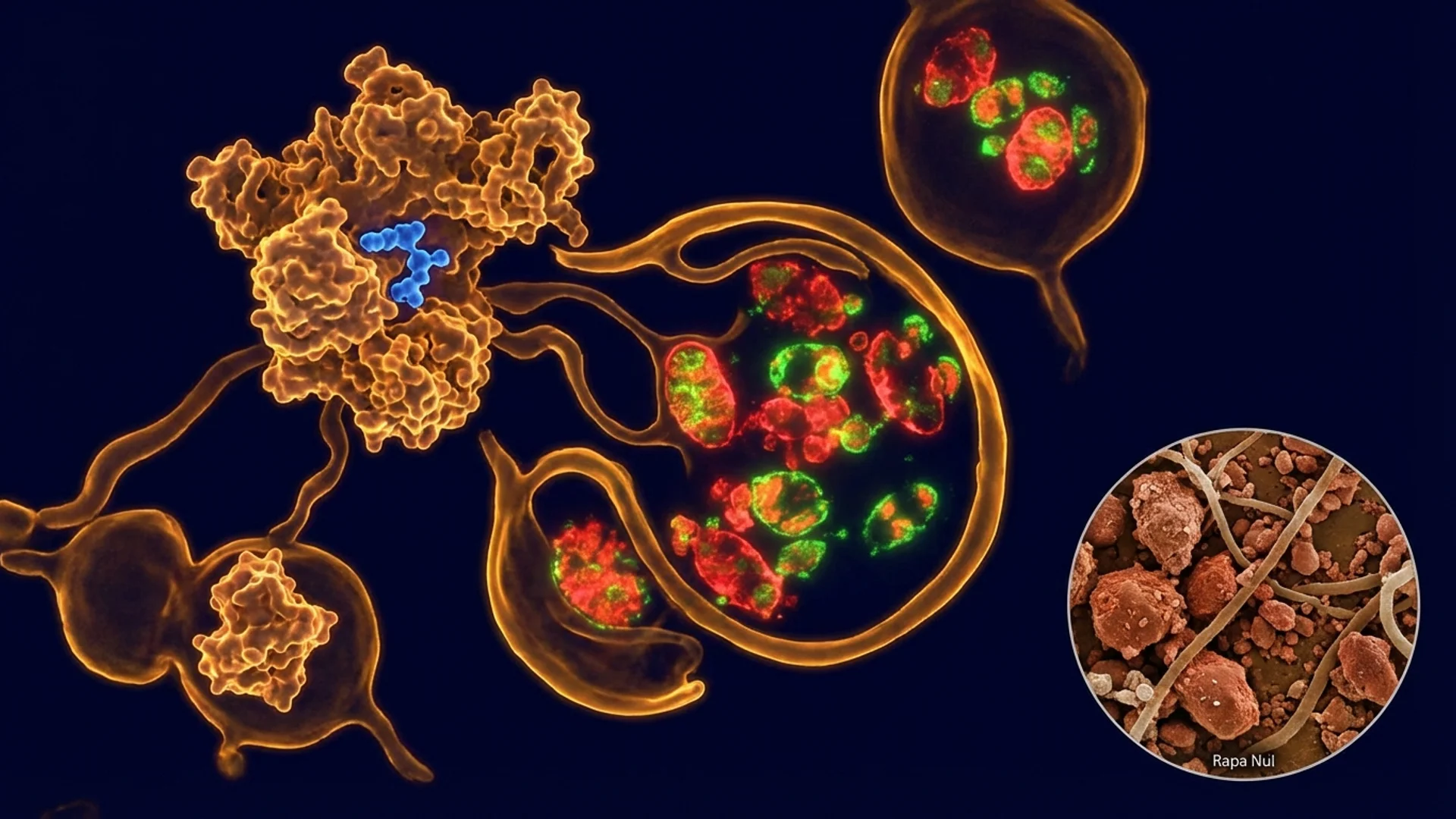
No drug generates more discussion in longevity medicine than rapamycin. Discovered in the soil of Easter Island (Rapa Nui) in the 1970s, it was initially developed as an antifungal, then repurposed as an immunosuppressant for organ transplant recipients. Its entry into the longevity conversation came when it became the first — and so far only — drug to extend maximum lifespan in genetically normal mammals.
That is a remarkable claim, and it requires careful examination.
The mTOR Pathway
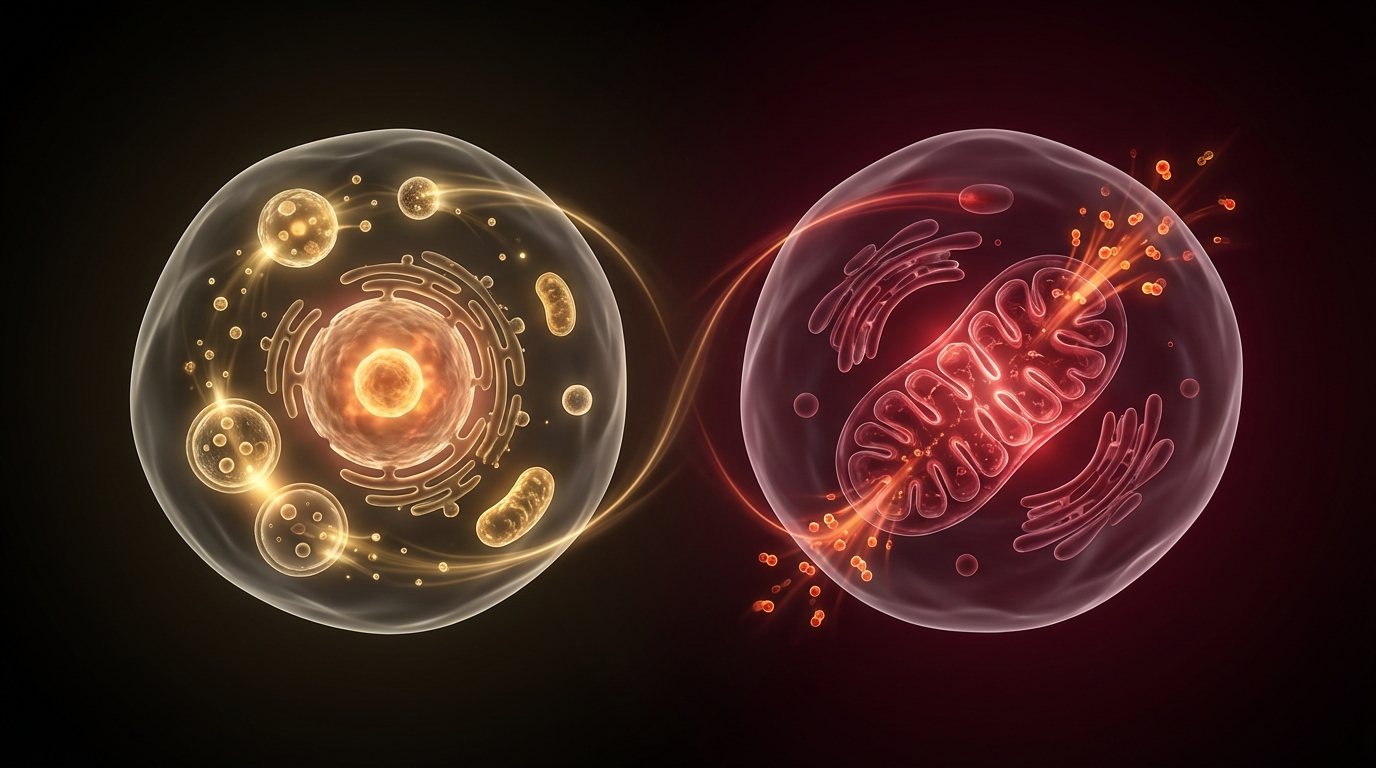
To understand rapamycin, you must understand mTOR (mechanistic Target Of Rapamycin). mTOR is a nutrient-sensing kinase that acts as a master switch in cellular metabolism. When activated, mTOR promotes:

- Cell growth and proliferation
- Protein synthesis
- Lipid synthesis
- Suppression of autophagy
When inhibited, mTOR shifts the cell toward:
- Autophagy (cellular recycling and repair)
- Stress resistance
- Mitochondrial optimization
- Reduced inflammation
mTOR exists in two complexes: mTORC1 and mTORC2. Rapamycin primarily inhibits mTORC1, which is the complex associated with aging-relevant pathways. Chronic, high-dose rapamycin also inhibits mTORC2, which is associated with many of the drug’s undesirable side effects (insulin resistance, immunosuppression).
This distinction is important. The longevity hypothesis rests on the idea that intermittent, low-dose rapamycin can selectively modulate mTORC1 while minimizing mTORC2 inhibition.
What the Animal Data Shows
The ITP (Interventions Testing Program), funded by the National Institute on Aging, found that rapamycin extended median lifespan in genetically heterogeneous mice by approximately 10-15%, even when treatment began late in life [1]. This has been replicated across multiple laboratories and mouse strains.
Treated mice showed reduced cancer incidence, improved cardiovascular function, enhanced cognitive performance, and better immune function at lower doses — despite rapamycin’s reputation as an immunosuppressant.
The animal data is unambiguous: rapamycin extends lifespan in mice. What it does in humans is a different question.
Human Evidence
What We Know
- Rapamycin and its analogs (rapalogs) are FDA-approved for organ transplant immunosuppression and certain cancers. At these higher, continuous doses, side effects include immunosuppression, hyperlipidemia, insulin resistance, mouth ulcers, and impaired wound healing.
- A 2014 study by Mannick et al. demonstrated that low-dose rapamycin analogs (everolimus) actually enhanced immune function in elderly humans, improving their response to influenza vaccination by approximately 20% [2]. This counterintuitive finding suggests that low, intermittent dosing has different immunological effects than continuous high-dose suppression.
- A Phase 2 trial (PEARL) in elderly volunteers found that low-dose rapamycin improved markers of aging-related decline, including immune function.
- Small pilot studies have explored rapamycin for age-related conditions including periodontal disease and skin aging, with preliminary positive results.
What We Do Not Know
- Whether rapamycin extends human lifespan. No such trial exists or is feasible in the near term.
- The optimal dose and frequency for longevity purposes in humans.
- The long-term safety profile of intermittent, low-dose rapamycin in otherwise healthy adults.
- Whether the benefits observed in mice — cancer reduction, cardiovascular protection, cognitive enhancement — translate proportionally to humans.
How I Approach Rapamycin in Practice
I want to be transparent about my position. Rapamycin has the strongest preclinical longevity data of any pharmacological agent. The human data, while limited, is consistent with the animal data at low doses. But we are still in the early stages of understanding its use for longevity in humans.
I do not prescribe rapamycin routinely. When I do prescribe it, it is:
- For patients who understand and accept the evidence limitations
- After thorough baseline assessment (lipids, glucose, HbA1c, CBC, liver and kidney function, immune markers)
- At low, intermittent doses: typically 3-6 mg once weekly (the “longevity dose”), compared to 2-5 mg daily in transplant recipients
- With regular monitoring (every 8-12 weeks initially)
- As part of a comprehensive longevity program, not as a standalone intervention
The weekly dosing protocol is designed to achieve mTORC1 inhibition during the day following the dose while allowing recovery of mTORC2 function during the remainder of the week. This is a rational approach based on pharmacokinetics, but I want to be clear that it has not been validated in long-term human longevity trials.
Side Effects and Risks
At longevity doses, the side effects I have observed in my patients are generally mild:
- Mouth sores (aphthous ulcers) — the most common complaint, usually manageable
- Modest lipid elevations (typically LDL and triglycerides)
- Occasional mild GI discomfort
- Delayed wound healing during the 48-72 hours following the dose
I have not observed clinically significant immunosuppression at weekly low doses, though I monitor immune markers and counsel patients to pause dosing during acute illness.
The theoretical concerns that require honest acknowledgment:
- Cancer: Rapamycin is used to treat certain cancers and has anti-tumor properties in animal models. However, chronic immunosuppression can increase cancer risk. Whether low-dose intermittent rapamycin is net cancer-protective or cancer-promoting in humans has not been determined.
- Infection risk: At transplant doses, rapamycin increases infection susceptibility. At longevity doses, this has not been observed consistently, but the long-term data is insufficient.
- Metabolic effects: mTOR inhibition can worsen insulin sensitivity and lipid profiles. Monitoring and management are essential.
The Bottom Line
Rapamycin is the most scientifically credible pharmacological longevity candidate we have. The animal data is exceptional. The human data is intriguing but incomplete. The risk-benefit assessment for any individual patient requires careful consideration of their health status, risk tolerance, and understanding of the evidence limitations.
This is an area where our understanding is still developing rapidly. I expect the next five to ten years to bring substantially more clarity, and I adjust my practice as new data emerges.

References
- Harrison DE, et al. Rapamycin fed late in life extends lifespan in genetically heterogeneous mice. Nature. 2009;460(7253):392-395.
- Mannick JB, et al. mTOR inhibition improves immune function in the elderly. Science Translational Medicine. 2014;6(268):268ra179.
This content is educational and does not constitute medical advice. Rapamycin is a prescription medication with significant potential side effects and should only be used under medical supervision. Its use for longevity purposes is not FDA-approved.