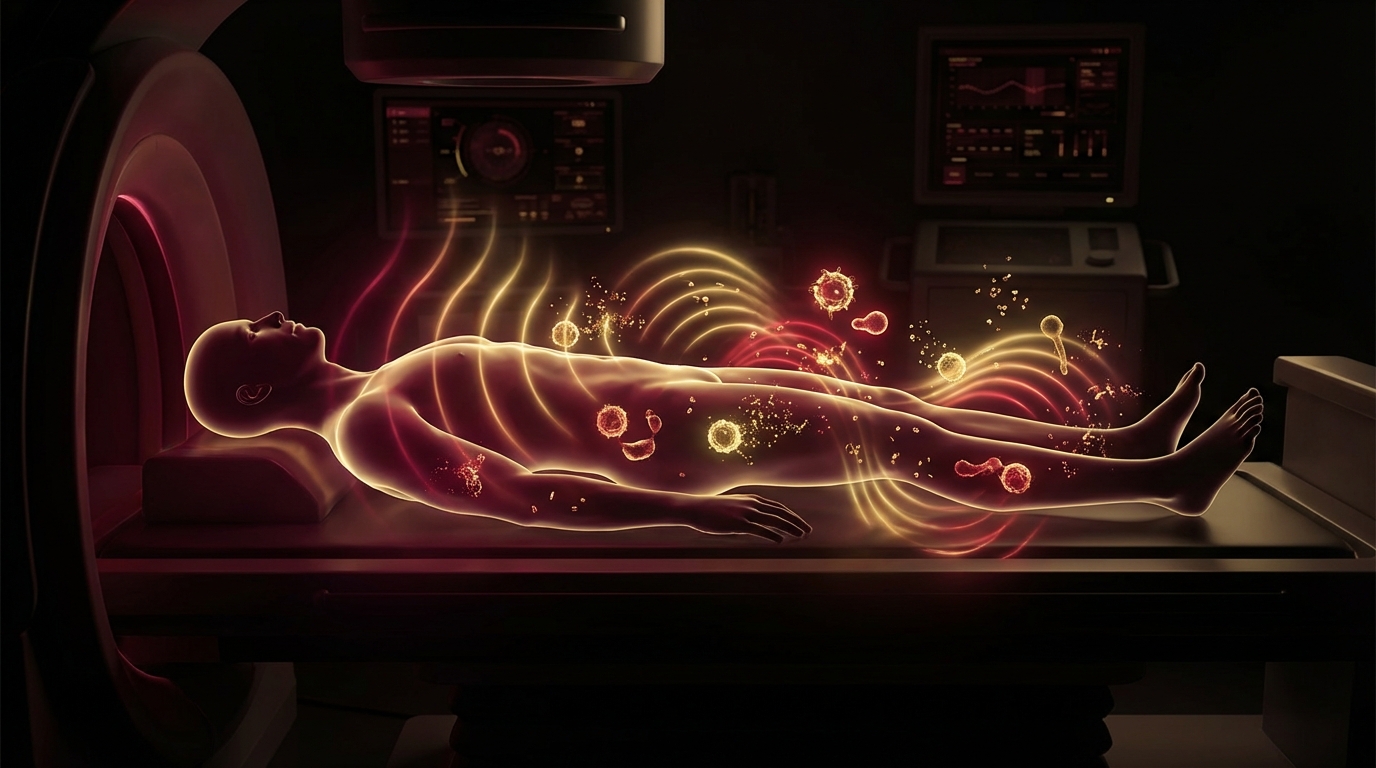
At a Glance
| Property | Value |
|---|---|
| Evidence Level | Moderate (thermolability research + 30 years institutional clinical observation) |
| Primary Use | Chronic Lyme disease (Borrelia burgdorferi) eradication |
| Key Mechanism | Direct pathogen kill at lethal temperature (session 1) + immune activation and biofilm disruption (session 2) |
| Protocol | 2 sessions at 41.6-41.8°C, 48-72 hours apart |
| Device | Heckel HT3000 (water-filtered infrared-A) |
| Research Basis | Prof. Reisinger, University of Graz — Borrelia thermolability studies |
The Question Every Lyme Patient Asks
You have Lyme disease. You have probably tried antibiotics — maybe multiple rounds, maybe IV ceftriaxone, maybe combination protocols. You still have symptoms. Someone has told you about hyperthermia, and now you are researching it. You are finding clinics that offer 5 sessions, 6 sessions, sometimes more. And then you find us, and we say two.
Two sessions.
The natural reaction is skepticism. How can two sessions accomplish what other clinics claim requires five or six? Are we cutting corners? Are we being aggressive? Is this safe?
Let me be direct. We do not use two sessions because it is cheaper or faster. We use two sessions because the protocol is designed for a fundamentally different therapeutic objective. And that difference — the difference between immune modulation and pathogen eradication — is the single most important thing to understand about hyperthermia for Lyme disease.
The Problem With Moderate Hyperthermia for Lyme
Most clinics offering hyperthermia for Lyme disease use moderate whole-body hyperthermia. The target temperature is typically 39.5-40.5°C, maintained for several hours, repeated 5-6 times over a treatment course.
The logic behind this approach is immune modulation. At moderate temperatures, the body mounts a fever-like immune response: heat shock protein production increases, interleukin levels rise, NK cell activity improves, and lymphocyte trafficking to tissues is enhanced. The idea is that repeated immune stimulation will help the patient’s own defenses clear the infection.
This is not wrong as biology. These immune effects are real. But here is the problem: you are asking the immune system to do something it has already failed to do.
If a patient has chronic Lyme disease — meaning they have had the infection for months or years despite immune engagement and often despite antibiotic treatment — the immune system has already been trying to clear this pathogen. And it has not succeeded. The reasons are well-understood:
- Borrelia is an immune evasion specialist. It changes its outer surface proteins (OspC to VlsE variation), evades complement killing, and suppresses key immune pathways.
- Biofilm communities protect the organisms. Borrelia forms biofilms — polysaccharide matrices that shield the bacteria from both antibiotics and immune cells.
- Intracellular persistence. Borrelia can invade host cells, hiding from extracellular immune defenses.
- Tissue sequestration. The spirochete migrates to tissues with poor immune surveillance — joints, nervous system, connective tissue — where immune cells and antibiotics have limited penetration.
Stimulating an immune system that has already been outmaneuvered is like sending more soldiers through the same gate the enemy has already fortified. You need a different strategy.
The Different Strategy: Kill the Pathogen Directly
This is what the research actually says.
Prof. Reisinger and colleagues at the University of Graz in Austria conducted systematic studies on the thermolability of Borrelia burgdorferi. Their work demonstrated that Borrelia spirochetes lose viability at temperatures above 41.0°C and are effectively killed at 41.6-41.8°C.
This is not immune modulation. This is direct thermal eradication. At 41.6-41.8°C, you are exploiting a fundamental biological vulnerability of the organism: it cannot survive that temperature. Period.
The difference between 40°C and 41.6°C may seem small — just 1.6 degrees — but biologically, it is enormous. At 40°C, Borrelia is stressed but viable. At 41.6-41.8°C, it is dead. This is not a gradual effect. Thermolability has a threshold, and the threshold is sharp.
This is why our protocol targets 41.6-41.8°C. We are not trying to stimulate the immune system into fighting harder. We are raising the core body temperature to a point where the pathogen cannot survive, regardless of its immune evasion strategies, regardless of its biofilm protection, regardless of where in the body it has hidden. Heat penetrates everywhere blood flows. There is no tissue the temperature does not reach.
Why Two Sessions — The Precise Rationale
Now, the critical question: if one session at lethal temperature should kill the pathogen, why do a second?
This is where the protocol becomes elegant. The two sessions serve different but complementary purposes.
Session 1: Eradication
The first session is the kill shot. Core temperature is raised to 41.6-41.8°C using the Heckel HT3000 water-filtered infrared-A system. The patient is under anesthesia for comfort and safety. Temperature is maintained at the lethal threshold, monitored continuously via rectal probe.
At this temperature:
- Free-floating (planktonic) Borrelia spirochetes are killed directly through thermal denaturation.
- Spirochetes within tissues are exposed to lethal temperatures as blood carries heat to every perfused tissue in the body.
- Borrelia within biofilm structures are stressed, and many are killed. However — and this is important — biofilms provide partial thermal insulation. The organisms at the center of dense biofilm communities may experience slightly lower effective temperatures, and some may survive.
- Intracellular Borrelia are exposed to heat as host cells equilibrate with core temperature, but the intracellular environment may offer marginally more thermal buffering.
The first session eliminates the vast majority of the pathogen burden. But “vast majority” is not “all.” In infectious disease, the organisms that survive initial treatment are often the ones that were most protected — in this case, by biofilms and intracellular niches.
Session 2: Immune Cascade, Biofilm Disruption, and Detoxification
The second session, performed 48-72 hours after the first, is not simply a repeat. It achieves three distinct objectives:
1. Heat Shock Protein and Interleukin Cascade
The second exposure to extreme temperature triggers a massive upregulation of heat shock proteins — particularly HSP70 and HSP90 — and a surge in pro-inflammatory interleukins (IL-1, IL-6, TNF-alpha). This immune cascade is far more powerful on the second exposure than the first, because the immune system has been primed by session 1.
This matters because the surviving Borrelia — the ones that were partially protected by biofilms or intracellular niches during session 1 — are now facing an immune system that has been supercharged. The HSPs enhance antigen presentation: immune cells become dramatically better at recognizing and targeting Borrelia. The interleukins mobilize neutrophils, macrophages, and NK cells. The primed immune response attacks the survivors with a coordinated intensity that the chronically suppressed immune system could never have achieved on its own.
This is what moderate hyperthermia clinics are trying to achieve with 5-6 sessions — immune stimulation. We achieve it in one session, at a dramatically higher intensity, because the extreme temperature produces a proportionally more powerful immune cascade.
2. Biofilm Disruption
Biofilms are not static structures. They are living communities with active maintenance. Session 1 kills many of the bacteria maintaining these structures. By the time session 2 occurs 48-72 hours later, surviving biofilm structures have already begun to degrade because their bacterial populations have been decimated.
Session 2 delivers the thermal insult to biofilms that are already compromised. The combination of direct thermal damage to the biofilm matrix, loss of the bacteria that maintain it, and the immune cell influx triggered by the HSP/interleukin cascade creates a coordinated assault on the protective structures that have been shielding Borrelia from treatment for months or years.
3. Tissue Permeability and Detoxification
The second session of extreme hyperthermia dramatically increases vascular permeability throughout the body. This has two critical effects:
First, it allows immune cells and any concurrent antimicrobial agents to penetrate tissues that are normally difficult to reach — joints, nervous system, connective tissue. These are exactly the tissues where Borrelia sequesters.
Second, it facilitates the clearance of pathogen debris. Session 1 killed an enormous number of organisms. The breakdown products of those dead spirochetes — outer surface proteins, lipoproteins, endotoxin-like molecules — need to be cleared. Enhanced tissue permeability allows these waste products to enter the circulation and be processed by the liver and kidneys. This is why we provide intensive IV hydration and detoxification support around both sessions.
Why Not Three Sessions? Or Four?
If two sessions with different objectives make sense, why not three?
In our clinical experience treating over 12,000 Lyme patients, two sessions achieve the therapeutic objectives. Here is the clinical reasoning:
- Session 1 eliminates the bulk pathogen burden through direct thermal kill.
- Session 2 addresses the survivors through immune cascade, biofilm disruption, and enhanced tissue access.
- A third session at extreme temperature would provide diminishing returns because the primary targets — planktonic organisms, biofilm communities, tissue-sequestered spirochetes — have already been addressed by sessions 1 and 2.
- Additional extreme sessions also carry increasing physiological stress. Extreme whole-body hyperthermia is a significant procedure. The risk-benefit ratio of a third session does not favor additional treatment in the majority of patients.
Some patients do receive additional treatment — but typically in the form of moderate hyperthermia as part of ongoing immune support, not additional extreme sessions. The extreme protocol is two sessions. This has been refined over three decades and thousands of patients.
The 48-72 Hour Interval
The timing between sessions is not arbitrary. The 48-72 hour interval is chosen based on:
- Immune priming kinetics. After session 1, HSP production and cytokine levels peak and then begin to decline over 24-48 hours. By performing session 2 at 48-72 hours, we catch the immune system in a state where it has been primed by session 1 but the acute response has partially resolved — allowing session 2 to trigger a second, amplified cascade.
- Biofilm degradation timing. Partially damaged biofilms continue to degrade over hours to days after thermal insult. The 48-72 hour window allows biofilms to weaken sufficiently that session 2 can complete their disruption.
- Patient recovery. Extreme hyperthermia is physiologically demanding. The patient needs time to recover from session 1 — rehydrate, stabilize vital signs, clear initial die-off products — before undergoing session 2.
- Herxheimer reaction management. The massive pathogen die-off from session 1 frequently triggers a Jarisch-Herxheimer reaction (temporary worsening of symptoms due to toxin release from dying organisms). The 48-72 hour interval allows this reaction to peak and begin resolving before session 2 adds to the detoxification burden.
Comparing the Two Approaches
Let me lay this out plainly:
| Factor | Moderate WBH (other clinics) | Extreme WBH (St. George Hospital) |
|---|---|---|
| Temperature | 39.5-40.5°C | 41.6-41.8°C |
| Number of sessions | 5-6 | 2 |
| Primary mechanism | Immune stimulation | Direct pathogen eradication + immune cascade |
| Borrelia viability at target temp | Stressed but viable | Killed |
| Biofilm effect | Minimal direct disruption | Significant thermal disruption |
| HSP/IL cascade intensity | Moderate per session | Extreme per session |
| Anesthesia required | No | Yes |
| Scientific basis | General fever immunology | Specific thermolability research (Reisinger/Graz) |
| Treatment duration (total) | 3-4 weeks | 1 week |
| Clinical experience | Varies | 30+ years, 12,000+ patients |
I am not dismissing moderate hyperthermia entirely. It has a role — we use it ourselves for cancer patients and post-COVID patients, where the therapeutic goals are different. But for Lyme disease, where the goal is pathogen eradication, moderate temperatures do not reach the thermolability threshold. You are modulating the immune system without killing the organism. In my clinical experience, this produces temporary improvement but frequent relapse.
The Heckel HT3000: Why the Device Matters
When you are raising a human being’s core body temperature to 41.8°C, the equipment is not a minor detail. The Heckel HT3000 uses water-filtered infrared-A radiation (wIRA), which has specific advantages:
- Deep penetration without surface burns. The water filter removes wavelengths that cause superficial thermal damage while allowing the therapeutic wavelengths to penetrate tissue.
- Uniform heating. No hot spots. The entire body reaches the target temperature evenly.
- Precise control. Temperature can be adjusted in real-time based on continuous monitoring. This is essential when your target is 41.6-41.8°C — the margin between therapeutic and dangerous is narrow, and precision engineering is the difference between a controlled medical procedure and a risk.
- German medical device certification. The Heckel is a CE-marked medical device manufactured under German medical device regulations — among the strictest in the world.
What the Research Shows
The Thermolability Foundation
Reisinger EC, et al. demonstrated in vitro that Borrelia burgdorferi loses viability at temperatures exceeding 41°C. This work at the University of Graz provided the scientific foundation for extreme whole-body hyperthermia as a Lyme disease treatment. The thermolability data is reproducible and consistent with the known biology of spirochete membrane stability — at elevated temperatures, the lipid bilayer of Borrelia’s outer membrane loses structural integrity, and the organism dies.
Heat Shock Protein Biology
The HSP response to hyperthermia is well-characterized in the literature. Multhoff et al. have published extensively on HSP70’s role as both an intracellular chaperone and an extracellular immune activator. When HSP70 is released from heat-stressed cells, it activates innate immunity through TLR2 and TLR4 signaling, enhances antigen cross-presentation by dendritic cells, and stimulates NK cell cytotoxicity. These effects are dose-dependent on temperature — higher temperatures produce more robust HSP responses.
Biofilm Thermal Sensitivity
Biofilm disruption by heat has been studied across multiple bacterial species. While Borrelia-specific biofilm thermal data is limited, the general principle that elevated temperatures destabilize the extracellular polymeric substance (EPS) matrix of biofilms is well-established. Temperatures in the extreme WBH range cause physical denaturation of proteins within the biofilm structure and disrupt the polysaccharide cross-links that maintain biofilm integrity.
Institutional Clinical Data
St. George Hospital has treated over 12,000 Lyme patients since first receiving a Lyme patient in 1994. Our institutional data consistently shows that extreme whole-body hyperthermia combined with antimicrobial therapy produces sustained clinical improvement in the majority of chronic Lyme patients. I want to be transparent: this is institutional clinical observation, not published multicenter RCT data. A randomized trial of this protocol would be scientifically valuable, and I advocate for it. But the absence of a trial does not negate three decades of consistent clinical observation.
What to Expect as a Patient
For patients considering this protocol, here is what the treatment week typically looks like:
Day 1-2: Arrival, comprehensive evaluation, blood work, cardiac assessment, treatment planning. IV antimicrobial therapy begins.
Day 3: Session 1 — extreme WBH at 41.6-41.8°C under anesthesia. Post-session monitoring, IV fluids, electrolyte support. Rest.
Day 4-5: Recovery period. IV support continues. Detoxification support (IV fluids, binders, antioxidants). Herxheimer reaction management if needed. Blood work monitoring.
Day 5-6: Session 2 — extreme WBH at 41.6-41.8°C under anesthesia. Post-session monitoring and recovery.
Day 6-8: Post-treatment monitoring, continued IV support, discharge planning.
Most international patients stay for approximately 7-10 days. Follow-up protocols — antimicrobial, detoxification, immune support — continue after discharge and are coordinated with the patient’s local physician.
Safety
Let me be direct about safety. Raising core body temperature to 41.8°C is not without risk. This is why:
- The procedure is performed under anesthesia with an anesthesiologist present.
- Continuous monitoring includes core temperature, ECG, blood pressure, oxygen saturation, and blood gases.
- The Heckel device allows precise temperature control and rapid cooling if needed.
- Pre-treatment cardiac and medical evaluation identifies patients who are not suitable candidates.
- Our team has performed this procedure thousands of times over three decades.
Complications are rare but can include: cardiac arrhythmia (which is why cardiac screening is essential), dehydration (managed with IV fluids), prolonged fatigue, and intense Herxheimer reactions. Serious adverse events are exceedingly rare in our experience, but they are possible, which is why this procedure belongs in a hospital setting with experienced practitioners — not in an outpatient clinic or spa.
The Bottom Line
The difference between our approach and the standard moderate hyperthermia protocol is not about being more aggressive. It is about having a different therapeutic target. Moderate hyperthermia stimulates the immune system. Extreme hyperthermia kills the pathogen directly and then activates the immune system to handle the survivors.
Two sessions, each with a clear purpose. Session 1: eradicate. Session 2: activate, disrupt, detoxify.
This protocol was developed at St. George Hospital. It is based on Reisinger’s thermolability research at the University of Graz. It has been refined over 30 years and more than 12,000 Lyme patients. The nuance matters — and in this case, 1.6 degrees of temperature makes all the difference.
References
-
Reisinger EC, et al. In vitro activity of thermotherapy against Borrelia burgdorferi. Infection. 1996;24(4):308-309. PMID: 8875286.
-
Multhoff G, et al. Heat shock protein 70 (Hsp70) stimulates proliferation and cytolytic activity of natural killer cells. Exp Hematol. 1999;27(11):1627-1636. PMID: 10560910.
-
Sapi E, et al. Characterization of biofilm formation by Borrelia burgdorferi in vitro. PLoS One. 2012;7(10):e48277. PMID: 23110225.
-
Hildebrandt B, et al. The cellular and molecular basis of hyperthermia. Crit Rev Oncol Hematol. 2002;43(1):33-56. PMID: 12098606.
-
Issels RD. Hyperthermia adds to chemotherapy. Eur J Cancer. 2008;44(17):2546-2554. PMID: 18789678.
-
Klempner MS, et al. Two controlled trials of antibiotic treatment in patients with persistent symptoms and a history of Lyme disease. N Engl J Med. 2001;345(2):85-92. PMID: 11450676.
This content is educational and does not constitute medical advice. Extreme whole-body hyperthermia is a medical procedure performed under general anesthesia that carries inherent risks. It should only be performed by experienced medical teams in a hospital setting with appropriate monitoring equipment. Consult a qualified physician to determine whether this treatment is appropriate for your condition.