
At a Glance
| Property | Value |
|---|---|
| Evidence Level | Strong (multiple large prospective studies, >500,000 subjects) |
| Primary Use | All-cause mortality prediction, cardiovascular risk assessment |
| Key Mechanism | Reflects integrated cardiopulmonary and muscular oxygen utilization |
| How to Improve | Zone 2 base training (80%) + high-intensity intervals (20%) |
| Target | Above the 75th percentile for your age and sex |
The Number That Predicts Your Death Better Than Anything Else
If I could order only one test to assess a patient’s longevity prognosis, it would not be a blood panel. It would not be a genetic test. It would not be an imaging study. It would be a VO2 max test.
Let me be direct about why. In 2018, a study from the Cleveland Clinic analyzed over 122,000 patients who underwent exercise stress testing and followed them for a median of 8.4 years. The findings were stark: low cardiorespiratory fitness was a stronger predictor of mortality than smoking, diabetes, and coronary artery disease. Patients in the lowest fitness quartile had a five-fold higher mortality risk compared to those in the top quartile. And there was no upper ceiling of benefit — even “extreme” fitness was associated with lower mortality compared to merely “high” fitness [1].
This is not a fringe finding. It has been replicated across multiple populations, age groups, and clinical contexts. VO2 max is the strongest modifiable predictor of how long you will live.
What VO2 Max Actually Measures
VO2 max — maximal oxygen consumption — is the maximum rate at which your body can take in, transport, and utilize oxygen during exhaustive exercise. It is expressed in milliliters of oxygen consumed per kilogram of body weight per minute (mL/kg/min).
The number reflects the integrated function of multiple organ systems:
Pulmonary: The lungs must efficiently exchange oxygen and carbon dioxide across the alveolar membrane.
Cardiac: The heart must pump an adequate volume of oxygenated blood (cardiac output = heart rate x stroke volume). Stroke volume — the amount of blood ejected per heartbeat — is the primary cardiac determinant of VO2 max and is highly trainable.
Vascular: The arterial system must deliver blood to working muscles, and the capillary network must be dense enough for efficient gas exchange at the tissue level.
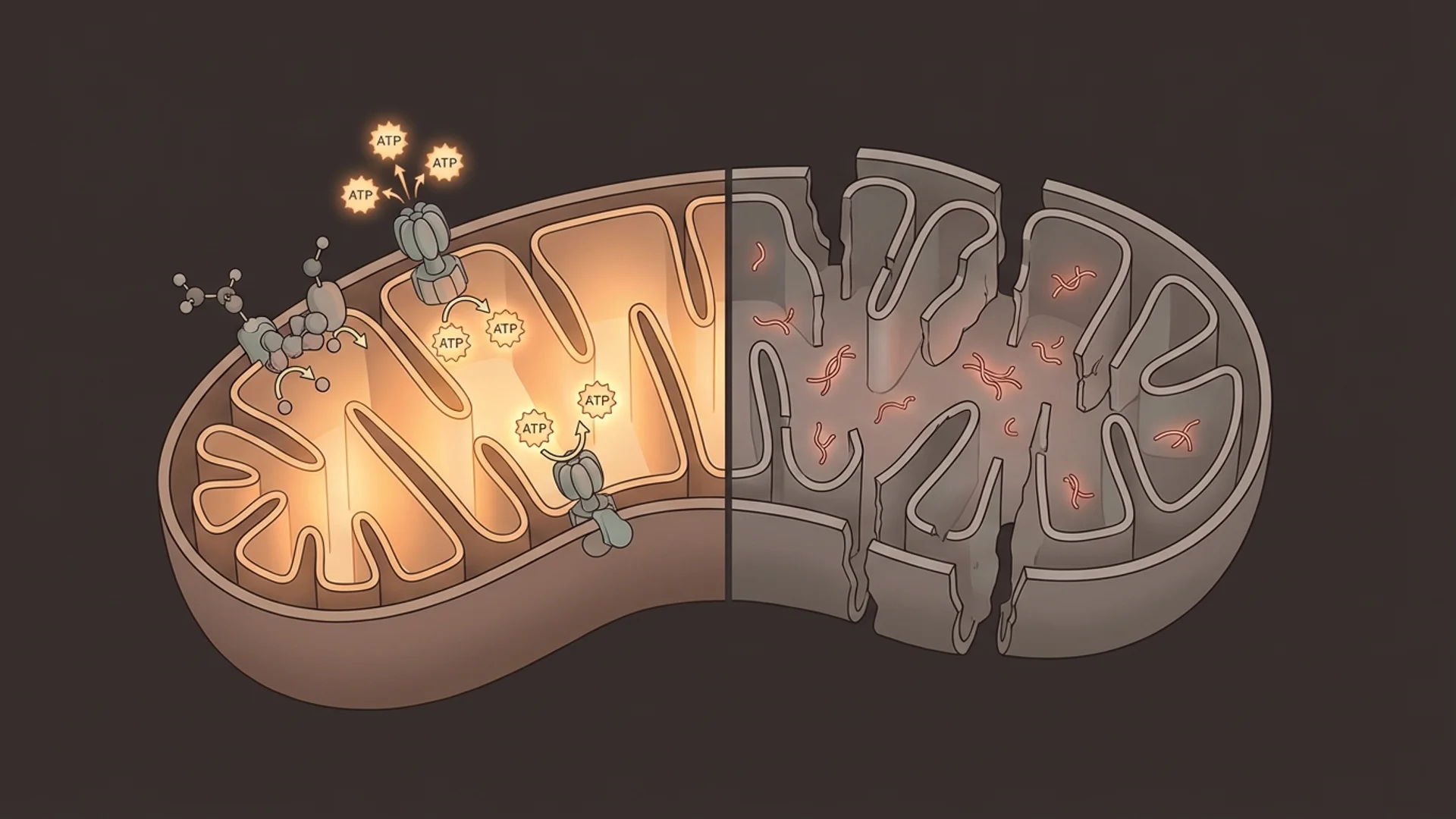
Muscular: Skeletal muscle must have sufficient mitochondrial density and enzymatic capacity to extract and utilize oxygen for ATP production. This is the peripheral component — and it is directly built through Zone 2 training.
A typical sedentary 40-year-old male might have a VO2 max of 35 mL/kg/min. A well-trained recreational athlete of the same age might reach 50-55 mL/kg/min. An elite endurance athlete may exceed 70 mL/kg/min. The difference between these numbers is not just athletic performance — it is a fundamental difference in physiological reserve, disease resistance, and mortality risk.
The Mortality Data
The Cleveland Clinic Study
The Mandsager et al. study deserves detailed attention because of its scale and the clarity of its findings [1]. Among 122,007 patients (mean age 53), fitness was stratified into five groups: low, below average, above average, high, and elite. After adjustment for age, sex, BMI, diabetes, hypertension, smoking, and other confounders:
- Patients with low fitness had a 390% higher mortality risk compared to elite fitness
- Moving from low to below-average fitness reduced mortality risk by approximately 50%
- Moving from below-average to above-average reduced mortality by another 30-40%
- Even the difference between high and elite fitness was statistically significant
The dose-response relationship was continuous and without a ceiling. Every increment in fitness corresponded to reduced mortality. The largest absolute risk reduction was in the transition from the lowest to the next-lowest fitness category — meaning that the greatest return on investment comes from getting the least fit people moving.
The HUNT Study
The Norwegian HUNT study followed over 55,000 adults for more than 15 years. Estimated cardiorespiratory fitness was a powerful predictor of cardiovascular mortality, cancer mortality, and all-cause mortality. Men in the highest fitness tertile had a 51% lower risk of cardiovascular death compared to the lowest tertile. Women showed a similar pattern [2].
The Cooper Center Longitudinal Study
Analyzing over 66,000 patients, this study found that each 1-MET increase in fitness (approximately 3.5 mL/kg/min of VO2 max) was associated with a 13% reduction in all-cause mortality and an 18% reduction in cardiovascular mortality [3]. This finding puts a concrete number on the mortality benefit per unit of fitness improvement — and it is substantial.
Age Does Not Diminish the Effect
A critical point for my older patients: the mortality benefit of fitness does not weaken with age. Studies specifically examining adults over 70 have found that cardiorespiratory fitness remains a powerful mortality predictor in older populations. A 75-year-old who maintains above-average fitness has markedly better survival than a below-average peer [4]. The “it’s too late” narrative is not supported by the evidence.
VO2 Max Decline With Age — and What You Can Do About It
VO2 max declines with age. This is a biological reality. The average rate of decline is approximately 1% per year after age 30, though this varies considerably based on training status and other factors [5].
Here is where framing matters. A decline from 50 mL/kg/min to 35 mL/kg/min over 15 years represents a shift from above-average fitness to the territory associated with dramatically increased mortality risk. If you begin from a higher baseline and maintain training, you remain in the protective zone for longer.
I explain it to patients this way: think of VO2 max as your physiological reserve — the margin between your current capacity and the minimum needed to live independently. Tasks like climbing stairs, carrying groceries, getting off the floor, and recovering from illness all require a minimum level of cardiorespiratory and muscular function. VO2 max quantifies that reserve. The higher your number, the more capacity you have to absorb the inevitable age-related decline and still remain functional.
An 80-year-old needs a VO2 max of approximately 15-18 mL/kg/min just for basic independent living — walking, standing from a chair, managing stairs. If your VO2 max at 50 is 30 mL/kg/min (below average for that age), you are already closer to the threshold of functional dependence than you realize. If it is 45 mL/kg/min, you have decades of reserve.
How to Test Your VO2 Max
Gold Standard: Cardiopulmonary Exercise Testing (CPET)
The most accurate VO2 max measurement requires a graded exercise test on a treadmill or cycle ergometer with direct measurement of inspired and expired gases through a metabolic cart. The test progressively increases intensity until the subject reaches volitional exhaustion or meets objective criteria for maximal effort (respiratory exchange ratio >1.10, plateau in oxygen consumption despite increasing workload).
This test provides VO2 max, ventilatory thresholds (VT1 and VT2), and detailed metabolic data that can guide training prescription with precision. I recommend CPET for patients who are serious about optimizing their fitness for longevity, particularly those with known cardiovascular risk factors or who are beginning a training program after a period of inactivity.
Submaximal Estimates
For patients who cannot or prefer not to undergo maximal testing:
The Cooper 12-minute run test: Run as far as possible in 12 minutes. VO2 max can be estimated from the distance covered. This is simple but requires maximal effort and is less precise.
The 1-mile walk test (Rockport): Walk one mile as fast as possible and record your time and heart rate at completion. An equation estimates VO2 max. Suitable for lower-fitness patients.
Wearable estimates: Modern smartwatches (Apple Watch, Garmin, WHOOP) provide VO2 max estimates based on heart rate and pace during outdoor runs or walks. These are estimates, not measurements, and they may be inaccurate by 5-15%. But they are useful for tracking trends over time — if your estimated VO2 max is improving, your real VO2 max almost certainly is too.
Interpreting Your Number
VO2 max norms vary by age and sex. General categories for a 40-year-old male:
| VO2 Max (mL/kg/min) | Category | Mortality Implication |
|---|---|---|
| <30 | Low | Significantly elevated mortality risk |
| 30-37 | Below average | Elevated risk |
| 37-44 | Average | Moderate risk |
| 44-52 | Above average | Reduced risk |
| >52 | High/Elite | Lowest mortality risk |
For women, values are typically 10-15% lower at each fitness level. Age-adjusted norms are published by the American College of Sports Medicine and other organizations.
My recommendation: aim for the 75th percentile or higher for your age and sex. If you are currently below average, the most impactful thing you can do for your longevity is improve your fitness — the evidence on this point is overwhelming.
How to Improve VO2 Max
The Foundation: Zone 2 Training
The aerobic base built through Zone 2 training is the essential foundation for VO2 max improvement. Zone 2 develops the peripheral adaptations — mitochondrial density, capillary network, fat oxidation capacity — that determine how efficiently your muscles can extract and use oxygen. Without this base, high-intensity training produces limited sustainable improvement.
I recommend 150-200 minutes per week of Zone 2 training as the foundation. This should represent approximately 80% of total training volume.
The Accelerator: High-Intensity Intervals
Once a Zone 2 base is established (typically after 8-12 weeks of consistent base training), adding high-intensity interval training (HIIT) drives central cardiac adaptations — particularly increased stroke volume and cardiac output — that raise the ceiling on VO2 max.
Effective HIIT protocols for VO2 max improvement:
4x4 Norwegian protocol: Four 4-minute intervals at 90-95% of maximum heart rate, with 3 minutes of active recovery between intervals. This protocol has the strongest evidence base for VO2 max improvement, validated in multiple RCTs including cardiac rehabilitation populations [6].
3x3 to 5x3 intervals: Three to five 3-minute intervals at similar intensity. Slightly more manageable for less fit patients.
Tabata and shorter intervals: Less effective for VO2 max specifically. Very short intervals (20-30 seconds) improve anaerobic capacity but produce smaller VO2 max gains than the longer intervals described above.
Frequency: 1-2 HIIT sessions per week is sufficient. More is not better — HIIT requires recovery, and excessive high-intensity training leads to overtraining, injury, and paradoxically reduced performance.
A Practical Weekly Structure
For a patient targeting VO2 max improvement:
| Day | Session | Duration |
|---|---|---|
| Monday | Zone 2 (cycling or walking) | 45-60 min |
| Tuesday | Strength training | 45 min |
| Wednesday | Zone 2 (any modality) | 45-60 min |
| Thursday | HIIT (4x4 intervals) | 35-40 min total |
| Friday | Strength training | 45 min |
| Saturday | Zone 2 (longer session) | 60-90 min |
| Sunday | Rest or easy walk | — |
This provides approximately 180 minutes of Zone 2, one HIIT session, and two strength sessions — a comprehensive longevity program.
Expected Improvement Timelines
In my clinical experience with patients beginning structured VO2 max training:
- Weeks 1-4: Minimal measurable VO2 max change, but subjective improvement in exercise tolerance and recovery
- Weeks 4-12: Measurable improvement of 5-15%, depending on starting fitness and training consistency
- Months 3-12: Continued improvement, though rate of gain slows. Consistent training can yield 15-25% improvement from baseline in previously untrained individuals
- Beyond 12 months: Gains continue but plateau. Maintenance of achieved fitness becomes the primary goal
The largest percentage improvements come in the least fit individuals — precisely the population that benefits most from an all-cause mortality perspective.
What I See in Practice
In my clinical experience with longevity patients, VO2 max testing and training has become one of the most impactful interventions I prescribe. I have observed several consistent patterns:
Patients who improve their estimated VO2 max by even 5-7 mL/kg/min report meaningful improvements in daily energy, exercise tolerance, cognitive clarity, and overall quality of life. These subjective benefits often precede measurable changes in other biomarkers.
Patients undergoing serial biological age testing who combine VO2 max-focused training with other longevity interventions consistently show more favorable biological aging trajectories. The correlation between improved fitness and improved epigenetic age scores is among the strongest I observe in practice.
I have also seen patients who fixate on the VO2 max number to the exclusion of other important health markers. VO2 max is powerful, but it is not the only thing that matters. Strength, muscle mass, metabolic markers, sleep quality, and stress management all contribute to longevity. A patient with excellent VO2 max but poor sleep and chronic stress is not optimized.
Safety and Considerations
VO2 max testing and training are generally safe, but important precautions apply:
- Patients with known or suspected cardiovascular disease should undergo physician-supervised exercise testing before beginning HIIT. The 4x4 interval protocol has been used safely in cardiac rehabilitation, but appropriate screening is essential.
- Patients over 50 who have been sedentary should begin with Zone 2 training only, establishing a base before adding intervals. Jumping directly to HIIT in a deconditioned individual increases injury and cardiac event risk.
- Patients on beta-blockers will have blunted heart rate responses. VO2 max testing remains valid, but heart rate-based training zones need recalibration (perceived exertion becomes the primary intensity guide).
- Overtraining is a real risk with excessive HIIT. Two sessions per week is sufficient. More than three is counterproductive for most non-athletes.
The Bottom Line
VO2 max is not just a fitness metric. It is the single most powerful modifiable predictor of how long you will live. The data is unambiguous: higher fitness equals lower mortality, at every age, with no upper ceiling of benefit. The greatest mortality reduction comes from moving out of the lowest fitness category — meaning the least fit have the most to gain.
What I tell my patients: get tested. Know your number. Then train systematically to improve it — Zone 2 as the foundation, high-intensity intervals as the accelerator, strength training to preserve the muscle mass that supports everything else. This is not optional health advice. It is, based on the evidence, the single most impactful thing you can do for your longevity.
References
- Mandsager K, Harb S, Cremer P, et al. Association of cardiorespiratory fitness with long-term mortality among adults undergoing exercise treadmill testing. JAMA Netw Open. 2018;1(6):e183605. PMID: 30646252.
- Nes BM, Vatten LJ, Nauman J, Janszky I, Wisloff U. A simple nonexercise model of cardiorespiratory fitness predicts long-term mortality. Med Sci Sports Exerc. 2014;46(6):1159-1165. PMID: 24576863.
- Kodama S, Saito K, Tanaka S, et al. Cardiorespiratory fitness as a quantitative predictor of all-cause mortality and cardiovascular events in healthy men and women: A meta-analysis. JAMA. 2009;301(19):2024-2035. PMID: 19454641.
- Paterson DH, Warburton DE. Physical activity and functional limitations in older adults: A systematic review related to Canada’s Physical Activity Guidelines. Int J Behav Nutr Phys Act. 2010;7:38. PMID: 20459782.
- Fleg JL, Morrell CH, Bos AG, et al. Accelerated longitudinal decline of aerobic capacity in healthy older adults. Circulation. 2005;112(5):674-682. PMID: 16043637.
- Wisloff U, Stoylen A, Loennechen JP, et al. Superior cardiovascular effect of aerobic interval training versus moderate continuous training in heart failure patients: A randomized study. Circulation. 2007;115(24):3086-3094. PMID: 17548726.