At a Glance
| Property | Value |
|---|---|
| Evidence Level | Emerging (biofilm-specific); Moderate (fibrinolytic activity) |
| Primary Use | Degradation of fibrin and protein components of biofilm matrix |
| Key Mechanism | Proteolytic cleavage of fibrin, fibrinogen, and extracellular protein matrix components |
The Enzyme Strategy Against Biofilms
If you are researching biofilm treatment, you have almost certainly encountered nattokinase and serrapeptase. These two proteolytic enzymes have become central to biofilm disruption protocols in the tick-borne disease community — and for good reason. They target specific structural components of the biofilm matrix that antibiotics cannot degrade.
But here is where the nuance matters: not all claims about these enzymes are equally supported. Some of the evidence is strong. Some is promising. Some is extrapolated beyond what the data actually shows. Let me walk you through what we know, what we observe, and what remains uncertain.
How They Work
Nattokinase
Source: Produced by Bacillus subtilis during fermentation of soybeans (natto, a traditional Japanese food) Primary activity: Serine protease with potent fibrinolytic activity Molecular weight: ~28 kDa
Nattokinase degrades fibrin through multiple mechanisms:
- Direct fibrinolysis: Cleaves fibrin crosslinks directly
- tPA activation: Enhances tissue plasminogen activator (tPA), which converts plasminogen to plasmin — the body’s primary fibrinolytic enzyme
- PAI-1 inhibition: Reduces plasminogen activator inhibitor-1, removing a natural brake on fibrinolysis
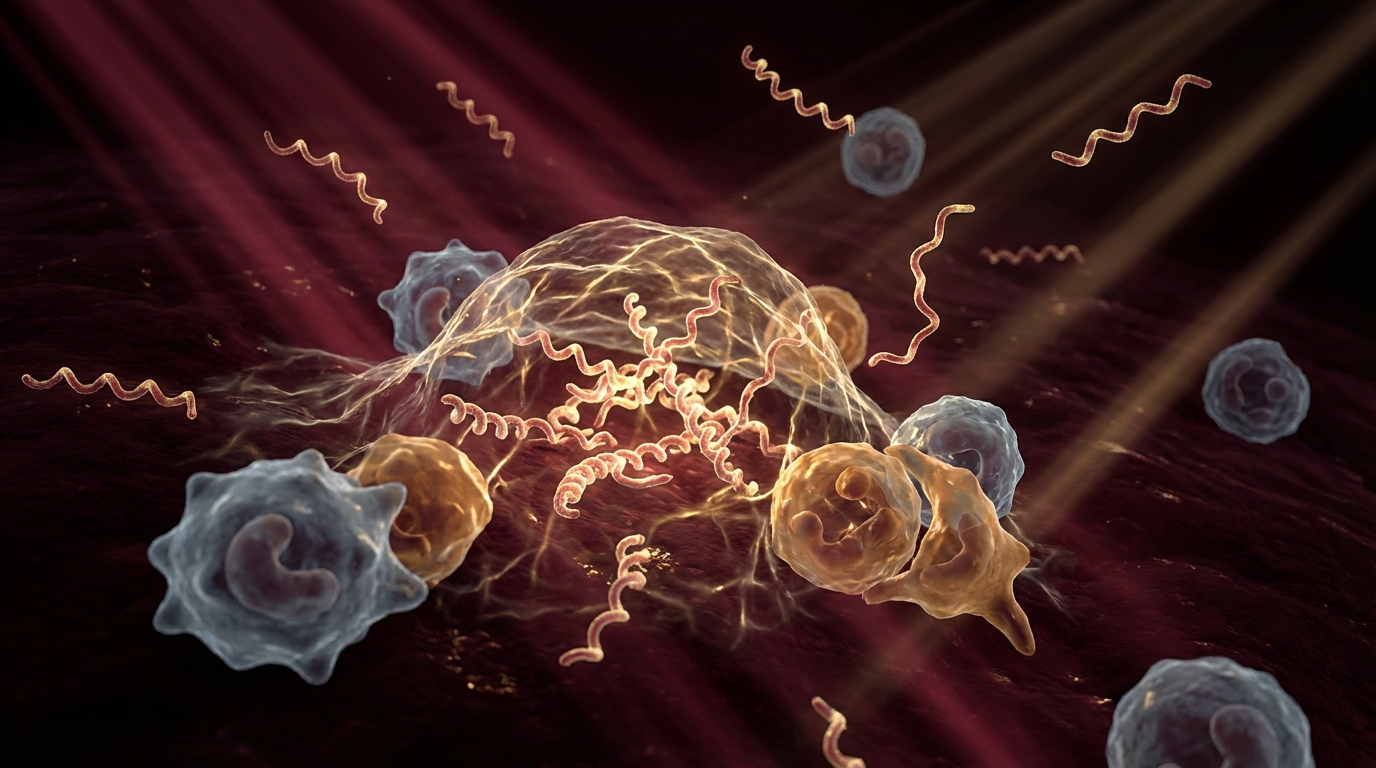
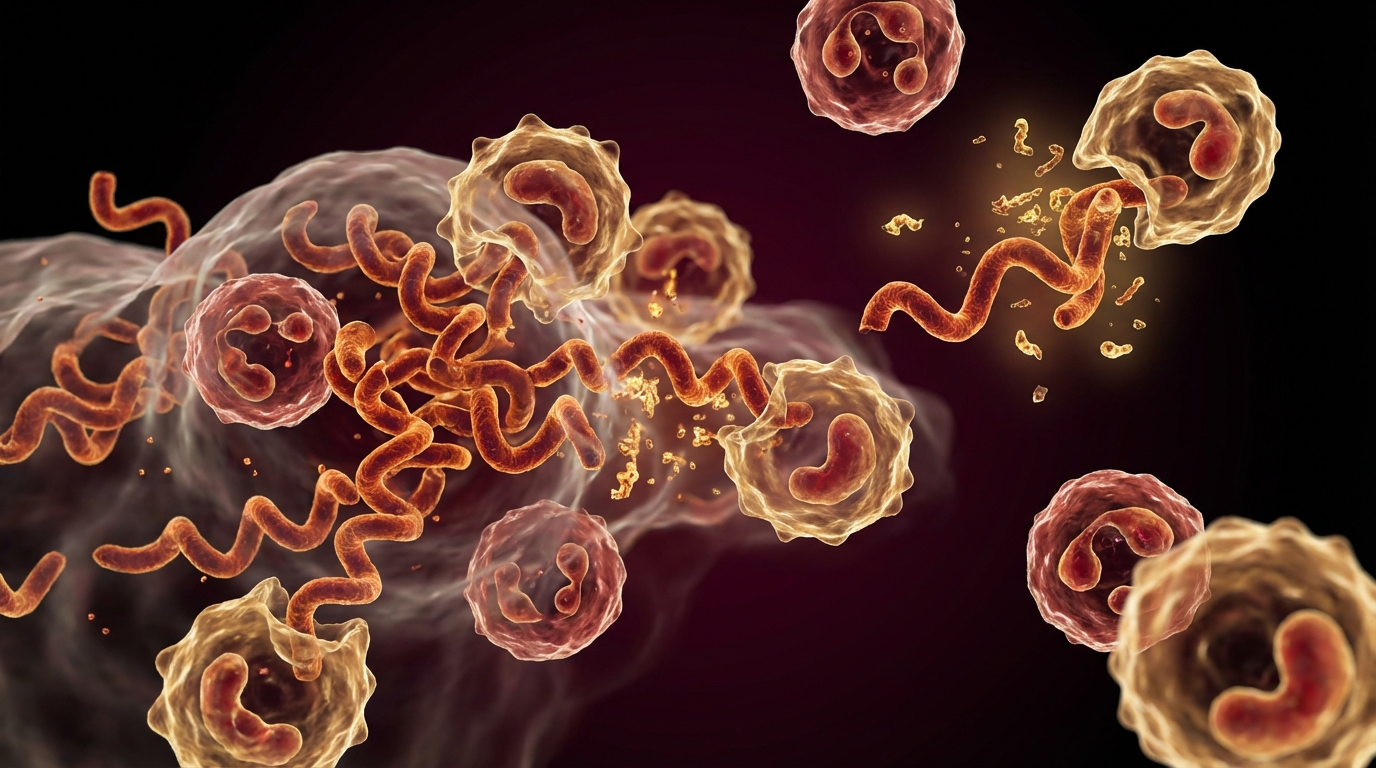
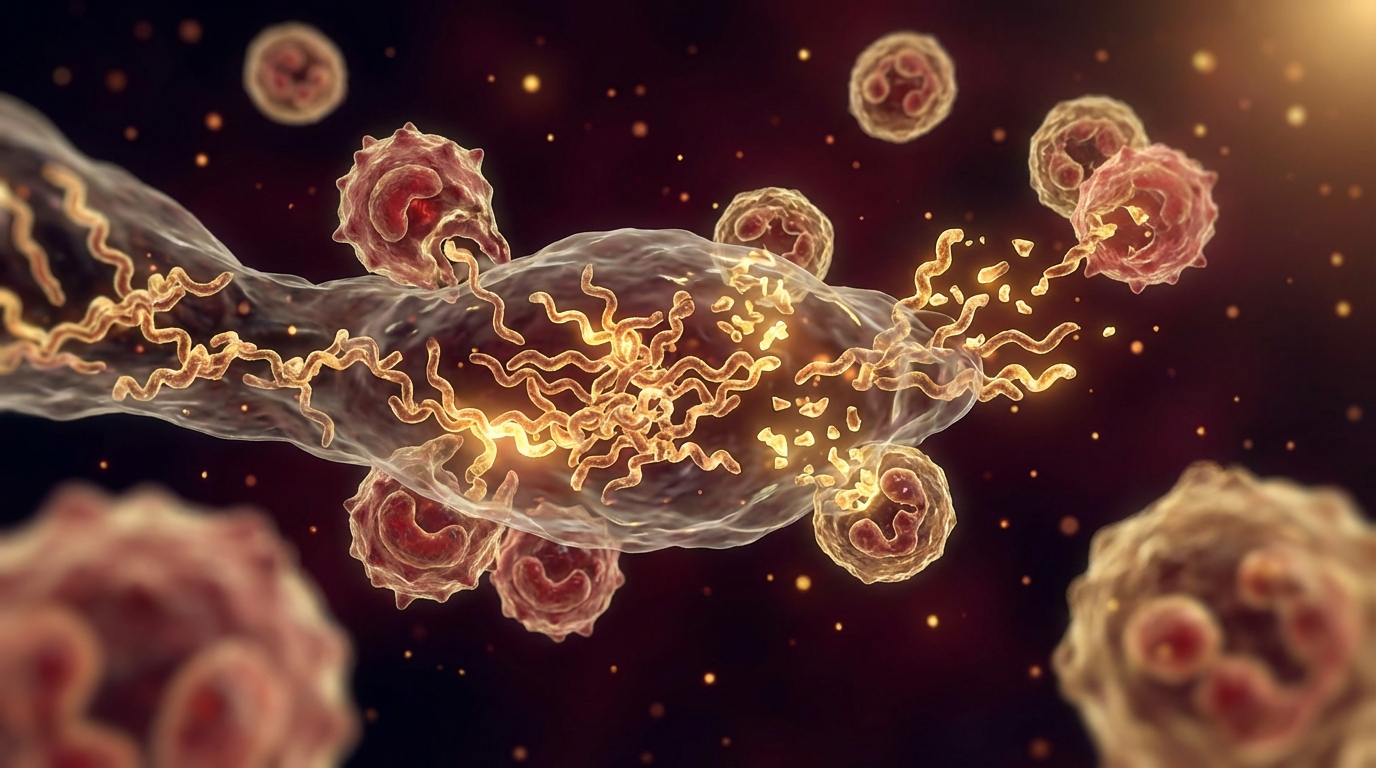
Why this matters for biofilms: bacterial biofilms frequently incorporate host fibrin and fibrinogen into their extracellular matrix. Borrelia burgdorferi biofilms in particular have been shown to contain fibrin as a structural component [1]. By degrading this fibrin scaffold, nattokinase disrupts the structural integrity of the biofilm, potentially allowing antimicrobial agents to penetrate more effectively.
Additionally, fibrin deposition in chronic infections creates a physical barrier — essentially a fibrin mesh that walls off infected tissue from immune surveillance and drug delivery. Nattokinase’s fibrinolytic activity addresses this barrier directly.
Serrapeptase (Serratiopeptidase)
Source: Originally isolated from Serratia marcescens bacteria in the intestine of silkworms Primary activity: Metalloprotease with broad protein substrate specificity Molecular weight: ~50 kDa
Serrapeptase works differently from nattokinase:
- Broad protein degradation: Cleaves a wider range of protein substrates than nattokinase, including dead tissue proteins, inflammatory mediators, and biofilm structural proteins
- Anti-inflammatory activity: Degrades inflammatory mediators (bradykinin, fibrin degradation products), reducing swelling and pain
- Mucolytic effect: Thins mucus secretions, which may be relevant for biofilm matrix disruption
- Antibiotic enhancement: Multiple studies suggest serrapeptase enhances antibiotic activity against biofilm-forming organisms
The seminal work by Selan et al. demonstrated that serrapeptase enhanced the activity of antibiotics against Staphylococcus biofilms by degrading the extracellular matrix and improving antibiotic access to bacterial cells within [2].

The Evidence
What We Know (Human Data)
Nattokinase — fibrinolytic evidence: The fibrinolytic activity of nattokinase is well-established. A randomized, double-blind, placebo-controlled trial published in Atherosclerosis demonstrated that nattokinase supplementation significantly reduced fibrinogen levels and factor VII and VIII activity in human subjects [3]. Multiple cardiovascular studies confirm dose-dependent fibrinolytic activity.
The connection to biofilm disruption is where the evidence becomes more indirect. We know that:
- Biofilms contain fibrin
- Nattokinase degrades fibrin
- Therefore, nattokinase should degrade the fibrin component of biofilms
This is logical and mechanistically sound, but direct clinical trials measuring biofilm disruption in Lyme patients using nattokinase have not been published.
Serrapeptase — antibiotic enhancement evidence: Serrapeptase has stronger evidence specifically for biofilm disruption and antibiotic enhancement:
- Selan et al. showed that serrapeptase enhanced antibiotic efficacy against device-associated Staphylococcal biofilms [2]
- A study in chronic sinusitis demonstrated improved antibiotic outcomes when serrapeptase was added to the regimen
- In vitro studies confirm degradation of biofilm extracellular matrix proteins by serrapeptase
Combination evidence: No published studies have evaluated the combination of nattokinase and serrapeptase specifically for tick-borne disease biofilms. This combination is based on the complementary mechanisms (fibrin-specific + broad protease) and clinical observation.
What We See in the Lab (Preclinical)
In vitro studies on Borrelia burgdorferi biofilms have demonstrated that:
- Enzymatic disruption of biofilm matrix increases antibiotic susceptibility
- Combination of enzyme disruption + antibiotics is more effective than either alone
- The biofilm matrix contains multiple protein substrates that are targets for proteolytic enzymes [1]
Studies by Sapi et al. at the University of New Haven have characterized the composition of Borrelia biofilms, confirming the presence of fibronectin, collagen-like proteins, and alginate-like polysaccharides — all of which are potential targets for proteolytic and mucolytic enzymes.
What I See in Practice
In our clinical experience, adding nattokinase and serrapeptase to antimicrobial protocols produces observable clinical effects:
Increased Herxheimer intensity. When patients add these enzymes to their existing antibiotic regimen, many experience a notable increase in Herxheimer reaction intensity within the first 1-2 weeks. This is consistent with improved antibiotic access to biofilm-protected organisms — more organisms killed means more endotoxin release and more die-off symptoms.
Improved antimicrobial response. Patients who had plateau’d on antibiotics alone sometimes experience renewed clinical improvement after adding enzyme-based disruption. This is the clinical observation that keeps us using these agents despite the limited controlled trial data.
Fibrin-related symptom improvement. Patients with symptoms potentially related to fibrin deposition — hypercoagulability markers, impaired microcirculation, “thick blood” sensation — often report improvement with nattokinase specifically. This may be relevant for patients with post-COVID microclots or chronic infection-related coagulopathy.
What I tell my patients: the evidence supports these enzymes as part of a comprehensive approach. They are not magic bullets. They address one component of the biofilm problem (the protein/fibrin matrix) but not others (polysaccharides, eDNA, mineral deposits). A complete biofilm disruption protocol addresses multiple matrix components.
Practical Application
Dosing
Nattokinase:
- Standard dose: 2,000 FU (fibrinolysis units) per dose, taken twice daily
- Higher doses (up to 4,000 FU twice daily) used in some clinical protocols
- MUST be taken on empty stomach — food proteins compete for enzyme activity
- Take 30-60 minutes before antimicrobials
Serrapeptase:
- Standard dose: 60,000-120,000 SPU (serratiopeptidase units) per dose, twice daily
- Enteric-coated formulations preferred (enzyme is destroyed by stomach acid)
- Empty stomach, same timing as nattokinase
- Can be taken concurrently with nattokinase
Timing in the Treatment Protocol
The timing of enzyme dosing relative to antimicrobials is not arbitrary — it is based on the pharmacokinetic rationale of disrupting the matrix before the antimicrobial agent needs to penetrate it:
- Wake up — take enzymes on empty stomach
- Wait 30-60 minutes — allow enzymes to reach systemic circulation and begin matrix degradation
- Take antimicrobials — antibiotics or herbal antimicrobials now access disrupted biofilm
- Evening dose — repeat enzyme + antimicrobial sequence
- Bedtime — take binders (activated charcoal, cholestyramine) to bind released toxins; must be 2+ hours from all other supplements
Duration
- Initial loading phase: 2-4 weeks of enzymes alone before adding antimicrobials (some protocols)
- Combined phase: Continue enzymes throughout the antimicrobial treatment course (typically 8-16 weeks)
- Some clinicians maintain enzyme support for months after antimicrobial completion
- Cycling (4 weeks on / 2 weeks off) may reduce bacterial adaptation and give the coagulation system recovery time
Quality Considerations
Enzyme potency is measured in activity units, not milligrams. A supplement may contain 100mg of nattokinase but vary enormously in actual fibrinolytic activity. Always verify:
- Nattokinase: Measured in FU (fibrinolysis units). Minimum therapeutic dose: 2,000 FU
- Serrapeptase: Measured in SPU (serratiopeptidase units). Minimum therapeutic dose: 60,000 SPU
- Enteric coating for serrapeptase (essential)
- Third-party testing (COA) for potency verification
- Vitamin K2 content — some nattokinase products are derived from natto and may contain vitamin K2, which affects warfarin patients

Safety and Considerations
- Bleeding risk: Both enzymes have anticoagulant and fibrinolytic effects. Do NOT combine with warfarin, heparin, DOACs, aspirin, or other anticoagulants without physician supervision. Discontinue 2 weeks before any surgical procedure.
- Herxheimer reactions: Managing Herx at home is essential reading before starting biofilm disruption. Enzyme addition can significantly intensify die-off symptoms.
- Allergies: Serrapeptase is derived from bacterial culture; nattokinase from soy fermentation. Soy allergies may be a consideration for some nattokinase products, though the fermentation process typically eliminates soy proteins.
- Gastrointestinal effects: Nausea, loose stools, and abdominal discomfort can occur, particularly at higher doses. Start at lower doses and titrate up.
- Not a standalone treatment. Enzymes disrupt biofilm structure but do not kill organisms. They must be combined with antimicrobial agents for clinical benefit.
- Pregnancy and breastfeeding: Insufficient safety data. Avoid.
The Bottom Line
Nattokinase and serrapeptase are the most commonly used proteolytic enzymes in biofilm disruption protocols, and for good reason — they target key structural components of the biofilm matrix through well-characterized mechanisms. The fibrinolytic evidence for nattokinase is moderate to strong. The biofilm-disrupting evidence for serrapeptase has direct clinical support in device-related infections. Their specific application in tick-borne disease biofilms is emerging but mechanistically sound. Here is what the evidence shows: these enzymes are not the entire answer, but they are a logical and increasingly evidence-supported piece of a comprehensive biofilm strategy.
References
- Sapi E, Bastian SL, Mpoy CM, et al. Characterization of biofilm formation by Borrelia burgdorferi in vitro. PLoS One. 2012;7(10):e48277. PMID: 23110225
- Selan L, Papa R, Tilotta M, et al. Serratiopeptidase: a well-known metalloprotease with a new non-proteolytic activity against S. aureus biofilm. BMC Microbiol. 2015;15:207. PMID: 26463589
- Hsia CH, Shen MC, Lin JS, et al. Nattokinase decreases plasma levels of fibrinogen, factor VII, and factor VIII in human subjects. Nutr Res. 2009;29(3):190-196. PMID: 19358933
- Peng Y, Yang X, Zhang Y. Microbial fibrinolytic enzymes: an overview of source, production, properties, and thrombolytic activity in vivo. Appl Microbiol Biotechnol. 2005;69(2):126-132. PMID: 16211382