At a Glance
| Property | Value |
|---|---|
| Evidence Level | Emerging |
| Primary Use | Recognizing infection-driven psychiatric symptoms |
| Key Mechanism | Bartonella infects endothelial cells and glial cells in the CNS, triggering neuroinflammation and neurotransmitter disruption |
The Psychiatric Symptoms That Are Not Psychiatric
You have never had anxiety before. Then one day, seemingly out of nowhere, you cannot leave the house. Your heart races. You feel a rage building inside you that has no source — a rage that scares you because it is not who you are. You develop intrusive thoughts, compulsive behaviors, maybe even visual disturbances. Your psychiatrist prescribes an SSRI. It does not work. Neither does the second medication. Or the third.
What I tell my patients is this: if psychiatric symptoms appear suddenly in someone with no psychiatric history — particularly if they coincide with fatigue, joint pain, or a history of tick or animal exposure — the question is not “which psychiatric medication should we try next?” The question is “what is causing this?”
Bartonella is one of the most underrecognized infectious causes of neuropsychiatric disease. And the evidence is building.
How Bartonella Gets Into the Brain
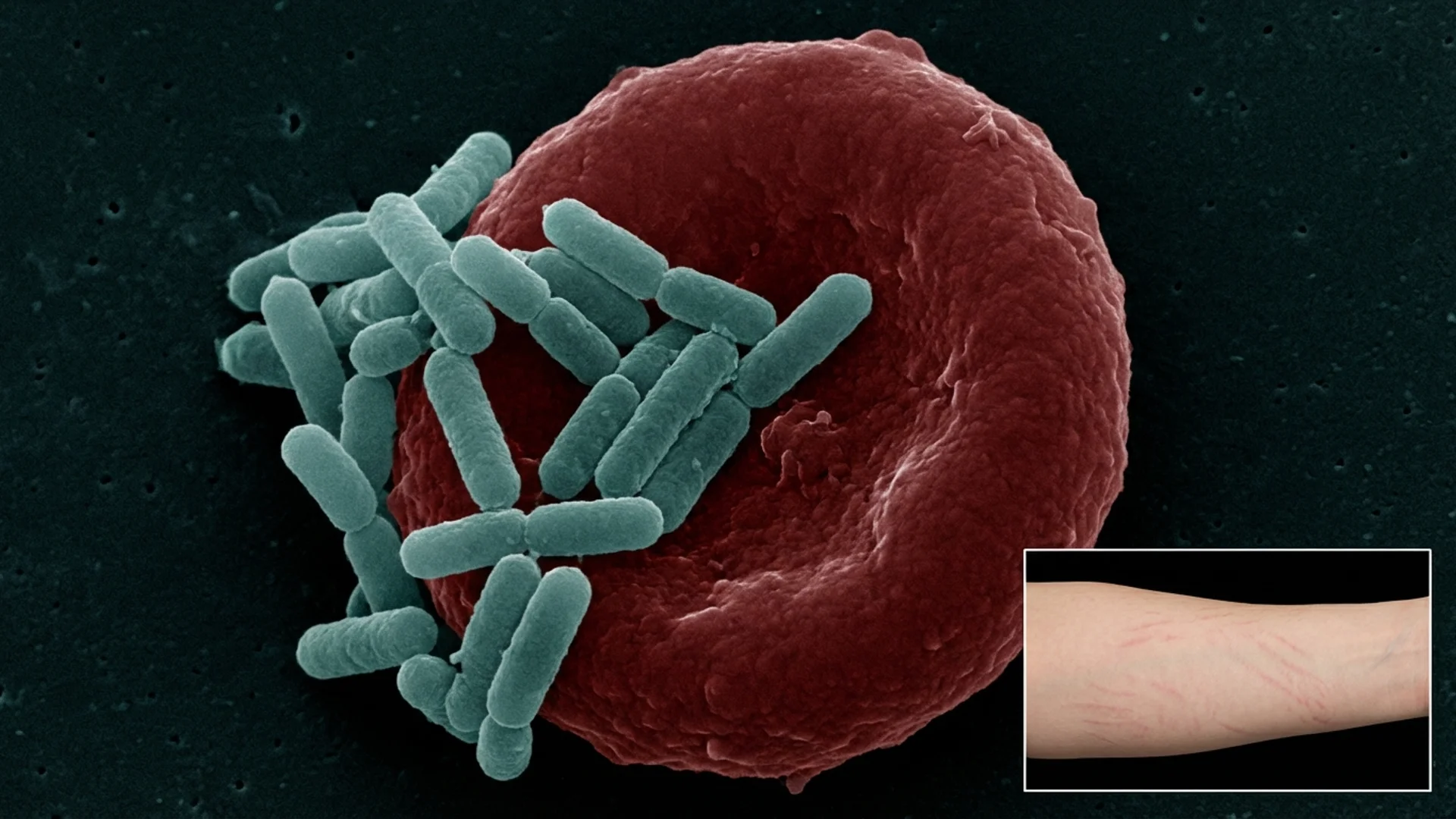
Bartonella species — particularly Bartonella henselae and Bartonella quintana — have a well-established tropism for endothelial cells. They literally invade the cells that line your blood vessels. In the central nervous system, this means Bartonella can directly infect cerebral vasculature, crossing the blood-brain barrier and establishing infection within the CNS [1].
Once in the brain, Bartonella triggers multiple pathological mechanisms:
1. Endothelial inflammation and vasculitis Bartonella infection of cerebral endothelial cells causes local inflammation, microvasculitis, and impaired blood-brain barrier integrity. This allows inflammatory mediators and potentially additional pathogens to enter the CNS that would normally be excluded.
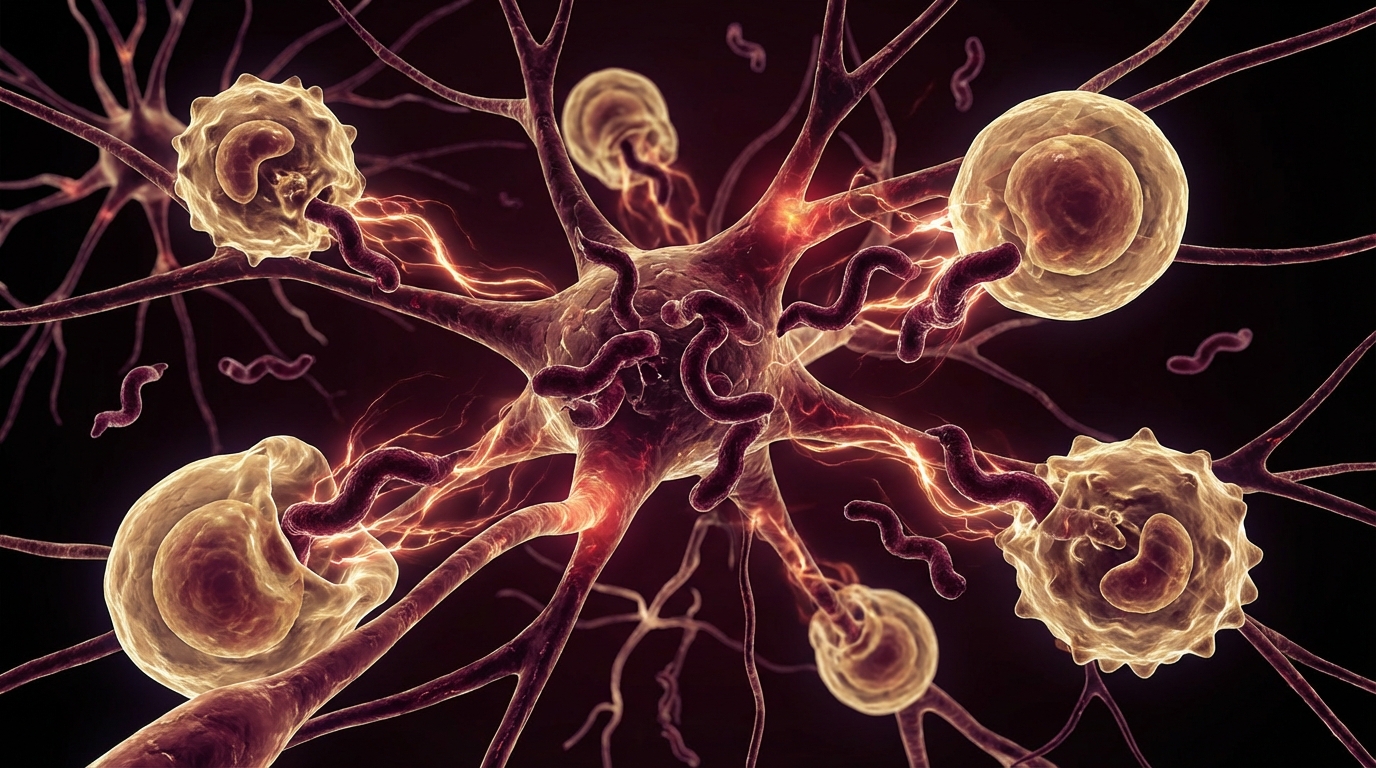
2. Glial cell activation Emerging research suggests Bartonella can infect microglial cells — the resident immune cells of the brain. Activated microglia produce pro-inflammatory cytokines (TNF-alpha, IL-1beta, IL-6) that directly disrupt neurotransmitter metabolism, particularly serotonin, dopamine, and GABA pathways [2].
3. Direct neural effects Bartonella’s ability to infect and persist within neural tissue creates ongoing neuroinflammation. This chronic low-grade inflammatory state alters the balance between excitatory and inhibitory neurotransmission — producing the anxiety, irritability, and sensory processing abnormalities that patients describe.
4. Autoimmune cross-reactivity Molecular mimicry between Bartonella surface proteins and neural tissue antigens may trigger autoimmune responses targeting the nervous system. This is similar to the mechanism proposed in PANDAS/PANS (post-streptococcal neuropsychiatric disease) and may explain why neuropsychiatric symptoms can persist even after the active infection is controlled.
The NC State Research
The most significant research connecting Bartonella to neuropsychiatric disease comes from North Carolina State University, where Dr. Edward Breitschwerdt and colleagues have documented a series of cases establishing this association.
In a landmark 2020 study, Breitschwerdt et al. documented Bartonella bacteremia in patients presenting with neuropsychiatric symptoms including anxiety, depression, cognitive dysfunction, and skin lesions. Using enrichment blood culture combined with PCR (BAPGM), the researchers identified active Bartonella infection in patients who had been previously diagnosed with primary psychiatric disorders [1].
Key findings from the NC State program:
- Bartonella bacteremia was confirmed in patients with unexplained neuropsychiatric symptoms
- Bartonella-Associated Cutaneous Lesions (BACL) co-occurred with psychiatric symptoms in many cases
- Symptoms improved or resolved with targeted antibiotic therapy
- Standard serological testing missed many active infections — culture-enhanced PCR was required for diagnosis
This is what the research actually says: the evidence supports that Bartonella can cause neuropsychiatric disease. The research is emerging rather than definitive — we do not yet have large randomized controlled trials. But the clinical and microbiological evidence is compelling enough that any patient with sudden-onset psychiatric symptoms and risk factors for Bartonella deserves testing.

The Symptom Pattern
What Bartonella Neuropsychiatric Disease Looks Like
In our clinical experience, Bartonella-driven neuropsychiatric symptoms have a recognizable pattern that differs from primary psychiatric disorders:
Sudden onset in a previously stable individual. The patient or family can often pinpoint exactly when the symptoms began. This is different from the gradual onset typical of primary anxiety or OCD.
Disproportionate rage and irritability. Patients describe a rage that feels foreign — “not me,” they say. It can be explosive, triggered by minor stimuli, and followed by confusion about why they reacted so intensely.
Anxiety with prominent somatic features. The anxiety is not primarily cognitive (worry, rumination) but physical — chest tightness, a vibrating sensation in the body, a feeling of impending doom without identifiable content.
OCD-like symptoms. Intrusive thoughts, compulsive checking, need for symmetry — that appeared de novo in an adult without childhood OCD history.
Cognitive dysfunction. Brain fog, word-finding difficulty, processing speed decline, and what patients describe as a “cotton wool” feeling in the head.
Visual disturbances. Floaters, light sensitivity, blurred vision, and occasionally visual hallucinations — reflecting Bartonella’s ability to cause neuroretinitis and optic nerve inflammation.
Sleep disruption. Vivid nightmares, difficulty falling asleep, middle-of-the-night awakenings with severe anxiety.
Concurrent physical symptoms. This is the diagnostic clue that many psychiatrists miss — these patients also have joint pain, characteristic skin lesions, lymphadenopathy, low-grade fevers, or profound fatigue. Pure psychiatric disorders do not cause these.
The Evidence
What We Know (Human Data)
The association between Bartonella and neurological disease is established in the medical literature beyond the psychiatric context. Bartonella neuroretinitis, encephalopathy, and transverse myelitis are recognized complications documented in numerous case reports and small series [3].
The psychiatric dimension is newer but growing. A 2019 systematic review identified over 100 published cases of Bartonella-associated neurological disease, with psychiatric manifestations documented in a significant subset [2].
The challenge is that most evidence comes from case reports and case series rather than controlled studies. This is not because the association is weak — it is because the disease is underrecognized and the diagnostic testing is technically demanding (standard serology misses a large proportion of active infections).
What I See in Practice
In our clinical experience, Bartonella is the tick-borne co-infection most strongly associated with neuropsychiatric symptoms. When I see a Lyme patient whose primary complaint is severe anxiety, rage, or new-onset psychiatric symptoms, Bartonella is the first co-infection I investigate.
What I observe in practice is that approximately 30-40% of our patients with confirmed Bartonella co-infection report significant neuropsychiatric symptoms as their primary or most distressing complaint. Many have been through multiple psychiatric medication trials before anyone considered an infectious etiology.
The response to appropriate antimicrobial therapy is often dramatic — but it is not immediate. Neuropsychiatric symptoms from Bartonella typically take 4-8 weeks to begin improving after treatment initiation, and full resolution may take months. Herxheimer reactions during Bartonella treatment frequently include a temporary worsening of psychiatric symptoms, which requires careful management and patient preparation.
Practical Application
When to Suspect Bartonella as a Psychiatric Mimic
Consider Bartonella testing when:
- Psychiatric symptoms appeared suddenly in a previously stable individual
- Psychiatric medications have been ineffective
- The patient has concurrent physical symptoms (fatigue, joint pain, skin lesions, lymphadenopathy)
- There is a history of tick bite, cat scratch, flea exposure, or body louse exposure
- The patient has known Lyme disease or other tick-borne co-infections
- Rage, irritability, or OCD-like symptoms are disproportionate to the clinical history
Diagnostic Approach
Standard serology (IFA for B. henselae and B. quintana) has significant limitations:
- Sensitivity ranges from 46-76% depending on the species and laboratory
- Seronegativity does not rule out active infection
- Cross-reactivity with other organisms occurs
More sensitive approaches:
- Bartonella PCR (blood and serum)
- BAPGM enrichment culture with PCR (NC State protocol — most sensitive but limited availability)
- Bartonella ePCR (enhanced PCR with enrichment)
- Triple draw strategy: Three blood draws over time to increase detection sensitivity
Treatment Considerations
Herbal protocols for Bartonella may serve as adjuncts, but first-line treatment for neuropsychiatric Bartonella typically involves prolonged antibiotic therapy:
- Azithromycin + rifampin: Common first-line combination. Minimum 4-6 weeks, often 3-6 months for CNS involvement.
- Doxycycline + rifampin: Alternative combination.
- Fluoroquinolones (levofloxacin, moxifloxacin): Reserved for resistant cases due to side effect profile.
- Herbal adjuncts: Cryptolepis, Japanese Knotweed, Cat’s Claw — as complementary therapy under clinical supervision.

Safety and Considerations
- Do not discontinue psychiatric medications abruptly. If neuropsychiatric symptoms are infection-driven, medications can be tapered gradually under psychiatric supervision as antimicrobial therapy takes effect.
- Herxheimer reactions during Bartonella treatment frequently involve psychiatric symptom worsening. Patients and families should be warned and prepared.
- Rifampin has significant drug interactions, including with oral contraceptives, warfarin, and many psychiatric medications. A thorough medication review is essential.
- Not all sudden-onset psychiatric symptoms are infection-related. Autoimmune encephalitis, thyroid disease, and other medical causes must also be considered.
- This is an emerging area of medicine. The evidence supports clinical investigation in appropriate patients, but definitive diagnostic criteria and treatment protocols are still being established.
The Bottom Line
Bartonella is a legitimate cause of neuropsychiatric symptoms including anxiety, rage, OCD-like behaviors, and cognitive dysfunction. The NC State research has moved this from clinical suspicion to documented microbiological fact. If you or your patient has sudden-onset psychiatric symptoms that do not respond to standard treatment — especially with concurrent physical symptoms or tick/animal exposure history — Bartonella deserves a place on the diagnostic list. The nuance matters: this is not about replacing psychiatric care with antibiotics. It is about identifying the upstream driver so that treatment targets the actual cause.
References
- Breitschwerdt EB, Sontakke S, Cannedy A, Hancock SI, Bradley JM. Infection with Bartonella henselae and Bartonella vinsonii subsp. berkhoffii: clinical and microbiological evidence in a patient with neuropsychiatric disease. Pathogens. 2020;9(12):1019. PMID: 33291497
- Mascarelli PE, Maggi RG, Hopkins S, et al. Bartonella henselae infection in a family experiencing neurological and neurocognitive abnormalities after woodlouse hunter spider bites. Parasit Vectors. 2013;6(1):98. PMID: 23587341
- Maman E, Bickels J, Ephros M, et al. Musculoskeletal manifestations of cat scratch disease. Clin Infect Dis. 2007;45(12):1535-1540. PMID: 18190313
- Breitschwerdt EB. Bartonelloses: one health perspectives for an emerging infectious disease. ILAR J. 2014;55(1):46-58. PMID: 24936029