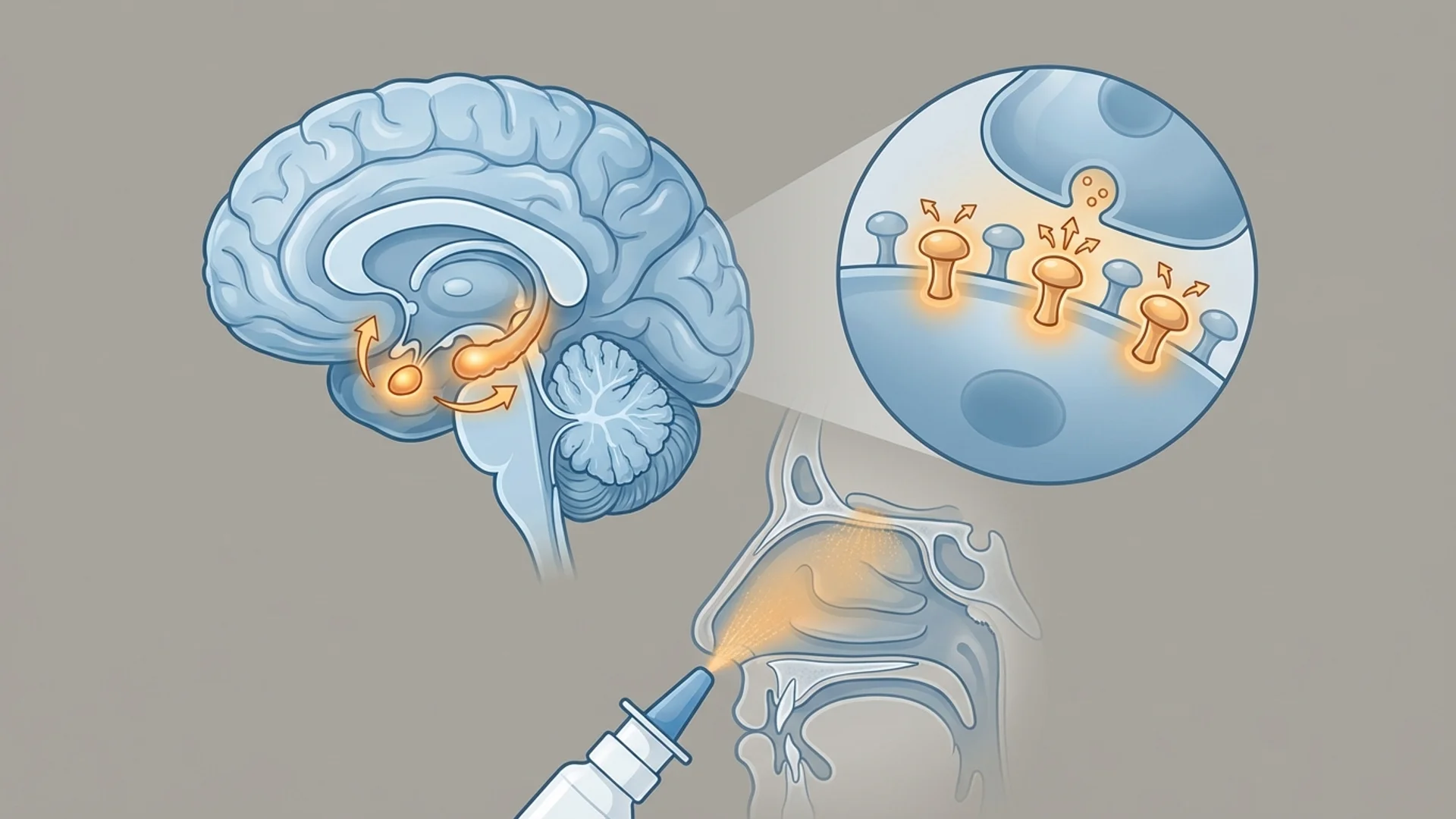
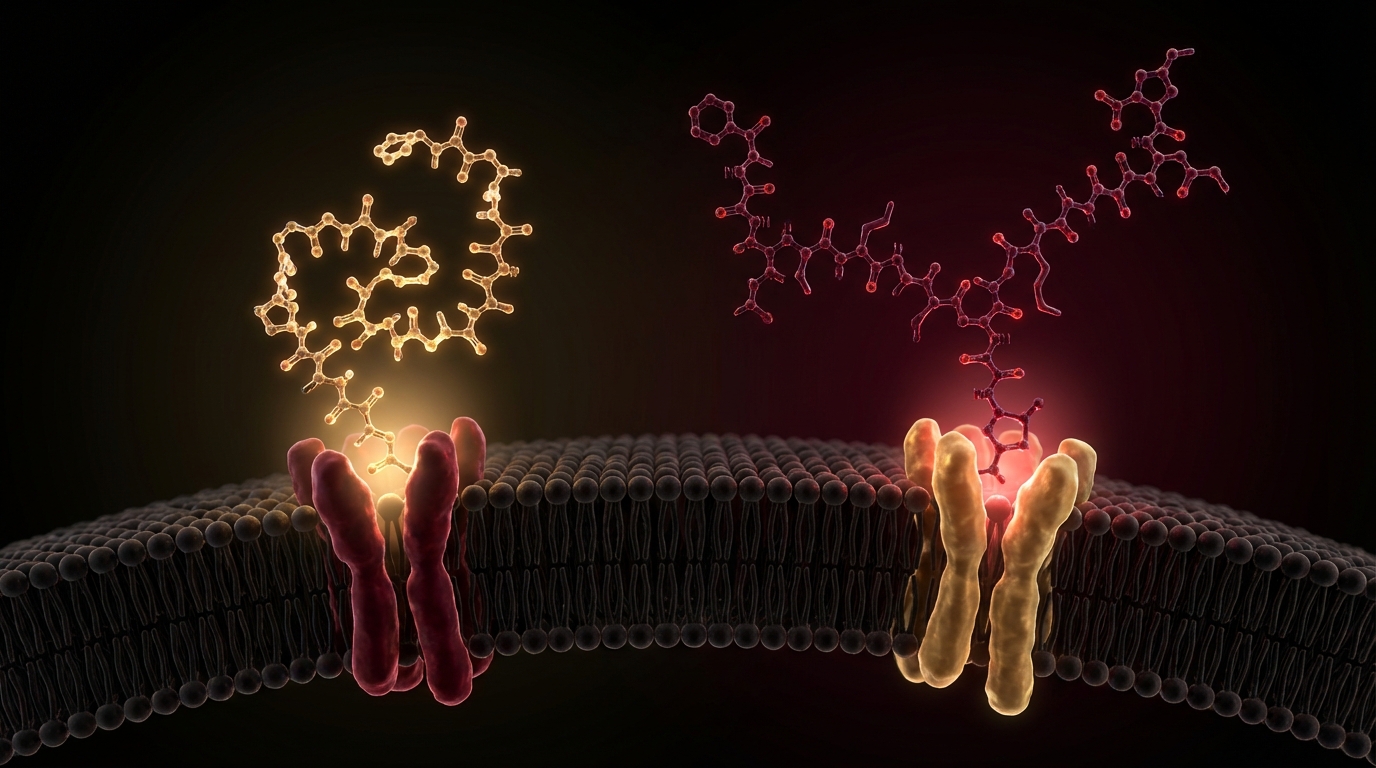
Selank and Semax are the two most widely discussed nootropic peptides to come out of Russian neuropharmacology, and they are routinely compared in online communities. But the comparison is often superficial — “Selank for anxiety, Semax for focus” — without examining why these peptides do what they do or when one is genuinely preferable to the other.
Here is what the evidence shows, and what I observe in practice when patients use one, the other, or both.
At a Glance
| Property | Selank | Semax |
|---|---|---|
| Origin | Tuftsin analog (immunopeptide) | ACTH(4-10) analog (melanocortin) |
| Primary Action | Anxiolytic, immunomodulatory | Nootropic, neuroprotective |
| Key Pathways | GABA, serotonin, BDNF | Dopamine, BDNF, melanocortin |
| Evidence Level | Moderate (Russian clinical trials) | Moderate (Russian clinical trials, stroke data) |
| Route | Intranasal | Intranasal |
| Standard Dose | 200-400 mcg, 2-3x daily | 200-600 mcg, 2-3x daily |
| Cycle | 14-21 days | 10-30 days |
| Effect Onset | Minutes (anxiolytic); days (cognitive) | Minutes to hours (cognitive) |
| Dependence Risk | None documented | None documented |
| Stimulatory? | No — calming | Yes — mildly activating |
The Fundamental Difference: Two Lineages, Two Targets
To understand why these peptides behave differently, you need to understand where they came from.
Selank: Born from the Immune System
Selank is a synthetic analog of tuftsin, a naturally occurring tetrapeptide (Thr-Lys-Pro-Arg) produced by enzymatic cleavage of immunoglobulin G in the spleen. Tuftsin’s primary role is immunomodulatory — it enhances phagocytosis and natural killer cell activity. The researchers at the Institute of Molecular Genetics added a Pro-Gly-Pro tripeptide to tuftsin’s C-terminus to increase its metabolic stability and discovered that this modified peptide had potent anxiolytic and nootropic effects beyond the original immunomodulatory activity.
The anxiolytic mechanism involves multiple systems:
- GABAergic modulation. Selank enhances GABAergic transmission without directly binding GABA receptors, avoiding the sedation and dependence profile of benzodiazepines.
- Serotonin metabolism. Selank alters the balance between serotonin and its metabolite 5-HIAA, particularly in the hypothalamus and frontal cortex (Narkevich et al., 2008).
- BDNF upregulation. Selank increases brain-derived neurotrophic factor expression, which contributes to both anxiolytic and cognitive effects over time.
- Enkephalin modulation. Selank influences the expression of enkephalin genes, connecting it to the endogenous opioid system’s role in emotional regulation.
Semax: Born from the Stress Hormone System
Semax is a synthetic analog of the ACTH(4-10) fragment — a portion of adrenocorticotropic hormone that retains the neurotropic activity of ACTH without the adrenal-stimulating effects. Where Selank is derived from the immune system, Semax is derived from the stress-response system, specifically the melanocortin pathway.
The nootropic mechanism operates through:
- Dopaminergic enhancement. Semax increases dopamine and its metabolites in the striatum and nucleus accumbens, contributing to motivation, attention, and working memory.
- Melanocortin receptor activation. MC3 and MC4 receptor engagement produces neuroprotective and neuroplasticity-enhancing effects.
- BDNF upregulation. Like Selank, Semax robustly increases BDNF, but through different upstream pathways — melanocortin signaling rather than GABAergic/serotonergic modulation.
- NGF modulation. Semax also influences nerve growth factor, supporting neuronal survival and differentiation.
The critical distinction: Selank calms the brain while enhancing function. Semax stimulates the brain while enhancing function. Both increase BDNF, but through different signaling cascades, which is why their subjective effects are so different.
The Evidence: Head to Head
Neither peptide has been tested head-to-head in a single trial. We must compare their evidence bases separately.
Selank: The Anxiety Data
The strongest human evidence for Selank comes from Russian clinical trials in generalized anxiety disorder:
- A double-blind comparison with medazepam (a benzodiazepine) in GAD patients showed comparable anxiolytic efficacy on the Hamilton Anxiety Scale, with Selank producing no sedation, cognitive impairment, or dependence (Seredenin et al., 2009).
- Selank received Russian regulatory approval in 2009 for anxiety disorders and neurasthenia.
- Cognitive improvements in anxious patients were documented over 14-day courses, with effects more pronounced in the second week.
The limitation: these trials were conducted by the developer’s research ecosystem, published primarily in Russian, and have not been independently replicated internationally.
Semax: The Cognitive and Stroke Data
Semax has a broader clinical evidence base than Selank, partly because it has been approved in Russia since the 1990s for multiple indications:
- Stroke recovery. The most robust data. Semax demonstrated neuroprotective effects in ischemic stroke patients, reducing infarct volume and improving neurological outcomes when administered within the first 12 hours (Gusev et al., 1997).
- Cognitive enhancement. Clinical trials in patients with cognitive impairment showed improvements in attention, memory, and information processing speed over 10-day courses.
- Optic nerve atrophy. Semax is approved in Russia for optic nerve conditions, with data showing improvement in visual function.
- ADHD-related research. Preliminary data suggesting benefits in attention deficit presentations, though this indication is not formally approved.
Semax has somewhat stronger Western interest due to its neuroprotective stroke data, which has been cited in English-language neuroscience reviews.
What I See in Practice
In my clinical experience, the choice between Selank and Semax maps relatively clearly to the patient’s primary complaint:
Selank patients are those whose cognitive difficulties are downstream of anxiety. They cannot concentrate because they are anxious. They cannot sleep because their mind races. They describe mental fog that lifts when they are calm (on vacation, after exercise). For these patients, Selank addresses the root cause — anxiety — and the cognitive improvement follows.
Semax patients are those with primary cognitive complaints without significant anxiety. They feel mentally sluggish, have difficulty with sustained attention, or describe a “brain fog” that is not anxiety-driven but rather a flat, hypo-aroused state. Some of my post-COVID patients with persistent cognitive impairment fall into this category. Semax provides the dopaminergic push that these patients need.
Combined patients represent what I see most frequently — patients with both anxiety and cognitive impairment who benefit from the complementary mechanisms. The Selank prevents the anxiety that Semax’s mild stimulatory effect might otherwise exacerbate, while Semax provides the cognitive drive that Selank alone does not fully deliver.
Practical Comparison: Choosing Your Protocol
When to Choose Selank
- Primary complaint is anxiety with secondary cognitive impairment
- History of poor response to stimulatory compounds (caffeine sensitivity, stimulant side effects)
- Sleep disturbance is a significant component (Selank does not interfere with sleep)
- Patient is tapering from benzodiazepines (Selank may ease the transition, though this is based on clinical observation, not trials)
- Concurrent autoimmune or inflammatory condition where immunomodulation may be beneficial
When to Choose Semax
- Primary complaint is cognitive impairment without significant anxiety
- Post-stroke cognitive rehabilitation
- Hypo-aroused, low-motivation presentation (“brain fog” without anxiety)
- ADHD-type attention difficulties
- Optic nerve or visual processing concerns
When to Combine
- Mixed anxiety-cognitive presentation (the most common scenario in my practice)
- Post-COVID neurological sequelae with both anxiety and cognitive components
- Patients who tried Semax alone and found it slightly overstimulating
- Patients who tried Selank alone and found it calming but insufficient for cognitive demands
Combined Protocol
| Parameter | Selank | Semax |
|---|---|---|
| Morning dose | 200 mcg per nostril | 200-300 mcg per nostril |
| Midday dose | 200 mcg per nostril | 200-300 mcg per nostril |
| Evening dose | 200 mcg per nostril (optional) | Not recommended (stimulatory) |
| Cycle | 14-21 days | 10-21 days |
When stacking, I recommend starting each peptide separately for at least one short course to understand individual response before combining. Some patients find that Selank alone is sufficient, and adding Semax provides marginal benefit. Others find the combination significantly superior to either alone. Individual neurochemistry matters.
Mechanism Comparison: Why They Are Complementary
The reason Selank and Semax combine well is that their mechanisms converge on neuroplasticity (BDNF) while diverging on neurotransmitter modulation:
Convergence: Both increase BDNF expression. This shared effect supports neuroplasticity, synaptic strengthening, and long-term cognitive resilience. The combined BDNF signal from two different upstream pathways may be more robust than either alone, though this has not been tested directly.
Divergence: Selank modulates GABA and serotonin (calming). Semax modulates dopamine and melanocortin (activating). These systems are complementary rather than redundant. A brain that is both calm and engaged — GABAergic stability with dopaminergic drive — is precisely the neurochemical state associated with optimal performance.
This is not a theoretical construct. The pharmacological profile of peak performance states consistently involves adequate GABAergic tone (preventing anxiety-driven interference) with sufficient dopaminergic activity (providing motivation and attention). Selank and Semax approximate this balance through two different molecular mechanisms.
Safety Comparison
| Concern | Selank | Semax |
|---|---|---|
| Dependence | None documented | None documented |
| Tolerance | Not observed in 14-21 day courses | Not observed in standard courses |
| Sedation | No | No |
| Overstimulation | No | Possible in sensitive individuals |
| Insomnia risk | No | Low (avoid evening dosing) |
| Nasal irritation | Mild, occasional | Mild, occasional |
| Immunomodulation | Yes (tuftsin-derived) | Minimal |
| Cardiovascular | No known effects | No known effects |
| Autoimmune caution | Yes (immune activation) | No specific concern |
Both peptides have excellent safety profiles across published data. The primary practical difference is that Semax can be mildly overstimulating in anxiety-prone individuals, while Selank has essentially no activation concern. Neither produces dependence, which is a meaningful differentiator from conventional anxiolytics and stimulants.
The Bottom Line
Selank and Semax are complementary, not competing. Selank is the better choice when anxiety is the primary driver of cognitive difficulty. Semax is the better choice when cognitive impairment exists without significant anxiety. The combination is rational when both presentations coexist, which they frequently do. The evidence for both is moderate — grounded in Russian clinical trials and preclinical data — and neither has undergone the rigorous international replication that would elevate confidence further. In my clinical experience, these are among the best-tolerated and most consistently effective peptides for neurological optimization, with the important caveat that individual response varies and the evidence base, while promising, is geographically concentrated.
Back to Selank Overview | All Peptide Articles
References
- Seredenin SB, Kozlovskaia MM, Blednov IuA, et al. “Anxiolytic action of selank.” Zh Vyssh Nerv Deiat Im I P Pavlova. 2009;59(1):100-107. PMID: 19340054.
- Narkevich VB, Kudrin VS, Klodt PM, et al. “Effects of Selank on serotonin metabolism in the rat brain.” Bull Exp Biol Med. 2008;145(6):665-667. DOI: 10.1007/s10517-008-0181-0.
- Gusev EI, Skvortsova VI, Chukanova EI. “Semax in prevention of disease progress and development of exacerbations in patients with cerebrovascular insufficiency.” Zh Nevrol Psikhiatr Im S S Korsakova. 2005;105(2):35-40.
- Eremin KO, Kudrin VS, Saransaari P, et al. “Semax, an ACTH(4-10) analogue with nootropic properties, activates dopaminergic and serotoninergic brain systems in rodents.” Neurochem Res. 2005;30(12):1493-1500. DOI: 10.1007/s11064-005-8826-8.
- Kozlovskii II, Danchev ND. “Optimizing effect of selank on disturbances of cognitive function.” Eksp Klin Farmakol. 2003;66(5):12-15. PMID: 14628570.
Disclaimer: This article is provided for educational purposes and reflects one physician’s clinical approach. Selank and Semax are approved in Russia but not by the FDA or EMA. It is not a substitute for individualized medical care. Consult a qualified physician before beginning any peptide protocol.