At a Glance
| Property | Detail |
|---|---|
| Evidence Level | Moderate for topical; Limited for injection |
| Topical Dose | 1-2% concentration in serum or cream, twice daily |
| Subcutaneous Dose | 1-2 mg, 2-3x weekly |
| Microneedling Adjunct | 0.5-1% solution, applied post-procedure |
| Onset of Results (Topical) | 8-12 weeks for visible anti-aging effects |
| Key Consideration | Formulation quality and stability critical for efficacy |
How Do You Dose GHK-Cu?
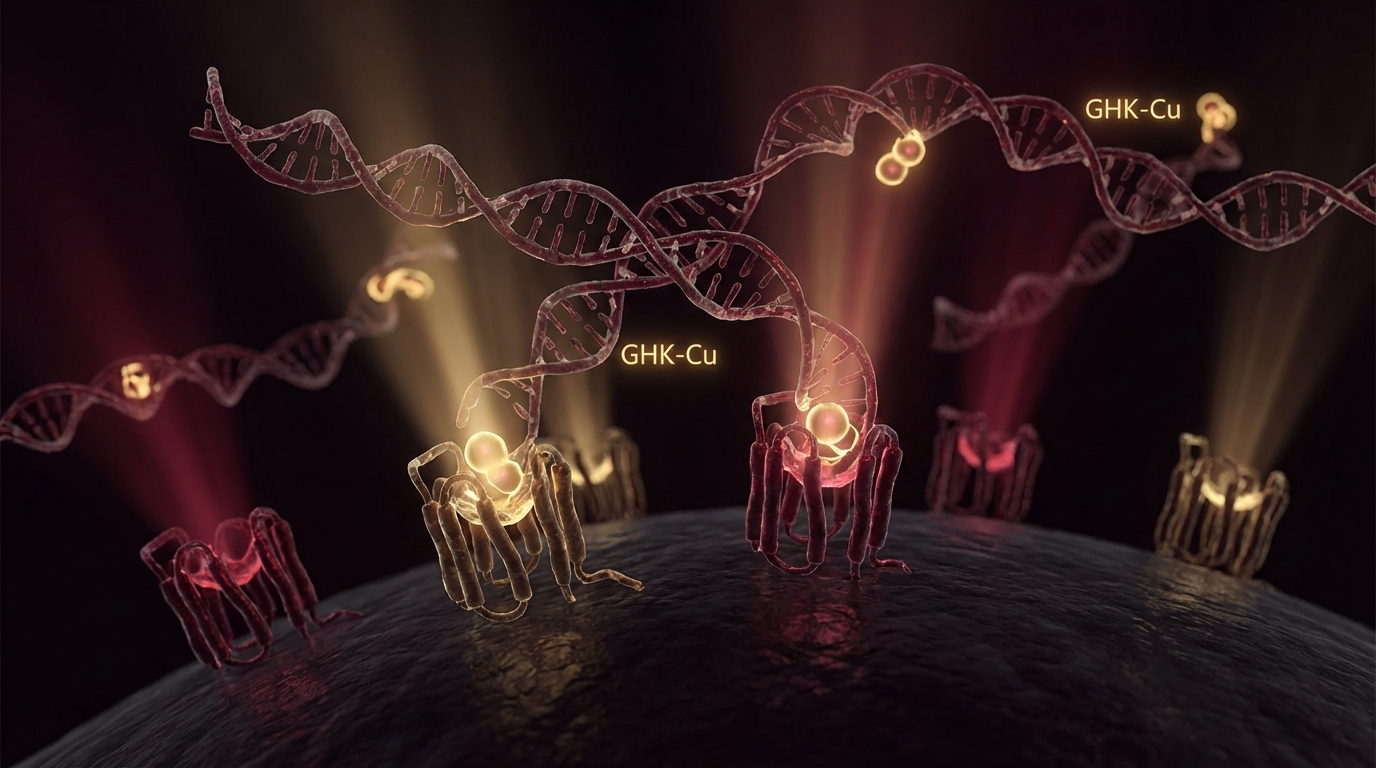
The answer depends entirely on what you are trying to achieve and which route of administration you are using. GHK-Cu is unusual among peptides in that topical application — the most accessible route — also has the strongest evidence base. Most peptides require injection to achieve meaningful tissue concentrations. GHK-Cu’s small molecular size (tripeptide, molecular weight ~403 Da) allows meaningful skin penetration, particularly with properly formulated delivery vehicles.
Here is what the evidence supports for each route, where the evidence is thin, and how I approach dosing in clinical practice.
Topical Dosing
Why Topical Works for GHK-Cu
Most peptides are too large to penetrate the skin barrier effectively. GHK-Cu is an exception for several reasons:
-
Small size. At only three amino acids (Gly-His-Lys) plus a copper ion, GHK-Cu has a molecular weight of approximately 403 Da — well below the 500 Da threshold generally considered the upper limit for passive skin penetration.
-
Charge characteristics. The copper binding modifies the peptide’s interaction with the lipid-rich stratum corneum in ways that may facilitate penetration.
-
Target tissue is the destination. Unlike peptides that must reach distant tissues, GHK-Cu’s target for anti-aging — dermal fibroblasts — sits directly beneath the skin surface. Even modest penetration delivers the peptide to its site of action.
Standard Topical Protocol
| Parameter | Detail |
|---|---|
| Concentration | 1-2% GHK-Cu |
| Formulation | Serum (preferred for penetration) or cream |
| Application | Twice daily — morning and evening |
| Application area | Clean, dry skin; face, neck, decolletage, or hands |
| Amount | 2-4 drops (serum) or pea-sized amount (cream) per area |
| Layering order | After cleansing and toner, before heavier moisturizers and sunscreen |
| Expected onset | Subtle improvement at 4-6 weeks; measurable results at 8-12 weeks |
| Duration | Continuous use recommended |
Concentration Matters
The clinical studies that showed significant wrinkle reduction and skin density improvement used GHK-Cu at 1-2% concentrations. Below 0.5%, the evidence for meaningful anti-aging effects becomes questionable. Many consumer products contain copper peptides at undisclosed or subtherapeutic concentrations — this is one of the reasons that product selection matters as much as the peptide itself.
| Concentration | Expected Efficacy | Clinical Evidence |
|---|---|---|
| Below 0.5% | Unlikely to produce measurable anti-aging effects | Insufficient |
| 0.5-1% | Mild improvement possible | Limited |
| 1-2% | Range used in clinical studies showing wrinkle/density improvement | Moderate |
| Above 2% | Not demonstrated to be more effective; may increase irritation risk | Insufficient |
Formulation Stability
GHK-Cu has specific formulation requirements that affect its stability and therefore its efficacy:
- pH sensitivity. Optimal stability at pH 5.5-6.5, which is close to physiological skin pH. Formulations outside this range may degrade the peptide or release the copper ion.
- Oxidation susceptibility. Copper can catalyze oxidation reactions. Formulations should include appropriate antioxidant stabilizers and use airless pump packaging to minimize air exposure.
- Light sensitivity. UV exposure can degrade GHK-Cu. Amber or opaque packaging is preferred.
- Interaction with other actives. Vitamin C (L-ascorbic acid) at low pH can interact with copper, potentially causing oxidation of the vitamin C and destabilization of the GHK-Cu complex. If using both, apply at different times or separate by at least 30 minutes.
Subcutaneous Injection Dosing
Injectable GHK-Cu is used by some clinicians for systemic effects — not limited to skin, but including systemic tissue repair, anti-inflammatory effects, and the broad gene expression modulation that GHK-Cu is known for.
Standard Injection Protocol
| Parameter | Detail |
|---|---|
| Dose | 1-2 mg per injection |
| Frequency | 2-3 times per week |
| Route | Subcutaneous |
| Injection site | Abdominal fat, upper arm, or anterior thigh |
| Cycle length | 4-8 weeks |
| Rest period | 4 weeks between cycles |
Evidence Basis for Injectable Dosing
Let me be transparent: the evidence for injectable GHK-Cu dosing in humans is limited. The 1-2 mg dose range is extrapolated from preclinical studies showing biological activity at micromolar concentrations in tissue cultures, scaled to estimated systemic distribution. No formal human pharmacokinetic studies of subcutaneous GHK-Cu have been published.
This places injectable GHK-Cu dosing in the same category as BPC-157 and TB-500 dosing — educated extrapolation, not validated pharmacology. The topical route has substantially more clinical evidence and should be preferred when the target is skin.
When Injectable May Be Preferred
| Goal | Route | Rationale |
|---|---|---|
| Facial anti-aging | Topical | Most evidence; direct delivery to target |
| Systemic anti-inflammatory | Injectable | Systemic distribution needed |
| Gene expression modulation (systemic) | Injectable | Topical delivery limited to application site |
| Post-surgical wound healing | Topical + injectable | Combined approach for local and systemic effects |
| Hair regrowth (scalp) | Topical to scalp or mesotherapy | Direct follicle delivery |
Microneedling-Enhanced Delivery
Microneedling creates microchannels in the skin that dramatically increase peptide penetration. For GHK-Cu specifically, microneedling can increase delivery to the dermis by an estimated 3-10x compared to passive topical application.
Microneedling Protocol with GHK-Cu
| Parameter | Detail |
|---|---|
| Needle depth | 0.5-1.0 mm for facial skin |
| GHK-Cu concentration | 0.5-1% solution |
| Application timing | Immediately after microneedling while channels are open |
| Amount | Enough to cover the treated area; gently pat in |
| Post-procedure care | No harsh actives (acids, retinoids) for 24-48 hours |
| Frequency | Every 4-6 weeks (standard microneedling interval) |
| Results timeline | Faster than passive topical — improvements may be visible at 4-6 weeks |
Why Lower Concentration with Microneedling
The concentration is slightly lower (0.5-1% vs. 1-2% for passive topical) because microneedling dramatically increases absorption. A lower topical concentration with enhanced delivery may achieve similar or higher tissue levels compared to a higher concentration applied passively.
Mesotherapy / Intradermal Injection
Some aesthetic practitioners administer GHK-Cu via mesotherapy — multiple shallow intradermal injections directly into the facial skin. This approach delivers the peptide directly to the dermal layer where fibroblasts reside.
Mesotherapy Protocol
| Parameter | Detail |
|---|---|
| Dose | 0.5-1 mg total, distributed across treatment area |
| Technique | Multiple 0.1 mL intradermal injections, spaced 1-2 cm apart |
| Frequency | Every 2-4 weeks |
| Sessions | 4-6 sessions for initial course |
| Maintenance | Monthly thereafter if desired |
This approach is performed exclusively by trained aesthetic physicians. It is not a self-administration route. The evidence for mesotherapy with GHK-Cu is primarily anecdotal and based on practitioner experience — no controlled trials of this specific approach have been published.
Combination Protocols
GHK-Cu + BPC-157 (Wound Healing)
| Peptide | Route | Dose | Frequency |
|---|---|---|---|
| GHK-Cu | Topical (to wound/scar) | 1-2% serum | Twice daily |
| BPC-157 | SC near wound site | 250 mcg | Once daily |
Rationale: GHK-Cu promotes collagen remodeling and gene expression for tissue repair. BPC-157 promotes angiogenesis and growth factor signaling. Together, they address both the structural reorganization and the vascular supply components of wound healing.
GHK-Cu + Retinoid (Anti-Aging)
| Active | Timing | Concentration |
|---|---|---|
| GHK-Cu serum | Morning | 1-2% |
| Tretinoin/retinol | Evening | Per dermatologist recommendation |
Rationale: Both stimulate collagen synthesis through distinct mechanisms. GHK-Cu acts through copper-dependent enzymatic pathways and broad gene modulation. Retinoids act through retinoid receptor activation. Using them at different times of day avoids potential formulation interactions while capturing complementary benefits.
GHK-Cu + Vitamin C + Sunscreen (Comprehensive Anti-Aging)
| Step | Product | Timing |
|---|---|---|
| 1 | GHK-Cu serum (1-2%) | Morning, after cleansing |
| 2 | Vitamin C serum (10-20% L-ascorbic acid) | Morning, 10-15 minutes after GHK-Cu |
| 3 | Broad-spectrum sunscreen (SPF 30+) | Morning, after actives absorb |
Note: Separate GHK-Cu and vitamin C by at least 10-15 minutes to minimize copper-catalyzed oxidation of ascorbic acid. Alternatively, use a vitamin C derivative (sodium ascorbyl phosphate, ascorbyl glucoside) that is less susceptible to copper-mediated oxidation.
What I Tell My Patients
For patients whose primary goal is facial anti-aging, I recommend starting with topical GHK-Cu at 1-2% concentration, applied twice daily, before considering injectable approaches. This is where the evidence is strongest, the safety profile is best characterized, and the cost is lowest.
For patients with systemic goals — chronic inflammation, post-surgical recovery, or systemic tissue repair — injectable GHK-Cu at 1-2 mg subcutaneously two to three times weekly is a reasonable protocol, with the caveat that the evidence base for this route is substantially thinner.
The patients who see the best results are those who combine GHK-Cu with a comprehensive skin care approach: sun protection, adequate hydration, retinoid use (if tolerated), and attention to the nutritional factors that support collagen synthesis (vitamin C, zinc, protein intake).
The Bottom Line
GHK-Cu dosing is route-dependent. Topical application at 1-2% concentration twice daily has the most clinical evidence and is the recommended first-line approach for skin anti-aging. Subcutaneous injection at 1-2 mg two to three times weekly is used for systemic effects but has limited published human data. Microneedling-enhanced delivery offers a middle ground with potentially faster results. Product quality, formulation stability, and concentration are as important as the peptide itself.
For the skin-specific evidence review, see GHK-Cu for Skin: Anti-Aging Evidence and Protocols. For the full overview, see GHK-Cu: Copper Peptide Science.
References
- Pickart L, et al. “The human tripeptide GHK-Cu in prevention of oxidative stress and degenerative conditions of aging.” Oxid Med Cell Longev. 2012;2012:324832. PMID: 22666519.
- Pickart L, Margolina A. “Regenerative and Protective Actions of the GHK-Cu Peptide in the Light of the New Gene Data.” Int J Mol Sci. 2018;19(7):1987. PMID: 29986520.
- Maquart FX, et al. “Stimulation of collagen synthesis in fibroblast cultures by the tripeptide-copper complex glycyl-L-histidyl-L-lysine-Cu2+.” FEBS Lett. 1988;238(2):343-346. PMID: 3169264.
- Leyden JJ, et al. “Facial wrinkle reduction with topical copper peptide complex.” J Cosmet Dermatol. 2002;1(2):72-76.
- Bos JD, Meinardi MM. “The 500 Dalton rule for the skin penetration of chemical compounds and drugs.” Exp Dermatol. 2000;9(3):165-169. PMID: 10839713.
Disclaimer: This article is for educational purposes and reflects current published research and clinical observation. It is not medical advice. GHK-Cu is available as a cosmetic ingredient and is not FDA-approved for medical treatment. Consult a qualified physician or dermatologist before pursuing any peptide therapy.