At a Glance
| Property | Value |
|---|---|
| Evidence Level | Strong (bone healing, osteoarthritis); Moderate (soft tissue repair, pain); Emerging (depression, fibromyalgia, neurological) |
| Primary Use | Bone fracture healing, osteoarthritis pain, tissue repair, inflammation reduction |
| Key Mechanism | Calcium signaling modulation, nitric oxide release, anti-inflammatory cytokine regulation |
| FDA Status | Cleared for bone fracture healing (non-union/delayed union) and post-operative pain/edema |
| Treatment Duration | Typically 20-60 minutes per session, variable frequency depending on condition |
PEMF Therapy Benefits and Evidence: Separating Signal from Noise
Pulsed electromagnetic field therapy sits at an uncomfortable intersection in medicine. On one hand, it has legitimate FDA clearances, decades of research, and established use in orthopedic medicine for bone healing. On the other, the consumer PEMF market is flooded with devices making extravagant claims — from curing cancer to reversing aging — backed by little more than testimonials and cherry-picked studies.
Here is what the evidence actually supports, where the gaps are, and how we use PEMF in clinical practice.
How PEMF Works: The Biophysics
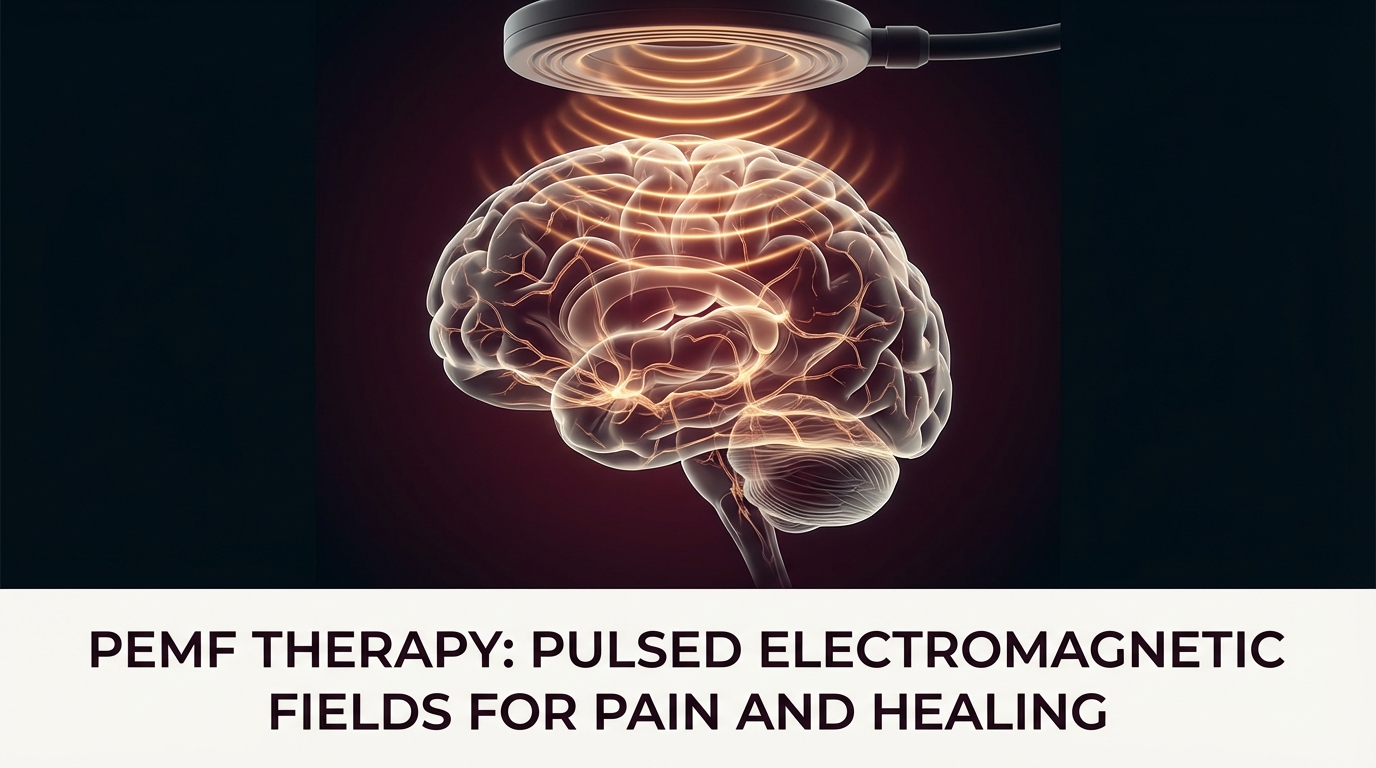
PEMF devices generate time-varying electromagnetic fields that penetrate tissue and induce secondary electrical fields within the body. The biological effects depend on four key parameters: frequency (measured in Hz), intensity (measured in Gauss or Tesla), waveform (sinusoidal, square, sawtooth, or custom), and duty cycle (the on-off pattern).
The fundamental question — how do electromagnetic fields affect biological processes? — has several well-characterized answers:
Calcium Signaling
The most established mechanism. PEMF stimulation increases intracellular calcium through voltage-gated calcium channels and the calmodulin/nitric oxide synthase pathway. Calcium is a universal intracellular messenger that regulates gene expression, enzyme activity, cell proliferation, and differentiation. The calcium-calmodulin cascade downstream of PEMF exposure has been mapped in detail by Pilla and colleagues [1].
This is not hypothetical biophysics. The signaling cascade has been demonstrated in osteoblasts (bone-forming cells), chondrocytes (cartilage cells), endothelial cells, and neurons. The downstream effects include increased production of:
- Nitric oxide (NO): A vasodilator and anti-inflammatory signaling molecule
- Growth factors: BMP-2, TGF-beta, VEGF — molecules that drive tissue repair
- Anti-inflammatory cytokines: IL-10 upregulation with concurrent IL-1beta and TNF-alpha suppression
The Adenosine Pathway
PEMF has been shown to upregulate adenosine A2A and A3 receptor expression. Activation of these receptors has potent anti-inflammatory effects, including suppression of NF-kB — a master regulator of inflammatory gene expression. This mechanism is particularly relevant to the pain and inflammation benefits of PEMF [2].
Cellular Membrane Effects
At the cellular membrane level, PEMF exposure affects ion channel behavior, membrane potential, and transmembrane signaling. These effects are frequency-dependent and intensity-dependent, which is why parameter selection matters and why not all PEMF devices produce equivalent biological effects.
Let me be direct: a consumer PEMF mat operating at 0.5 Gauss is not producing the same biological effects as a clinical device operating at 20-40 Gauss, regardless of what the marketing claims. Physics applies.
The Evidence: Condition by Condition
Bone Fracture Healing — Strong Evidence
This is where PEMF has its deepest and most legitimate evidence base. The FDA first cleared PEMF devices for non-union fractures in 1979, making it one of the oldest electromagnetic therapy approvals.
The data: A 2011 systematic review and meta-analysis by Griffin et al. examined 11 RCTs of PEMF for fracture healing and found a significant acceleration of fracture union, with the greatest benefit in delayed-union and non-union fractures [3]. Success rates for non-union fractures treated with PEMF range from 64-87% across studies, which is remarkable given that these are fractures that have failed to heal with standard management.
The mechanism is well-understood: PEMF stimulates osteoblast proliferation and differentiation, increases BMP-2 and BMP-4 expression, enhances calcium deposition in the extracellular matrix, and promotes angiogenesis at the fracture site.
Parameters that work: Most successful bone healing protocols use frequencies in the 15-75 Hz range, intensities of 10-30 Gauss, and treatment durations of 3-8 hours daily for 3-6 months. These are specific parameters validated in clinical trials — not arbitrary settings.
Osteoarthritis — Strong Evidence
PEMF for knee osteoarthritis has been evaluated in multiple RCTs with consistently positive results.
A 2013 meta-analysis by Vavken et al. analyzing 14 RCTs found significant improvements in both pain and function scores compared to sham treatment [4]. A more recent 2020 systematic review confirmed these findings, noting that the anti-inflammatory mechanism (adenosine A2A receptor upregulation, NF-kB suppression) is particularly relevant to the chronic low-grade inflammation that drives OA progression [5].
What I see in practice: Patients with mild-to-moderate OA respond better than those with severe, end-stage disease. This makes biological sense — PEMF can modulate inflammation and support cartilage homeostasis, but it cannot regenerate cartilage that no longer exists. I use PEMF as part of a multimodal approach for OA that includes targeted exercise, weight management, nutritional support, and in some cases regenerative therapies.
Post-Surgical Recovery — Moderate-to-Strong Evidence
Multiple RCTs have demonstrated that PEMF applied post-operatively reduces pain, edema, and accelerates functional recovery. The most robust data exists for:
- Breast surgery: Nelson et al. (2014) showed significant reductions in post-operative pain and narcotic use following breast augmentation with active PEMF versus sham [6].
- Ankle surgery: Reduction in post-operative edema and improved range of motion recovery.
- Spinal fusion: Enhanced fusion rates when PEMF is used as adjunctive therapy.
The FDA has cleared specific PEMF devices for post-operative pain and edema management based on this evidence.

Chronic Pain — Moderate Evidence
Beyond osteoarthritis, the evidence for PEMF in other chronic pain conditions is promising but less robust:
Low back pain. A 2020 systematic review of 5 RCTs found significant pain reduction with PEMF for chronic low back pain, though the studies were heterogeneous in parameters and protocols [7]. The effect sizes were moderate — meaningful but not transformative as monotherapy.
Fibromyalgia. Several small RCTs have shown improvements in pain, fatigue, and global function with PEMF, but the evidence base is insufficient for strong recommendations. A 2019 RCT by Maestú et al. found significant improvements in pain and physical function after 3 weeks of PEMF treatment [8]. Promising, but replication in larger trials is needed.
Neuropathic pain. Limited but encouraging data, particularly for diabetic peripheral neuropathy. The mechanism — via nitric oxide-mediated microvascular improvement — is biologically plausible.
Soft Tissue Repair — Moderate Evidence
PEMF has demonstrated effects on wound healing, tendon repair, and muscle recovery in both animal and human studies:
Wound healing. PEMF accelerates chronic wound closure, particularly in diabetic ulcers, likely through enhanced angiogenesis and growth factor expression. A systematic review by Aziz et al. found significant improvements in wound closure rates [9].
Tendinopathy. Animal studies are compelling; human data is limited. The evidence supports PEMF as adjunctive therapy for chronic tendinopathy but not as a standalone treatment.
Muscle recovery. Some evidence for reduced delayed-onset muscle soreness (DOMS) and faster recovery after intense exercise. The data is mixed, and the effect, if real, appears modest.
Depression — Emerging Evidence
Repetitive transcranial magnetic stimulation (rTMS) — which is technically a form of PEMF applied to the brain — has FDA clearance for treatment-resistant depression and strong evidence supporting its efficacy. However, rTMS devices operate at fundamentally different parameters (higher intensity, more focused targeting) than whole-body PEMF devices.
Lower-intensity PEMF applied to the brain has shown preliminary promise for depression in small studies, but it would be premature to extrapolate the strong rTMS evidence to consumer PEMF devices. The physics are different. The dosimetry is different. The evidence base is different.
Neurological Applications — Emerging Evidence
Early-stage research suggests potential benefits of PEMF for:
- Traumatic brain injury: Enhanced neuroplasticity and reduced neuroinflammation in animal models
- Multiple sclerosis: Reduced fatigue and improved quality of life in small clinical studies
- Parkinson’s disease: Preliminary evidence for motor symptom improvement
These are areas of active research. The preclinical rationale is strong — PEMF’s effects on neuroinflammation, BDNF expression, and neuroplasticity are well-documented in laboratory settings. But translating this to proven clinical benefit requires larger, well-designed trials that have not yet been conducted.
In my clinical experience, I have seen encouraging responses in patients with post-concussion syndrome and chronic neuroinflammatory conditions, but I am careful to frame this as clinical observation rather than evidence-based recommendation.
What the Consumer Market Gets Wrong
The consumer PEMF market ranges from reasonably priced mats (a few hundred dollars) to elaborate whole-body systems costing tens of thousands. The marketing for many of these devices is divorced from the clinical evidence.
Common Misleading Claims
“PEMF cures [disease X].” No electromagnetic therapy cures disease. PEMF modulates biological processes that can support healing and reduce symptoms. The distinction matters.
“Higher intensity is better.” Not necessarily. Bone healing protocols use moderate intensities. Some cellular effects follow a biphasic dose-response (the Arndt-Schulz law) — too low has no effect, optimal produces benefit, too high can be inhibitory. More is not automatically more.
“All PEMF devices are equivalent.” This is demonstrably false. A consumer mat producing 0.1-2 Gauss is not equivalent to a clinical device producing 20-40 Gauss at specific frequencies. The clinical evidence was generated with specific devices at specific parameters. Extrapolating to other devices requires assuming bioequivalence that has not been demonstrated.
“NASA uses PEMF.” This refers to a single NASA-funded study on PEMF for tissue engineering that showed enhanced osteoblast maturation in cell culture [10]. It was a cell biology experiment, not an endorsement of consumer devices. The marketing misrepresentation of this study is particularly egregious.

Practical Application
Clinical-Grade PEMF
In our clinical practice, we use PEMF as part of multimodal treatment protocols. It is never a standalone therapy — it is an adjunct that enhances the biological environment for healing. Our typical applications include:
- Post-operative recovery protocols: PEMF applied to surgical sites to reduce inflammation and accelerate tissue repair
- Chronic musculoskeletal pain: As part of a comprehensive approach including physical therapy, nutritional optimization, and when appropriate, regenerative therapies
- Neuroinflammatory conditions: As an adjunct to our neuromodulation protocols, including alongside transcranial pulse stimulation in selected patients
- Chronic fatigue and mitochondrial dysfunction: Based on PEMF’s demonstrated effects on mitochondrial membrane potential and ATP production
Parameters Matter
The single most important clinical point about PEMF is that parameters are not interchangeable. A protocol that works for bone healing (15 Hz, 20 Gauss, hours daily) is not the same protocol that works for soft tissue inflammation (higher frequency, lower intensity, shorter sessions). This is why I have concerns about consumer devices that offer a single setting or a few preset programs for all conditions.
What to Consider for Home PEMF
If patients ask about home PEMF devices — and many do — here is what I tell them:
- Set realistic expectations. Home devices can be useful adjuncts for chronic conditions, but they are not substitutes for clinical-grade treatment.
- Choose a device with adjustable parameters — frequency, intensity, and timer settings at minimum.
- Look for devices that reference specific clinical protocols in their programming, not vague “wellness” settings.
- Consistency matters more than individual session duration. Daily 20-30 minute sessions typically outperform occasional longer sessions.
- Avoid devices with extreme claims. If the marketing promises to cure everything, the device probably does nothing well.
Safety and Considerations
PEMF has an excellent safety profile when used within standard parameters.
Contraindications:
- Active implanted electronic devices (pacemakers, defibrillators, insulin pumps) — electromagnetic interference risk
- Pregnancy (precautionary; insufficient safety data)
- Active hemorrhage — theoretical concern about vasodilation
- Epilepsy (for brain-targeted applications) — seizure threshold may be affected
Side effects are uncommon and typically mild:
- Temporary increase in pain at the treatment site (usually first 1-3 sessions, then resolves)
- Mild fatigue or lightheadedness after initial sessions
- Transient skin warmth at the application site
No long-term safety concerns have emerged from decades of clinical use in orthopedic medicine. The electromagnetic field intensities used in therapeutic PEMF are orders of magnitude below those that cause tissue heating or cellular damage.
The Bottom Line
PEMF therapy is a legitimate therapeutic modality with strong evidence for bone healing and osteoarthritis, moderate evidence for post-surgical recovery and chronic pain, and emerging evidence for neurological and inflammatory conditions. It is not a cure-all, and the consumer device market is rife with overclaiming. The clinical value lies in appropriate application — matching the right parameters to the right condition — as part of a comprehensive treatment approach. The physics are real. The biology is established. The gap is between what the science supports and what the marketing promises.
References
- Pilla AA. Nonthermal electromagnetic fields: from first messenger to therapeutic applications. Electromagn Biol Med. 2013;32(2):123-136. PMID: 23675615
- Varani K, Vincenzi F, Ravani A, et al. Adenosine receptors as a biological pathway for the anti-inflammatory and beneficial effects of low frequency low energy pulsed electromagnetic fields. Mediators Inflamm. 2017;2017:2740963. PMID: 28626345
- Griffin XL, Costa ML, Parsons N, Smith N. Electromagnetic field stimulation for treating delayed union or non-union of long bone fractures in adults. Cochrane Database Syst Rev. 2011;4:CD008471. PMID: 21491410
- Vavken P, Arrich F, Schuhfried O, Dorotka R. Effectiveness of pulsed electromagnetic field therapy in the management of osteoarthritis of the knee: a meta-analysis of randomized controlled trials. J Rehabil Med. 2009;41(6):406-411. PMID: 19479151
- Yang X, He H, Ye W, et al. Effects of pulsed electromagnetic field therapy on pain, stiffness, physical function, and quality of life in patients with osteoarthritis: a systematic review and meta-analysis of randomized placebo-controlled trials. Phys Ther. 2020;100(7):1118-1131. PMID: 32280994
- Rawe IM, Lowenstein A, Barcelo CR, Genecov DG. Control of postoperative pain with a wearable continuously operating pulsed radiofrequency energy device. Aesthet Surg J. 2012;32(6):746-751. PMID: 22751080
- Andrade R, Duarte H, Pereira R, et al. Pulsed electromagnetic field therapy effectiveness in low back pain: a systematic review of randomized controlled trials. Porto Biomed J. 2016;1(5):156-163. PMID: 32258567
- Maestú C, Blanco M, Nevado A, et al. Reduction of pain thresholds in fibromyalgia after very low-intensity magnetic stimulation: a double-blinded, randomized, placebo-controlled clinical trial. Pain Res Manag. 2013;18(6):e101-e106. PMID: 24308027
- Aziz Z, Cullum N, Flemming K. Electromagnetic therapy for treating venous leg ulcers. Cochrane Database Syst Rev. 2015;7:CD002933. PMID: 26134172
- Goodwin TJ. Physiological and molecular genetic effects of time-varying electromagnetic fields on human neuronal cells. NASA/TP-2003-212054. 2003.
This content is educational and does not constitute medical advice. PEMF therapy for specific medical conditions should be managed by a qualified physician.